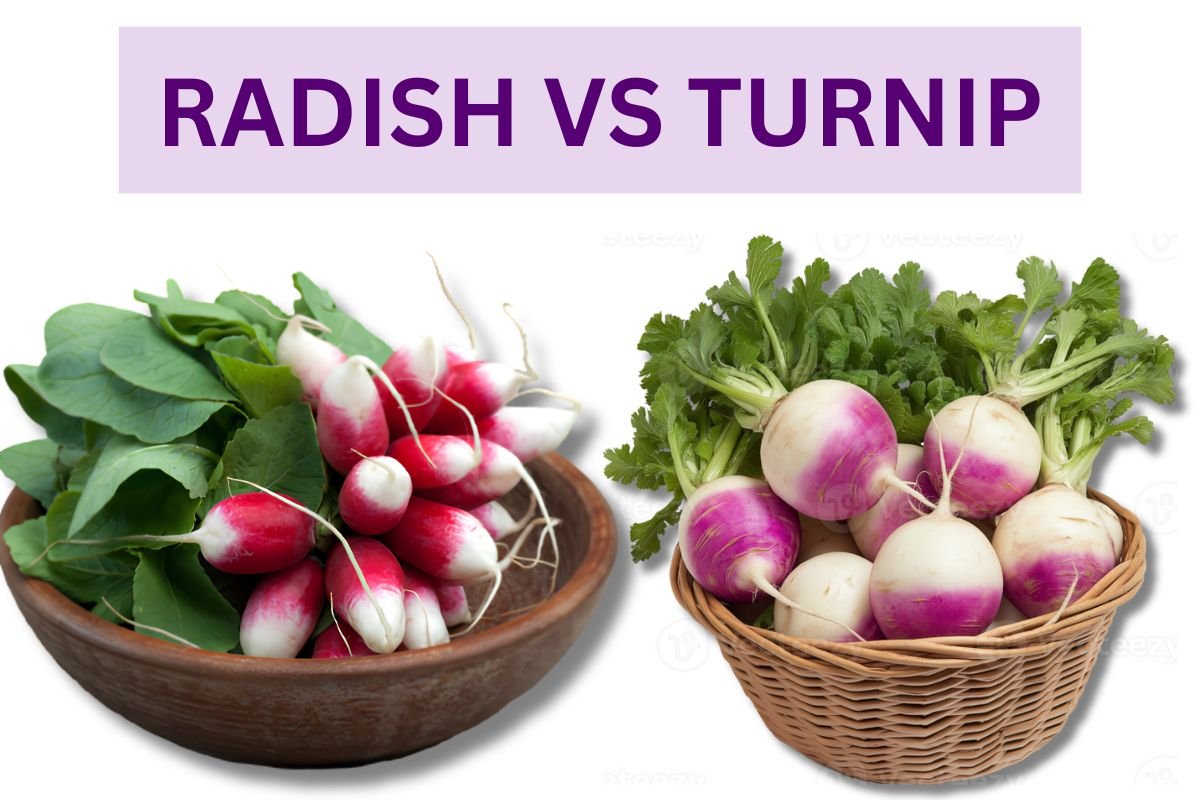
Walk through a vegetable market in winter, and you will often spot fresh white radishes and turnips displayed side by side. Both look similar, but their taste and uses are quite different. Radish is commonly grated into parathas, added to salads, or eaten with a little salt and lemon. Turnip, meanwhile, is often cooked in curries, soups, and vegetable dishes because of its mild, slightly sweet flavour.
Although both belong to the same plant family, they offer different nutritional benefits. Radish contains more water and fewer calories, while turnip provides more vitamin C per 100 grams. So, when it comes to radish vs. turnip, which one deserves a place on your plate? Let’s look at their key differences.
What is the Difference Between Radish and Turnip?
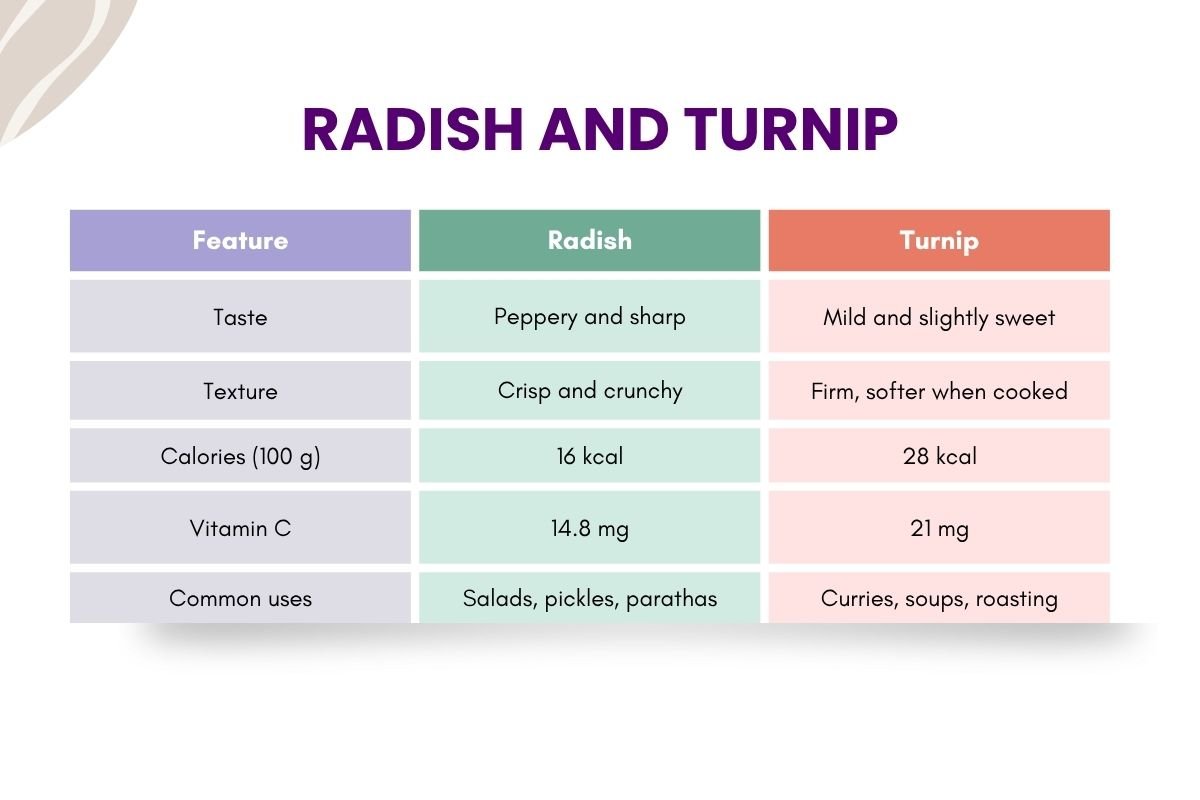
Radish (Raphanus sativus) and turnip (Brassica rapa) are edible root vegetables from the Brassicaceae family.
Radish is usually white, red, or black, with a crisp texture and peppery flavour. Turnip generally has white flesh with purple or green skin near the top and tastes mildly sweet and earthy.
| Feature | Radish | Turnip |
| Taste | Peppery and sharp | Mild and slightly sweet |
| Texture | Crisp and crunchy | Firm, softer when cooked |
| Calories (100 g) | 16 kcal | 28 kcal |
| Vitamin C | 14.8 mg | 21 mg |
| Common uses | Salads, pickles, parathas | Curries, soups, roasting |
Radish vs. Turnip – Nutritional Value
Both vegetables provide fibre, vitamin C, potassium, and other essential nutrients. However, their nutritional composition differs slightly.
Per 100 grams of raw vegetables:
| Nutrient | Radish | Turnip |
| Calories | 16 kcal | 28 kcal |
| Protein | 0.7 g | 0.9 g |
| Carbohydrates | 3.4 g | 6.4 g |
| Fibre | 1.6 g | 1.8 g |
| Vitamin C | 14.8 mg | 21 mg |
| Potassium | 233 mg | 191 mg |
Radish is a good option for people looking for a low-calorie, water-rich vegetable. Turnip provides slightly more fibre and vitamin C in these reference values.
https://pmc.ncbi.nlm.nih.gov/articles/PMC9735862
Health Benefits of Radish
Radish is more than a crunchy salad ingredient. It provides nutrients that support everyday health.
- Supports immunity: Vitamin C helps maintain normal immune function.
- Aids digestion: Dietary fibre supports bowel regularity and digestive health.
- Provides antioxidants: Radish contains natural plant compounds, including glucosinolates.
- Supports weight management: Its high water content and low calorie count make it useful in balanced, calorie-conscious meals.
Health Benefits of Turnip
Turnip offers several nutritional benefits, including vitamin C, potassium, and dietary fibre.
- Supports immune health: Vitamin C contributes to normal immune function.
- Supports muscle function: Potassium helps maintain normal muscle and nerve function.
- Improves fibre intake: Its fibre content supports healthy digestion.
- Adds more nutrients: Turnip greens provide vitamins A, C, and K, along with minerals.
Radish vs. Turnip for Weight Management
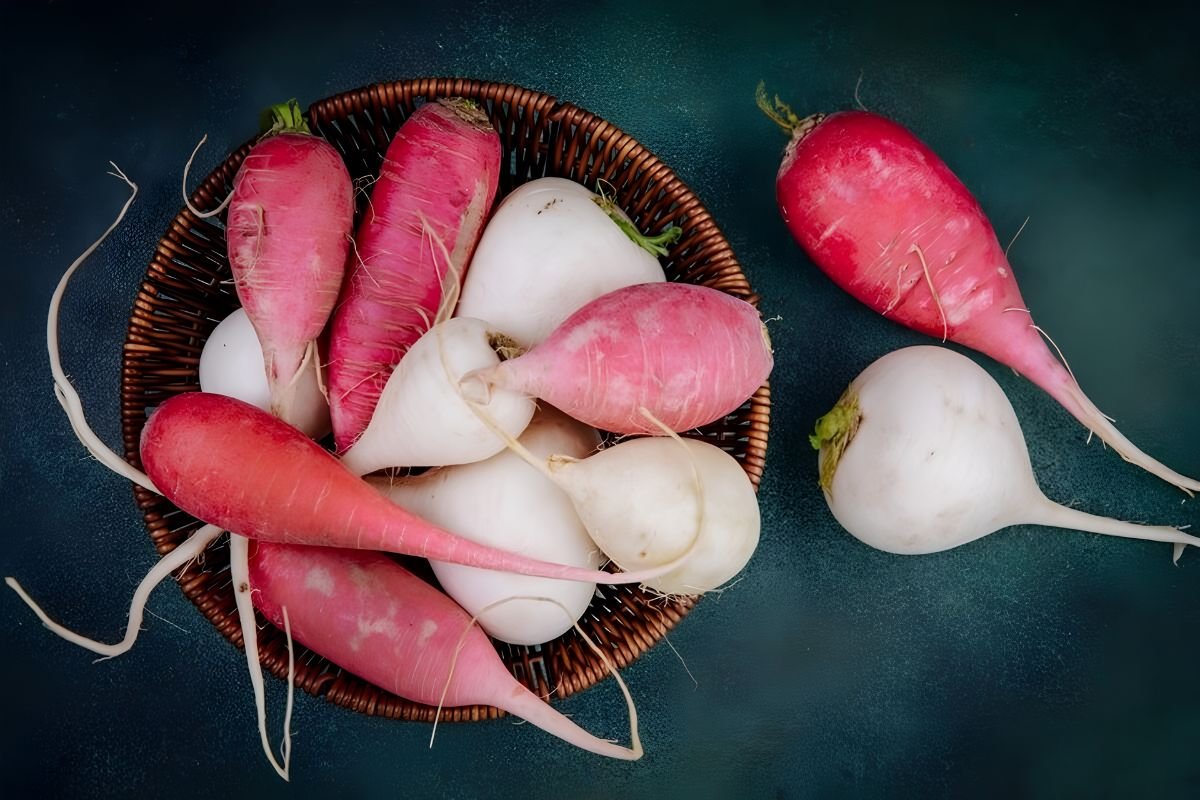
If calorie intake is your priority, radish has a slight advantage. It contains approximately 16 calories per 100 grams, compared with 28 calories in turnip.
However, both vegetables are suitable for balanced weight-management diets. Their water and fibre content can help add volume to meals without significantly increasing calorie intake.
Neither vegetable directly burns fat or causes weight loss. Overall eating habits and physical activity matter more.
How Are Radish and Turnip Used in Cooking?
Both vegetables can add flavour and variety to everyday meals.
Radish:
- Grated into mooli parathas.
- Sliced into fresh salads.
- Prepared as pickles.
- Added to stir-fries and soups.
Turnip:
- Cooked in Indian-style vegetable curries.
- Added to soups and stews.
- Roasted with herbs and spices.
- Mashed as a vegetable side dish.
Both can be eaten raw after proper washing, although cooking makes their texture softer and changes their flavour.
Radish vs. Turnip: Which Is Better?
There is no single winner in the radish vs. turnip debate. Radish is a better choice if you prefer crunchy vegetables with fewer calories, while turnip is worth adding if you want more vitamin C and a mildly sweet vegetable for cooked meals.
The best approach is to include both in your diet. Each offers different nutrients, flavours, and cooking possibilities.
Conclusion
Radish and turnip may look alike, but they bring different qualities to the plate. Radish is crisp, refreshing, and low in calories, while turnip is mildly sweet and offers more vitamin C. Both are affordable, versatile vegetables that can make everyday meals more nutritious. Rather than choosing one over the other, enjoy both as part of a varied and balanced diet.
FAQs
1. Is radish healthier than turnip?
Both are nutritious. Radish has fewer calories, while turnip provides more vitamin C.
2. Can you eat radish and turnip together?
Yes. Both work well in salads, soups, curries, and other vegetable dishes.
3. Which has more vitamin C, radish or turnip?
Turnip generally contains more vitamin C per 100 grams than common radish varieties.
4. Which is better for weight management?
Radish has fewer calories, but both vegetables can support a balanced, calorie-conscious diet.
5. Are radish and turnip leaves edible?
Yes. Both have edible leaves, and turnip greens are particularly rich in vitamins A, C, and K.