Anxiety disorders are mental health conditions involving excessive fear or worry that disrupt daily life, and they affect an estimated 470 million people worldwide, according to the WHO. Picture one person constantly worrying about everyday responsibilities, another hit by sudden episodes of intense fear, and a third avoiding social situations for fear of being judged. Though they look different, each can point to a distinct anxiety-related condition. Anxiety is a normal stress response, but persistent, hard-to-control symptoms deserve attention. This guide covers the classification, symptoms, underlying mechanisms, diagnosis, and treatment.
Table of Contents
What Are Anxiety Disorders and When Does Anxiety Become a Concern?
Anxiety is a normal response to stress, fear, or uncertainty. But it may need clinical attention when it is persistent, hard to control, and disrupts daily life. Anxiety disorders are mental-health conditions involving excessive worry, fear, or unease that interfere with routines, relationships, school, work, or sleep.
Normal anxiety vs. clinical anxiety
| Experience | What it looks like |
| Normal anxiety | A short-lived reaction to a real challenge, such as an exam or job interview; it can help you focus. |
| Stress | A response to pressure or demands, which usually eases once the situation changes. |
| Fear | An immediate reaction to a clear, present danger. |
| Anxiety disorders | Intense, ongoing, or disproportionate worry that is difficult to control and affects everyday functioning. |
When to seek help
Anxiety needs attention when it persists, feels overwhelming, or disrupts work, relationships, sleep, or daily routines. Avoidance and panic symptoms are added warning signs.
Anxiety affects children, adolescents, and adults, often starting early and continuing into adulthood. The WHO estimates that 470 million people (5.8%) had one in 2023, making them the most common mental disorders worldwide.
What Are the Different Types of Anxiety Disorders?
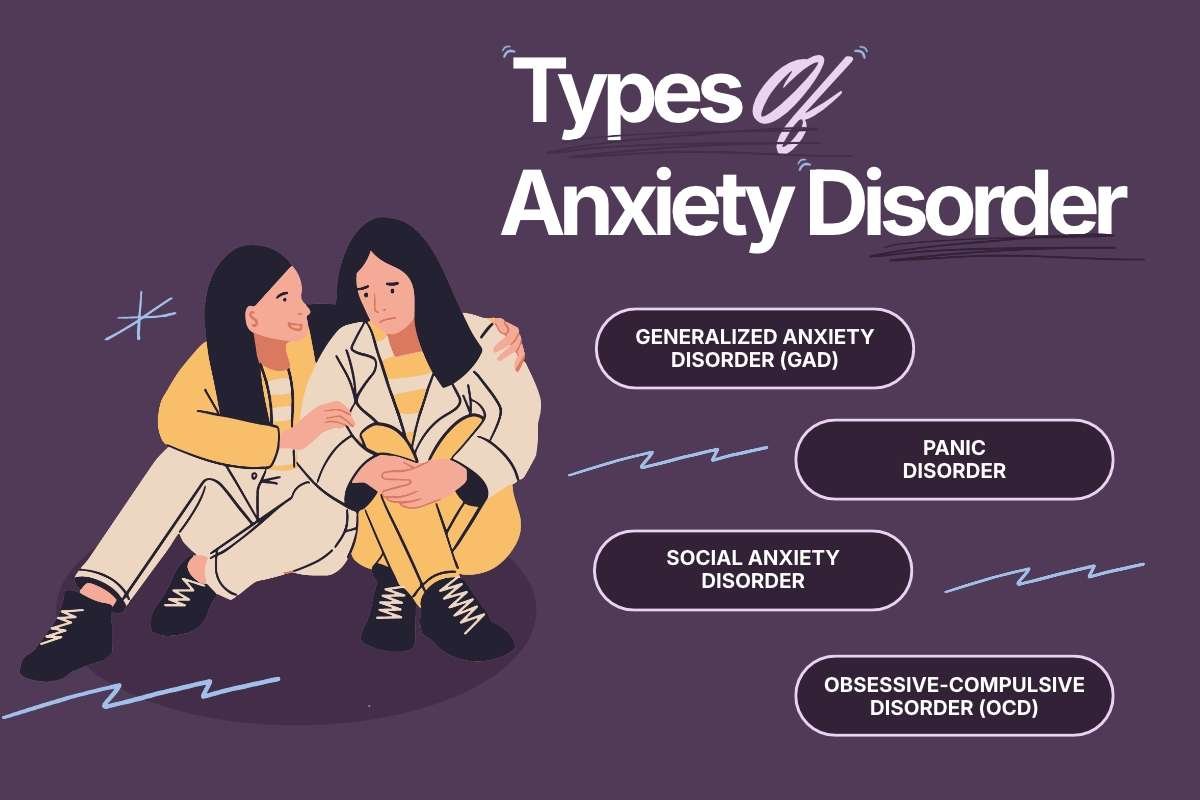
Anxiety is a group of mental-health conditions marked by excessive, persistent fear or worry that interferes with daily life. They differ mainly in what triggers the anxiety and how it shows up.
Generalized Anxiety Disorder (GAD)
Ever feel like your brain won’t stop running “what if” scenarios about health, money, work, or family? In GAD, the worry is constant and far bigger than the situation calls for. It often brings restlessness, fatigue, irritability, tense muscles, trouble concentrating, and poor sleep, sometimes for months or years.
Panic Disorder
Out of nowhere, your heart pounds, your breath shortens, and you feel dizzy, sweaty, or sure something is terribly wrong. That’s a panic attack. In panic disorder, these attacks keep recurring, and the fear of the next one can lead people to avoid places linked to past episodes.
Social Anxiety Disorder
This is far more than shyness. It’s an intense, hard-to-control fear of being judged, embarrassed, or rejected, whether you’re speaking in public, meeting new people, or eating in front of others. Over time, avoidance can start to limit work, school, and relationships.
Obsessive-Compulsive Disorder (OCD)
Though often grouped with anxiety, OCD is classified separately in the DSM-5-TR, under obsessive-compulsive and related disorders. It involves unwanted, intrusive thoughts (obsessions) and repetitive behaviors or mental rituals (compulsions) that bring brief relief but eventually eat up time and disrupt daily life.
| Condition | Primary fear | Common symptoms | Behavioral pattern |
| GAD | Every day “what if” worries | Restlessness, fatigue, muscle tension, sleep and concentration problems | Ongoing worry across many situations |
| Panic disorder | Another panic attack | Palpitations, breathlessness, dizziness, chest discomfort | Avoiding places associated with attacks |
| Social anxiety disorder | Judgment, embarrassment, rejection | Anxiety before or during social events, physical nervousness | Avoiding social or performance situations |
Other related conditions include specific phobias, which involve intense fear of a particular object or situation, and agoraphobia, a fear of situations where escape or help may be difficult, such as crowds or public transport.
What Are the Causes of Anxiety? Understanding the Brain and Risk Factors
Anxiety disorders do not have one universal cause. They usually develop from interactions among brain function, genetics, life experiences, and learned responses to stress.
Brain and body
The amygdala detects threats and triggers fear, while the prefrontal cortex helps keep those reactions in check. When these two communicate differently, some people may become more sensitive to perceived danger.
Chemical messengers like serotonin, norepinephrine, and GABA also regulate mood, alertness, and fear, and imbalances may contribute to anxiety symptoms.
Risk factors
- Genetics: It can run in families, but a family history increases risk rather than guaranteeing a diagnosis.
- Environment: Chronic stress, trauma, abuse, bullying, illness, and major life changes can increase vulnerability.
- Psychology: Repeated fear experiences and avoidance can teach the brain to expect danger, reinforcing anxiety over time.
How factors interact
Biology and the environment often work together. A person may inherit a more reactive stress system, then face trauma or prolonged pressure that strengthens fearful responses. That’s why anxiety isn’t caused by weakness, upbringing, or a single stressful event.
How Is Anxiety Diagnosed?

Anxiety disorders are diagnosed through a careful clinical assessment, not a single test. A healthcare professional looks at symptoms, their impact, and whether another condition could explain them.
What happens at an appointment
A doctor or mental-health professional will ask about the type, frequency, severity, and duration of symptoms, including worry, fear, panic, sleep problems, and physical symptoms. They also review personal and family mental-health history, medications, alcohol or drug use, and how symptoms affect work, school, relationships, and daily routines.
They may use clinical interviews and standardized questionnaires, such as the GAD-7, to support the assessment. A physical exam or blood tests may rule out medical causes such as thyroid problems, anemia, or medication side effects.
What diagnosis involves
The clinician also considers differential diagnosis, distinguishing anxiety from depression, OCD, PTSD, and physical health conditions that can cause similar symptoms. There is no single blood test or brain scan that independently confirms anxiety. Diagnosis relies primarily on clinical assessment.
Conclusion:
Anxiety disorders are common, but they are also highly treatable. Feeling anxious is a normal part of life. When worry becomes persistent, hard to control, or starts shaping your daily choices, it’s a signal worth listening to. Understanding the different types, the mix of biology and experience behind them, and how clinicians diagnose them can make the first step feel far less daunting.
If anxiety is affecting your work, relationships, or sleep, don’t wait for it to get worse. Talk to a doctor or mental-health professional today. Getting support early can make a real difference.
FAQ:
1. What is the difference between everyday anxiety and an anxiety disorder?
Everyday anxiety is usually temporary, while an anxiety disorder involves persistent, excessive fear or worry that interferes with daily life.
2. Can anxiety disorders cause physical health problems?
Yes, anxiety can cause physical symptoms such as rapid heartbeat, muscle tension, digestive discomfort, headaches, and sleep disturbances.
3. Can anxiety disorders develop without an obvious trigger?
Yes, anxiety disorders can develop through a combination of genetic, biological, psychological, and environmental factors, even without an identifiable trigger.
Links and Sources:
- https://opa.hhs.gov/adolescent-health/mental-health-adolescents
- https://www.nhs.uk/every-mind-matters/mental-health-issues/anxiety
- https://discoverwhr.nih.gov/research/anxiety
- https://www.nimh.nih.gov/health/publications/social-anxiety-disorder-more-than-just-shyness?ref=cms.clarityx.com
- https://medlineplus.gov/anxiety.html