Did you know most people chasing fibre grams still end up with digestive issues? That’s because gram counts alone don’t tell the full story.
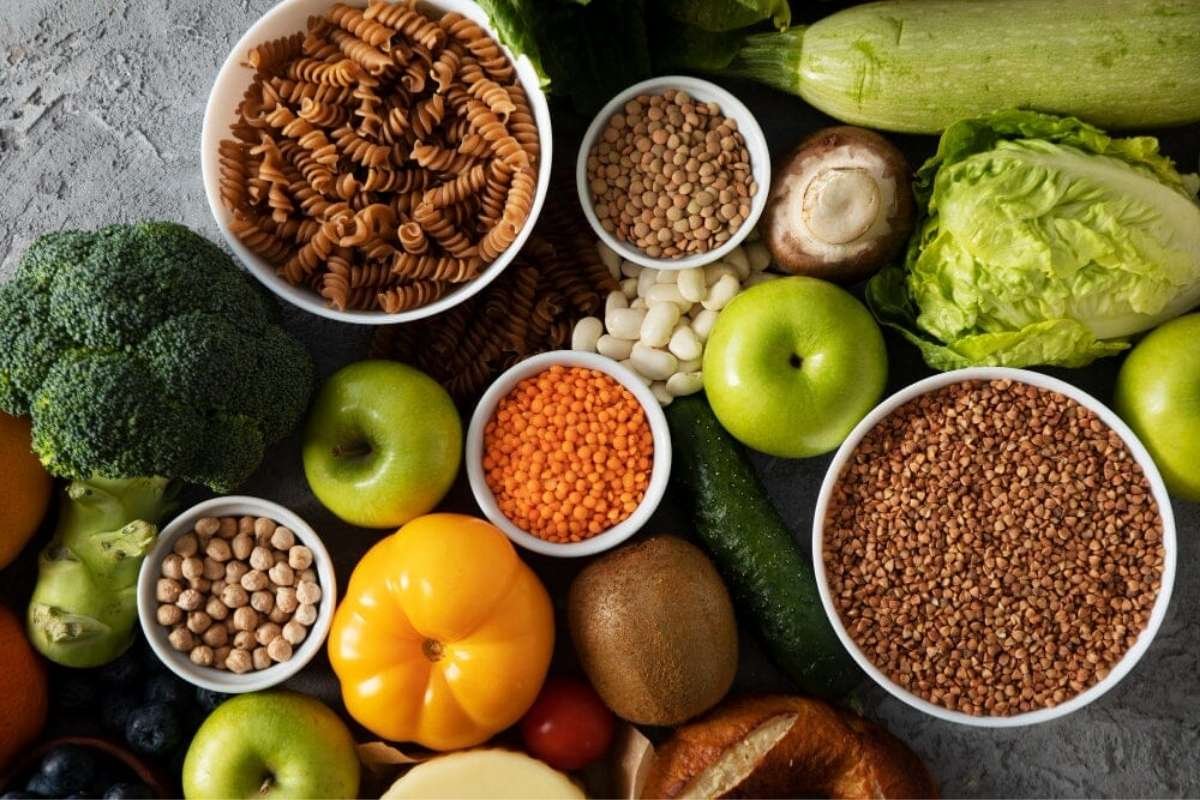
If you want more fibre, don’t just look for the food with the highest number on the label. Look for variety. Most high fibre foods lists simply rank items by grams per serving. But fibre isn’t one uniform nutrient. It’s a mix of structures with different jobs. Some ferment into gut-friendly compounds, some add viscosity that slows digestion, others add bulk that keeps things moving.
This guide ranks the top 20 high-fibre foods by practical function. Serving-size fibre, unique benefits, prep effects, and daily combinations. Favouring whole foods over isolated nutrients.
What Makes a Food “High Fibre”?
A food is “high fibre” when it delivers a meaningful amount of indigestible plant carbohydrate per realistic portion. That should be enough to support digestion, satiety, and metabolic health without excessive calories.
What dietary fibre is
Dietary fibre consists of non-digestible carbohydrates (and lignin) that resist breakdown by human enzymes in the small intestine. Soluble fibre dissolves in water to form a gel and can be fermented by gut bacteria. Insoluble fibre adds bulk and helps food move through the gut.
What qualifies as a high-fibre food
Under UK/EU labelling rules (used by the NHS), a product may be called “high in fibre” if it contains at least 6 g of fibre per 100 g (or 3 g per 100 kcal). This standardised threshold lets you compare foods fairly, regardless of brand or recipe.
Fibre per serving vs fibre per 100 g
Fibre per 100 g is a fixed benchmark for comparing products side by side. Fibre per serving reflects what you actually eat in one sitting. It is critical because portions vary widely. E.g., 30 g of bran cereal vs 150 g of cooked lentils.
Why serving size matters
You consume servings, not 100 g blocks. A food might be high fibre per 100 g. But deliver little fibre if the typical serving is tiny. Conversely, a moderate-fibre food can become a strong contributor when the serving is large.
Why calorie density matters
For weight management, fibre relative to calories is key. Some very fibrous foods (e.g., certain seeds or bran supplements) are calorie-dense or easy to overeat. This can undermine goals despite impressive fibre numbers.
Why “highest fibre” ≠ “best food”
The highest-fibre item isn’t automatically the best choice. Balance matters: protein, micronutrients, palatability, and overall diet quality determine whether a high fibre foods pick truly supports health.
| Metric | Why it matters |
| Fibre per serving | What you realistically consume |
| Fibre per 100 g | Standardized comparison |
| Fibre type | Indicates potential function (gel-forming vs bulking) |
| Protein | Helps evaluate overall meal quality |
| Calories | Useful for weight-management choices |
The 4 Types of Fibre Function You Should Know
Dietary fibre functions through four distinct mechanisms that support digestion, satiety, and metabolic health. Understanding these roles helps you select the right plants for your body rather than guessing. Each type interacts with your digestive system differently to provide unique benefits.
- Bulking fibre increases stool bulk and improves transit time. It is abundant in whole grains and vegetable skins.
- Viscous fibre creates gel formation in the gut, slowing nutrient absorption and stabilizing blood sugar. Oats, barley, and psyllium are prime examples.
- Fermentable fibre fuels gut microbial fermentation, producing beneficial short-chain fatty acids. Legumes, certain fruits, and vegetables are rich sources.
- Resistant starch resists small intestine digestion, reaching the colon for microbial fermentation. Potatoes, legumes, and some grains qualify depending on food structure and preparation.
The traditional soluble vs. insoluble classification is useful but incomplete for modern nutrition. Fibres can differ substantially in fermentability and viscosity, which are stronger predictors of physiological effects than solubility alone. This functional view clarifies why some soluble fibres don’t ferment, and some insoluble ones do. Recognizing these differences allows for better dietary planning. When choosing high fibre foods, focusing on these functional properties ensures you meet specific health goals rather than just hitting a daily number. Aim for a variety of sources to cover all four functions daily.
Here Are The Top 20 High Fibre Foods Ranked by Function:
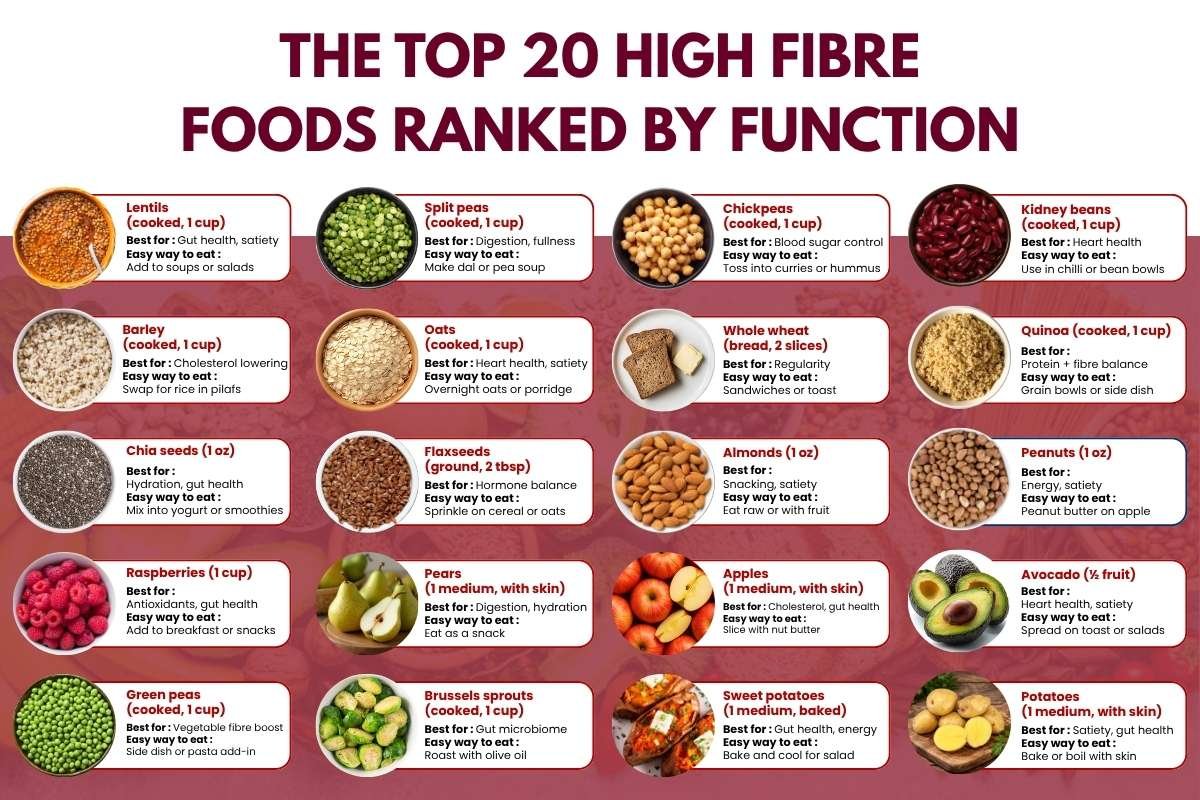
Ranking high fibre foods by function helps you choose options that match your health goals, not just fibre totals. The table below standardizes servings to common household measures using USDA data.
| Rank | Food | Fibre/serving | Key fibre characteristic | Best for | Easy way to eat |
| 1 | Lentils (cooked, 1 cup) | 15.6 g | Fermentable + bulking | Gut health, satiety | Add to soups or salads |
| 2 | Split peas (cooked, 1 cup) | 16.0 g | Fermentable + bulking | Digestion, fullness | Make dal or pea soup |
| 3 | Chickpeas (cooked, 1 cup) | 12.5 g | Fermentable + bulking | Blood sugar control | Toss into curries or hummus |
| 4 | Kidney beans (cooked, 1 cup) | 11.0 g | Fermentable + bulking | Heart health | Use in chilli or bean bowls |
| 5 | Barley (cooked, 1 cup) | 6.0 g | Viscous (beta-glucan) | Cholesterol lowering | Swap for rice in pilafs |
| 6 | Oats (cooked, 1 cup) | 4.0 g | Viscous (beta-glucan) | Heart health, satiety | Overnight oats or porridge |
| 7 | Whole wheat (bread, 2 slices) | 4.0 g | Bulking | Regularity | Sandwiches or toast |
| 8 | Quinoa (cooked, 1 cup) | 5.2 g | Bulking + fermentable | Protein + fibre balance | Grain bowls or side dish |
| 9 | Chia seeds (1 oz) | 10.0 g | Viscous + fermentable | Hydration, gut health | Mix into yogurt or smoothies |
| 10 | Flaxseeds (ground, 2 tbsp) | 3.8 g | Viscous + fermentable | Hormone balance | Sprinkle on cereal or oats |
| 11 | Almonds (1 oz) | 3.5 g | Bulking | Snacking, satiety | Eat raw or with fruit |
| 12 | Peanuts (1 oz) | 2.4 g | Bulking | Energy, satiety | Peanut butter on apple |
| 13 | Raspberries (1 cup) | 8.0 g | Fermentable + bulking | Antioxidants, gut health | Add to breakfast or snacks |
| 14 | Pears (1 medium, with skin) | 5.5 g | Fermentable + bulking | Digestion, hydration | Eat as a snack |
| 15 | Apples (1 medium, with skin) | 4.5 g | Fermentable (pectin) | Cholesterol, gut health | Slice with nut butter |
| 16 | Avocado (½ fruit) | 5.0 g | Viscous + fermentable | Heart health, satiety | Spread on toast or salads |
| 17 | Green peas (cooked, 1 cup) | 8.8 g | Fermentable + bulking | Vegetable fibre boost | Side dish or pasta add-in |
| 18 | Brussels sprouts (cooked, 1 cup) | 4.5 g | Fermentable | Gut microbiome | Roast with olive oil |
| 19 | Sweet potatoes (1 medium, baked) | 4.8 g | Resistant starch (cooled) | Gut health, energy | Bake and cool for salad |
| 20 | Potatoes (1 medium, with skin) | 3.6 g | Resistant starch (cooled) | Satiety, gut health | Bake or boil with skin |
How to Choose High Fibre Foods for Your Goal?
Selecting high fibre foods by health goal makes your diet work harder than chasing a daily total alone. If you are exploring how to start eating healthy, fibre should be part of an overall eating pattern rather than treated as a standalone treatment.
For digestive regularity
Prioritize whole grains, legumes, vegetables, fruits, and seeds. Insoluble and bulking fibres add stool mass and speed transit, supporting normal laxation at intakes around 25 g/day.
For cholesterol support
Prioritize oats, barley, and legumes. These provide viscous beta-glucan and soluble fibres that help lower LDL cholesterol when consumed daily as part of a low-saturated-fat diet.
For satiety and weight management
Prioritize legumes, oats, vegetables, chia, and whole fruit. Gel-forming and bulky fibres increase fullness, slow eating, and reduce overall energy intake without sacrificing nutrients.
For blood glucose management
Prioritize legumes, whole grains, vegetables, and viscous-fibre sources. Viscous fibres can slow digestion and carbohydrate absorption, which may help moderate post-meal blood glucose responses.
Across all goals, combine fibre-rich plants with adequate fluids, varied colours, and minimally processed staples for best results.
Why Fibre Diversity Matters More Than Chasing 30 Grams?
Hitting your fibre target is useful. Getting that fibre from a variety of foods may be even more useful.
Fibre quantity vs. fibre diversity
| Focus | What it means | Why it matters |
| Quantity | Total grams per day (e.g., 30 g) | Supports bowel function and satiety |
| Diversity | Different plant sources and fibre types | Feeds different microbes and functions |
Choosing high fibre foods across categories provides varied fibre characteristics rather than relying on one staple.
Sample day
- Breakfast: Oats + chia + berries (viscous + fermentable)
- Lunch: Dal + vegetables + whole grain (bulking + fermentable)
- Snack: Apple + peanuts (pectin + bulking)
- Dinner: Chickpeas + vegetables + whole grain (resistant starch + bulking)
This mix delivers oats (beta‑glucan), legumes (fermentable fibre), whole grains (bulking), fruits (pectin), and seeds (viscous), covering multiple functional types in one day.
Fibre influences the gut microbiome. But the response can vary by fibre type, dose, and individual. Human intervention evidence is nuanced, and meta‑analyses show no consistent increase in alpha diversity across studies. Incorporating both probiotic and prebiotic foods can help support this complex ecosystem. While a broader diet focused on foods for gut health promotes overall digestive resilience. Prioritizing diversity supports broader health outcomes even if microbiome shifts differ person to person.
How to Build a High Fibre Day Without Overdoing It
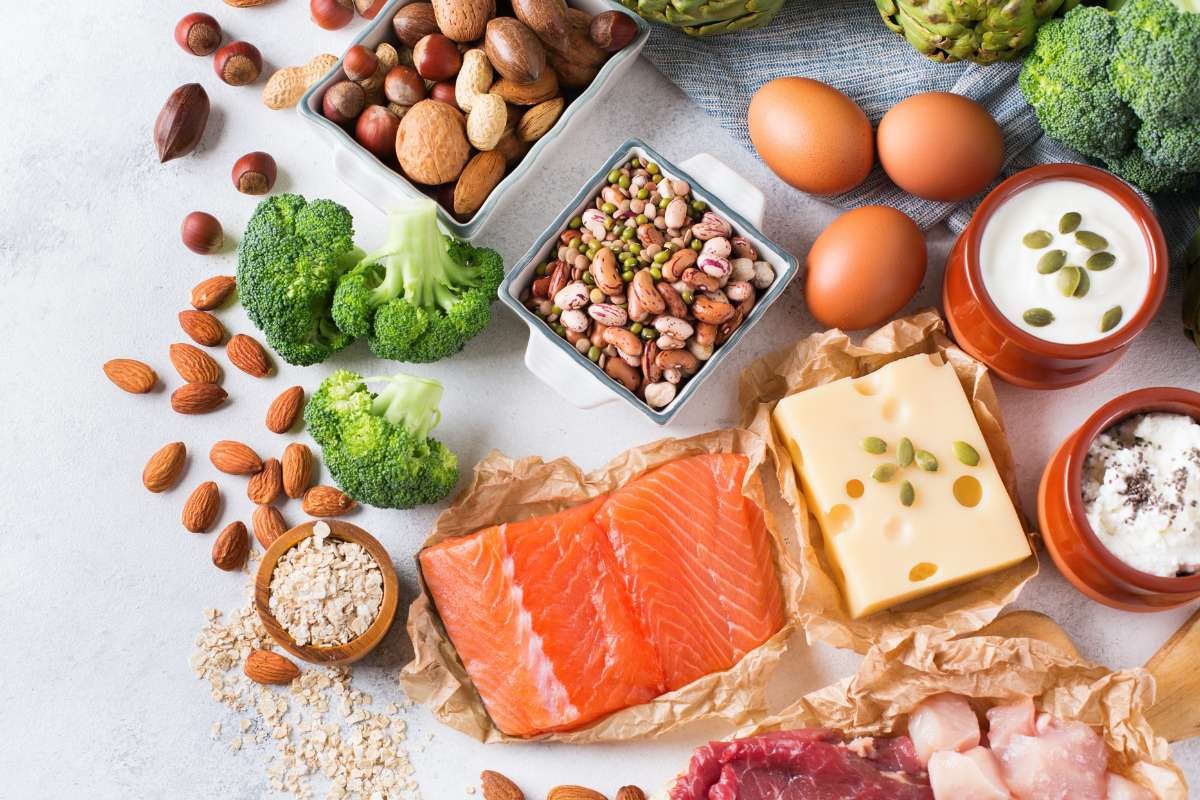
Building a high‑fibre day works best with a simple “5‑source” strategy instead of obsessively counting grams.
The 5-source strategy
Aim to include one serving from each group daily:
- Whole grain
- Legume
- Vegetable
- Fruit
- Nuts/seeds
This naturally adds fibre while keeping meals balanced and familiar.
Sample day
- Breakfast: Oats + chia + fruit (whole grain + seed + fruit)
- Lunch: Dal + vegetables + whole grain (legume + vegetable + whole grain)
- Snack: Pear + nuts (fruit + nuts/seeds)
- Dinner: Chickpeas/beans + vegetables + whole grain (legume + vegetable + whole grain)
Selecting high fibre foods across these five categories spreads fibre types and reduces reliance on supplements.
Increase gradually and hydrate
Suddenly increasing fibre can cause bloating, gas, or bowel discomfort. Mayo Clinic and NHS-aligned guidance recommend increasing intake slowly over weeks so your digestive system can adapt. As you add fibre, drink adequate fluids, about 8 glasses (64 oz) or more daily. They will assist to help fibre move smoothly through the gut.
If you experience persistent pain, vomiting, blood in stool, or major bowel changes, seek medical advice.
Conclusion:
Building a fibre-rich diet isn’t about chasing one big number; it’s about variety. The best high fibre foods work together: legumes for fermentation, oats and barley for viscosity, whole grains for bulk, and resistant starches for gut support. When you combine these functional types across your meals, you get better digestion, steadier blood sugar, and lasting fullness. They are not just a higher gram count on paper.
Start small. Pick one new high fibre food from a different category each week, increase intake gradually, and pair it with plenty of water. Your gut will thank you for the diversity, not just the quantity.
Which high fibre food will you add to your plate first?
FAQ:
1. What are the best high fibre foods to eat every day?
Some of the best high fibre foods include lentils, chickpeas, beans, oats, barley, whole grains, chia seeds, flaxseeds, vegetables, berries, apples, pears and avocados.
2. How much fibre should you eat each day?
A common target for adults is around 25–30 grams of fibre per day, although needs vary by age, sex and overall diet. Focus on gradually getting more fibre from a variety of whole or minimally processed foods.
3. Which high fibre foods are best for constipation?
Legumes, whole grains, vegetables, fruits and seeds can help increase fibre intake and support bowel regularity. Increase fibre gradually and drink enough fluids, as a sudden increase may cause gas or bloating.
4. Can you eat too much fibre?
Yes. Increasing fibre too quickly can cause bloating, gas, abdominal discomfort, or changes in bowel movements. Increase your intake gradually and maintain adequate fluid intake.
5. Are fruits high in fibre?
Many fruits provide useful amounts of fibre, especially when eaten whole. Berries, pears, apples with their skin, and avocados are examples.
Links and Sources:
- https://mcforms.mayo.edu/mc0500-mc0599/mc0592.pdf
- https://nutritionaustralia.org/app/uploads/2020/05/Healthy-Eating-Pyramid.pdf
- https://pmc.ncbi.nlm.nih.gov/articles/PMC12517706
- https://fruitsandveggies.org/blog/what-fruits-and-vegetables-have-the-most-fibre
- https://www.mayoclinic.org/healthy-lifestyle/nutrition-and-healthy-eating/in-depth/high-fibre-foods/art-20050948
- https://medlineplus.gov/ency/imagepages/19531.htm
- https://www.fda.gov/food/nutrition-food-labeling-and-critical-foods/questions-and-answers-dietary-fiber