
Workplace emotional wellness helps employees manage stress, improve resilience, and boost performance. This blog explains its importance, the science behind healthy workplaces, warning signs, and practical strategies organizations can use to create a supportive, productive work environment.
Emotional wellness at work isn’t a “nice-to-have” anymore. It’s a business imperative related to performance, retention, and resilience. Burnout and stress are increasing in many industries, and organizations are realizing that emotionally healthy teams are more engaged, more productive, and less likely to leave.
In this article, we’ll discuss why workplace emotional wellness is important, what the latest research says about stress and burnout, and which science-backed strategies can improve both individual well-being and organizational outcomes.
You’ll also hear about the topic from both the employee’s and employer’s points of view. So you can see what support looks like in real life and how workplaces can raise a healthier culture.
Table of Contents
What is workplace emotional wellness?
Emotional wellness is the ability to recognize, understand, and healthily manage emotions while staying connected to purpose and relationships. In workplace emotional wellness, this means employees can handle stress, change, and conflict without losing balance. The CDC says positive emotional well-being includes managing emotions well. It includes having a sense of meaning and purpose, and supportive relationships. This can also improve productivity at work.
1. Emotional wellness vs mental health
Mental health is broader and includes emotional, psychological, and social well-being. Emotional wellness is a part of that bigger picture and focuses more on daily emotional management.
2. Emotional wellness vs emotional intelligence
Emotional intelligence is about noticing emotions and using that awareness to guide decisions and relationships. Emotional wellness is about overall emotional balance and healthy coping.
3. Emotional wellness vs resilience
Resilience is the ability to bounce back after stress or setbacks. Emotional wellness supports resilience by helping people process emotions and cope more effectively.
4. Components
Key parts of emotional wellness include self-awareness, healthy expression of feelings, coping with stress, handling uncertainty, solving problems, and asking for support when needed.
Why workplace emotional wellness matter?
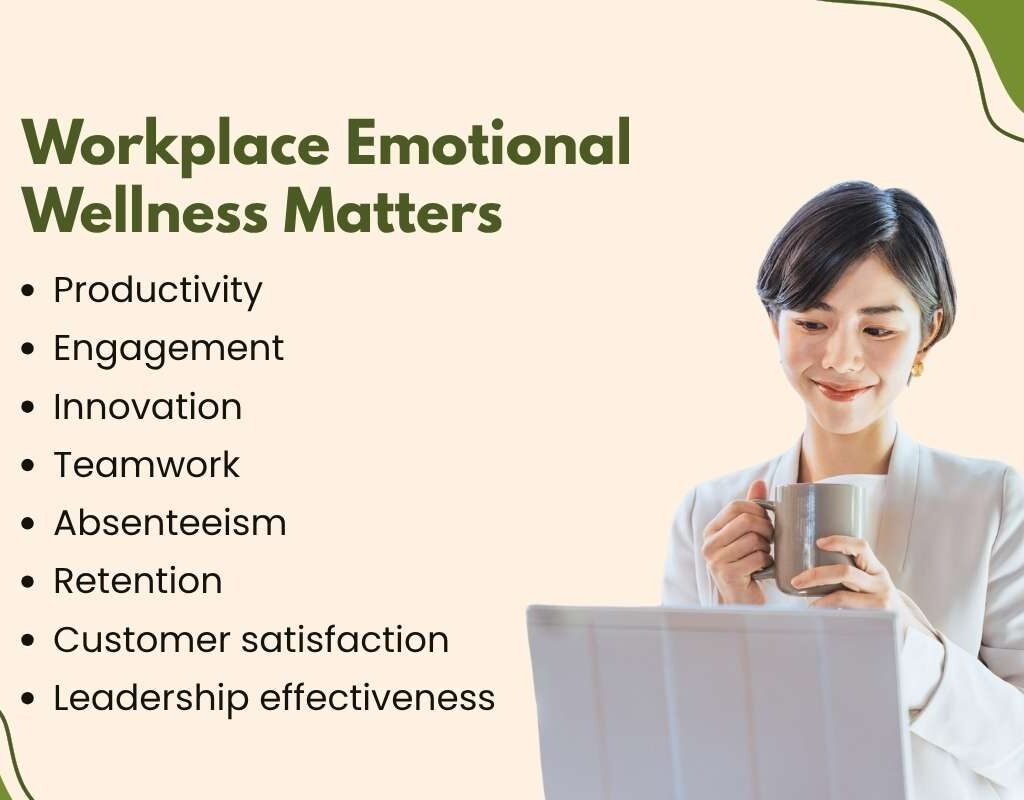
Emotional wellness at work matters because it affects how people think, feel, and perform at work. Gallup’s 2026 global report says employee engagement fell to 20% in 2025, and low engagement costs the world economy about $10 trillion in lost productivity.
- Productivity: Better emotional wellness supports focus and fewer mistakes; poor wellbeing is linked to lower output. Gallup ties engagement strongly to productivity and sales.
- Engagement: Emotionally supported employees are more involved in their work; engaged workers are more likely to feel purpose and belonging.
- Innovation: Engaged employees are more likely to drive performance and innovation, while disengaged staff tends to hold organizations back.
- Teamwork: Emotional strain can hurt communication and trust, while healthy emotional habits improve collaboration.
- Absenteeism: Gallup notes poor mental health is linked with incremental unplanned absenteeism costing $47.6 billion annually in the U.S.
- Retention: When people feel respected and supported, they are more likely to stay; Gallup reports respect at work hit a record low of 37%.
- Customer satisfaction: Better employee wellbeing usually improves service quality, because employees are more present, calm, and consistent.
- Leadership effectiveness: Gallup found managers’ engagement dropped to 22% in 2025, showing that leader wellbeing matters for team results.
What does science actually say about healthy organisations?
Chronic stress keeps the nervous system on alert and can make emotions harder to manage. The CDC says long-term stress can lead to worsening health problems, trouble concentrating, sleep problems, and stronger feelings. These feelings can be anger, sadness, worry, or numbness. Research also links chronic stress with weaker emotion regulation and higher cortisol-related strain, which is why Emotional Dysregulation in Adults becomes more common when recovery is poor.
Heart rate variability as a marker of resilience
A simple science signal to watch is Heart Rate Variability. PubMed-reviewed research reports that higher vagally mediated HRV is associated with better emotional regulation, stronger stress recovery, and better modulation of cortisol and other stress responses. In practice, higher HRV is often used as a marker of flexibility, adaptation, and resilience.
Healthy organisations support neuroplasticity, psychological safety, and social connection by reducing chronic stress and improving recovery time. That matters because the brain and body adapt better when people have enough rest, trust, and support. This is the core of workplace emotional wellness.
Signs of poor emotional wellness at work:

When workplace emotional wellness starts slipping, the signs usually show up in steps: stress, emotional fatigue, dysregulation, and then burnout. The researchers note that long-term stress can worsen health and make it harder to cope, focus, and sleep. The Canadian Centre for Occupational Health and Safety says burnout often shows up as exhaustion, cynicism, low effectiveness, and detachment.
- Employee signs: irritability, low energy, trouble focusing, sleep changes, and feeling detached from work.
- Manager signs: more conflict, less patience, weaker decision-making, and difficulty supporting the team.
- Team signs: poor communication, less trust, lower cooperation, and more mistakes.
- Organization signs: rising absenteeism, lower performance, disengagement, and higher turnover risk.
If these patterns keep building, the workplace may need a reset in workload, support, and recovery time.
How organizations create an emotionally healthy workplace?
Organizations build emotionally healthy workplaces by designing work to support people, not just output. The strongest systems improve workplace emotional wellness through leadership, safety, flexibility, inclusion, and regular measurement.
- Leadership: Leaders set the tone by speaking openly about mental health, modeling healthy boundaries, and treating well-being as a core business priority. When executives visibly prioritize rest, it gives the entire organization permission to do the same. This top-down transparency breaks down longstanding stigmas around seeking support.
- Recognition: Frequent, specific praise and fair feedback make employees feel valued, boosting motivation while easing performance anxiety. Acknowledging small wins daily prevents the cynicism that often accompanies unappreciated hard work. It transforms routine tasks into recognized contributions that build long-term loyalty.
- Psychological Safety: Teams thrive when members can take risks, admit mistakes, and voice concerns without fear of blame or retaliation. Frame failures as valuable learning moments to keep communication channels honest and transparent. This environment encourages faster problem-solving and shields staff from chronic workplace anxiety.
- Flexible Work: Autonomy over schedules, hybrid options, and clear offline boundaries help employees balance personal responsibilities and prevent overload. Granting people control over their time builds trust and reduces non-work friction. Ultimately, flexibility improves focus during working hours while protecting personal time.
- Manager Training: Equipping managers to spot early signs of distress and listen empathetically ensures timely, effective support before crises escalate. Frontline supervisors are best positioned to notice subtle shifts in behavior and workload strain. Proper training gives them the confidence to navigate sensitive health conversations effectively.
- Inclusive Culture: Equitable practices and a true sense of belonging eliminate the chronic stress of masking one’s identity at work. Actively removing subtle biases ensures every team member feels safe bringing their true self to work. This psychological comfort frees up cognitive energy for creativity and collaboration.
- Meaningful Work: Connecting daily tasks to a clear purpose gives employees a sense of dignity, pride, and resilience during busy periods. People need to see how their individual contributions directly impact the broader mission. Clear purpose turns demanding workloads into fulfilling, worthwhile achievements.
- Workload Management: Realistic deadlines, balanced staffing, and protected rest periods address the primary structural cause of burnout. Perks cannot fix an environment where the sheer volume of work is permanently unsustainable. Auditing demands regularly ensures team energy is preserved for long-term output.
- Support Resources: Accessible EAPs, mental health coverage, and clear return-to-work programs ensure professional help is easy to reach. Removing financial and administrative barriers encourages individuals to seek care early. Structured re-entry pathways support smooth transitions after extended medical leaves.
- Measurement: Regular pulse surveys and validated well-being metrics provide the data needed to fix systemic issues and track progress. Tracking continuous feedback prevents leadership from relying on assumptions about company morale. Actionable insights ensure wellness investments target the specific needs of the workforce.
Conclusion:
Workplace emotional wellness is creating the conditions where people can do their best work without running on empty. Organizations that support stress recovery, trust, and healthy habits build stronger teams, better results, and more sustainable performance.
If you are a leader, a manager, or an employee, start by observing what drains energy and what helps people to recover. Small adjustments in the way work is led, supported, and measured can have a real impact.
FAQ:
1. How is workplace emotional wellness different from mental health?
Mental health refers to a person’s overall psychological well-being and may include diagnosed mental health conditions. It focuses specifically on how employees understand, express, and regulate their emotions in a professional setting. While the two are closely connected, emotional wellness is one important aspect of overall mental health.
2. How can employees improve their emotional wellness at work?
Protect emotional well-being by setting boundaries, taking regular breaks, and communicating openly. Small daily habits and seeking early support prevent stress from becoming burnout.
3. How can managers support workplace emotional wellness?
Managers boost team well-being by communicating openly, balancing workloads, and offering regular recognition. Fostering psychological safety and providing mental health resources builds long-term trust and resilience.
4. When should someone seek professional help for work-related emotional challenges?
Seek professional help if stress lasts for weeks, disrupts sleep, or impairs daily functioning. Early support prevents deeper mental health struggles and protects long-term well-being.
5. Can workplace emotional wellness improve productivity?
Emotionally supported employees stay focused, creative, and motivated. Prioritizing well-being sharpens decision-making, boosts job satisfaction, and prevents stress-induced distractions.
Links and Sources:
- https://www.nih.gov/health-information/your-healthiest-self-wellness-toolkits/emotional-wellness-toolkit
- https://www.gallup.com/topic/employee-wellbeing.aspx
- https://www.bencarrettin.com/emotional-wellness/
- https://www.sciencedirect.com/science/article/abs/pii/S016503271931331X
- https://www.mayoclinic.org/healthy-lifestyle/adult-health/in-depth/burnout/art-20046642
- https://www.who.int/news-room/fact-sheets/detail/mental-health-at-work