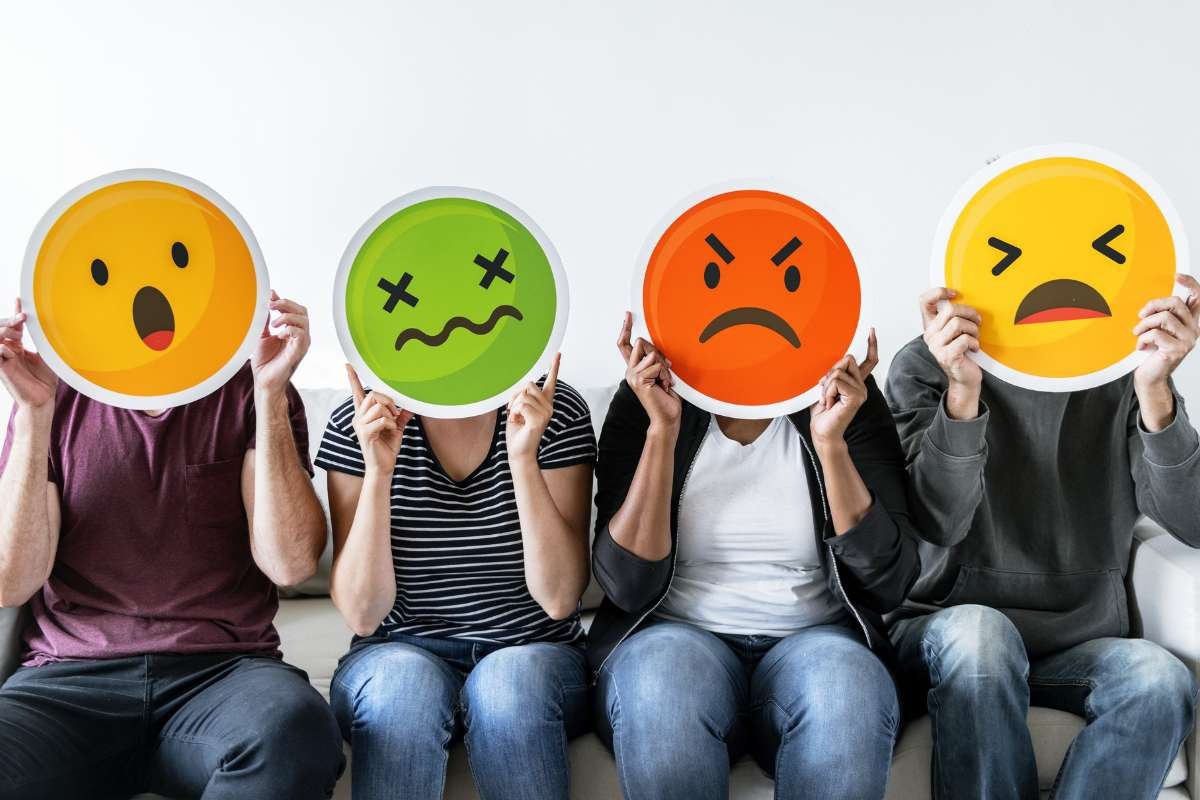
Emotional regulation is the ability to recognize, manage, and respond to emotions in healthy ways. This guide explains the science behind emotional regulation, how it affects mental and physical health, signs of emotional dysregulation, evidence-based strategies to strengthen emotional control, and when professional support may be helpful.
If you’re feeling overwhelmed, stressed, or emotionally exhausted, making everyday decisions can be harder than it needs to be. Emotional regulation is the ability to manage our emotional responses, not by denying them or avoiding them. It shapes how you respond to conflict, how you face challenges, how you maintain relationships, and how you create long-term mental health.
Now researchers know that emotional control is a complicated interplay of the brain, nervous system, and learned behavioral patterns. If you’re experiencing a period of stress or continuous emotional challenges, understanding how emotional control works can help you to react rather than respond.
Emotional Regulation Explained: What It Is and How It Works
Emotional regulation is the ability to notice, manage, and adjust our emotions. So, they fit the situation and our goals. Rather than letting feelings completely drive our behaviour.
From a psychological perspective, it includes both conscious strategies (like reframing a situation) and automatic processes that reduce the intensity or duration of an emotional reaction.
The process typically involves:
- Recognizing and naming what you feel
- Choosing a strategy (pause, breathe, reframe, seek support)
- Acting in a way that aligns with your values and longer-term goals.
Healthy emotional responses might include pausing before replying to a harsh email, taking a walk to cool down, or calmly stating a boundary in an argument. Unhealthy responses can look like yelling, blaming, rumination, substance use, or completely shutting down.
In daily life, emotional control shows up when you stay composed in traffic. And also manage disappointment after feedback at work, or calm yourself before a presentation. Persistent difficulties with these skills can contribute to emotional dysregulation in adults. It is a cluster that will be explored further in a dedicated guide.
What’s one situation in your own day where you clearly notice yourself trying to regulate your emotions? And how do you usually do it?
Why Does Emotional Regulation Matter for Mental and Physical Health?

Emotional regulation helps people manage thoughts and feelings, lowering the risk of mental health problems like depression, anxiety, and post-traumatic stress. It reduces chronic stress by improving how the body handles cortisol and cardiovascular responses, supporting healthier blood pressure, sleep, and immune function.
When emotions are regulated, decision-making and workplace performance improve because people think more clearly, recover faster from setbacks, and stay focused on long-term goals. It also supports closer relationships and greater resilience, meaning the ability to bounce back from negative experiences.
Emotion regulation is closely linked to physical health: better skills are associated with fewer stress-related complaints and better overall health outcomes.
Heart rate variability (HRV) measures the variation in time between heartbeats and reflects how flexibly the autonomic nervous system shifts between “stress” (sympathetic) and “rest-and-digest” (parasympathetic) states. Higher HRV is often considered a marker of emotional resilience and better emotion regulation because it indicates greater adaptability to stressors.
In your own work or daily routine, where do you most notice that managing emotions changes the quality of your decisions or performance?
How to Strengthen Emotional Regulation for Long-Term Well-Being?
To strengthen Emotional Regulation for long-term well-being, start with small daily habits that make emotions easier to notice and manage.
Step 1: Build awareness. Notice what you feel when it happens, and how your body reacts.
Step 2: Identify triggers. Look for patterns such as stress, conflict, poor sleep, or hormonal transitions.
Step 3: Practice regulation skills. Use brief pauses, breathing, reappraisal, or distraction to calm the response.
Step 4: Improve nervous system recovery. Support recovery with sleep, movement, routines, and stress reduction.
Step 5: Develop emotional resilience. Keep practicing until setbacks feel easier to handle and recover from.
Life stage matters too. Adolescence is a key time for learning emotional skills. While adulthood often brings work, family, and stress demands that test them. In aging, some strategies may shift. But regulation can remain strong with practice and support.
Hormonal transitions can also affect mood and stress sensitivity. This is why topics like Emotional Wellness in Menopause deserve separate attention.
The Clinic Science Behind Managing Your Emotions:
The clinical science behind managing emotions starts with a brain network: the amygdala detects threat, the prefrontal cortex helps you pause and choose, and the hippocampus links feelings to memory and context.
Gross’s process model describes five ways emotion can be regulated: choosing or changing situations, shifting attention, reappraising the meaning, and modulating the response at the end.
Polyvagal theory explains that the nervous system can shift toward safety or threat; when regulation is working well, the body is more able to settle, connect, and recover.
The window of tolerance is the zone where you can think clearly and stay present. Too much stress can push you into hyperarousal, while shutdown and numbness reflect hypoarousal.
Over time, emotional habits can change through neuroplasticity, meaning repeated regulation skills can strengthen healthier brain and body patterns.
Signs You May Be Struggling with Emotional Regulation
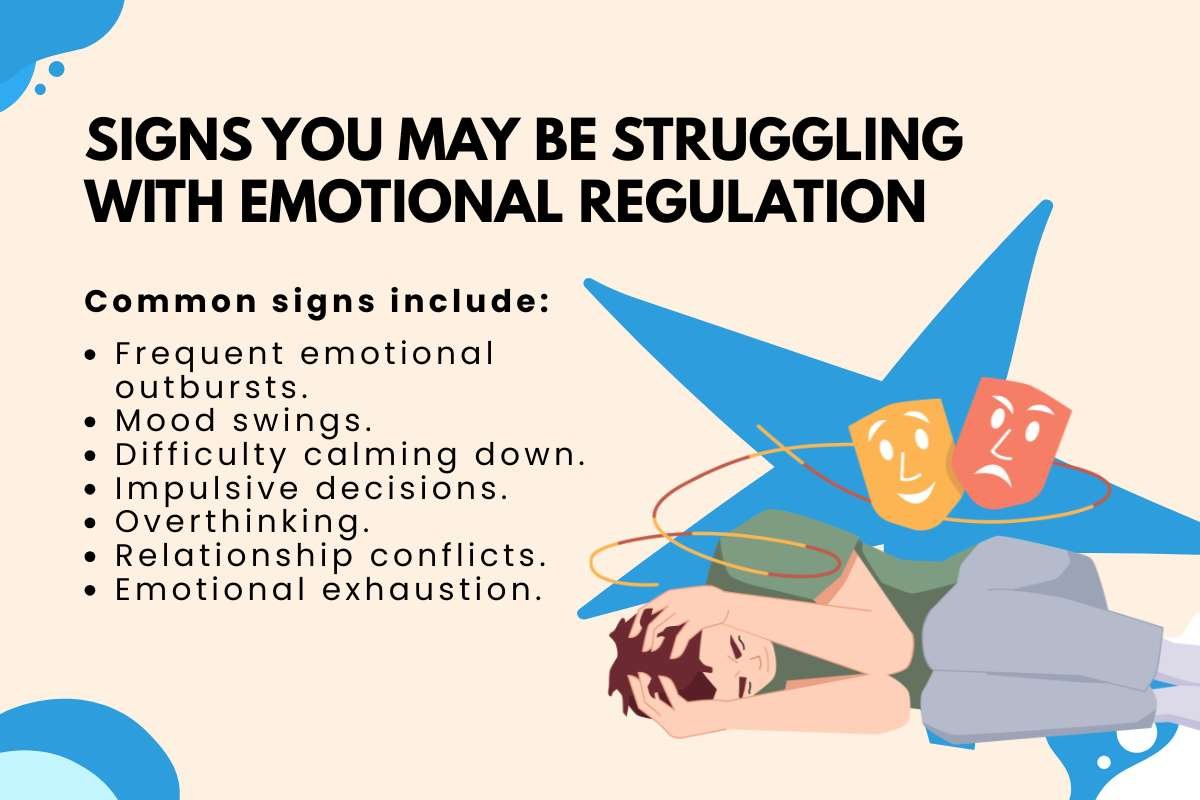
Emotional control becomes harder when stress, conflict, or repeated emotional overload turns into a chronic pattern. Over time, this can develop into emotional dysregulation in adults, where feelings feel too intense, last too long, or are hard to control.
Common signs include:
- Frequent emotional outbursts.
- Mood swings.
- Difficulty calming down.
- Impulsive decisions.
- Overthinking.
- Relationship conflicts.
- Emotional exhaustion.
These signs can affect work, relationships, and daily functioning. Especially when emotions seem to “take over” more often than they should. Noticing these patterns early can make it easier to get support and build healthier coping skills.
Emotional Regulation vs Emotional Suppression:
| Emotional Regulation | Emotional Suppression |
| Acknowledges emotions | Avoids emotions |
| Improves resilience | Increases stress |
| Supports mental health | Can worsen distress |
| Encourages awareness | Encourages avoidance |
Emotional regulation is the ability to recognize and process emotions healthily. Suppression is when you push them away or pretend they don’t exist. This is important because regulation is tied to better mental health, clearer thinking, and more stable relationships, whereas suppression can build tension and prolong distress. Healthy emotional control over time helps people respond and not react, supporting long-term well-being.
In relationships, regulation helps people communicate calmly, resolve conflict, and stay connected during stress. Suppression may look calm on the outside, but it often leaves problems unresolved and can create distance between people.
When Does Emotional Dysregulation Require Professional Support?

Emotional Dysregulation means emotions feel too intense, last too long, or are hard to control. It can be linked to anxiety, depression, PTSD, trauma, chronic stress, or other mental health conditions.
Seek professional support when emotions start affecting daily functioning, such as work, sleep, or relationships. It is also important to get help if distress is persistent, getting worse, or leading to self-destructive behaviors like self-harm or thoughts of harming yourself or others.
Treatment usually depends on the cause. Common options include therapy, such as CBT or DBT, medication for underlying conditions, and lifestyle changes like better sleep, stress management, and routine support.
Early help matters because the right treatment can improve coping, reduce distress, and support healthier emotional control over time.
Conclusion
Emotional regulation isn’t about suppressing feelings. It’s about observing them, making a choice about how to respond, and acting in line with what is important to you. The more you develop this skill, the more you reduce stress. It also sharpens your decision-making and improves your relationships. This allows you to move away from reactive, less productive patterns of thinking and living and into steadier, more purposeful directions. Start with small daily practices: pause, breathe, name the feeling, and take one positive step. Progress tracking: small wins add up. If your feelings are threatening to interfere with your work, sleep, or relationships, consider talking to someone professionally.
Want to try one simple regulation technique today? Pick one and see how different you are by the end of the week.
People also ask
1. What are the 4 R’s of emotional regulation?
The 4 R’s of emotional regulation provide a sequential framework to shift from emotional reactivity to an intentional response. They stand for: Recognize the feeling, relax the body, reframe the thoughts, and respond constructively.
2. What is an example of emotional regulation?
It is the ability to monitor and manage your feelings and behavioral reactions.
3. Which organ is connected to anger?
In Traditional Chinese Medicine (TCM), anger is directly connected to the liver.
4. What is the hardest emotion to control?
While the “hardest” emotion varies by person, psychology and mental health experts widely consider anger and anxiety to be the most difficult to control.
5. What does ADHD emotional dysregulation look like?
ADHD emotional dysregulation looks like an inability to manage the intensity and duration of emotions.
Links and Sources: