Key Takeaway:
- 592 California countertop workers developed silicosis from 2019 to June 2026; 31 died and 65 needed lung transplants.
- Engineered stone can contain more than 90% silica, whose fine dust can cause irreversible lung damage when inhaled.
- California is considering stronger regulations, with officials examining Australia’s 2023 engineered-stone ban as a possible model.
California health officials report that the state has now confirmed 592 Silicosis Cases among quartz countertop fabrication workers from January 2019 through June 2026, including 31 deaths and 65 lung transplants, as officials warn the toll is likely higher.
Cases rise among young countertop workers
The California Department of Public Health released the findings Aug. 12, showing a sharp rise in silicosis among workers who cut, grind and finish engineered stone countertops, part of a wider pattern of airborne particles harming respiratory health. About half of the reported cases are in Los Angeles County.
The median age at diagnosis is 46, while the median age among workers who died is 52. Men account for 99% of the reported cases, according to the department.
The figures likely underestimate the true burden because some workers remain undiagnosed or receive diagnoses late, health officials said. California began treating silicosis as a reportable disease in 2025 to improve surveillance and identify silicosis cases among affected workers.
Silica dust creates deadly workplace risk
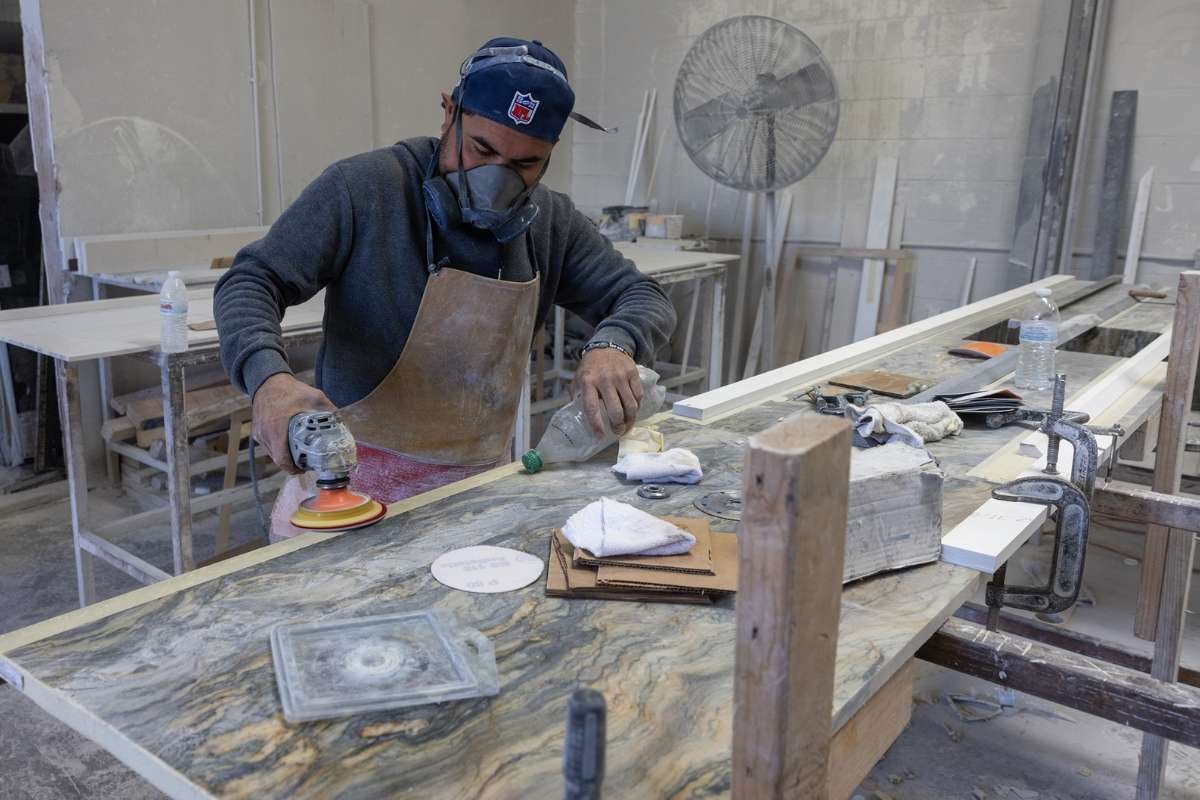
Engineered stone, commonly called quartz, can contain more than 90% silica. Cutting and finishing the material can release respirable crystalline silica dust that, when inhaled, can cause silicosis, an incurable lung disease.
The California Department of Public Health says workers who cut, saw, grind, drill or polish engineered stone are at risk. The disease can progress to severe lung damage, disability and death.
“Hundreds of workers have been sickened making quartz countertops, a product we do not need,” David Michaels, a co-author of the report and professor at the George Washington University Milken Institute School of Public Health, said in a release.
Michaels said the California cases suggest that thousands of additional cases could exist across the country. He urged health care providers and public health departments to identify cases and help prevent further exposure.
Treatment options are limited. California health officials recommend preventing additional silica exposure, along with supportive care such as bronchodilators and supplemental oxygen when needed. Lung transplantation may be required when respiratory failure progresses.
California considers tougher countertop rules
California officials are working on regulatory and legislative measures in response to the rising number of cases. The state already requires protections designed to reduce workers’ exposure to respirable crystalline silica.
The report, detailed in a peer-reviewed NEJM Evidence study, points to Australia as a potential model. Australia became the first country to ban engineered stone nationwide in 2023, citing the risk of silica-related disease among workers.
California’s surveillance data show the problem has grown rapidly. The department previously reported 432 confirmed cases, 48 lung transplants and at least 25 deaths through November 2025.
The latest silicosis cases underscore the continuing health risks faced by workers who fabricate engineered stone countertops and the challenges of preventing exposure to silica dust.