
Ultra-processed foods make up roughly 57% of calories in the average American diet. Diets high in them are linked to higher risks of heart disease, type 2 diabetes, and early death. So which unhealthy foods to avoid? The foods most worth limiting are typically high in added sugar, sodium, saturated or trans fats, and refined carbohydrates, particularly when eaten frequently. No single food makes or breaks your health, though. Frequency, portions, preparation, and your overall eating pattern matter more.
This guide identifies common culprits, explains the nutritional concern behind each, and offers realistic swaps, with evidence-based advice and no guilt or rigid rules.
Table of Contents
15 Unhealthy Foods to Avoid and Healthier Alternatives
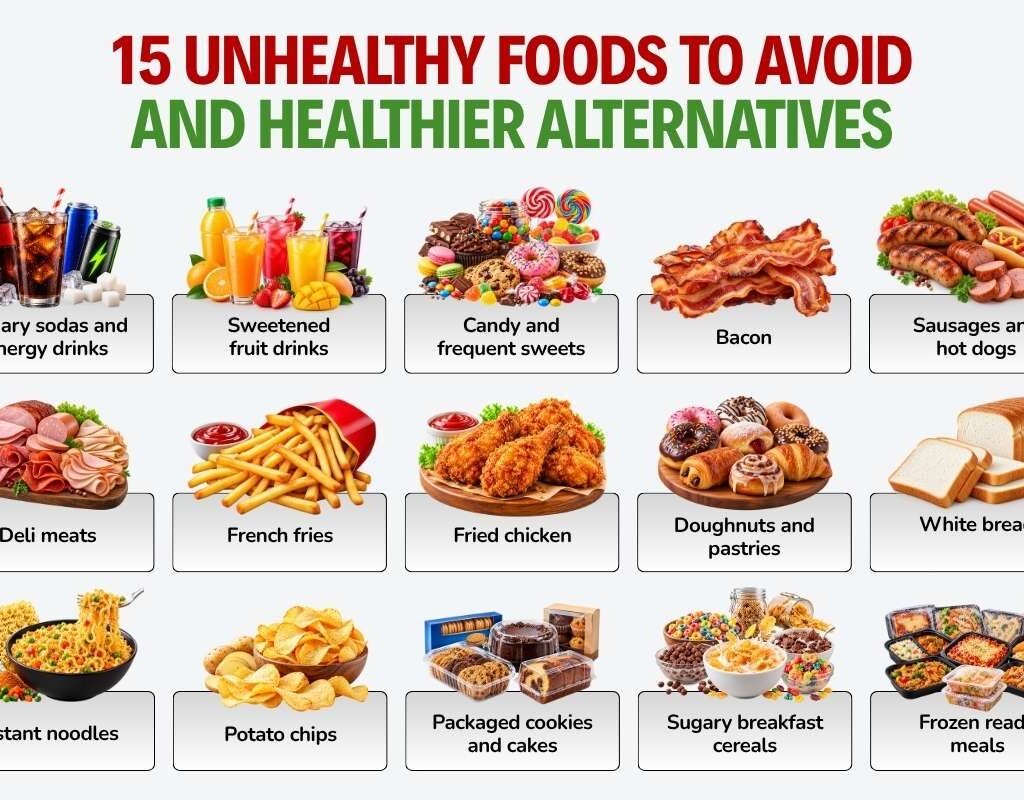
- Sugary sodas and energy drinks: liquid sugar, low satiety. Swap: water.
- Sweetened fruit drinks: Often contain added sugar and provide less fiber than whole fruit. Swap: Whole fruit and water; choose 100% juice in modest portions when preferred.
- Candy and frequent sweets: sugar without nutrients. Swap: fresh fruit.
- Bacon: high sodium; processed meat is linked to colorectal cancer. Swap: eggs.
- Sausages and hot dogs: salty and heavily processed. Swap: beans or lentils.
- Deli meats: sodium-heavy. Swap: home-cooked chicken.
- French fries: deep-fried and energy-dense. Swap: baked potatoes.
- Fried chicken: Often higher in calories because of the coating and frying method; nutritional content varies by cut and oil. Swap: Grilled or baked chicken.
- Doughnuts and pastries: refined flour, sugar, and saturated fat. Swap: oats.
- White bread: less fiber than whole grains. Swap: whole-wheat atta.
- Instant noodles: refined carbs and high sodium. Swap: brown rice.
- Potato chips: salt and unhealthy fats. Swap: roasted chickpeas.
- Packaged cookies and cakes: sugar plus saturated or trans fats. Swap: nuts.
- Sugary breakfast cereals: added sugar, little fiber. Swap: plain oats.
- Frozen ready meals: often high in sodium. Swap: homemade meals.
These are priorities for reduction, not a universal ranking of “worst” foods. Processing alone does not make a food unhealthy. Processed meat is a specific category with stronger health concerns than minimally processed foods.
| Food category | Main concern | Better comparison |
| Sugary drinks | Added sugars, low satiety | Water or unsweetened drinks |
| Processed meats | Sodium; evidence linking intake to colorectal cancer | Beans, lentils, eggs, or less-processed protein |
| Deep-fried foods | High energy density; potentially unfavourable fats | Baked, grilled, or roasted foods |
| Refined grains | Less fiber than whole grains | Oats, whole-wheat atta, brown rice |
| Packaged snacks | Often high in sodium, sugar, or saturated fat | Nuts, fruit, or roasted chickpeas |
Nutrient composition and how often you eat a food matter more than its marketing label, so the unhealthy foods to avoid are best judged by what’s actually in them, not what the package claims. Replace one less-helpful item at a time with a higher-fiber, lower-sodium, or unsweetened option.
How Much Sugar, Salt, and Saturated Fat Is Too Much?
The WHO recommends keeping free sugars below 10% of daily energy, ideally under 5%; for a 2,000-calorie diet, 10% is about 50 g or 12 teaspoons. Adults should have less than 5 g of salt daily, equal to under 2 g of sodium. Keep saturated fat below 10% and trans fat below 1% of total energy; avoid industrially produced trans fats.
These are overall daily dietary benchmarks, not cutoffs for a single food or serving. When checking common unhealthy foods to avoid, read the serving size, ingredient list, and nutrition panel. Pay particular attention to added sugars, sodium, and saturated fat instead of relying on front-of-pack claims alone.
How Do Unhealthy Foods to Avoid Affect Long-Term Health

Long-term health effects depend more on your overall eating pattern than any single meal. Excess sodium can raise blood pressure, while replacing saturated and trans fats with unsaturated fats supports healthier blood lipid levels.
Frequent sugary drinks and energy-dense foods can make balanced energy intake harder to maintain, affecting weight and blood-sugar management. Diets low in fiber-rich plant foods may offer less support for a diverse gut microbiome; fiber interacts with gut bacteria and is linked to better metabolic and heart health.
Higher processed-meat consumption is associated with a greater risk of colorectal cancer. This does not mean that eating one serving will inevitably cause disease; overall intake and long-term dietary patterns matter. Reducing processed meat, adding fiber, and choosing unsaturated fats can support a diet for cancer prevention, foods for gut health, a diet for diabetes, and an anti-inflammatory diet.
How to Replace Unhealthy Foods Without Restrictive Dieting
The foods most worth limiting are typically high in added sugar, sodium, saturated or trans fats, and refined carbohydrates, particularly when eaten frequently.
Start with one food or drink you consume often. Compare its nutrition label with a similar option, then make one realistic swap, such as replacing soda with water, white bread with whole-wheat bread, or chips with unsalted nuts. Repeat the change until it becomes a habit.
Rather than focusing only on unhealthy foods to avoid, add vegetables, fruit, beans or lentils, and whole grains to meals you already enjoy. The Dietary Guidelines recommend small, doable “shifts” that fit your personal and cultural preferences, rather than an overnight overhaul.
Choose swaps that suit your budget, cooking time, and taste. You do not need to eliminate every treat. Consistent substitutions and more nutrient-dense foods matter most.
Which Healthy Diets Help You Make Better Choices?

Several flexible eating patterns can guide better choices without strict rules. The Mediterranean diet emphasizes vegetables, fruits, whole grains, beans, nuts, and unsaturated fats such as olive oil. The DASH diet prioritizes produce, whole grains, and lower sodium, making it useful for blood-pressure management.
A diabetes-friendly diet focuses on carbohydrate quality, portion sizes, and individualized glucose management. An anti-inflammatory diet emphasizes overall dietary quality rather than claiming specific foods cure inflammation. Blue Zone eating patterns offer plant-rich traditional examples, but diet alone does not explain longevity.
When comparing these patterns, look past unhealthy foods to avoid and focus on what to add: fiber-rich plants, legumes, whole grains, nuts, and unsaturated fats. The best pattern is one you can maintain within your budget, culture, and preferences.
Conclusion:
Choosing better doesn’t require a perfect diet. The unhealthy foods to avoid are mainly sugary drinks, processed meats, deep-fried items, refined grains, and packaged snacks that stack up sugar, sodium, and saturated fat. But no single food decides your health. What counts is the pattern you repeat most days.
Start small: swap one daily item for a higher-fiber, lower-sodium, or unsweetened option, then build from there. Add more vegetables, beans, whole grains, and nuts to meals you already enjoy, and let the treats stay in balance.
Pick one swap today and try it this week. Small, steady changes add up.
FAQ:
1. What is the unhealthiest food to eat every day?
There is no single unhealthiest food, but regularly consuming sugar-sweetened drinks or foods high in sodium and unhealthy fats can undermine overall dietary quality.
2. Are all processed foods unhealthy?
No, foods such as frozen vegetables, canned beans, and plain yogurt can be nutritious, while some highly processed products are high in sodium, added sugar, or saturated fat.
3. Which unhealthy foods should people with diabetes avoid?
People with diabetes may benefit from limiting sugary drinks, frequent sweets, and refined carbohydrates while considering portions and overall carbohydrate intake.
Links and Sources:
- https://www.nhlbi.nih.gov/news/2025/nih-supported-dash-diet-named-best-heart-healthy-diet-and-best-diet-high-blood-pressure
- https://odphp.health.gov/sites/default/files/2019-10/DGA_Recommendations-At-A-Glance.pdf
- https://www.cdc.gov/salt/sodium-potassium-health/index.html
- https://www.who.int/publications/m/item/healthy-diet-factsheet394
- https://professional.heart.org/en/science-news/2026-dietary-guidance-to-improve-cardiovascular-health/top-things-to-know