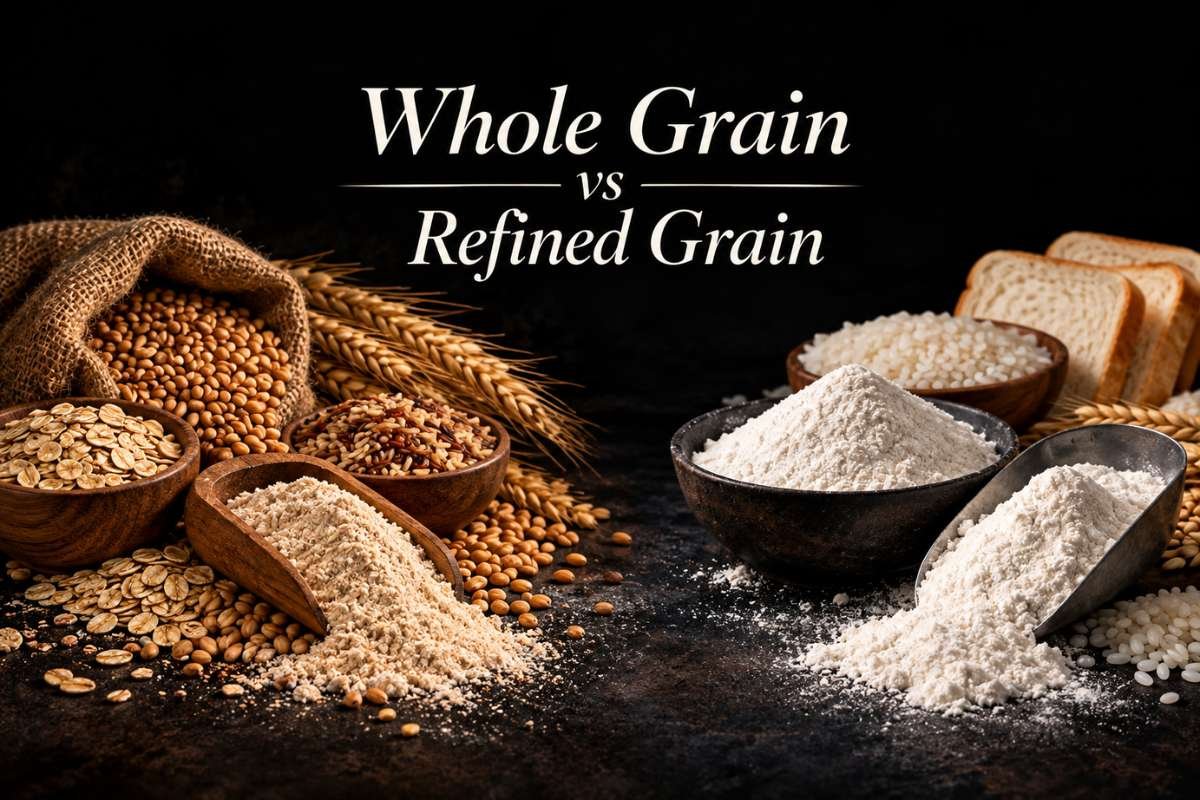
Whole grains are generally the better everyday choice because they keep the bran, germ, and endosperm, giving them more fiber and nutrients than refined grains. But does whole grain vs refined grain really change blood sugar? One meta-analysis linked 3-5 daily servings of whole grains to a roughly 26% lower type 2 diabetes risk. What happens to your gut microbiome when bran and germ are stripped away? Is brown rice truly different from white? Processing alters fiber, micronutrients, and digestion speed.
So this guide connects grains to foods for gut health, diet for diabetes, high-fibre foods, and low-glycemic-index foods.
Table of Contents
Whole Grain vs Refined Grain: What’s the Difference?
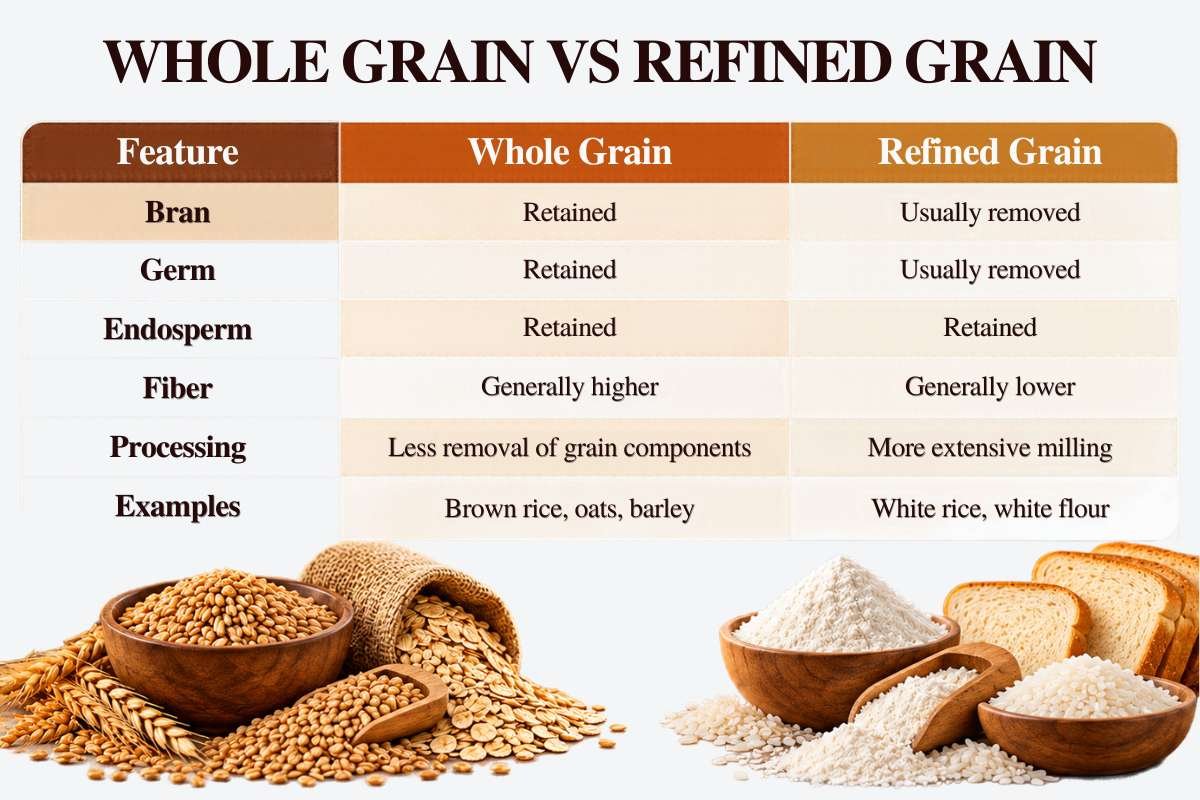
Whole grains contain the entire grain kernel, while refined grains retain mainly the starchy interior. In Whole Grain vs Refined Grain comparisons, whole grains generally provide more fiber and naturally occurring nutrients, while refined grains are smoother, softer, and last longer on the shelf.
| Feature | Whole Grain | Refined Grain |
| Bran | Retained | Usually removed |
| Germ | Retained | Usually removed |
| Endosperm | Retained | Retained |
| Fiber | Generally higher | Generally lower |
| Processing | Less removal of grain components | More extensive milling |
| Examples | Brown rice, oats, barley | White rice, white flour |
The Three Grain Parts
A whole grain has three parts: the bran (outer layer, rich in fiber, B vitamins, minerals, and plant compounds), the germ (the embryo, with vitamins, antioxidants, and healthy oils), and the endosperm (the largest part, mostly starch and some protein). Refining strips away the bran and germ, which gives a finer texture and longer shelf life but removes much of the fiber and some micronutrients. Enriched and fortified grains add some nutrients back, yet usually still have less fiber than whole grains. “Whole grain” also covers oats, brown rice, barley, and corn, not just whole wheat. Because fiber helps you feel full longer, swapping refined foods for whole grains may support a healthy diet plan for weight loss.
Which Grain Is Better for Blood Sugar and Glycemic Response?
Whole grains generally have a metabolic advantage, but “whole grain” does not automatically mean “low GI.” The glycemic index (GI) shows how quickly a carbohydrate-containing food raises blood sugar, while glycemic load (GL) also considers the amount eaten.
Fiber can slow digestion, but grain structure matters too. Intact or coarsely processed grains usually digest more slowly than finely milled flour because their particle size limits starch exposure. Milling, cooking, and other processing can make carbohydrates easier to digest. Portion size also matters, while protein, fat, and fiber in a mixed meal can reduce or slow the overall glucose rise. Therefore, two whole-grain foods can produce different responses.
In whole grain vs refined grain comparisons, less-processed whole grains often perform better. However, a controlled trial found no significant difference in glycemic response between matched whole-wheat and refined-wheat products, showing that milling, particle size, and food structure matter alongside the whole/refined label. Another trial found that less-processed whole grains produced lower post-meal glucose responses than finely milled whole grains.
If you’re managing diabetes, ask three questions: How processed is it? How much am I eating? What am I eating with it? Choose intact grains, sensible portions, and balanced meals rather than relying on the label alone. This approach is more useful than simply choosing foods marketed as low glycemic index foods.
How Do Whole and Refined Grains Affect Gut Health and the Microbiome?
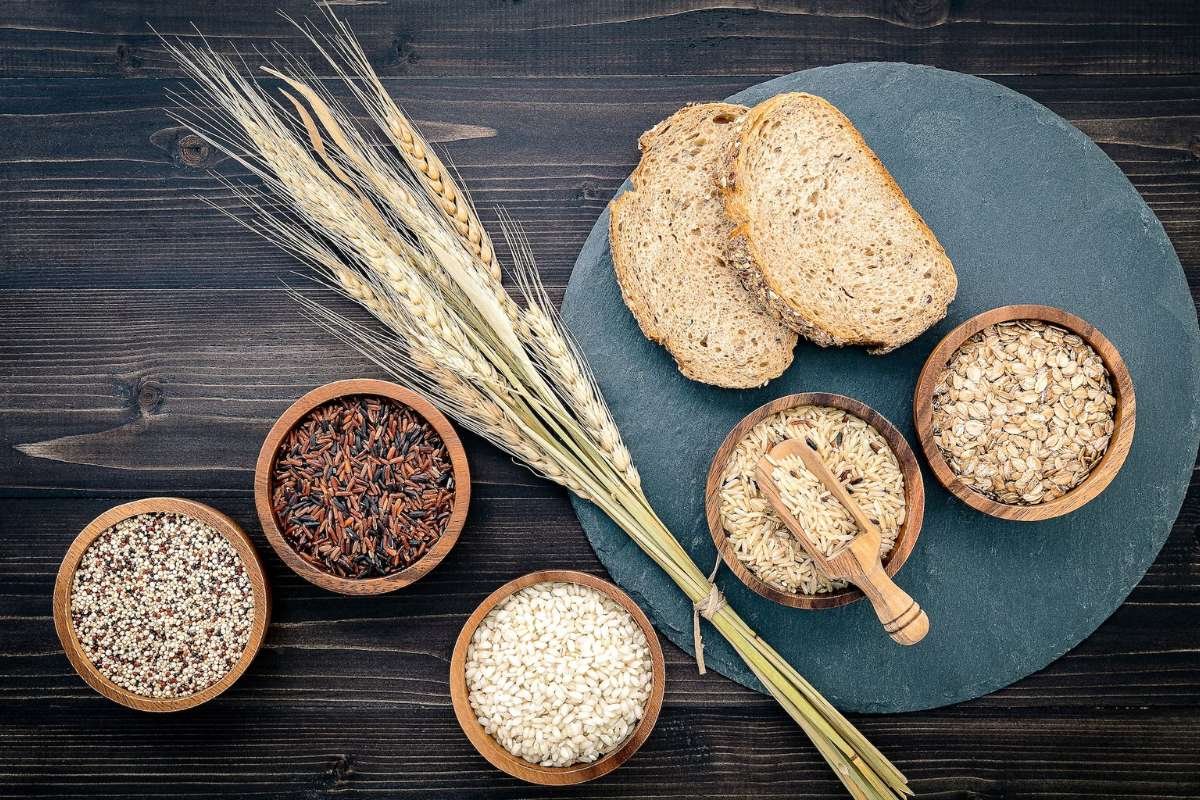
Some fiber in whole grains is not digested in the small intestine. It reaches the colon, where gut microbes use it as a food substrate and ferment it into short-chain fatty acids (SCFAs). Refined grains contain less fiber, so they provide less material for this process.
- Acetate: The most abundant SCFA; it can be used by tissues for energy.
- Propionate: Produced during fiber fermentation and involved in energy metabolism.
- Butyrate: An important fuel for colon cells and a key marker of fiber fermentation.
In whole grain vs refined grain research, human trials show a possible gut-health advantage, but not a universal “microbiome fix.” A 2023 randomized crossover trial found that whole grains increased fecal butyrate and stool frequency compared with refined grains. Another trial reported modest changes in microbial composition. An eight-week study found no major microbiome changes, although blood butyrate was higher after whole-grain intake.
Whole grains may also increase stool bulk and support bowel regularity. Increase high-fiber foods gradually and drink enough fluids to reduce the risk of bloating or constipation. Oats, barley, brown rice, and whole wheat can fit naturally into a diet focused on Foods for Gut Health, including other prebiotic foods. Their effects vary because different fibers feed different microbes.
Brown Rice vs White Rice: Does the Difference Matter?
Brown and white rice come from the same grain, but brown rice retains the bran and germ. White rice has these layers removed, making it softer and quicker to cook.
| Feature | Brown Rice | White Rice |
| Bran | Retained | Removed |
| Germ | Retained | Removed |
| Fiber | Higher | Lower |
| Processing | Less refined | More refined |
| Texture | Chewier | Softer |
| Cooking time | Usually longer | Usually shorter |
One cup of cooked long-grain brown rice provides more than 3 grams of fiber, compared with less than 1 gram in white rice. Fiber may improve fullness and digestion, and the bran and germ also provide additional nutrients.
In the whole grain vs refined grain discussion, Harvard reports observational evidence linking five or more weekly servings of white rice with a 17% higher type 2 diabetes risk. Two or more weekly servings of brown rice were linked with an 11% lower risk. These findings show an association, not proof that rice alone causes or prevents diabetes. Replacing some white rice with whole grains may be beneficial.
How to Choose Whole or Refined Grains at the Grocery Store

Do not judge a product by color. Brown bread may contain coloring but little whole grain. In the whole grain vs refined grain comparison, the ingredient list and Nutrition Facts panel are more reliable than appearance.
What to Check
- Read the first ingredients: Look for “whole wheat,” “whole oats,” or another whole-grain ingredient near the beginning. Ingredients are listed by weight, so the first ingredients make up the largest share of the product.
- Check fiber: Compare fiber per serving. A product labeled whole grain may still provide modest fiber, depending on the recipe and serving size.
- Review the rest of the label: Whole grains do not automatically make a packaged food healthy. Check for added sugar, high sodium, and excess saturated fat.
Common Indian Choices
- Whole or less refined: Daliya, oats, brown rice, whole-wheat atta, barley, and millets.
- Usually refined: Maida-based breads, white rice, and products made mainly with refined wheat flour.
These categories are useful starting points, not health verdicts. Plain oats may be a better choice than a sugary whole-grain cereal, while a moderately portioned white-rice meal with dal and vegetables can still fit a balanced diet. Choose foods based on their ingredients, fiber, preparation, portion, and overall meal, not one label or color.
Conclusion:
Whole grain vs refined grain isn’t about banning one and praising the other. Whole grains keep the bran and germ, so they usually offer more fiber, nutrients, and fermentable fiber for gut microbes. But processing, portion size, and pairings matter too: a moderate bowl of white rice with dal and vegetables can fit a balanced diet, while a sugary “whole grain” cereal may not.
Start small: swap one refined staple a day, like maida bread or white rice, for oats, daliya, or whole-wheat atta. Try one swap at your next meal and notice how you feel.
FAQ:
1. What is the main difference between whole grain vs refined grain?
Whole grains retain the bran, germ, and endosperm, while refined grains generally have the bran and germ removed.
2. Are whole grains healthier than refined grains?
Generally, whole grains provide more fiber and naturally occurring nutrients, making them the preferred choice more often in a balanced diet.
3. Is brown rice healthier than white rice?
Brown rice generally provides more fiber and retains more of the grain’s original components, but overall diet, portion size, and meal composition also matter.
Links and Source:
- https://foodbuyingguide.fns.usda.gov/foodcomponents/resourcegrains
- https://pmc.ncbi.nlm.nih.gov/articles/PMC6498460
- https://nutritionsource.hsph.harvard.edu/what-should-you-eat/whole-grains/
- https://www.sciencedirect.com/science/article/pii/S0002916522002180
- https://pmc.ncbi.nlm.nih.gov/articles/PMC9498509
- https://www.heart.org/en/news/2022/03/29/rounding-up-healthy-rice-choices