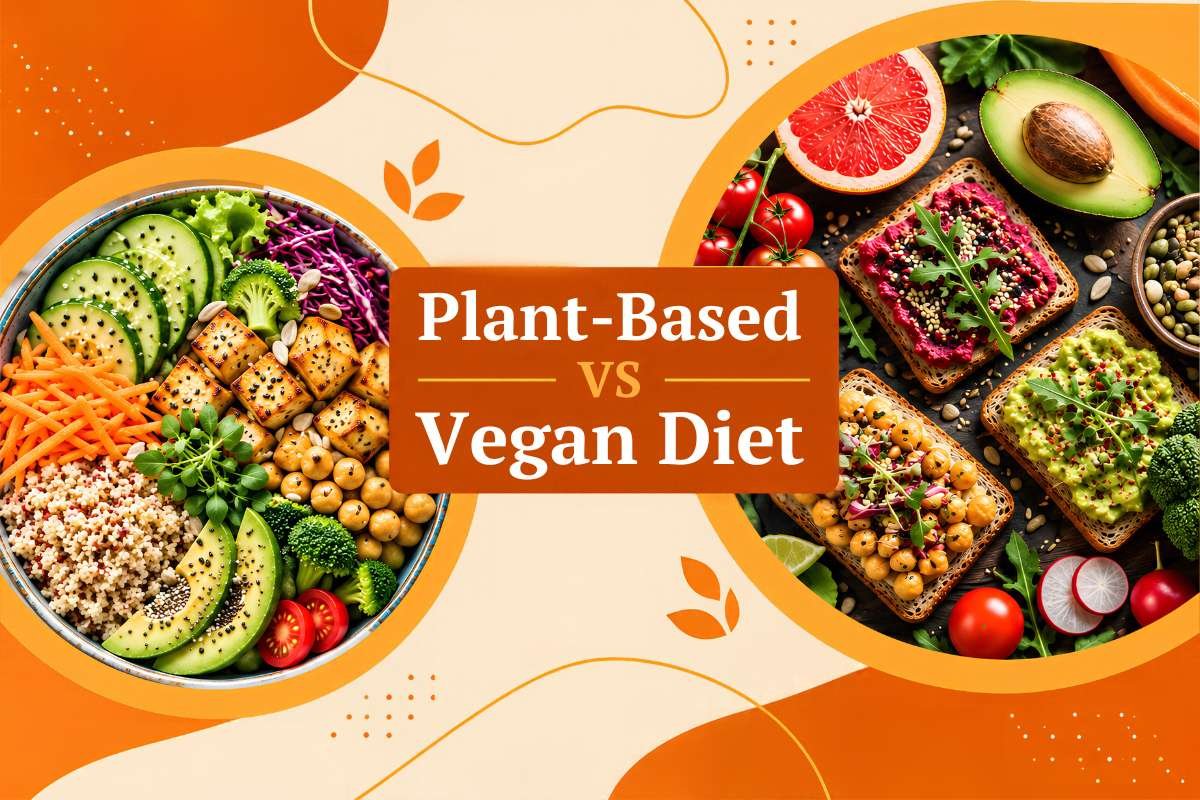
Plant-based vs vegan diets overlap, but they aren’t the same. Plant-based eating emphasizes mostly plant foods and may include some meat, dairy, or eggs. Veganism excludes all animal-derived foods and often extends into lifestyle choices. Most guides stop there. The better question is whether that difference changes protein adequacy, nutrient risks (A vegan diet needs a reliable vitamin B12 source), health outcomes, flexibility, and long-term sustainability. In one large analysis, vegetarian-style diets were linked to roughly 15% lower heart disease risk.
This head-to-head comparison weighs each factor, so you can choose the approach that fits your goals instead of chasing a universal winner.
Table of Contents
Plant-Based vs Vegan Diet: What’s the Difference?
The main difference is that plant-based describes an emphasis on plant foods, while vegan describes the exclusion of animal products. Therefore, a vegan diet is always plant-based, but a plant-based diet is not always vegan.
What Is a Plant-Based Diet?
A plant-based diet focuses mostly or primarily on fruits, vegetables, beans, lentils, whole grains, nuts, seeds, and other plant foods. It may exclude animal products completely, but some people still eat small amounts of meat, fish, dairy, or eggs.
“Plant-based” has no single universally standardized definition. It can describe different eating patterns. A whole-food, plant-based diet places greater emphasis on minimally processed foods and may limit refined grains, added oils, sugar, and processed meat substitutes.
Plant-based eating exists on a spectrum. For example, a flexitarian diet is mainly plant-based but allows animal foods occasionally.
What Is a Vegan Diet?
A vegan diet excludes meat, poultry, fish, seafood, dairy, eggs, and other animal-derived ingredients. Many vegans also avoid honey, gelatin, and other animal-based products.
“Vegan” can also describe a lifestyle, not just a diet. Vegan lifestyles generally avoid animal-derived clothing, cosmetics, and products tested on animals. People may choose veganism for ethical reasons. Others follow a vegan diet primarily for health or environmental concerns.
What Can You Eat on a Plant-Based vs Vegan Diet?
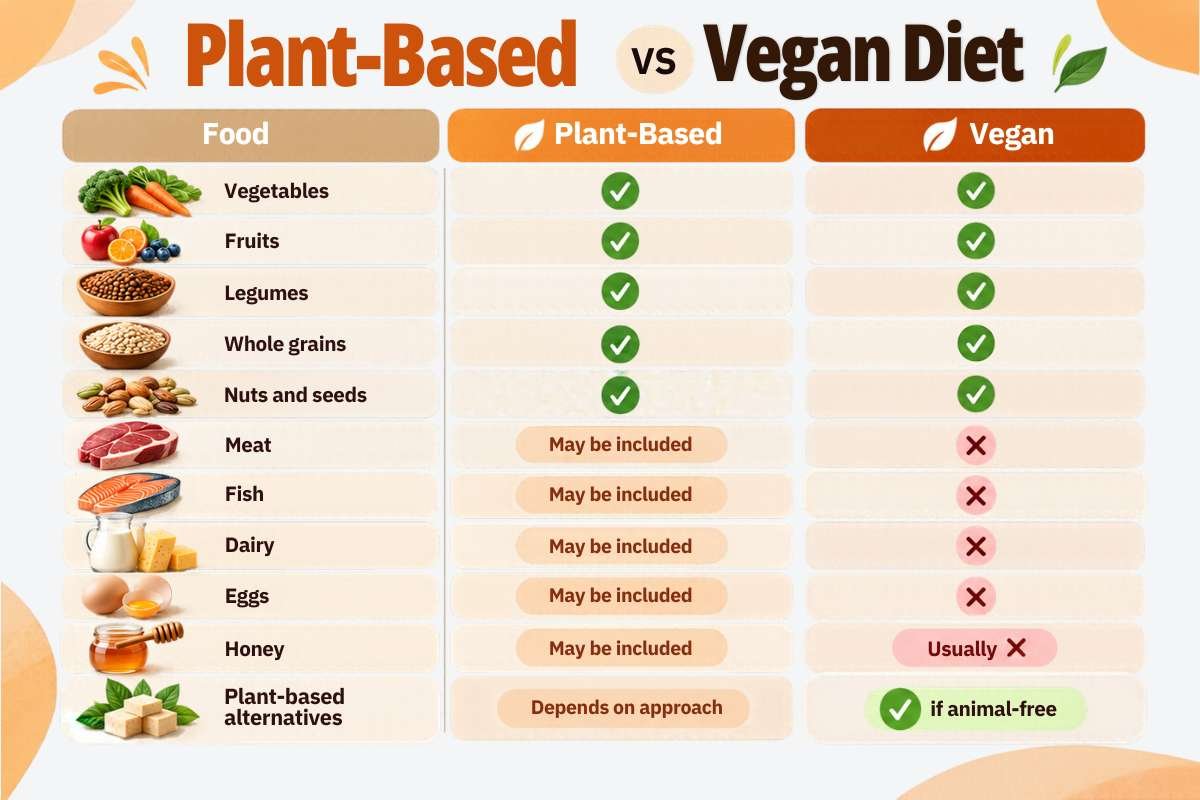
Both diets can include vegetables, fruits, legumes, whole grains, nuts, and seeds. However, the key difference in the Plant-Based vs Vegan Diet comparison is that plant-based eating may allow some animal foods, while vegan eating excludes them completely.
| Food | Plant-Based | Vegan |
| Vegetables | ✓ | ✓ |
| Fruits | ✓ | ✓ |
| Legumes | ✓ | ✓ |
| Whole grains | ✓ | ✓ |
| Nuts and seeds | ✓ | ✓ |
| Meat | May be included | ✗ |
| Fish | May be included | ✗ |
| Dairy | May be included | ✗ |
| Eggs | May be included | ✗ |
| Honey | May be included | Usually ✗ |
| Plant-based alternatives | Depends on approach | ✓ if animal-free |
Plant-based meals may include high fibre foods such as beans, lentils, oats, fruits and vegetables. Depending on the approach, they may also include meat, fish, dairy or eggs. Vegan meals use plant milks, tofu, beans, grains and meat-free alternatives instead. Check labels because some products contain milk, eggs, honey, or other animal-derived ingredients.
Where Whole-Food, Plant-Based Fits:
Vegan diets can still include processed foods, while whole-food, plant-based eating centers on minimally processed ones. For weight loss, build meals around vegetables, legumes, whole grains, and fruit. If you’re just starting, add more plants first before cutting out animal foods.
Protein and Nutrient Adequacy: Where Does Planning Matter More?
Yes. Adequate protein is achievable on both diets when meals are planned well. Lentils, beans, chickpeas, tofu, tempeh, soy foods, peas, nuts, seeds, and whole grains can all contribute protein.
In the plant-based vs vegan diet comparison, protein adequacy depends more on food choices and total intake than on the label itself. A vegan diet may require more deliberate planning because it excludes dairy, eggs, meat, and fish.
Nutrients That Deserve More Attention
As animal foods are eliminated, pay closer attention to:
- Vitamin B12, usually from fortified foods or supplements.
- Iron and zinc, found in legumes, tofu, seeds, nuts and whole grains.
- Calcium, from fortified plant milks, calcium-set tofu and leafy greens.
- Iodine, vitamin D and omega-3 fats, including foods such as flaxseeds, chia seeds and walnuts.
These nutrients are commonly highlighted when planning vegetarian and vegan diets. For more ideas, see this guide to omega-3 foods.
Individual requirements can vary with age, activity, health, and goals.
Plant-Based vs Vegan Diet: How Do They Compare for Health?

Both patterns may support health when they emphasize whole, high-fibre foods and limit saturated fat. The evidence does not support treating “vegan” as automatically healthier: diet quality and overall composition matter.
| Health outcome | Plant-based | Vegan |
| Heart health | Potential benefit when diet quality is high | Potential benefit when well planned |
| LDL cholesterol | May improve with more fibre and less saturated fat | May improve under similar conditions |
| Blood pressure | Potential benefit | Potential benefit |
| Blood glucose | Depends on overall food quality | Depends on overall food quality |
| Weight management | Can support a calorie-conscious, high-fibre pattern | Can support weight management |
| Gut health | Often higher in fibre | Often higher in fibre |
| Nutritional adequacy | Depends on the food pattern | Requires greater attention to certain nutrients |
Heart Health and Cholesterol
Oats, beans, lentils, nuts, and seeds can help lower cholesterol. Cutting saturated fat matters more than the vegan label.
Blood Sugar and Diabetes
Legumes, whole grains, and vegetables support blood sugar control, but carb portions and added sugars still matter.
Gut Health and Fibre
Plant-rich diets supply fibre, prebiotics, and probiotics. Increase fibre gradually to avoid bloating.
Brain, Mental Health and Inflammation
Plant-rich eating may support general wellbeing, but neither diet treats mental-health conditions. For less inflammation, choose minimally processed plant foods, not just the vegan label.
Does Vegan Mean Healthier? Food Quality Matters More Than the Label
A vegan diet can be healthy, but the label alone does not guarantee good nutrition. Vegan foods may include refined grains, sugary foods, fried foods, high-sodium meals, highly processed meat alternatives, and desserts. Chips, biscuits, and soft drinks can be vegan but are still best limited.
A plant-based diet that includes small amounts of fish, eggs, or dairy can also be nutrient-dense. In this comparison, food quality matters more than whether the diet is labelled vegan or plant-based. Build a healthy diet around vegetables, fruits, beans, whole grains, nuts and seeds.
Prioritize high fibre foods, such as lentils, oats, vegetables and fruit. These may support fullness, blood-sugar control and cholesterol management. Low glycemic index foods, including beans and intact whole grains, can also help provide steadier carbohydrate choices.
For foods that lower cholesterol, focus on fibre-rich foods and unsaturated fats while limiting saturated and trans fats.
Diet Quality and Cancer Prevention
A diet for cancer prevention should not promise that vegan or plant-based eating prevents cancer. However, guidance supports eating whole grains, vegetables, fruits, and beans, getting adequate fibre, and limiting processed meat. These principles can support health regardless of whether someone includes small amounts of animal foods.
Plant-Based vs Vegan Diet: Which Approach Fits Your Goals?

There is no universal winner in this debate. The best option is the one that matches your values, health needs, and ability to follow it consistently.
| If your priority is… | Consider… |
| Eating more plants without strict elimination | Plant-based |
| Avoiding all animal-derived foods | Vegan |
| A whole-food focus | Whole-food, plant-based |
| Gradually reducing meat | Plant-based or flexitarian |
| Animal welfare as a core value | Vegan |
| Maximum dietary flexibility | Plant-based |
| Cardiovascular health | Either, if well planned |
| Weight management | Either, depending on diet quality and adherence |
| Nutritional simplicity | Depends on food choices, not the label |
You don’t have to choose between two labels. Mediterranean and DASH diets are flexible, plant-forward options built around vegetables, fruits, whole grains, beans, and nuts, with modest amounts of fish, eggs, poultry, or dairy. The Diabetes Plate method can guide balanced portions, and a brain-healthy diet can be plant-forward without being fully vegan. Choose a nutritious pattern that fits your preferences and is practical long term.
How to Make Either Eating Pattern Nutritionally Balanced?
Build Meals Around Plant Protein
Include legumes, tofu, tempeh, other soy foods, nuts and seeds in regular meals. Beans, peas, and lentils provide protein, minerals, and fibre without the saturated fat found in some animal proteins.
Prioritize Whole or Minimally Processed Foods
Base meals on vegetables, fruits, legumes and whole grains. In the plant-based vs vegan diet choice, food quality matters more than the label. Limit heavily processed foods, whether or not they are vegan.
Cover Key Nutrients
Fully vegan diets need a reliable vitamin B12 source, such as fortified foods or a supplement. Also consider iron, calcium, zinc, iodine, omega-3 fats, and vitamin D through suitable foods, fortified products or supplements when appropriate.
Don’t Forget Food Variety
Rotate legumes, whole grains, vegetables, fruits, nuts, seeds, and fortified foods. Variety improves the chance of meeting nutritional needs and makes meals more enjoyable.
Transition Gradually If Needed
You do not need to change overnight. Start by replacing one meal, adding more vegetables, or choosing beans instead of meat a few times weekly. This practical approach can make how to start eating healthy easier to maintain.
Conclusion:
The plant-based vs vegan diet debate has no universal choice. Both can support heart health and weight management when built around vegetables, fruits, legumes, whole grains, nuts, and seeds. What matters most is food quality, nutrient planning (especially B12 for vegans), and whether you can stick with the approach long term.
If you eat animal foods occasionally, plant-based food offers flexibility. If animal welfare or full exclusion matters to you, veganism can work well with the right planning. Start small this week: swap one meal for a bean, lentil, or tofu-based dish, and notice how it feels.
FAQ:
1. Is a plant-based diet the same as a vegan diet?
No. A plant-based diet generally emphasizes plant foods and may allow some animal foods, while a vegan diet excludes animal-derived foods.
2. Which is healthier, plant-based or vegan?
Neither is automatically healthier. Overall food quality, nutritional adequacy, and dietary pattern matter more than the label.
3. What nutrients are harder to get on a vegan diet?
Vitamin B12 requires particular attention, while iron, calcium, zinc, iodine, vitamin D, and omega-3 fats may also require deliberate food choices or fortified foods.
4. Can a vegan diet include processed foods?
Yes. Vegan foods can be highly processed, so being vegan does not automatically mean eating a minimally processed or whole-food diet.
5. Can you be both plant-based and vegan?
Yes. A person can follow a vegan diet while also emphasizing whole or minimally processed plant foods.
Links and Sources:
- https://www.forksoverknives.com/wellness/plant-based-diet-vs-vegan-diet-whats-the-difference/
- https://vegan.org/about-veganism
- https://www.nhs.uk/live-well/eat-well/how-to-eat-a-balanced-diet/the-vegan-diet
- https://www.healthline.com/nutrition/foods-vegans-eat
- https://www.oxfordhealth.nhs.uk/wp-content/uploads/sites/24/2024/12/1.5.7.-Special-Diets-Catering-Manual-2020.pdf
- https://www.heart.org/en/healthy-living/healthy-eating/eat-smart/nutrition-basics/how-does-plant-forward-eating-benefit-your-health
- https://epi.grants.cancer.gov/wcrf-aicr-score
- https://diabetes.org/food-nutrition/meal-planning