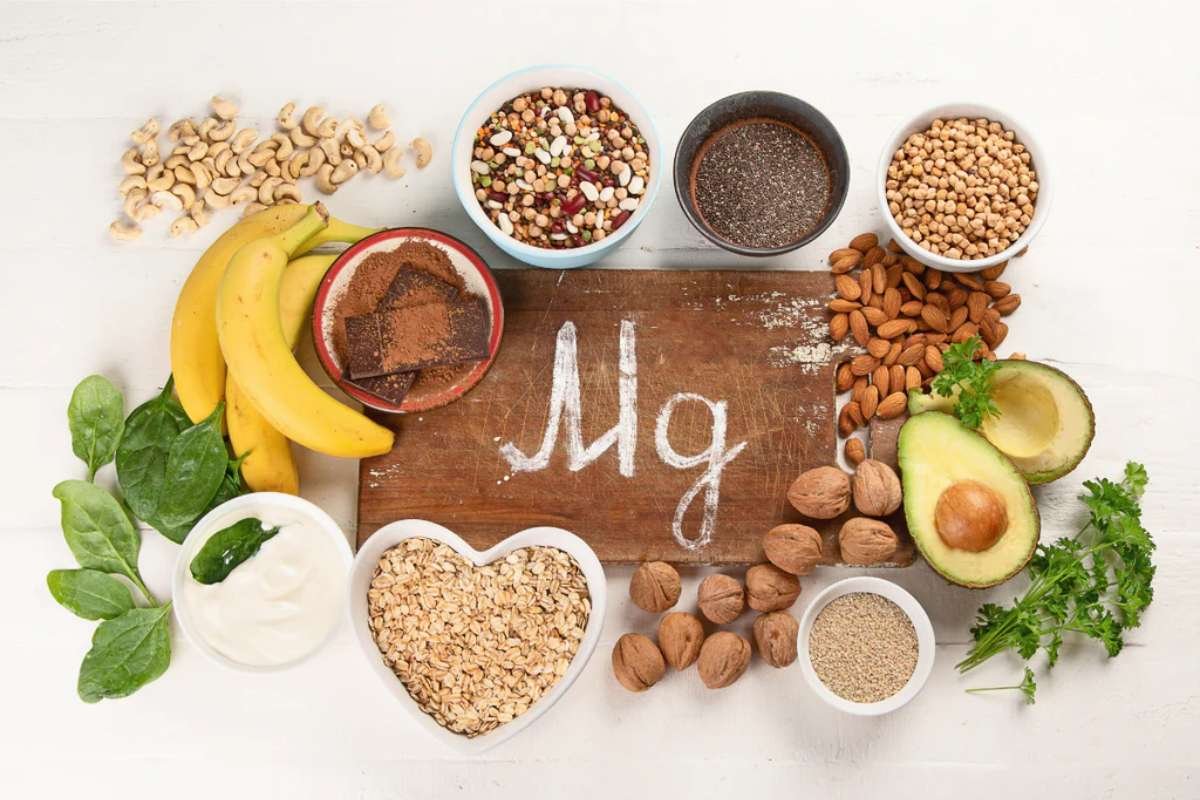
Modern diets heavy in processed foods have caused a silent global crisis. Billions of people suffer from widespread mineral deficiencies. Our body’s delicate electrolyte balance is necessary for cellular function. Along with energy production and nerve signaling. This is disrupted by stress from long workdays. Such as irregular sleep cycles and muscle fatigue from sedentary lifestyles.
This is what will change the game: Potassium and magnesium work well together. They don’t stand out on their own. Potassium maintains fluid balance and heart rhythm. Magnesium relaxes muscles and supports more than 300 enzymatic reactions. Together, they fight deficiencies affecting many adults. Did you know that, according to NIH data, about 50% of people don’t get enough magnesium each day?
Finding foods high in magnesium and potassium can help bring peace back. Your cravings, exhaustion, or mental fog may be mineral signals. It can be pleading for your attention.
Why Your Body Craves This Mineral Duo?
Your body doesn’t crave magnesium and potassium randomly. They’re essential for peak performance amid modern deficiencies. When levels dip, signals like fatigue, cramps, or irritability emerge as your system’s SOS.
Magnesium vs Potassium – Different Roles, Same Mission
Magnesium acts like a cellular powerhouse. It fuels energy production by activating ATP, the body’s energy currency. It relaxes muscles to prevent cramps. They also regulate blood sugar by enhancing insulin sensitivity. It helps calm nerve signaling to ease anxiety and support steady moods.
Potassium, meanwhile, maintains fluid balance by shuttling sodium in and out of cells. They control blood pressure. By countering sodium’s effects and regulating heart rhythm. This happens with electrical impulses that keep the beats steady.
Each excels solo, but deficiencies hit hard. Magnesium shortfall links to migraines and insomnia. In contrast, low potassium can cause hypertension.
Why do they work better together?
Competitors often list them separately, missing the magic. The synergy restores electrolyte balance. This is where magnesium and potassium team up. They help to optimize cellular hydration and function.
In the muscle contraction-relaxation cycle, potassium triggers contraction while magnesium enables smooth relaxation. Imbalanced, you get cramps or weakness. They also tame stress hormones like cortisol. Magnesium buffers the fight-or-flight response as potassium stabilizes nerve firings. Better yet, this duo enhances sleep quality. Magnesium promotes GABA for calm, and potassium supports circadian rhythms.
Studies, like those in the American Journal of Clinical Nutrition. They show that combined intake amplifies benefits. Slashing fatigue by 20-30% in deficient adults. Foods high in magnesium and potassium unlock this powerhouse partnership.
These Are Top Foods High in Magnesium and Potassium:
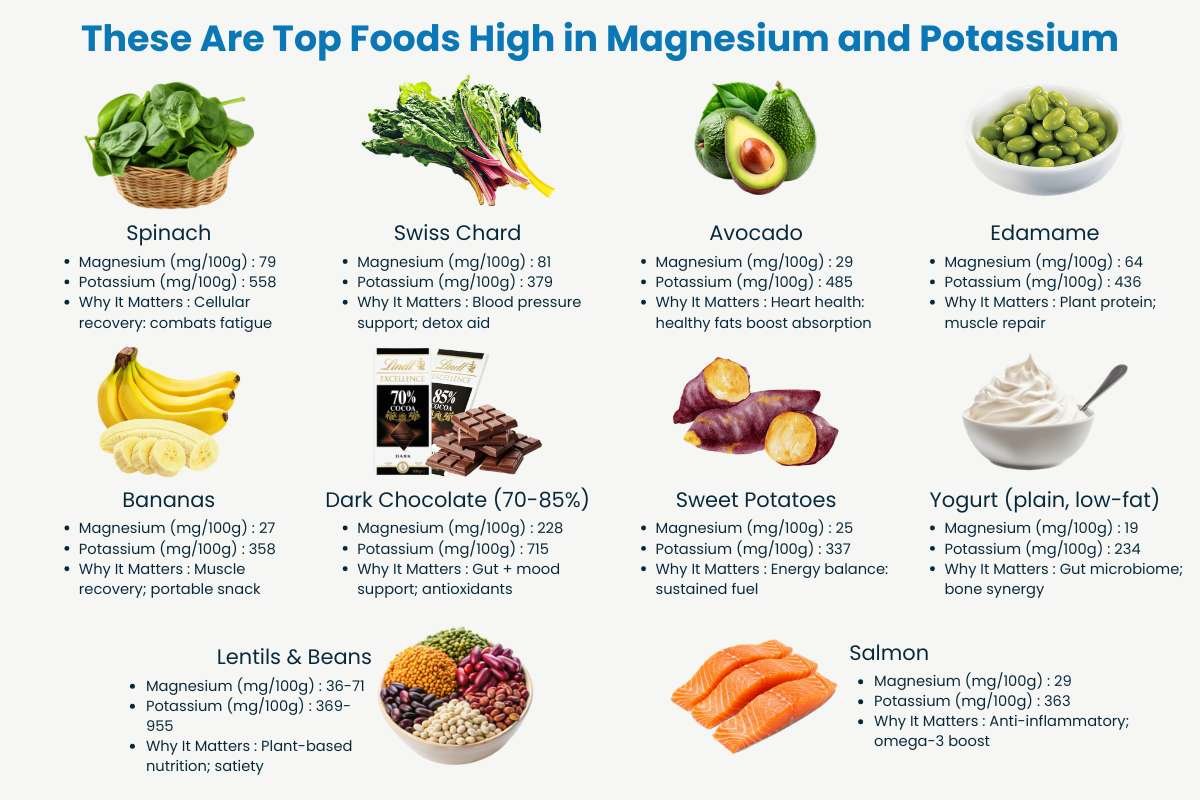
These powerful foods can help you achieve electrolyte balance. Dual-density and bioavailability are their top priorities. And USDA data support their accuracy in addressing cravings, exhaustion, and recuperation.
The Ultimate Mineral Power Foods
| Food | Magnesium (mg/100g) | Potassium (mg/100g) | Why It Matters |
| Spinach | 79 | 558 | Cellular recovery: combats fatigue |
| Swiss Chard | 81 | 379 | Blood pressure support; detox aid |
| Avocado | 29 | 485 | Heart health: healthy fats boost absorption |
| Edamame | 64 | 436 | Plant protein; muscle repair |
| Bananas | 27 | 358 | Muscle recovery; portable snack |
| Dark Chocolate (70-85%) | 228 | 715 | Gut + mood support; antioxidants |
| Sweet Potatoes | 25 | 337 | Energy balance: sustained fuel |
| Yogurt (plain, low-fat) | 19 | 234 | Gut microbiome; bone synergy |
| Lentils & Beans | 36-71 | 369-955 | Plant-based nutrition; satiety |
| Salmon | 29 | 363 | Anti-inflammatory; omega-3 boost |
Best Foods High in Magnesium and Potassium by Dietary Lifestyle:
Tailor your intake to your plate. Here’s how top picks shine across popular American diets, from NYC offices to Cali gyms.
1. Plant-Based Diets:
Load up on spinach (79 mg Mg, 558 mg K), Swiss chard, lentils/beans (up to 955 mg K), and edamame. They are completely synergistic without animal products.
2. High-Protein Diets:
Pair salmon (anti-inflammatory boost) with yogurt and edamame. This helps delivers 20g+ protein per serving alongside mineral power.
3. Keto Diet:
Avocados, dark chocolate, and spinach fit low-carb macros perfectly. Fueling ketosis with fats and electrolytes.
4. Paleo Diet:
Sweet potatoes, salmon, and Swiss chard. They align with whole-food rules, no grains, and all recovery.
5. Fitness & Athletic Diets:
Sweet potatoes for glycogen reload, bananas for pre-workout potassium, and Swiss chard post-sweat. This helps fuel recovery and curbs cramps.
These segmentations make foods high in magnesium and potassium accessible nationwide. They are boosting adherence coast-to-coast.
Foods That Secretly Deplete Magnesium and Potassium:

Even top foods high in magnesium and potassium lose impact. If counteracted by depleters. Modern habits silently drain these minerals. Here’s what to dodge, per NIH and Journal of Nutrition data.
- Ultra-Processed Foods: Chips, sodas, and fast food spike sugar and additives. They also increase urinary excretion by 20-30%. They lack synergy, worsening deficiencies.
- Excess Caffeine: Coffee/tea beyond 400mg daily acts as a diuretic. It is flushing 10-15% more potassium and magnesium. Common in high-stress routines.
- Alcohol: Beer or spirits disrupt gut absorption and boost excretion. One study shows that 2 drinks deplete 50mg of magnesium overnight.
- High-Sodium Diets: Processed meats and restaurant meals (2,000mg+ Na). They force potassium/magnesium loss via the kidneys to maintain balance. This leads to a risk of hypertension.
Quick Fix: Balance with our power foods list and hydrate. Track intake via apps like Cronometer to stay ahead.
Optimizing Absorption – Beyond the Plate:
Eating foods high in magnesium and potassium is step one. Smart strategies maximize uptake for real results.
Nutrient Pairings That Improve Absorption:
- Vitamin D → Magnesium Use: Sunlight or fatty fish activate magnesium’s role in energy pathways. Deficient D cuts absorption by 20%, per NIH.
- Fiber Balance: Pair with moderate fiber (e.g., avocado + spinach) to avoid binding. Excess block uptake.
- Hydration & Electrolytes: Water shuttles minerals. Add lemon for citrate synergy.
- Gut Health Impact: Probiotics from yogurt enhance bioavailability by 15-25%.
Cooking Methods That Preserve Minerals:
- Steaming vs Boiling: Steam spinach or chard to retain 80% minerals. Boiling leaches 40% into water.
- Soaking Legumes: Overnight soak lentils/beans reduces phytic acid blockers by 50%.
- Fermentation Benefits: Yogurt or fermented edamame boosts gut enzymes for better mineral absorption.
Lifestyle Factors Affecting Mineral Status
Globally, these drain your duo, counter with awareness:
- Chronic Stress: Cortisol spikes excretion; yoga or meditation restores balance.
- Poor Sleep: <7 hours halves magnesium retention, aim for routines.
- Intense Exercise: Sweating loses 100-200mg of potassium/hour. Refuel post-workout.
- Medications: Diuretics/PPIs deplete 30%; consult docs for food synergies.
Put these in place for 2x benefits from your mineral-rich plate.
Recommended Daily Intake (RDI) & Signs of Deficiency:

Hit these targets with foods high in magnesium and potassium to sidestep subtle health dips. Guidelines from WHO/NIH provide a universal benchmark.
Magnesium:
- Men: 400–420 mg/day
- Women: 310–320 mg/day
Potassium:
- Men: 3,400 mg/day
- Women: 2,600 mg/day
Athletes/pregnant folks may need 20-50% more. You can track via apps.
Common Signs of Deficiency
Magnesium shortfall shows as:
- Muscle cramps/twitching
- Fatigue, brain fog
- Insomnia, anxiety
Potassium gaps signal:
- Heart palpitations
- Weakness, constipation
- High blood pressure
Duo imbalance? Cravings for salt/sweets. Test via bloodwork if persistent. Food-first fixes most cases.
Warning Signs Your Body Needs More:
Listen to these red flags from foods high in magnesium and potassium shortfalls. The early action prevents escalation.
Magnesium Deficiency Symptoms:
- Muscle cramps or spasms (common in legs)
- Persistent fatigue and low energy
- Irregular heartbeat (palpitations)
- Heightened anxiety or mood swings
Potassium Deficiency Symptoms:
- Muscle weakness or fatigue
- Frequent cramps, especially post-exercise
- Blood pressure imbalance (hypertension risk)
- Numbness or tingling
Overlaps like brain fog signal duo issues. Consult a doctor for blood tests. Symptoms mimic stress but trace to minerals.
Who Is Most at Risk Worldwide?
Certain groups face higher odds of missing magnesium and potassium needs from foods high in magnesium and potassium, per CDC/WHO stats. 48% of adults are deficient globally.
- Office Workers: Sedentary stress + caffeine depletes stores fast.
- Athletes: Sweat loss hits 200mg+ potassium/hour.
- Aging Populations: Absorption drops 30% post-50; meds worsen it.
- Processed Diet Rely-ers: Low-mineral junk lacks synergy.
- Diabetes or Gut Disorders: Insulin issues/IBS block uptake by 25-40%.
Sample 1-Day Meal Plan:
Fuel like a pro with this simple plan using foods high in magnesium and potassium. Targets busy lifestyles (e.g., desk-to-gym days), delivering 380mg Mg / 3,000mg K.
| Meal | Foods | Est. Magnesium (mg) | Est. Potassium (mg) | % RDI (Men/Women) |
| Breakfast | Greek yogurt + almonds + banana | 110 | 700 | Mg: 26%/35% |
| Lunch | Quinoa spinach salad w/ tomatoes | 110 | 1,000 | Mg: 26%/35% |
| Snack | Dark chocolate square + chia seeds | 100 | 400 | Mg: 24%/32% |
| Dinner | Baked salmon + sweet potato | 60 | 900 | Mg: 14%/19% |
| Totals | – | 380 | 3,000 | Mg: 90%/120% |
Tips: Swap almonds for pumpkin seeds. Hydrate with 8+ glasses. Tweak for calories, under 2,000 total here.
Supplements vs Food – What Experts Recommend
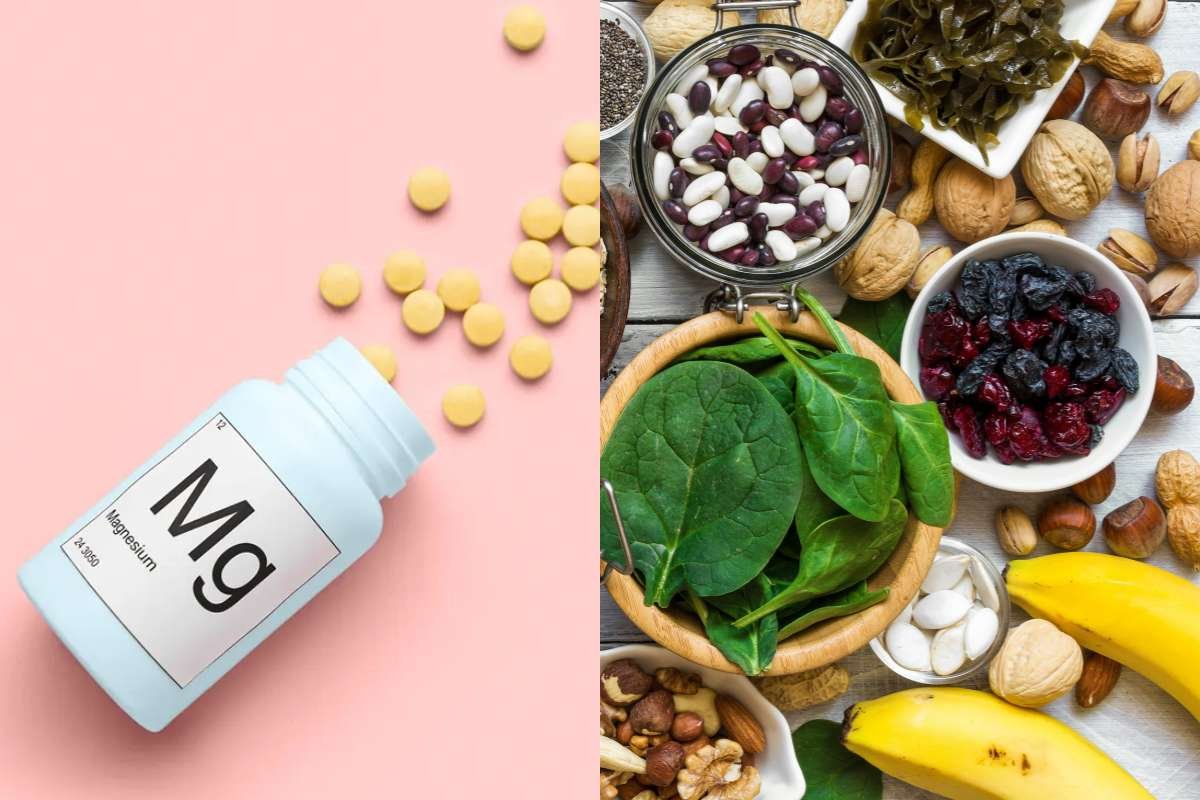
Health pros like those at NIH and Mayo Clinic push a food-first approach. Foods high in magnesium and potassium deliver natural synergy, fiber, and co-nutrients. This is what pills can’t match. Boosting absorption by 20-30% over isolates.
Food-First Wins
Whole sources like spinach, salmon, or bananas. They provide a steady release and cut overdose risks. They’re cheaper long-term and taste great in meals from our sample plan.
When Supplements May Help
Consider them if blood tests show deficits. You’re in at-risk groups (athletes, the elderly), or diets fall short despite efforts. Forms like magnesium glycinate (gentle on the gut) or potassium citrate pair well. Start low at 200mg Mg/99mg K daily.
Safety Considerations
Caps can cause diarrhea (Mg) or heart issues (high K). Stick to under 350mg supplemental Mg daily. Check with docs, especially on meds like diuretics. Food covers 80-90% of needs safely; supplements fill gaps only.
Conclusion:
Restoring your body’s natural rhythm does not have to be a struggle. By making small, intentional swaps in your daily meals, you can bridge the gap left by modern diets. Choosing foods high in magnesium and potassium is the simplest way to banish brain fog. It also stops muscle cramps and boosts your energy levels.
Whether you grab a banana for a quick snack or enjoy a fresh spinach salad for lunch. Every bite brings you closer to peak performance. Your body communicates its needs through every ache and dip in mood. Listen to those signals and fuel yourself with the minerals you deserve. Start today, and feel the difference. This is the change that real, nutrient-dense food can make for a vibrant life.
FAQ:
1. Why are magnesium and potassium important for the body?
Magnesium and potassium are essential minerals. They support muscle function, nerve signaling, heart rhythm, hydration balance, and energy production. They help regulate blood pressure, prevent muscle cramps, and maintain cellular health.
2. Can I get enough magnesium and potassium from food alone?
Yes. Most healthy individuals can meet their daily requirements through a balanced diet. Like vegetables, fruits, legumes, whole grains, nuts, and dairy or plant-based alternatives. Supplements are usually recommended only when a deficiency is diagnosed.
3. Do magnesium and potassium work better together?
Yes. Magnesium helps regulate potassium transport into cells. Without adequate magnesium levels. The body may struggle to maintain a healthy potassium balance. This can affect muscle and heart function.