
Emotional burnout is long-term emotional, mental, and physical exhaustion caused by ongoing stress. Understand the symptoms, causes, and how to differentiate it from stress and depression, explore evidence-based recovery strategies, and discover practical ways to prevent burnout and know when to seek professional support.
Emotional burnout is a state of extreme mental, physical, and emotional exhaustion caused by prolonged and unmanageable stress. APA data shows that nearly 60% of people report experiencing the negative effects of chronic stress, including mental exhaustion and emotional strain, and as a result, burnout is becoming more prevalent, fueled by constant connectivity and never-ending demands. Though commonly associated with work, this condition can affect caregivers, parents, students, and anyone who faces the chronic pressures of life.
In this article, we discuss how to recognize early warning signs, actionable steps toward recovery, and when it’s time to seek professional support.
Table of Contents
The reality of emotional burnout and why it happens
Emotional burnout is a state of emotional exhaustion, detachment, and reduced coping ability that builds after prolonged stress. Clinically, burnout is commonly described as a stress-related syndrome marked by exhaustion, cynicism or distancing, and reduced effectiveness. It is most often discussed in occupational settings. But the same pattern can occur outside work too.
It impacts mood, motivation, and resilience, while physical burnout shows up as bodily fatigue. It occurs when ongoing stress outpaces emotional capacity, especially in caregiving or high-pressure roles. Consequently, it commonly affects employees, parents, students, and caregivers experiencing long-term strain.
When adults have difficulty regulating emotions, stress feels harder to process, and recovery takes longer. This can quietly intensify burnout symptoms. That’s how emotional dysregulation makes burnout worse.
How to recognize emotional burnout: signs and symptoms
It is a state of ongoing emotional exhaustion, low motivation, and feeling mentally worn down after prolonged stress. It can show up as emotional, physical, behavioral, cognitive, and relationship changes, and it often builds slowly over time.
Signs by category
- Emotional symptoms: irritability, anxiety, hopelessness, numbness, or feeling trapped.
- Physical symptoms: fatigue, headaches, muscle tension, sleep problems, nausea, or digestive upset.
- Behavioral symptoms: withdrawing from others, avoiding tasks, missing deadlines, or doing things more slowly than usual.
- Cognitive symptoms: poor concentration, forgetfulness, mental fog, and trouble making decisions.
- Relationship symptoms: more conflict, less patience, emotional distance, and pulling away from people.
Progression:
| Early | Moderate | Severe |
| Tiredness, irritability, and reduced focus | Frequent overwhelm, more mistakes, withdrawal, and stronger physical symptoms | Emotional numbness, major functioning problems, and ongoing exhaustion that affects work, home, and relationships |
Burnout often becomes worse when stress keeps building, and a person has little recovery time. Especially if responsibilities continue without support.
Protecting your well-being: simple ways to prevent emotional burnout

Emotional outbursts are easier to prevent when you treat recovery as a daily habit, not a last resort. Healthy boundaries, regular sleep, emotional regulation, movement, social support, and a steady work-life rhythm all help keep stress from building into burnout.
Set clear limits on time, workload, and emotional availability, then protect sleep because poor rest lowers resilience and makes stress feel heavier. Use small recovery routines such as breaks, breathing, journaling, or quiet time so your nervous system has space to reset. Physical activity and supportive relationships also buffer stress and help you stay more grounded.
Why emotional wellness matters more
Building emotional wellness strengthens resilience, improves coping, and prevents ordinary stress from becoming long-term burnout. That is why broader emotional wellness during menopause and related emotional wellness guidance can be helpful: supporting emotional health early leads to faster recovery and makes relapses less likely.
When hormones add strain
Hormonal changes can increase irritability, low mood, sleep disruption, and mental fatigue, which can raise burnout risk and make prevention even more important. This makes the Emotional wellness in menopause topic especially relevant for readers who notice more stress sensitivity during midlife transitions.
Identifying the drivers of emotional burnout:
This happens when ongoing stress drains a person’s emotional energy, focus, and coping capacity over time. Common causes include chronic stress, emotional labor, caregiving, heavy workplace demands, family pressure, perfectionism, lack of recovery, and trauma.
Emotional labor is deeply draining because managing feelings for others creates constant internal strain. In high-contact roles or caregiving, limited rest and high expectations accelerate exhaustion. Added family stress and perfectionism make it nearly impossible to switch off, leaving no room to truly recharge.
Heart Rate Variability is a useful sign here. When HRV stays low, it often reflects chronic stress and weaker recovery, which can fit the same burnout pattern described in the dedicated cluster article. Trauma can also keep the nervous system on alert, making burnout more likely and recovery slower.
Commonly affected groups include employees in high-demand roles, parents, caregivers, students, and people living with long-term stress or unstable life circumstances.
How to recover from emotional burnout?
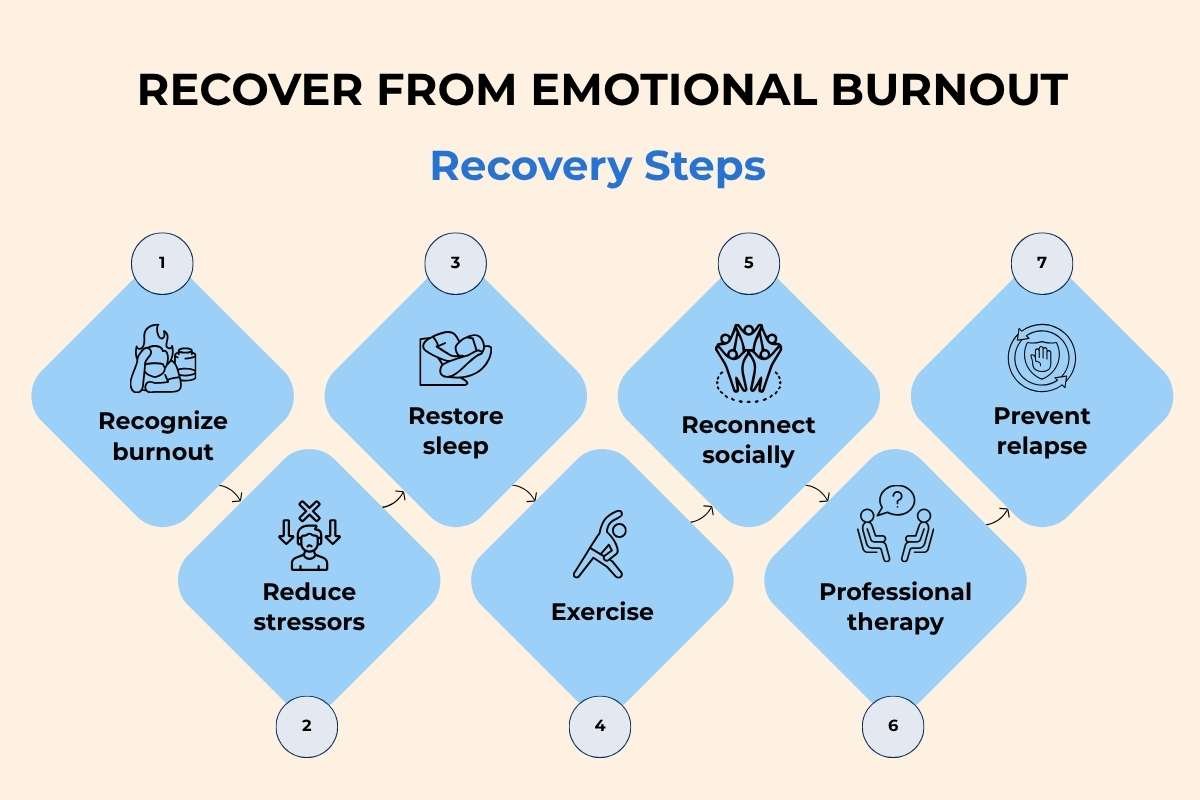
Recovering from this emotional pressure works best when you reduce strain in steps rather than trying to “push through” it. Start by recognizing the pattern: constant exhaustion, detachment, irritability, and poor focus are warning signs that need attention.
Recovery steps
- Recognize burnout. Name the problem early so it does not keep growing.
- Reduce stressors. Cut back where possible, set boundaries, and lower nonessential demands.
- Restore sleep. Keep a consistent sleep window and protect recovery time because poor sleep keeps stress high.
- Exercise. Light to moderate movement can improve mood, sleep, and stress regulation.
- Reconnect socially. Regular contact with trusted people helps reduce isolation and emotional strain.
- Professional therapy. Therapy is often the first-line support when burnout is persistent or affects daily functioning.
- Prevent relapse. Keep routines, monitor stress load, and make recovery habits part of daily life.
Finding the right modality: CBT or DBT?
Burnout often stems from overthinking and chronic stress. When burnout is linked to unhelpful thought patterns, harsh self-criticism, or perfectionism, CBT vs DBT can be a critical distinction, as CBT reframes mental traps while DBT builds distress tolerance. A comparison article can help readers choose the best fit.
Choosing between talk therapy and pharmacotherapy
Restoring mental balance requires addressing root causes and symptoms. For burnout, therapy is usually the first step because it targets stress, coping, and boundaries. However, evaluating Therapy vs medication for Emotional Wellness becomes important when burnout co-occurs with depression or anxiety and symptoms are severe or persistent.
Selecting your care delivery format
Deciding how to attend sessions is the final practical step. Teletherapy is often more accessible and convenient, especially for busy schedules or limited travel. Comparing In-Person Therapy vs Teletherapy for Emotional Wellness highlights that while virtual care offers convenience, in-person care may suit people who want stronger structure or face-to-face support.
Emotional burnout vs stress, depression, and emotional exhaustion:
Stress is a short-term response to pressure, while emotional exhaustion builds from sustained stress over time. Burnout adds detachment and low effectiveness, whereas depression and anxiety are broader clinical conditions that persist across all areas of life.
| Condition | Symptoms | Duration | Recovery | Need for treatment |
| Stress | Feeling pressured, tense, busy, or overloaded. | Often temporary, tied to a current demand. | Improves when the stressor eases and recovery time returns. | Usually not, unless it becomes persistent or impairing. |
| Emotional exhaustion | Drained, numb, irritable, and mentally worn out. | Can develop after prolonged strain. | Often improves with rest, boundaries, and reduced demands. | Sometimes, if it is severe or ongoing. |
| Burnout | Exhaustion, cynicism, detachment, and reduced performance. | Longer-lasting and tied to chronic stress. | Better when workload, support, and recovery improve. | May need professional help if symptoms persist or functioning drops. |
| Depression | Persistent low mood, loss of interest, low energy, and negative thinking. | Lasts for weeks or longer and affects many areas of life. | Often does not resolve with rest alone. | Yes, often needs clinical evaluation and treatment. |
| Anxiety | Excessive worry, fear, restlessness, tension, and sleep problems. | Can be ongoing and may occur even without a clear stressor. | Improves with treatment, coping skills, and support. | Yes, when it interferes with daily life. |
Burnout and emotional exhaustion are often tied to a specific context, whereas depression and anxiety impact life more broadly. A key clue is recovery: if a break brings fast relief, it is likely burnout; if dread and low mood persist, professional treatment is essential.
Conclusion:
Emotional burnout is more than just feeling tired. It is a deeper level of exhaustion that can affect your mood, your focus, your health, and your relationships. The good news is that things can get better with early awareness, better boundaries, consistent recovery habits, and support when needed. If you see the signs in yourself, make small changes and take them seriously before they become something harder to deal with. And if stress, low mood, or numbness just keep piling up, reaching out for professional help is a good next step.
FAQ:
1. What does emotional burnout feel like?
It feels like a profound, whole-person depletion where everything requires immense effort.
2. How do you fix emotional burnout?
Fixing this condition requires stopping the immediate energy drain, restoring your physical foundation, and establishing strict emotional boundaries.
3. What are the 7 signs of burnout?
Burnout is a state of physical, emotional, and mental exhaustion caused by prolonged stress. The seven key signs are chronic fatigue, reduced performance, cynicism, sleep issues, physical symptoms, irritability, and social withdrawal.
4. How long does emotional burnout last?
It can last anywhere from a few weeks to several years.
5. What is the 42% rule for burnout?
The “42% rule” suggests that humans need to spend 42% of their time (roughly 10 hours out of every 24) on rest and recovery to maintain long-term health and avoid burnout.
Sources and Links: