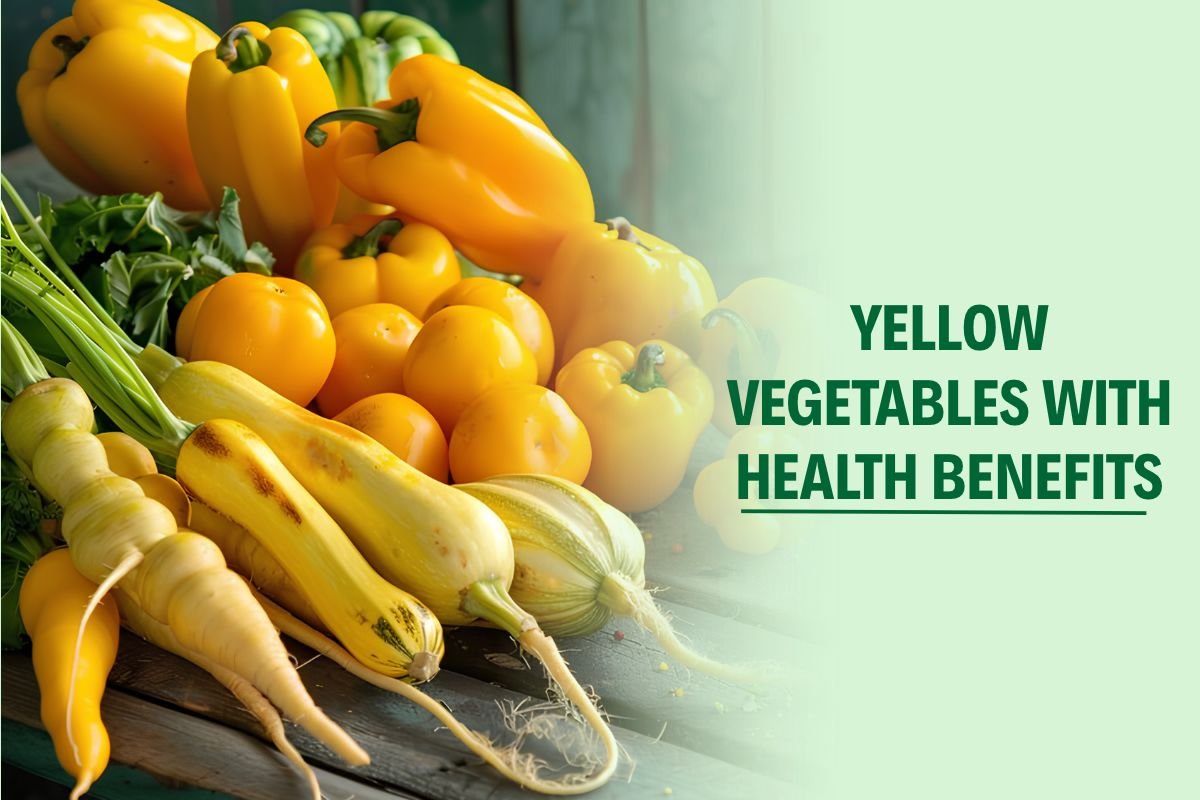
Yellow vegetables with health benefits include bell peppers, summer squash, sweet corn, yellow carrots, and golden beets. They supply vitamin C, lutein, fiber, and potassium in every serving. Add a few to your plate each week, and your eyes, heart, and immune system will thank you.
This guide ranks the best options and shows what each one does for your body. You will also learn why color matters, which pepper packs the biggest vitamin C punch, and how to cook these foods without fuss.
Which are the Best Yellow Vegetables With Health Benefits?
No single golden veggie does it all, so variety wins. The table below shows eight easy picks, what each one offers, and a simple way to serve it.
| Vegetable | Star nutrients | Key benefit | Easy way to eat it |
| Yellow bell pepper | Vitamin C, vitamin A, potassium | Supports immunity and blood pressure | Slice raw with hummus |
| Yellow squash | Vitamins A, B6, C, folate | Supports digestion and skin | Grill with olive oil |
| Sweet corn | Fiber, B vitamins | Keeps you full and energized | Toss into salads |
| Yellow carrots | Lutein, beta-carotene, vitamin C | Supports eye health | Roast with herbs |
| Golden beets | Vitamin C, potassium, folate | Supports blood pressure and immunity | Roast and slice over greens |
| Yellow potatoes | Vitamin C, vitamin B6, potassium | Supports heart and muscles | Boil and lightly mash |
| Yellow cauliflower | Beta-carotene, fiber | Supports vision and digestion | Roast whole |
| Yellow zucchini | Carotenoids | Supports eyes, heart, and skin | Spiralize into noodles |
Bell peppers and carrots lead for most shoppers. Both taste sweet, cost little, and show up in every grocery store. Squash and corn shine in summer, while golden beets and yellow potatoes work well in winter stews.
Notice how flexible these foods are. You can roast, steam, grill, or eat most of them raw. That makes a daily habit much easier to build. Nutrient details come from USDA FoodData Central.
Why are Some Vegetables Yellow in the First Place?
Color tells a story. Yellow vegetables get their glow from plant pigments called carotenoids, including lutein and zeaxanthin. These compounds act as antioxidants. They also settle into the retina, the light-sensing layer at the back of your eye.
Other colors carry these compounds too. Yellow vegetables simply supply them reliably, along with a good dose of vitamin C.
Scientists take lutein and zeaxanthin seriously. In the NIH-funded AREDS2 trial, people with the lowest dietary intake of these nutrients had a 26% lower risk of advanced macular degeneration when they took them as supplements, compared with the original formula. That result used supplements, but it shows why steady intake matters. Food is the easiest place to start.
Which Yellow Vegetable Has the Most Vitamin C?
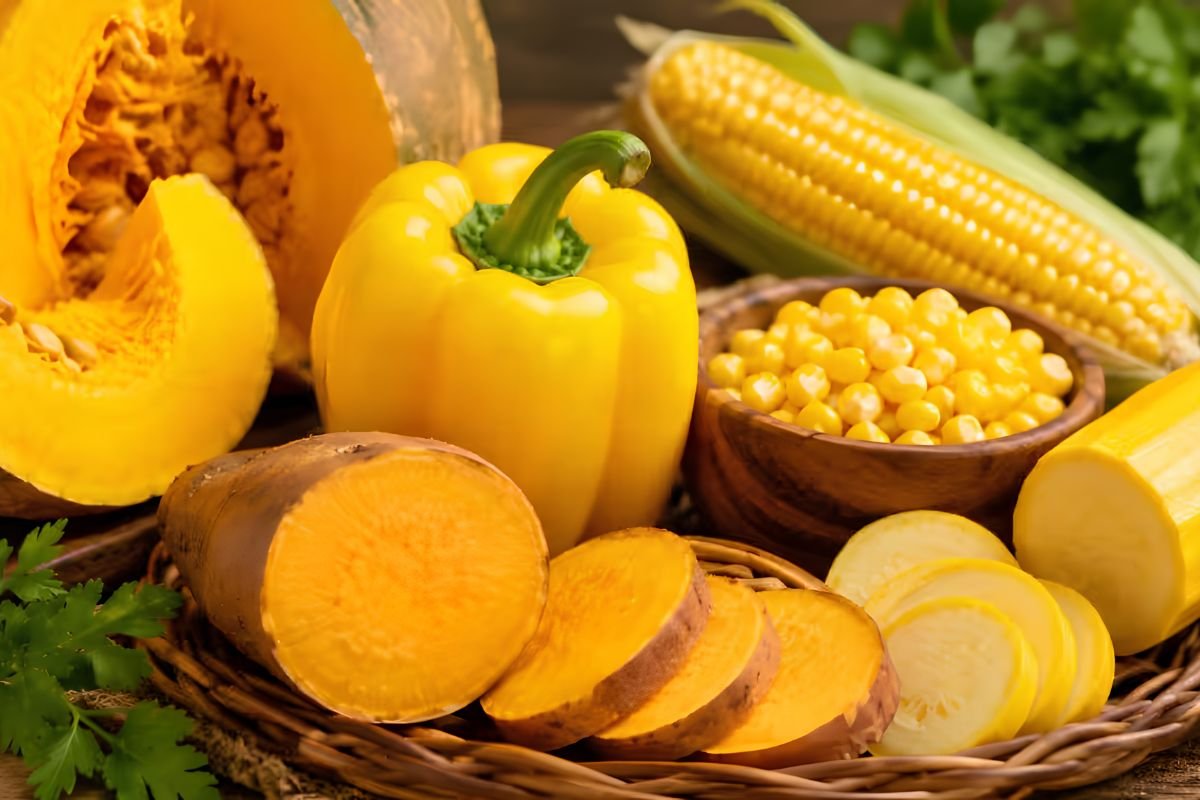
Yellow bell pepper wins this one. A large raw yellow pepper delivers 342 mg of vitamin C, or 380% of the daily value. Few foods come close.
Vitamin C supports your immune system and helps your body build collagen. It also helps you absorb iron from plant foods. Eat the pepper raw when you can, since heat breaks down some of the vitamin.
Among yellow vegetables with health benefits, this one gives you the biggest vitamin C return for the least effort. Slice it into a lunch box, dip it in yogurt, or toss it into a stir-fry at the very end.
How Do Yellow Vegetables Help Your Eyes, Heart, and Gut?
The best picks support three areas at once. Let’s take them one by one.
- Your eyes. Lutein and zeaxanthin protect the lens and retina from oxidative damage. Yellow carrots carry more lutein than their orange cousins, though they hold less beta-carotene. Yellow zucchini and cauliflower add more carotenoids to the mix.
- Your heart. Potassium helps your body manage blood pressure. Golden beets, yellow potatoes, and bell peppers all supply it. Vitamin C adds antioxidant support for your blood vessels.
- Your gut. Fiber keeps digestion steady and keeps you full longer. Corn, squash, and cauliflower all deliver it. Pair them with beans or whole grains, and you build a strong, gut-friendly meal.
None of this replaces medical care. Think of these foods as a daily habit that supports your health, not a cure for anything.
How Can You Eat More Yellow Vegetables Every Day?
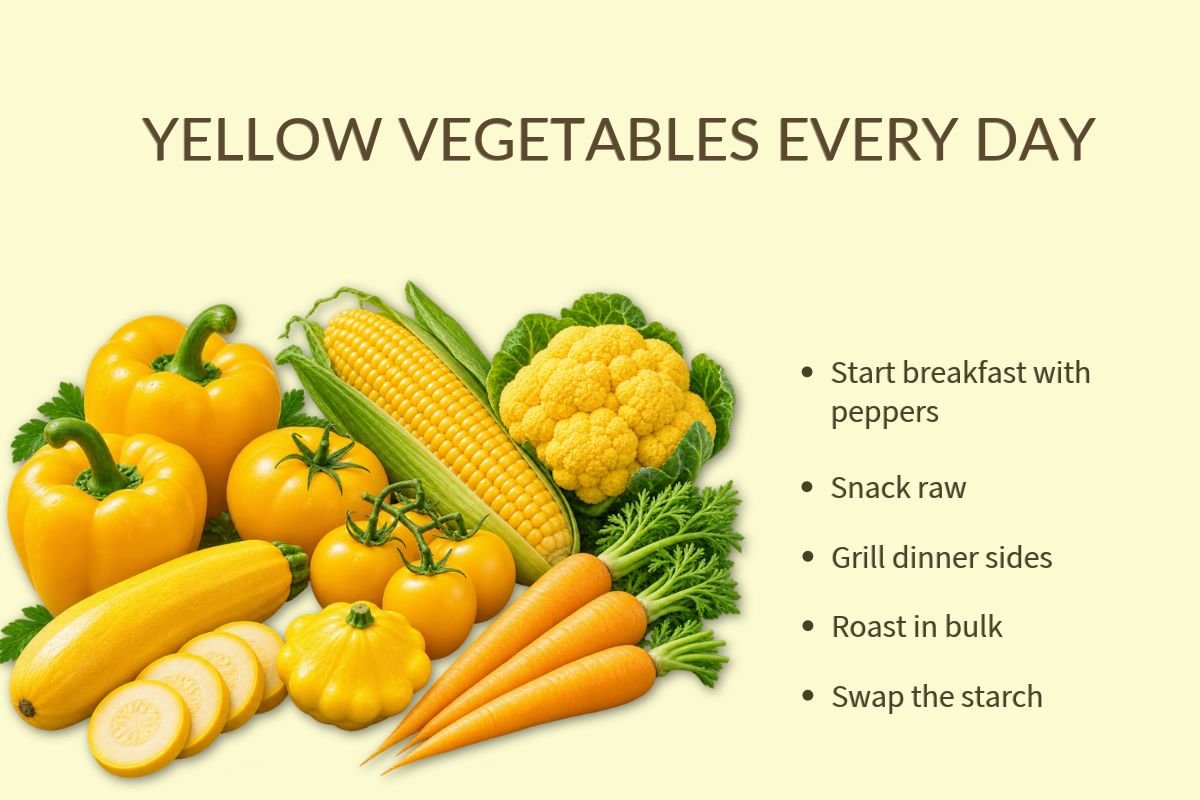
Small swaps beat big overhauls. You do not need a new diet. You need a few easy habits that fit your week. Here is how to work yellow vegetables with health benefits into meals you already cook.
- Start breakfast with peppers. Dice yellow bell pepper into scrambled eggs or an omelet.
- Snack raw. Keep pepper strips and carrot sticks in a container at eye level in the fridge.
- Grill dinner sides. Brush squash slabs with olive oil and garlic, then grill until tender.
- Roast in bulk. Cook a tray of golden beets and cauliflower on Sunday for easy weekday salads.
- Swap the starch. Use mashed yellow potatoes in place of white ones in your favorite recipe.
Keep the skin on when it is edible. Wash produce well and avoid overcooking, because long boiling washes nutrients into the water. A quick roast or steam keeps more flavor and more nutrition.
Do Yellow Vegetables Beat Green Ones?
No, and you should not pick sides. Green vegetables bring vitamin K, folate, and iron. Yellow vegetables with health benefits bring lutein, vitamin C, and carotenoids. Each color covers gaps the other leaves open.
Yellow vegetables also share many vitamins and minerals with other colors. That means you do not need a perfect plan. You need a colorful plate.
A simple rule works well. Aim for at least three colors at dinner. Add a handful of yellow peppers to a green salad, or serve roasted squash beside broccoli. Your body gets a wider range of nutrients, and your meal looks better too.
Conclusion
Yellow vegetables with health benefits cover a lot of ground for very little money. One bell pepper gives you a full day of vitamin C. Carrots look after your eyes, and squash keeps your gut moving. You don’t need a meal plan to benefit. Next time you shop, grab two items from the table and cook them however you like. Swap in a third the week after, and the habit will build itself.
FAQs
1. Is corn a vegetable or a grain?
Sweet corn counts as a vegetable in cooking, while dried corn acts as a grain. Both add fiber.
2. Are yellow peppers sweeter than green peppers?
Yes. Yellow peppers ripen longer on the plant, so they taste milder and sweeter.
3. Can I eat yellow vegetables raw?
Yes. Peppers, carrots, and young squash taste great raw, and raw peppers keep the most vitamin C.
4. Do cooked yellow vegetables lose their nutrients?
Some vitamin C drops with heat. Roasting or steaming briefly keeps most nutrients and boosts carotenoid absorption.
5. Where can I find yellow vegetables with health benefits year-round?
Peppers, carrots, and potatoes stay in stores all year. Check farmers’ markets for seasonal squash and golden beets.