Can you overdose on antidepressants? Yes. Taking more than the prescribed amount can cause poisoning, even when the medicine is safe at the right dose.
The level of risk depends on the type of antidepressant, amount taken, other medicines involved, and the person’s health. Some overdoses may cause mild symptoms. Others can affect the heart, brain, breathing, or nervous system. This guide explains common warning signs, possible risks, drug interactions, and what to do after a suspected overdose.
What Happens When You Take Too Much?
Can you overdose on antidepressants and feel fine at first? Yes. Some effects may appear later, so feeling normal does not always mean there is no danger.
An overdose can affect several parts of the body. The signs can also vary based on the medicine and whether another substance was taken.
Possible warning signs include:
- Nausea or vomiting
- Extreme sleepiness
- Confusion or agitation
- Sweating or fever
- Shaking or muscle twitching
- Fast or irregular heartbeat
- Changes in blood pressure
- Seizures
- Trouble breathing
- Fainting or loss of consciousness
Some antidepressants can also cause serotonin syndrome. This happens when serotonin activity becomes too high. Signs may include agitation, confusion, sweating, fever, muscle stiffness, twitching, and changes in heart rate. Severe cases can lead to seizures or loss of consciousness.
Do not wait for severe symptoms before seeking help. Early medical advice can help identify the safest next step.
Can You Overdose on Antidepressants of Any Type?
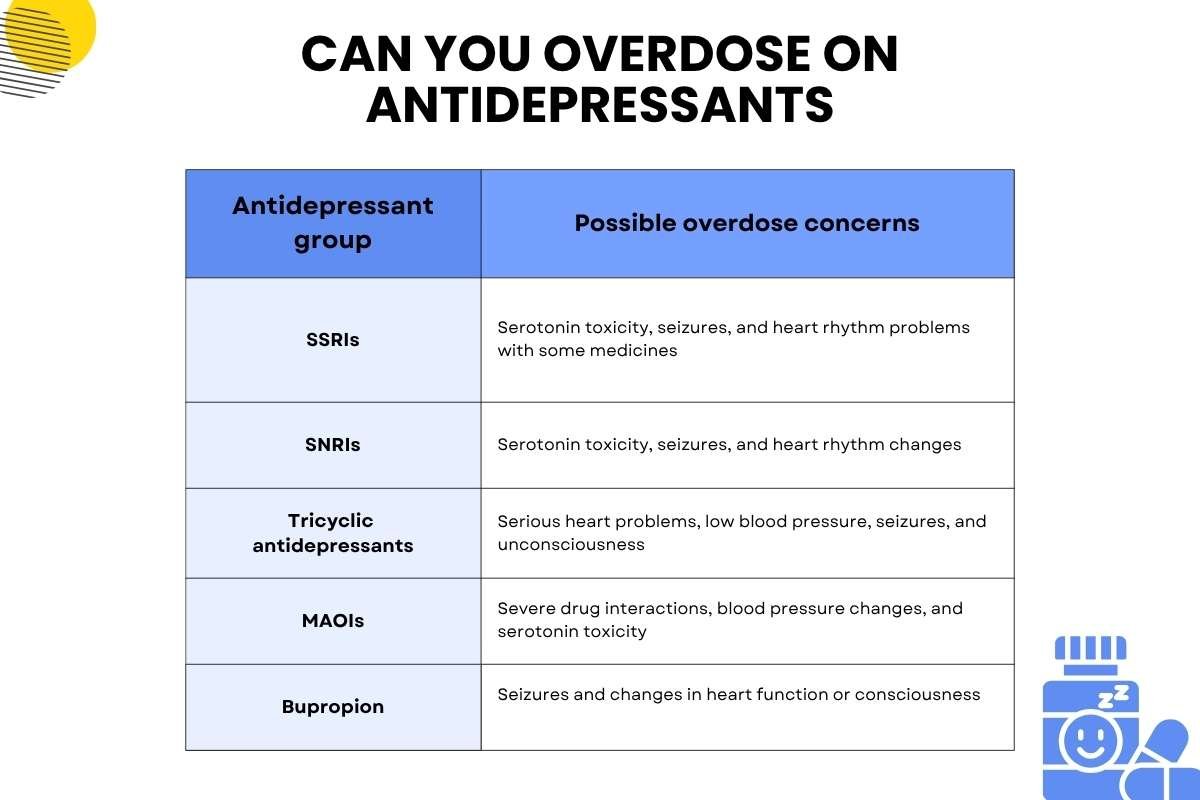
Yes, but different drug groups have different risks.
| Antidepressant group | Possible overdose concerns |
| SSRIs | Serotonin toxicity, seizures, and heart rhythm problems with some medicines |
| SNRIs | Serotonin toxicity, seizures, and heart rhythm changes |
| Tricyclic antidepressants | Serious heart problems, low blood pressure, seizures, and unconsciousness |
| MAOIs | Severe drug interactions, blood pressure changes, and serotonin toxicity |
| Bupropion | Seizures and changes in heart function or consciousness |
Older antidepressants, such as tricyclics, can cause serious effects during an overdose. The risks can include abnormal heart rhythms, low blood pressure, seizures, and loss of consciousness.
Newer antidepressants are not risk-free. For example, some SSRIs can affect heart rhythm in an overdose. The exact risk depends on the medicine, dose, other substances, and the person’s health.
The risk is not just theoretical. In 2024, antidepressants were involved in 93,287 adult poison exposures reported to U.S. poison centers, making them the third most common substance category in adult exposures.
More Info:
- Understanding Anxiety Medication: Types, Uses, and Considerations
- Understanding Psychiatric Disorders: Symptoms, Causes, and Treatment Options
Why Can Mixing Medicines Make an Overdose Worse?
Overdose due to mixing medicines depends on what you take with the antidepressant.
Some drug combinations increase serotonin activity. Others can affect heart rhythm, blood pressure, alertness, or seizure risk. Alcohol and recreational drugs can also change the effects of medicines.
Some common products can also interact with antidepressants. Certain cough medicines and pain medicines may affect serotonin or other body systems. Supplements and herbal products can also cause interactions.
Do not assume that a product is safe simply because you can buy it without a prescription. Tell your doctor or pharmacist about every medicine, supplement, and other substance you use.
Keeping a current medication list can help. Include prescription drugs, over-the-counter medicines, vitamins, and supplements. This information can help healthcare professionals make faster decisions during an emergency.
What Should You Do After a Suspected Overdose?
If someone shows signs of an overdose, act quickly rather than waiting for symptoms to worsen. Ashley Jones, PharmD, BCACP, a Cleveland Clinic pharmacist, advises, “If you come across someone who shows signs of an overdose, the first thing you need to do is call emergency services.”
While getting help:
- Do not make the person vomit unless a healthcare professional tells you to.
- Keep the medicine container nearby so the drug and strength can be identified.
- Note the time it was taken, if you know it.
- List other medicines or substances involved, including alcohol.
- Do not give another medicine to counter the effects unless a healthcare professional advises it.
- Stay with the person if they are confused, very sleepy, or unwell.
If the person collapses, has a seizure, has trouble breathing, or cannot be awakened, seek emergency medical care at once. MedlinePlus gives the same emergency advice for several antidepressants.
So, can you overdose on antidepressants and recover? Many people can recover with proper medical care. The outcome depends on the medicine, amount taken, other substances, symptoms, and how quickly treatment begins.
How is an Antidepressant Overdose Treated?

Treatment depends on the medicine and the symptoms. Doctors may monitor breathing, blood pressure, heart rate, body temperature, and heart rhythm. They may also use blood tests, an electrocardiogram, fluids, or medicines to manage specific problems.
Some patients need treatment for seizures or abnormal heart rhythms. Serious cases may require breathing support or close monitoring in a hospital.
There is no universal home treatment for an antidepressant overdose. Trying to treat poisoning at home can delay care if serious symptoms develop.
Fast medical advice is important because healthcare professionals can assess the specific medicine and circumstances. They can also tell you whether emergency treatment or monitoring is needed.
How Can You Prevent an Antidepressant Overdose?
A few simple habits can lower the risk:
- Take your medicine exactly as prescribed.
- Use a pill organizer if you often forget doses.
- Ask a pharmacist what to do after a missed dose.
- Keep medicines in their original containers.
- Never share prescription medicines.
- Store medicines away from children.
- Ask before starting a new medicine or supplement.
- Never change your dose without medical advice.
Can you overdose on antidepressants accidentally? Yes, missed doses, confusion, and incorrect timing can all lead to an accidental extra dose. If you accidentally take an extra dose, do not automatically skip your next dose. Ask a healthcare professional what you should do based on your specific medicine.
You should also avoid stopping an antidepressant suddenly unless your healthcare provider tells you to. Some antidepressants can cause withdrawal or discontinuation symptoms when stopped too quickly.
Conclusion
So, what is the key takeaway of can you overdose on antidepressants? You can overdose, and the level of danger varies by medicine and situation. The safest response is to take a suspected overdose seriously. Do not wait for severe symptoms or rely on a general dose limit from the internet.
If too much medication was taken, contact a poison center, doctor, pharmacist, or emergency service for advice. If someone is unconscious, having seizures, struggling to breathe, or cannot be awakened, seek emergency care immediately.
Antidepressants can be safe and helpful when used as prescribed. Knowing what to do after an accidental or suspected overdose can help protect you or someone you care about.
Read More:
- Can You Overdose on Vitamins? Watch for These Symptoms
- Fentanyl-Laced Pills Can Kill You. Here’s How to Protect Yourself
FAQs
1. Can one extra antidepressant pill cause an overdose?
It may not cause serious poisoning, but the risk depends on the medicine and person. Ask a healthcare professional for advice.
2. Can you overdose on antidepressants without immediate symptoms?
Yes. Some medicines can cause effects after a delay, so feeling well at first does not always rule out a problem.
3. Can antidepressants cause serotonin syndrome?
Yes. The risk can increase when medicines or substances that affect serotonin are combined.
4. Should you make someone vomit after an antidepressant overdose?
No. Do not induce vomiting unless a healthcare professional specifically tells you to do so.
5. Can an antidepressant overdose cause permanent damage?
Severe poisoning can cause serious complications. Prompt medical care can help reduce the risk of lasting harm.
Sources: