Want to understand coronary artery disease before it leads to a heart attack? This guide explains how the condition develops, the subtle warning signs that often appear early, who is most at risk, and what can happen if it goes untreated. You’ll also learn practical steps to lower your risk, recognize symptoms sooner, and take action before coronary artery disease becomes a medical emergency.
The leading cause of heart attacks and the most common type of heart disease in the world is coronary artery disease. But many people don’t realize they have it until something serious happens. It occurs over time as plaque grows inside the arteries that deliver blood to the heart. “If you know how CAD develops, what the early warning signs are, and what your own personal risk factors are, you can take action sooner.”
In this article, you’ll learn what happens before CAD becomes an emergency and what you can do to help protect your heart health.
Table of Contents
What is coronary artery disease and why does it matter?
Coronary Artery Disease is a long-term condition in which the arteries that supply the heart with blood become narrowed or blocked by plaque. It matters because it can silently reduce blood flow to the heart for years before causing a sudden emergency.
Simple definition
Coronary arteries are the blood vessels that feed the heart muscle with oxygen and nutrients. When these arteries become narrowed, the heart does not get the blood it needs to work well.
Plaque buildup
CAD usually develops from atherosclerosis, which is the buildup of fatty material, cholesterol, and other substances inside artery walls. This process happens gradually, so CAD is a long-term disease rather than a sudden event.
Why can it be silent?
Many people with CAD have no symptoms at first, but the risk is still real because the narrowed artery can suddenly become blocked or form a clot. That can trigger chest pain, heart failure, irregular heartbeat, or a heart attack.
CAD and heart attack
CAD is the underlying artery disease; a heart attack is the event that happens when blood flow is suddenly cut off, often by a blocked or ruptured plaque. In simple terms, CAD is the process, while a heart attack is one possible outcome.
Why early awareness matters
Knowing about CAD early gives people a chance to control risk factors before damage builds up. That can help prevent a heart attack and other serious complications later.
How coronary artery disease develop over time?
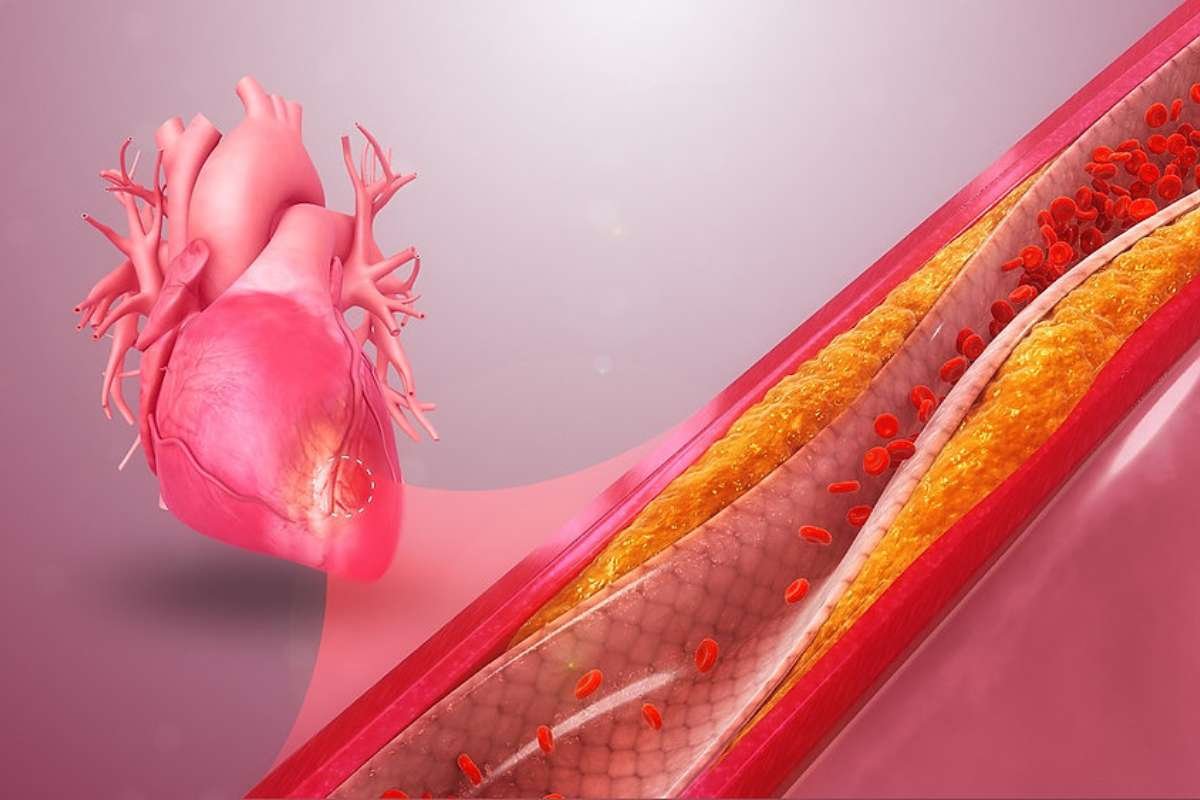
CAD develops slowly over time as plaque builds up inside the coronary arteries, the vessels that supply blood to the heart. At first, the artery may look healthy, but gradually the inner space gets smaller, blood flow falls, and a plaque rupture can trigger a clot and a heart attack.
Healthy artery vs plaque buildup
In a healthy artery, blood moves through a wide, open channel. In CAD, cholesterol and other substances collect in the artery wall and form plaque, which makes the artery wall thicker and narrower over time.
The 4-stage progression
- Stage 1: Silent plaque buildup. Plaque starts forming without obvious symptoms, and many people do not notice it at this point. CAD often progresses quietly for years.
- Stage 2: Reduced blood flow during exertion. As the artery narrows, the heart may get enough blood at rest but not during activity, so symptoms can appear with exercise or stress.
- Stage 3: Noticeable symptoms. With further narrowing, people may develop chest pain, shortness of breath, or related symptoms more often and with less effort.
- Stage 4: Heart attack or major cardiac event. If plaque ruptures, a clot can form and suddenly block blood flow, causing a heart attack or another serious cardiac event.
Why plaque rupture matter
The most dangerous part is not just the narrowing itself, but the possibility that plaque becomes unstable and breaks open. That rupture exposes material that triggers clot formation, which can fully stop blood flow to the heart muscle.
Why this matter
This is why Coronary Artery Disease is important even before symptoms appear: it is a slow, hidden process that can become an emergency with little warning. Early awareness helps people act before the artery becomes severely narrowed or a clot forms.
Early signs that may appear before a heart attack:
Early warning signs before a heart attack can be subtle and easy to dismiss. They may show up during routine activities like climbing stairs, carrying groceries, or walking to the car, especially when the body is asking for more oxygen than the narrowed arteries can supply.
Early signs to notice:
- Chest discomfort, which may feel like pressure, tightness, squeezing, or a heavy ache rather than sharp pain.
- Shortness of breath, sometimes with no chest pain at all. It may appear when walking fast, doing housework, or going up a flight of stairs.
- Fatigue, especially an unusual tiredness that feels out of proportion to the activity.
- Reduced exercise tolerance, such as needing to slow down on a walk, stop during yard work, or feel worn out after a normally easy workout.
- Discomfort in the jaw, neck, shoulder, back, or arm. Some people describe it as an ache, pressure, or soreness that seems like a pulled muscle.
Symptoms in women
Women may have the same symptoms as men. But they are more likely to notice fatigue, shortness of breath, nausea, back or jaw pain, and a vague sense that something is wrong. These symptoms are easier to overlook because they may feel more like indigestion, stress, or overexertion.
Why this matters
These signs can appear days or even weeks before a heart attack. So the key is not to wait for severe chest pain. If symptoms are new, unusual, or happening with everyday effort, they deserve attention.
Who is most at risk for coronary artery disease?

People most at risk for Coronary Artery Disease are those with a mix of unchangeable and changeable risk factors. Age, family history, and sex-related patterns matter, but smoking, high blood pressure, diabetes, high cholesterol, obesity, and inactivity often drive the risk higher over time.
Risk factors you cannot control
Risk goes up with age, and it is higher if a close family member had heart disease early in life. Men tend to develop CAD earlier, while women’s risk rises after menopause and gets closer to men’s risk.
Risk factors you can control
Smoking, high blood pressure, diabetes, unhealthy cholesterol levels, obesity, and physical inactivity are major modifiable risks. These factors can damage arteries and speed up plaque buildup.
Emerging risk signals
Poor sleep, chronic stress, metabolic syndrome, and inflammation are also important warning signals. They may not cause CAD alone, but they often travel with the main risk factors and make the problem worse.
Simple self-check
You may be at higher risk if you answer “yes” to one or more of these:
- Are you over 45 if male or over 55 if female?
- Does heart disease run in your family?
- Do you smoke or vape?
- Do you have high blood pressure, diabetes, or high cholesterol?
- Are you carrying extra weight or inactive most days?
- Do you sleep poorly or feel stressed most of the time?
What happens if coronary artery disease is left untreated?
If CAD is left untreated, the narrowed arteries can steadily limit blood flow to the heart and cause symptoms like angina, shortness of breath, and reduced stamina. Over time, everyday tasks such as climbing stairs, walking faster, or carrying groceries may start to feel harder even before a major event happens.
What can happen?
- Angina: Chest discomfort may appear when the heart needs more oxygen, especially during exercise or stress.
- Heart attack: A plaque can suddenly block an artery, cutting off blood flow to part of the heart.
- Heart failure: Repeated low blood flow or damage from a heart attack can weaken the heart’s pumping ability.
- Arrhythmias: Poor blood supply can disturb the heart’s electrical system and trigger abnormal heart rhythms.
- Lower quality of life: Fatigue, breathlessness, and chest discomfort can reduce energy, independence, and confidence in daily life.
How it progresses
Untreated CAD often does not stay “quiet.” It can gradually reduce exercise tolerance first, then make normal activities uncomfortable, and later lead to a heart attack or other serious complications. That slow decline is why early treatment matters, even if symptoms seem mild at first.
Steps that may help lower your risk:

Here’s a simple start this week to plan to lower your risk of Coronary Artery Disease. The goal is not perfection; it is to begin with a few high-impact steps and build from there.
Know your numbers
This week, check or book:
- Blood pressure.
- Cholesterol.
- Blood sugar.
- Weight or waist size.
If any of these are high, that is a sign to act early, because these risk factors can silently drive plaque buildup over time.
Heart-healthy habits
Pick two habits to start now:
- Walk briskly for 20 to 30 minutes on most days.
- Replace one processed or fried meal with a simpler meal that includes vegetables, whole grains, or lean protein.
- Quit smoking or set a quit date.
- Choose one stress reset each day, such as a short walk, slow breathing, or a screen-free break.
- Aim for a regular sleep schedule with enough sleep most nights.
A practical example: take a 10-minute walk after lunch, swap sugary drinks for water, and stop eating 2 to 3 hours before bed. Small changes done consistently matter more than dramatic short-term efforts.
When to seek care
Get prompt medical evaluation if you notice new chest discomfort, unusual shortness of breath, fatigue with routine activity, or pain in the jaw, neck, arm, or shoulder. These can be early signs of CAD or a heart problem that should not be ignored.
Call emergency services right away for chest pressure that lasts, trouble breathing, sweating, nausea, or pain spreading to the arm, jaw, or back. Do not drive yourself if symptoms are severe.
Conclusion:
Coronary artery disease doesn’t develop overnight, but it can silently progress from plaque build-up to an event. The good news is that early awareness, simple habit changes, and prompt medical attention for warning signs can make a real difference.
Know your risk, watch for subtle symptoms, and act early to give your heart a better chance. Just one small thing to do this week: check your numbers, move more, and talk to a clinician if anything feels new or unusual.
FAQ:
1. What is the life expectancy for someone with coronary artery disease?
Life expectancy with CAD varies widely and depends heavily on disease severity, treatment adherence, and other health conditions. However, with early diagnosis, proper medication, and a heart-healthy lifestyle, many patients live full, active lives well into their 70s, 80s, and beyond.
2. Is coronary artery disease serious?
CAD is a very serious and potentially life-threatening condition.
3. What can you do for coronary artery disease?
Managing CAD involves a combination of aggressive lifestyle changes, prescription medications, and potentially surgical procedures.
4. What are the early warning signs of clogged arteries?
Clogged arteries (atherosclerosis) often develop silently without symptoms for years. However, as blockages reduce blood flow to different parts of the body, subtle early warning signs emerge, primarily affecting the heart, legs, and brain.
5. What are the four signs your heart is quietly failing?
Heart failure means the heart struggles to pump blood efficiently, and symptoms often sneak up quietly over time. The four primary warning signs are persistent fatigue, shortness of breath, lower-body swelling, and a chronic cough.
Links and Sources:
- https://www.vhlab.umn.edu/atlas/coronary-arteries/index.shtml
- https://medlineplus.gov/ency/imagepages/19314.htm
- https://www.cdc.gov/heart-disease/about/coronary-artery-disease.html
- https://www.ahajournals.org/doi/10.1161/circresaha.114.302721
- https://www.nhs.uk/conditions/heart-attack
- https://blog.ochsner.org/articles/9-warning-signs-of-a-heart-attack-from-your-body-a-month-before
- https://my.clevelandclinic.org/health/diseases/16898-coronary-artery-disease