The Direct, Science-Backed Answer: You can lower your low-density lipoprotein (LDL) cholesterol by 10% to 15% without medication. To achieve this, you must execute three specific lifestyle modifications simultaneously:
- Consume 10+ grams of soluble fiber daily: This physically blocks cholesterol reabsorption in your gut.
- Ingest 2 grams of plant sterols daily: This crowds out cholesterol molecules at the intestinal wall.
- Engage in 150 minutes of moderate-intensity aerobic exercise weekly: This accelerates the clearance of lipids from your bloodstream.
While genetics dictate your baseline cholesterol production, these evidence-based interventions directly alter how your liver processes and excretes circulating fat.
If you want to reduce your cardiovascular risk, you must optimize your lipid panels. The debate on heart health often focuses strictly on prescription medication.
However, clinical data proves that targeted lifestyle shifts can dramatically alter your lipid profile if you want to learn how to lower cholesterol naturally.
This guide delivers the exact dietary protocols and exercise metrics you need to understand to lower your cholesterol.
What is the difference between LDL and HDL cholesterol?
To manage your cardiovascular health, you must understand how lipids move through your body. Cholesterol does not dissolve in water. Therefore, your body packages it into tiny spheres called lipoproteins to transport it through the bloodstream.
- Low-Density Lipoprotein (LDL): LDL acts as a delivery truck. It carries cholesterol straight to your cells. When your bloodstream contains too much LDL, these particles penetrate your delicate arterial walls. There, they oxidize, trigger inflammation, and form calcified plaques. The National Heart, Lung, and Blood Institute (NHLBI) warns that this process, known as atherosclerosis, directly causes heart attacks and strokes.
- High-Density Lipoprotein (HDL): HDL acts as a molecular vacuum cleaner. It collects excess cholesterol from your tissues and arterial walls, transporting it back to the liver for filtration and excretion.
By learning how to lower cholesterol naturally, you do not simply reduce a generic blood metric. You actively prevent arterial plaque accumulation and support your body’s natural clearance pathways.
Which three dietary shifts show you how to lower cholesterol naturally?
Your diet directly influences how your liver synthesizes and clears circulating fats. Most standard health advice tells you to avoid dietary cholesterol entirely. However, clinical science shows that specific food groups and biological compounds play a much larger role in driving down serum LDL.
1. Soluble fiber: The physical trap
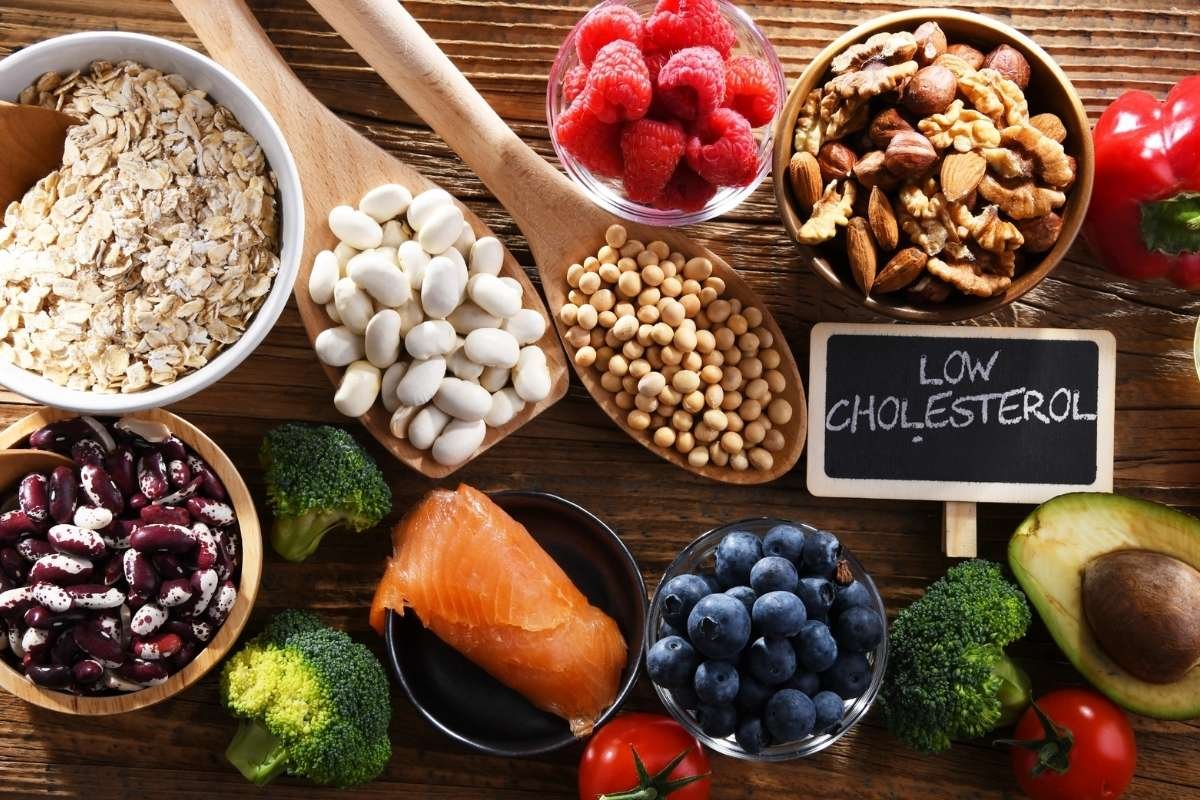
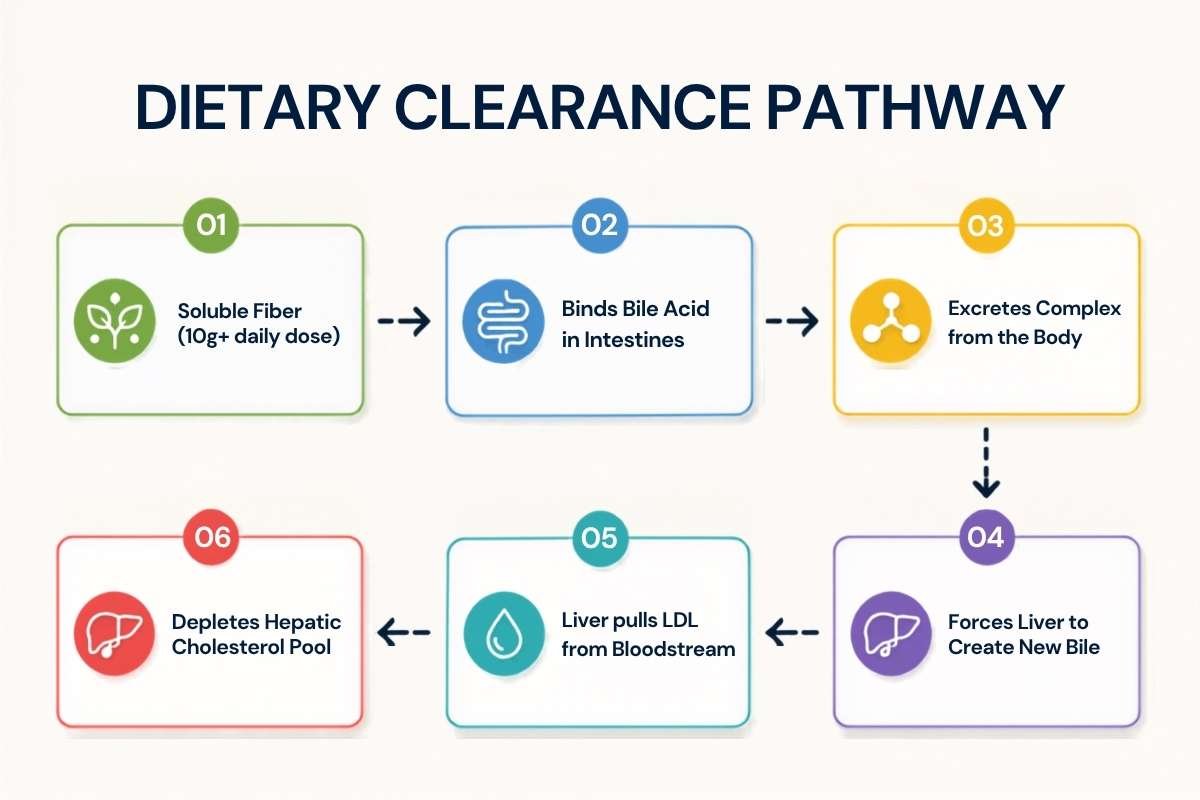
Soluble fiber acts as a gel-like sponge in your digestive tract. When you consume foods rich in soluble fiber—such as oats, barley, Brussels sprouts, and black beans—the fiber dissolves in water to form a viscous matrix.
This matrix physically binds to cholesterol-rich bile acids in your small intestine. Under normal conditions, your body reabsorbs these bile acids and returns them to the liver, but this dietary strategy shows you how to lower cholesterol naturally. Soluble fiber breaks this cycle by carrying the bile acids out of your body through elimination.
To replace the lost bile acids, your liver must harvest cholesterol straight from your bloodstream, significantly lowering your systemic LDL levels. The Food and Drug Administration (FDA) confirms that eating 3 grams of soluble fiber daily from whole oats can actively reduce your risk of coronary heart disease.
2. Plant sterols and stanols: Cellular competitors
Phytosterols are plant-derived compounds that mimic the exact molecular structure of cholesterol. When you consume 2 grams of plant sterols daily, they compete with cholesterol for absorption across your intestinal wall.
Because plant sterols bind tightly to intestinal receptors, they effectively block dietary and biliary cholesterol from entering your bloodstream. This biological blocking mechanism shows you how to lower your cholesterol naturally at the cellular level. The American Heart Association (AHA) states that consuming 2 grams of plant stanols or sterols per day can reduce LDL cholesterol by 5% to 15%. You can find these compounds naturally in unrefined vegetable oils, nuts, seeds, and fortified functional foods.
3. Saturated vs. Unsaturated fats: Cellular upgrades
Saturated fats—found in fatty cuts of meat, butter, and palm oil—directly downregulate your liver’s LDL receptors, leaving more harmful cholesterol circulating in your bloodstream.
Replacing these saturated lipids with monounsaturated and polyunsaturated fats preserves your liver’s clearance capacity. Olive oil, avocados, walnuts, and wild-caught salmon contain high levels of unsaturated fats. These healthy fats support the structural integrity of your cells, maintain your protective HDL levels, and suppress systemic inflammation.
Information gain (ig): The hepatic receptor acceleration principle
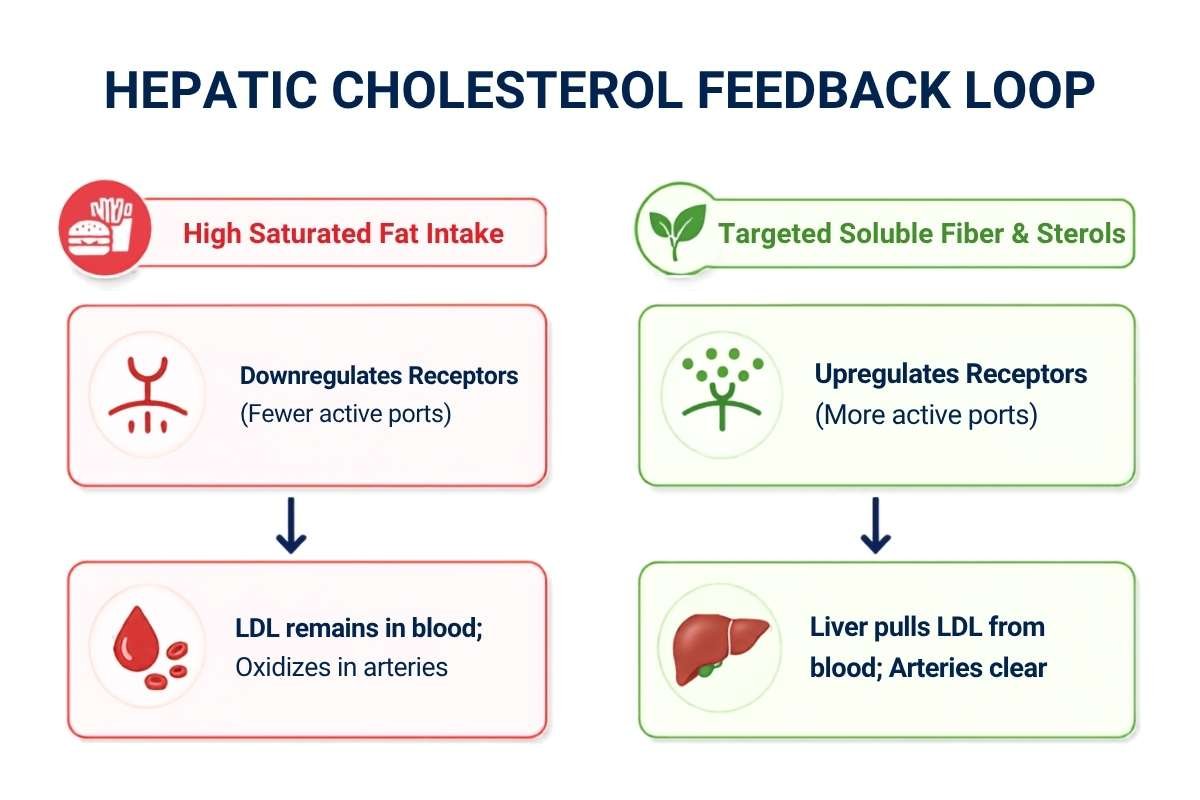
Standard health articles tell you what to eat, but they fail to explain the cellular feedback loops that control how to lower cholesterol naturally.
The surface of your liver cells contains specialized ports called LDL receptors. Think of these receptors as tiny magnets that pull harmful LDL particles out of circulation. The volume and activity of these receptors dictate your overall cholesterol clearance rate.
When you consume high amounts of saturated fats, you signal your liver to suppress its LDL receptor production. As a result, LDL particles circulate for longer periods, increasing their chances of oxidizing and initiating arterial plaque formation.
Conversely, when you execute the protocols in this guide, you deplete the liver’s internal cholesterol pool. To compensate, your liver cells upregulate, synthesizing and displaying thousands of new LDL receptors on their outer membranes. These newly activated receptors aggressively clear circulating LDL from your blood, demonstrating the molecular feedback loop that regulates systemic lipids.
Why does physical activity speed up cholesterol clearance?
Dietary changes establish the foundation, but physical activity provides the momentum. To accelerate how to lower cholesterol naturally, you must implement a structured, weekly exercise regimen.
Physical movement changes how your body transports and processes lipids. Aerobic exercise—such as brisk walking, running, cycling, or swimming- stimulates enzymes that transfer LDL from your blood vessels to your liver for excretion. Additionally, regular exercise increases the size of your LDL particles. Larger, fluffier LDL particles pose significantly less cardiovascular danger because they cannot easily penetrate your delicate arterial linings.
The exercise metric matrix
To achieve measurable improvements in your lipid profile, you must meet specific physical activity targets established by global health organizations:
| Exercise Modality | Weekly Volume Target | Biological Mechanism | Target Impact |
| Moderate-Intensity Aerobic | 150 to 300 minutes | Increases lecithin-cholesterol acyltransferase (LCAT) enzyme activity. | Raises protective HDL; increases LDL particle size. |
| High-Intensity Interval (HIIT) | 75 minutes | Depletes muscular glycogen; forces rapid lipid oxidation. | Reduces total circulating triglycerides. |
| Progressive Resistance Training | 2 to 3 sessions | Upregulates metabolic rate; burns visceral fat stores. | Lowers total body fat; improves insulin sensitivity. |
According to clinical guidelines from the World Health Organization (WHO), adults must aim for these physical activity thresholds to actively combat non-communicable diseases, including cardiovascular pathology.
What lifestyle habits unconsciously raise your LDL levels?
Two major variables can neutralize even the most meticulous diet and exercise program: tobacco use and excess visceral fat.
1. The immediate benefit of smoking cessation
Smoking tobacco introduces a highly toxic compound called acrolein into your bloodstream. Acrolein directly targets and structurally deforms HDL particles, stripping them of their ability to return cholesterol to the liver.
When you quit smoking, your body rapidly repairs this damage. Data from the Centers for Disease Control and Prevention (CDC) reveals that your HDL levels can rise by up to 10% within just a few weeks of your last cigarette, restoring your body’s natural arterial cleaning system.
2. The power of visceral fat loss
Carrying excess weight around your midsection triggers chronic, systemic inflammation. This inflammatory state prompts your liver to produce more LDL while suppressing your HDL levels.
Losing just 5% to 10% of your total body weight reverses this inflammatory signal. Weight loss reduces the liver’s production of very-low-density lipoproteins (VLDL), cutting off the precursor to harmful LDL at the source.
How long does it take to learn how to lower cholesterol naturally?
Many patients ask if they can resolve their high cholesterol quickly, often searching for ways to lower cholesterol naturally in 30 days. While your body begins adjusting its lipid processing within hours of a lifestyle change, systemic blood metrics require more time to reflect these shifts.
Your body requires a consistent, 30-to-90-day biological window to completely cycle its lipid pools and upregulate hepatic LDL receptors.
When you implement a new cardiovascular protocol, your doctor should wait at least 8 to 12 weeks before ordering follow-up blood panels. This timeline ensures your test results accurately measure the permanent, structural adaptations of your liver and cardiovascular system.
Frequently asked questions (FAQ)
Read these clinical answers to common questions about how to lower cholesterol naturally:
1. Can anyone lower their cholesterol without prescription statins?
While lifestyle modifications can lower your LDL cholesterol by 10% to 15%, genetic factors dictate a significant portion of your baseline lipid production. If you have familial hypercholesterolemia, your liver produces high levels of cholesterol regardless of your diet. In these cases, you must pair your healthy, natural lifestyle choices with prescription medication under direct medical supervision.
2. What are the best foods to eat to lower cholesterol?
Focus on foods high in soluble fiber and unsaturated fats. Eat oatmeal, oat bran, kidney beans, Brussels sprouts, pears, and apples daily. Integrate healthy lipid sources like extra virgin olive oil, avocados, walnuts, chia seeds, and wild-caught fatty fish to support your liver’s LDL receptor activity.
3. How does drinking water affect your cholesterol levels?
Dehydration causes your blood volume to contract, artificially concentrating the lipids, red blood cells, and proteins in your circulation. Drinking adequate water maintains optimal blood volume, supporting efficient circulation and ensuring your liver can filter waste and process lipids properly.
4. Do eggs raise your blood cholesterol levels?
Dietary cholesterol has a minor impact on blood cholesterol levels for the vast majority of people. Your liver adjusts its internal cholesterol production based on your dietary intake. Saturated fats and trans fats, rather than dietary cholesterol from eggs, are the primary drivers that raise harmful LDL.
5. Concluding Thoughts: The Vetted Framework
Mastering how to lower cholesterol naturally requires consistent, evidence-based habits rather than temporary detoxes. Clear the harmful saturated fats from your diet, load your meals with soluble fiber and plant sterols, and commit to consistent physical movement.
By taking control of these variables, you actively support your liver’s clearing power, protect your arteries from dangerous plaque, and build a strong foundation for long-term cardiovascular health.
Sources and References
- Lipoprotein Mechanics and Plaque Risks: National Heart, Lung, and Blood Institute (NHLBI) — High Blood Cholesterol Information
- Cardiovascular Prevention Strategies: American Heart Association (AHA) — Prevention and Treatment of High Cholesterol
- Dietary Fiber Guidelines: U.S. Food and Drug Administration (FDA) — Interactive Nutrition Facts: Dietary Fiber
- Physical Activity Guidelines: World Health Organization (WHO) — Global Physical Activity Fact Sheet
- Cardiovascular Risk Vitals: Centers for Disease Control and Prevention (CDC) — Cholesterol Management