Learn ways to build strength without gym using a proven system that works anywhere. This guide shows how bodyweight training, progressive overload, and structured routines help you gain real strength without equipment. Learn the five core principles, a practical weekly training plan, everyday activities that enhance strength, and simple ways to track progress at home. This makes fitness accessible, sustainable, and effective for beginners, busy professionals, travelers, and anyone seeking consistent results.
Bored with gym memberships that eat into your wallet and time? Not alone, over 80% of adults skip workouts because of access barriers. But studies have found that bodyweight training can boost strength by 20-30% in as little as 8 weeks, equivalent to weights (Journal of Strength and Conditioning Research, 2020).
How to build strength without the gym, get real results anywhere, no equipment required. In this guide, you will learn a proven blueprint. From the 5 core principles, a weekly no-gym structure, to turning everyday activities into secret strength builders, measuring gains at home, and learning who gains the most (for example, busy pros or travelers).
Is it possible to increase strength without the gym? Yes, access the complete no-gym plan and change up your routine today.
Table of Contents
Can you really build strength without the gym?
Yes, you can absolutely build strength without the gym. Your body is the only tool you truly need to create meaningful, measurable gains. The idea that you need machines, plates, and a locker‑room routine is more culture than science.
Myth vs reality of gym dependency
Gyms are convenient, but not magical. Strength is built by tension + adaptation: loading muscles enough to challenge them, then letting them recover and grow stronger over time. That tension can come from a barbell, a dumbbell, or your own bodyweight plus clever leverage (e.g., single-leg squats, push-ups on a porch, or step-ups).
Bodyweight athletes as proof
Calisthenics athletes, parkour practitioners, and gymnasts routinely reveal 20–30% strength and power gains in 6–8 weeks using mostly bodyweight-based progressions, underlining how effective tension-based training can be.
Why is equipment optional?
Equipment simply makes it easier to scale the load; it doesn’t change the underlying principle. With progressive overload, changing angle, tempo, reps, or rests. Home-based strength training produces results comparable to weight training for most people.
Psychological barrier of gym culture
Many people equate “real training” with a gym, but that belief is often a mental block, not a physiological requirement. Once you accept that strength is about consistent tension and adaptation, not location, you’re free to build it anywhere.
The 5 core principles of strength training without equipment:
You don’t need equipment to build strength; you need a clear, repeatable system. Here are the 5 Principles of strength training without Equipment, a proprietary framework that turns any space into a high‑value training zone. These are core Ways to Build Strength without Gym.
- Progressive Overload – Make exercises harder over time: slow the tempo, lift one leg, add reps, or shorten rest. Example: turn regular push-ups into feet-elevated or slow-tempo push-ups.
- Movement Patterns – Master 5 core patterns: squat, hinge, push, pull, and carry (e.g., step-ups, lunges, push-ups, rows using a towel, loaded walks).
- Stability First – Build control before power: single-leg squats, plank variations, and slow lunges create stronger joints and safer gains.
- Recovery Adaptation – Train hard 3–4 days weekly, then sleep, hydrate, and eat enough protein; your body adapts in the breaks, not just in the workout.
- Consistency Over Intensity – Missing workouts sabotages progress more than “easy” ones; 20 focused minutes, 4x/week, beats one brutal session.
This is the complete no-gym strength blueprint:
The Complete No‑Gym Strength Blueprint gives you a clear, repeatable system for every major movement category. So you know exactly what to do, any day, any location.
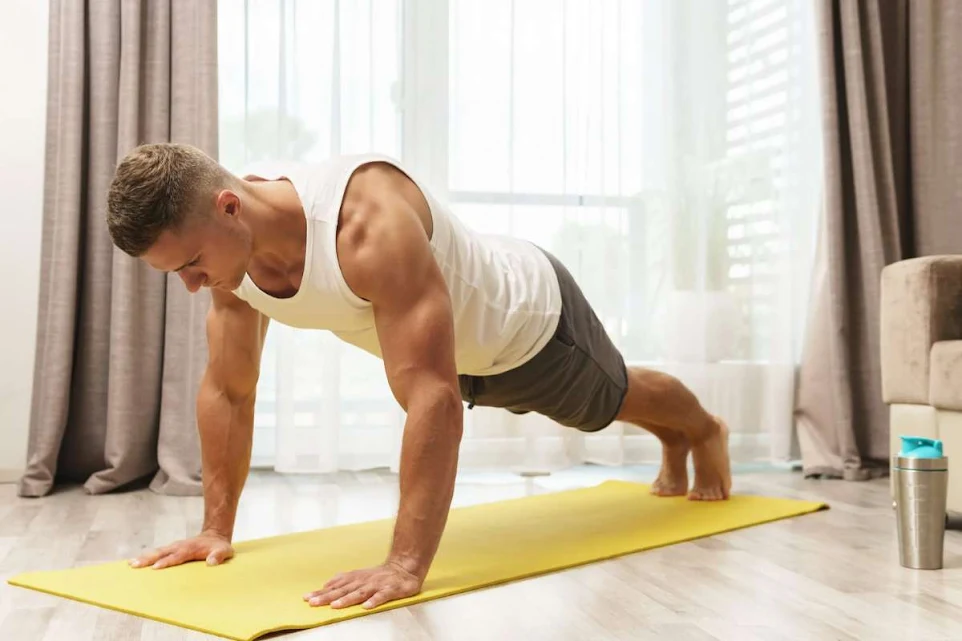
Push: push-ups (knees or incline for beginners), progressing to regular and then explosive clap push-ups for the advanced.
Pull: towel rows (loop towel over a sturdy bar or door handle), ideal for home pull-emulation.
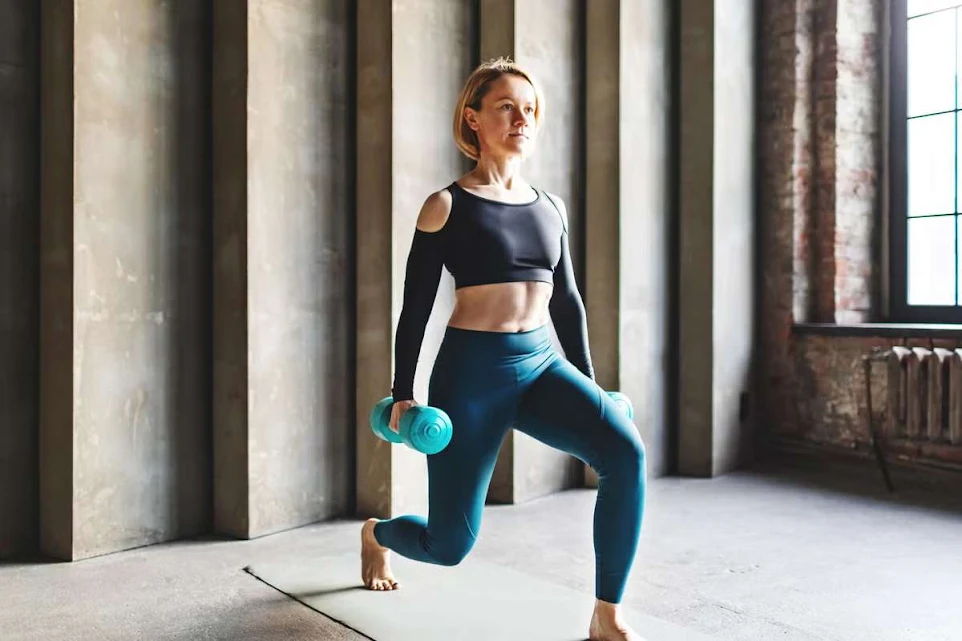
Legs: bodyweight squats → lunges → single-leg step-ups or pistol progressions for advanced.
Core: planks, bird-dogs, and dead bugs for stability; side planks and leg raises for strength.
Mobility: cat-cow, hip circles, and shoulder passes improve joint health and movement quality.
- Beginner (3x/week): 3 sets of 8–12 push-ups (easier variation), 3 sets of 10 bodyweight squats, 3 sets of 8 rows, 3 sets of 30-second plank, plus 5 minutes of mobility.
- Intermediate upgrade: add 3 sets of lunges per leg, slow-tempo push-ups, and 3 sets of 15-second side planks with 1 minute of mobility.
- Advanced progression: 4x/week with single-leg work (e.g., 3×8 pistol progressions), explosive push-ups, 4-set rows, loaded core work (e.g., moving planks), and 10 minutes of dynamic mobility. These progressions are powerful Ways to Build Strength without Gym.
What is the weekly training structure that works anywhere?
Ways to build strength without gym work work best when you follow a simple, repeatable weekly structure that removes decision fatigue. Here’s a practical, research-aligned setup you can use anywhere.
3-day minimalist plan (Mon/Wed/Fri):
Full-body workouts with push-ups, bodyweight squats, single-leg lunges, rows (towel or elevated), and planks. Three sets of 8–12 reps per exercise, 60–90 seconds rest, keeps the session under 30 minutes, and fits classic minimalistic strength-training guidance.
5-day strength-habit plan (Mon–Fri):
Alternate push, pull, legs, upper, and lower-body days, using push-ups, rows, squats, lunges, and core work. Each day is 20–25 minutes, mirroring multi-day splits that improve strength and recovery when volume is controlled.
15-minute daily method:
A quick circuit (e.g., squats, push-ups, lunges, planks, rows) for 12 minutes plus 2-3 minutes of mobility, repeated 5–6 days/week. Short, frequent sessions like this are shown to build strength and endurance effectively.
Recovery scheduling:
Take at least 1–2 full rest days weekly, and add light walks or gentle mobility on “active-recovery” days. This matches current recovery recommendations for home-based strength training.
Everyday activities that secretly build strength:
Everyday activities are quite strength‑builders when you move with intention. Instead of thinking of “exercise” and “chores” as separate, reframe them as functional training that builds real‑world strength.
Carrying groceries trains your grip, forearms, shoulders, and core like a farmer’s carry, especially if you split heavy bags into multiple trips and keep your torso tight.
Stair climbing strengthens quads, glutes, and calves, improves balance, and boosts cardiovascular fitness with just a few flights a day.
Floor sitting and standing up reinforce squat-pattern strength and hip mobility, protecting your back if you use your legs and keep your chest up.
Household functional movements, like laundry, sweeping, shoveling, or vacuuming. They force you to hinge, push, pull, and rotate, building endurance across the whole body.
Walking intensity methods, brisk walks, hill walks, or short bursts of faster steps. It turns casual walking into leg‑ and heart‑strength training, as recommended by general strength‑and‑function guidelines.
When you treat these tasks as part of your strength routine, you naturally bridge lifestyle and fitness intent. Reinforcing effective Ways to Build Strength without Gym.
How to measure strength gains at home?
Measuring progress doesn’t require complex equipment. You can track your gains through simple, repeatable benchmarks that validate your chosen ways to build strength without gym access:
- Push-Up Max: Record reps with chest-to-floor form. Increasing from 10 to 20 reps signals clear upper-body growth.
- Wall Sit Duration: Hold a 90-degree “chair” position against a wall. Aim to progress from 30 seconds to 90+ seconds to gauge leg endurance.
- Single-Leg Balance: Time your balance on each leg (eyes open, then closed) to measure core stability and joint health.
- Mobility & Depth: Note improvements in squat depth or shoulder reach, as increased range of motion often follows strength gains.
Consolidate these metrics into a strength journal. Logging your reps, hold times, and energy levels transforms vague feelings into data-driven results, keeping your motivation high and your training precise.
WHO benefits most from no-gym strength training?
Strength training isn’t exclusive to the weight room. In fact, many find that exploring ways to build strength without gym access is more sustainable and less intimidating. While anyone can see gains, these groups benefit most:
- Beginners: Bodyweight exercises provide a low-stakes environment to master form without the pressure of heavy iron.
- Busy Professionals: Eliminating the commute makes it possible to squeeze in a high-intensity session between meetings.
- Travelers: Hotel rooms become personal studios, ensuring fitness consistency regardless of location.
- Older Adults: Functional movements improve balance and bone density with a much lower risk of joint strain.
- Injury Recovery: Calisthenics allow for controlled, incremental resistance that is often easier on healing tissues than machines.
Ultimately, no-gym training democratizes fitness, making a stronger body accessible to anyone with a few square feet of floor space.
Success story: Sakshi Venkatraman’s 12kg transformation
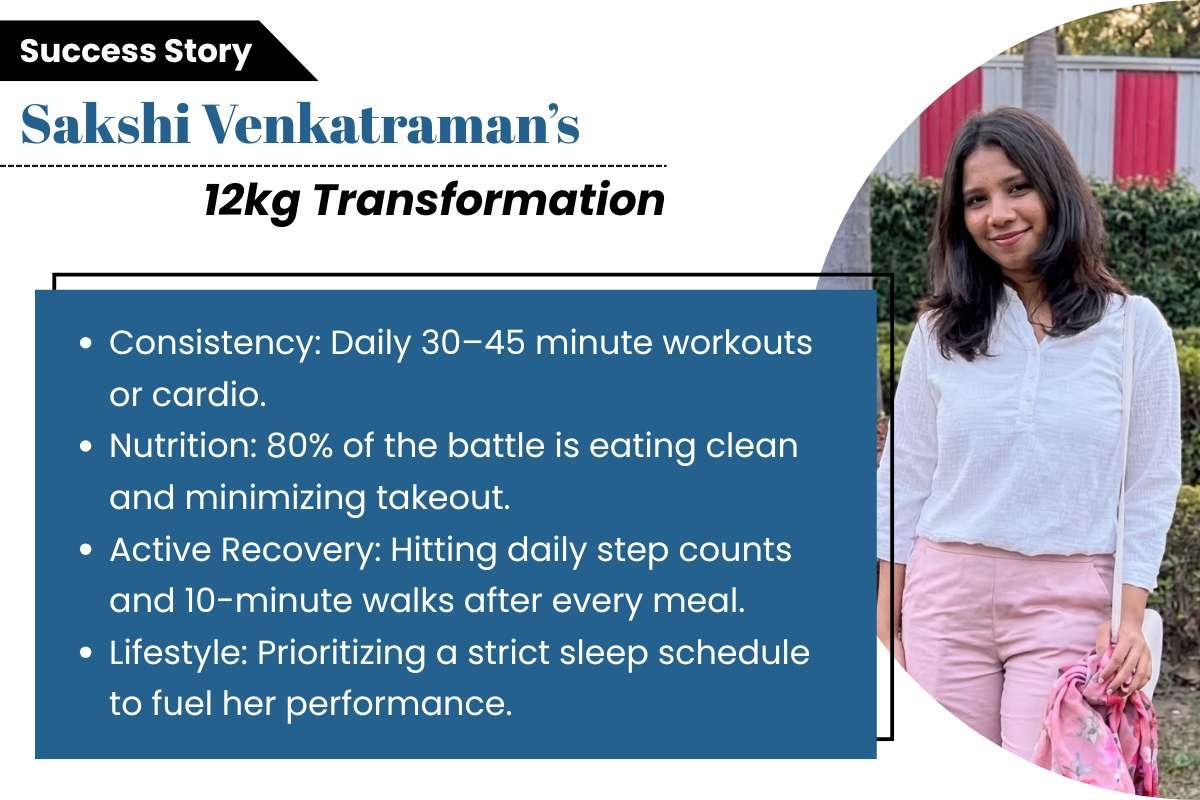
“After years of putting it off, I finally embraced home workouts post-pandemic,” says Sakshi Venkatraman, a 24-year-old finance professional. For Sakshi, finding ways to build strength without gym commutes was the only way to stay consistent amidst a hectic schedule. Over 24 months, she lost 12kg by prioritizing discipline and a ‘food-first’ mindset.
Her blueprint for success was simple:
- Consistency: Daily 30–45 minute workouts or cardio.
- Nutrition: 80% of the battle is eating clean and minimizing takeout.
- Active Recovery: Hitting daily step counts and 10-minute walks after every meal.
- Lifestyle: Prioritizing a strict sleep schedule to fuel her performance.
“If you want to level up, adding weights at home is one of the most effective ways to build strength without gym memberships,” Sakshi notes. “Home workouts taught me that when you eliminate the friction of a commute, determination does the rest.”
Conclusion:
You don’t need a gym to build a resilient body. You need a system. Sakshi’s 12kg transformation and the success of calisthenics athletes prove that the most effective ways to build strength without gym access are rooted in consistency and progressive overload. By learning the basic movements and tracking your progress in a strength journal, you can make a high-performance environment anywhere. It’s not the equipment you have, it’s the discipline you bring to your own living room.
Start your journey today
The hardest part is simply beginning. You don’t need perfect gear or a complex schedule, just the willingness to move. Pick one exercise from our blueprint right now, like a set of push-ups or a wall sit, and commit to a stronger you. Your progress starts with a single rep.
FAQ:
1. Can you build strength without a gym?
Strength exercises are easy to do at home. You can use resistance bands or weights such as dumbbells, or household items like water bottles. Or simply use your own bodyweight.
2. What is the 3-3-3 rule at the gym?
The “3-3-3 rule” in the gym is a sustainable, beginner-friendly training framework designed to balance effort with recovery, typically defined as 3 days of strength training, 3 days of cardio, and 3 days of active recovery/rest per week.
3. What are the 7 types of strength?
The seven key types of strength in physical fitness include Maximum Strength, Relative Strength, Strength Endurance, Speed Strength, Explosive Strength, Starting Strength, and Agile Strength.
4. At what age is it hardest to gain muscle?
Muscle building becomes harder around age 50, when your body starts showing clear changes in how it responds to training and nutrition.
5. Which muscle is hardest to grow?
Calves are widely considered the hardest muscle to grow due to high genetic influence, high daily endurance, and short muscle bellies.
Links and Source: