Key Takeaway:
- WHO declares Ebola Outbreak in Central Africa, in DRC and Uganda, a global public health emergency amid rising deaths and suspected cases.
- Conflict-driven displacement and urban infections increase the risk of rapid regional spread.
- No approved vaccine exists for the Bundibugyo strain; scientists are working on experimental treatments.
The World Health Organization chief warned Tuesday that a fast-growing Ebola outbreak in the Democratic Republic of Congo and Uganda, linked to more than 130 deaths and over 500 suspected cases, risks wider regional spread.
WHO declares emergency as cases rise in cities
The head of the World Health Organization said the expanding Ebola outbreak in Central Africa demands urgent global attention as conflict, population displacement, and urban transmission increase the threat of wider contagion.
WHO Director-General Dr. Tedros Adhanom Ghebreyesus told the World Health Assembly in Geneva that the scale and speed of infections “warrant serious concern.” More than 130 deaths are believed to be linked to the outbreak, alongside more than 500 suspected cases.
Tedros declared the situation a public health emergency of international concern on Saturday, marking the first time a WHO chief has issued such a declaration before convening an emergency committee.
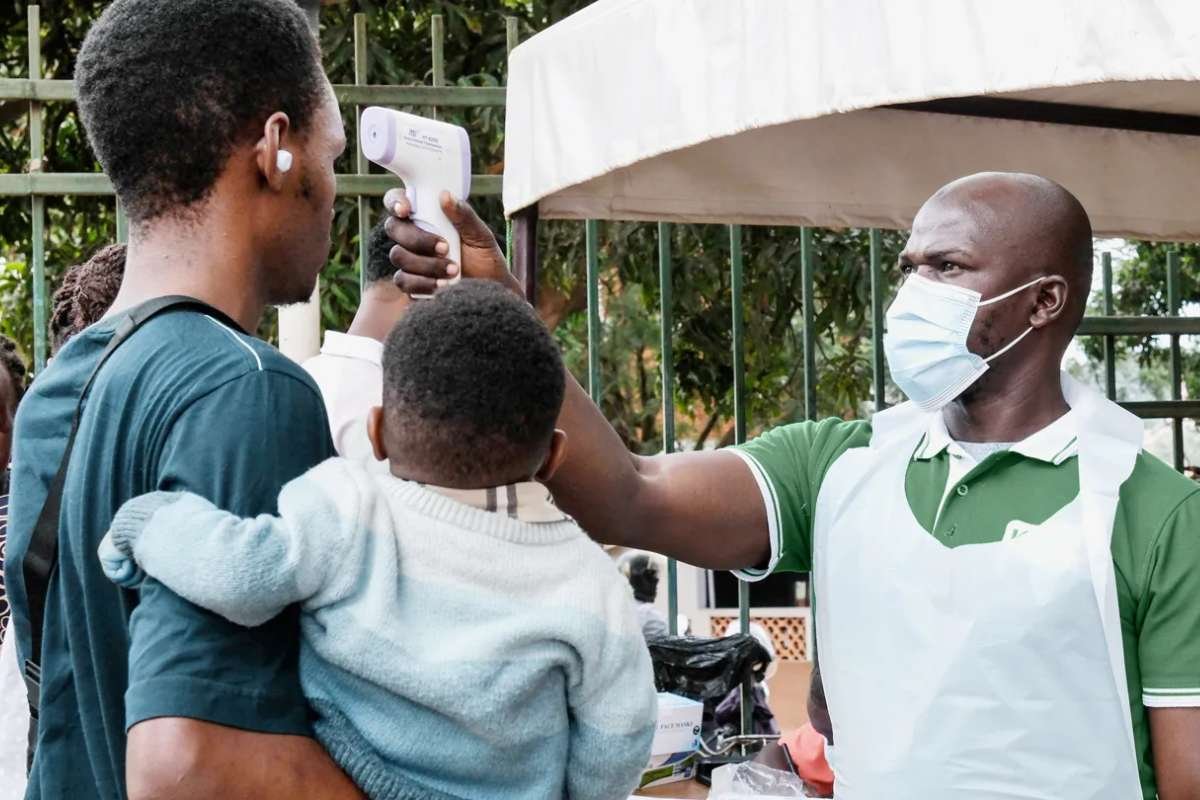
Cases have emerged in major urban centers, including Kampala in Uganda and the Congolese cities of Goma and Bunia. Urban transmission raises the likelihood of faster spread because of dense populations and frequent travel.
“We are seeing worrying signals that this outbreak has the potential to spread further and cause more deaths,” Tedros said.
Health officials also reported infections among medical staff, suggesting healthcare-associated transmission, a development experts say complicates containment efforts.
Conflict and displacement complicate response efforts
Health workers face mounting challenges reaching affected communities as violence intensifies in eastern Congo’s Ituri province, where the Ebola Outbreak in Central Africa was first detected in early May.
Tedros said insecurity in the region has displaced more than 100,000 people in recent months. Population movement during an outbreak increases transmission risks as infected individuals travel to new areas.
Aid agencies struggle to access remote communities because of ongoing conflict, damaged infrastructure, and limited medical resources.
A senior U.S. State Department official confirmed Tuesday that the United States has deployed a disaster assistance response team to support containment efforts in both the Democratic Republic of Congo and Uganda.
Dr. Anne Ancia, WHO’s representative in Congo, said early detection efforts were slowed because initial tests in Bunia showed negative results for the more common Zaire strain of Ebola. Genetic analysis later confirmed the outbreak involves the Bundibugyo strain.
No approved vaccine as scientists pursue treatment options
The current epidemic is caused by the Bundibugyo strain of Ebola virus, for which no approved vaccines or targeted treatments exist, according to WHO officials, in the ongoing Ebola Outbreak in Central Africa.
Ebola has an average fatality rate of about 50%, the WHO says. The virus spreads through direct contact with bodily fluids of infected individuals or contaminated materials, including contact with those who have died from the disease.
Symptoms range from fever, fatigue, and muscle pain to vomiting, diarrhea, and organ failure. Some patients experience internal or external bleeding.
Dr. Satish Pillai, deputy director in the Division of Preparedness and Emerging Infections at the U.S. Centers for Disease Control and Prevention, said researchers are working to develop a monoclonal antibody therapy as a potential treatment, but provided no timeline for availability.
Despite the absence of vaccines, health authorities said genetic fingerprinting shows similarities to outbreaks in 2007 and 2012, allowing existing diagnostic tools to detect the virus.
Global health leaders urged governments and humanitarian groups to strengthen surveillance, protect healthcare workers, and expand access to care to prevent further escalation.