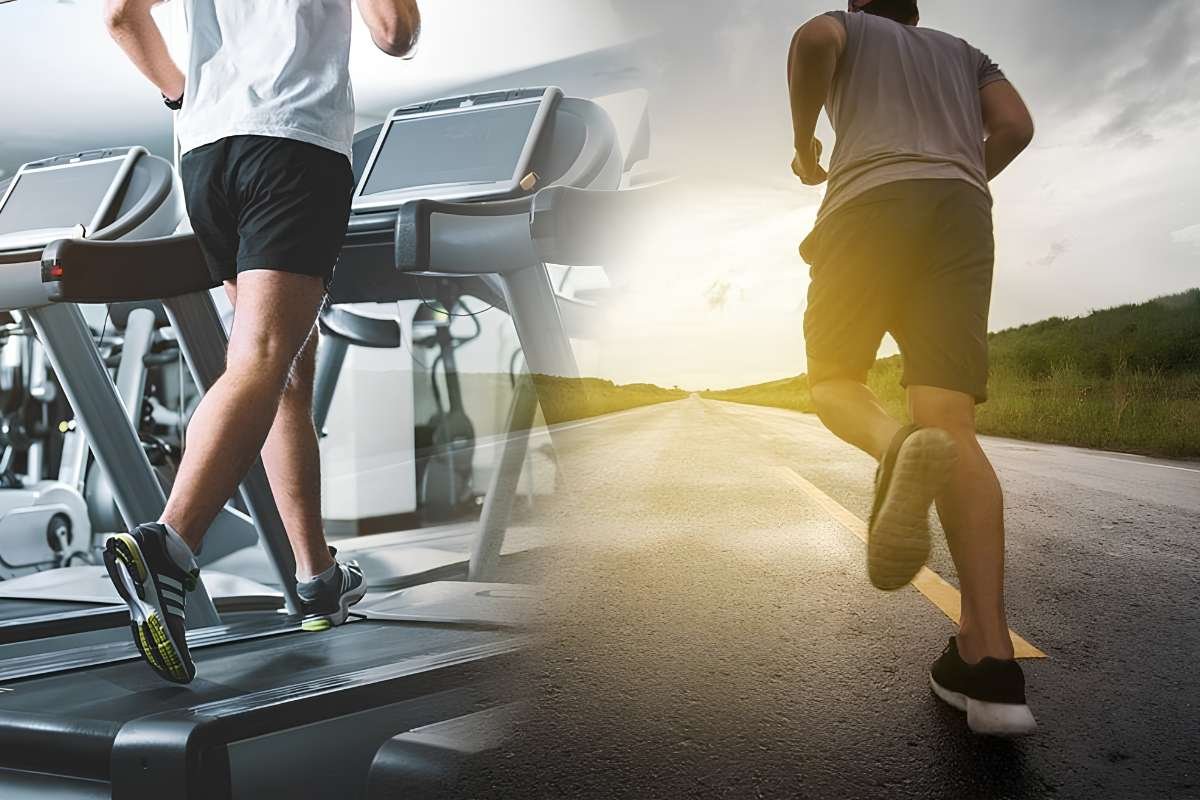
If you’re confused between treadmill vs walking outside for fat loss and fitness. This guide shows which actually burns more calories, improves endurance, and fits your lifestyle best. Outdoor walking slightly increases calorie burn through terrain and wind. While treadmill incline walking can outperform it for fat loss. The real answer depends on your goal, consistency, and environment. This blog breaks down science-backed differences, real-world factors, and a hybrid strategy to help you choose smarter.
For the most effective, practical way to walk for fitness: treadmill or walking outside? Studies have shown that walking on a treadmill can burn up to 10-15% fewer calories than walking briskly outside at the same speed, due to reduced wind resistance and a different walking style. Walking outside engages more stabilizing muscles and can increase energy expenditure by incorporating varied terrain.
This article compares “Treadmill vs Walking outside” to highlight clear, data-backed differences in calorie burn, biomechanics, and real-world factors such as air quality, safety, and time. Read on for practical comparisons, research-backed numbers, and a simple decision framework to help you choose the best option for your goals, plus a hybrid strategy that combines benefits from both.
Table of Contents
The real difference: treadmill vs walking outside
It’s not really the speed or the distance that is the difference between treadmill and outdoor walking. It’s the way your body perceives movement. Treadmills are smooth and predictable in surface, and the belt is actively pulling under your feet, making the motion feel more controlled and mechanically efficient. Outdoors, every step is met with changing textures, sidewalk seams, patches of grass, slight slopes, and wind. Your body is constantly adapting, and the neuromuscular demand increases at the same pace.
| Aspect | Treadmill walking | Outdoor walking |
| Environment | Controlled, predictable, no wind or terrain changes | Unpredictable, variable terrain, wind, and elevation |
| Motion type | Belt‑assisted; slightly reduced push‑off effort | Fully self‑propelled with full push‑off effort |
| Terrain & stability | Flat, even surface; fewer stabilizer demands | Uneven ground, slopes; more ankle/hip/core stability |
| Neuromuscular demand | Lower stabilizer activation, more predictable | Higher stabilizer and coordination demands |
| Mental experience | More monotony, consistent visual field | More sensory stimulation, engaging scenery |
| “Same speed” feeling | Often feels easier at the same pace | Often feels harder at the same pace |
| Key systemic effect | Better mechanical efficiency, easier pacing | Greater neuromuscular demand, functional strength |
Calorie burn & fat loss: what actually works?

Outdoor walking often burns slightly more calories than treadmill walking at the same speed because of wind resistance, terrain changes, and constant micro‑adjustments in your stride. These small corrections, stepping over cracks, tilting for slopes, or pushing against air, force your muscles to work a bit harder, nudging energy use up by roughly 3–7% for many people.
On the other hand, a treadmill can burn more fat than flat outdoor walking when you use an incline of 6–12%, because the uphill load recruits more glutes, hamstrings, and calves and raises heart rate without increasing speed. Studies and fitness-clinic guidance show that incline walking can increase calorie burn by about 30–50% compared with flat walking at the same pace, and uses more fat as fuel during the session.
For fat loss, what matters most is not “treadmill vs walking outside,” but:
- Duration (how long you walk),
- Heart-rate zone (staying in a moderate zone for steady fat oxidation), and
- Incline control (using incline to safely intensify effort without rushing into jogging).
Example comparison:
For a typical adult, a 5 km outdoor walk at a steady pace might burn about 5–10% more calories than a 5 km treadmill walk on flat, mainly due to wind and terrain. But if you set the treadmill at 5–7% incline, the treadmill session can match or even exceed the outdoor calorie burn, while still being joint‑friendly and easy to control.
So the myth “outdoor is always better for weight loss” doesn’t hold; the real edge comes from smart use of speed, incline, and duration, whether you’re on a treadmill or outside.
Biomechanics: why your body feels different
On a treadmill, your stride shortens and becomes more repetitive as the belt pulls your foot forward, reducing braking and push-off effort. Outdoors, your stride lengthens and varies to handle curbs, slopes, and uneven ground, increasing braking and propulsion load.
Treadmills cushion the impact on knees and hips; outdoor walking creates higher ground-reaction forces but strengthens stabilizers and improves joint resilience.
Muscle-wise, outdoor walking activates glutes and stabilizers more through constant micro-adjustments, while treadmill walking enforces consistent cadence and stride for repetition efficiency.
- Treadmill = repetition efficiency.
- Outdoor = adaptive strength training
These are the real-world factors nobody talks about:
When deciding between walking outdoors and using a treadmill, several “invisible” factors can make or break your weight loss journey. While walking seems simple, real-world friction often stalls progress.
1. Environmental hazards
- Air pollution: During exercise, you inhale more PM2.5 deep into the lungs, raising heart and lung risks.
- Heat & humidity: High humidity reduces sweat cooling, causing faster fatigue and “jelly legs,” making short walks feel much longer.
2. Safety & logistics
- Safety risks: 76% of pedestrian deaths occur after dark; dim paths and hazards like dogs trigger stress and reduce enjoyment.
- The time tax: Driving 20 minutes to a park for a 30-minute walk cuts time-efficiency versus a treadmill at home.
3. The psychological edge
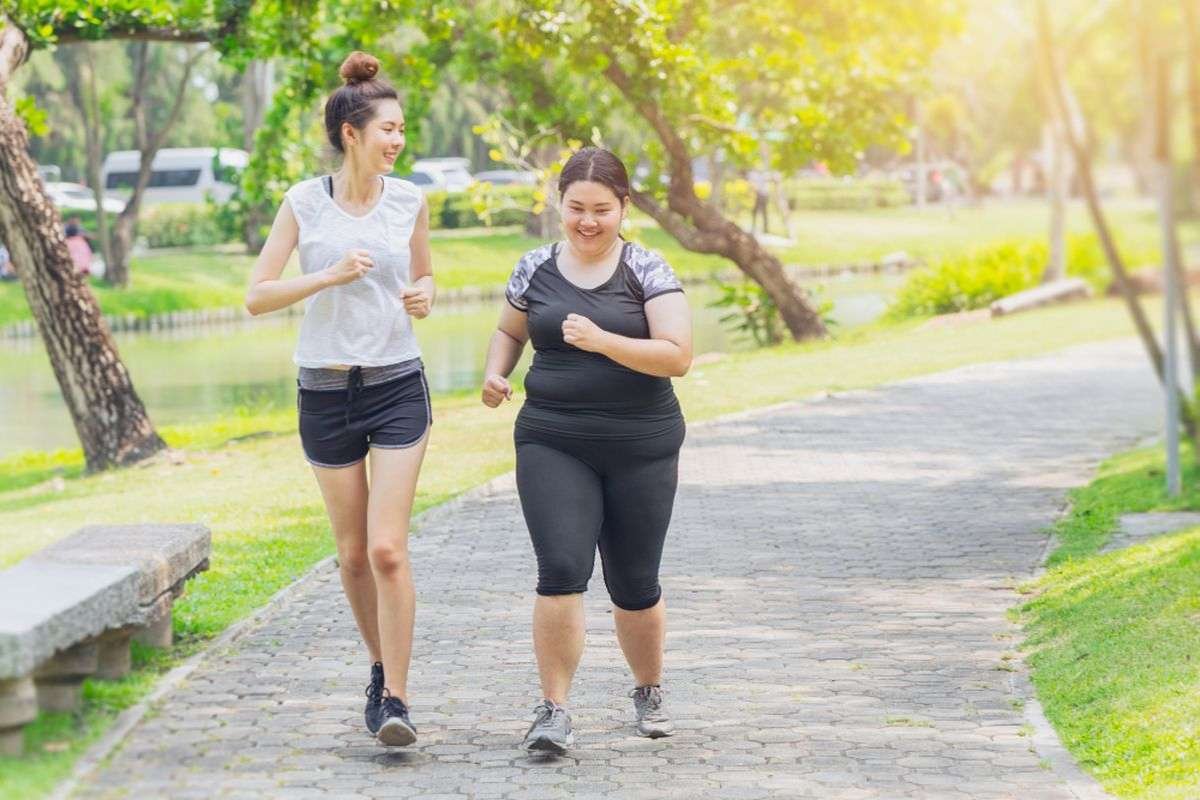
- Adherence: The key factor for fat loss is consistency.
- Weather inconsistency: Rain or extreme weather breaks habit loops; treadmills offer a stable, predictable environment.
- Reduced friction: Fewer decisions (no weather checks, safety prep, or commute) make treadmill walking easier to sustain long-term.
Which one is better for your goal?
When weighing treadmill vs walking outside, the “better” choice depends on your goal, not on which one feels easier.
1. If your goal is fat loss:
Use an incline treadmill (6–12%) for intense, controlled sessions that burn more calories and target fat with safer joint loading.
Use outdoor walking when you can commit to longer, steady-pace walks that build daily movement consistency.
2. If your goal is endurance:
Outdoor walking wins because varied terrain, slopes, and wind build stamina and functional endurance that flat treadmill walking doesn’t fully match.
3. If your goal is joint health (knees, hips, back):
A treadmill is usually better thanks to cushioned decks and even surfaces that reduce impact and strain.
4. If your goal is mental health (stress, mood, focus):
Walking outside is strongly preferred: green spaces, changing scenery, and fresh air improve mood and cognitive function more than staring at four walls.
5. If your goal is consistency (rain, heat, schedule):
A treadmill wins: it’s weather-proof, time-efficient, and easier to plug into tight routines.
Simple decision tree
- If fat-loss intensity → choose an incline treadmill.
- If fat-loss consistency → choose walking outside.
- If endurance → choose walking outside.
- If joint health → choose treadmill.
- If mental health → choose walking outside.
- If max consistency → choose treadmill.
Overall, treadmill vs walking outside isn’t a one-size-fits-all. It matches the mode to your primary goal, then tweaks speed, incline, and duration from there.
Here are some effective hybrid walking strategies:

A hybrid walking strategy blends the strengths of treadmill vs walking outside into one sustainable plan.
Use a weekly split: 3 days of incline treadmill walking to build intensity, calorie burn, and joint-friendly consistency, plus 2–3 days of outdoor walking to gain terrain adaptation, mental refresh, and functional endurance.
Apply seasonal adjustment: go treadmill-heavy in summer to avoid heat and dehydration, and outdoor-heavy in cooler winter months when air quality and temperature are more favorable.
This approach offers clear injury prevention benefits: the cushioned, controlled treadmill days reduce impact and overuse stress, while the outdoor days build stabilizer strength and joint resilience.
Psychologically, the hybrid model boosts sustainability: treadmill walking removes weather and commute friction, so you can maintain frequency, while outdoor walks keep the routine engaging and enjoyable, making it easier to stick with it long-term.
Personal insight:
My real-world experience with treadmill vs walking outside has become super clear two years into working out. As a 24-year-old content writer, I have a purpose for each mode. When I want to walk in a controlled, predictable environment and push for intensity, using incline, tracking speed, and driving fat loss, I hop on the treadmill. It’s a great way to get lean and get my body ready to do more intense efforts.
On the other hand, if I want something easy, peaceful, and less intense, I step outside. Walking outside won’t spike calorie burn like a vigorous treadmill workout, but it will work quietly to build stamina, mental calm, and capacity for daily movement. It’s the “recovery style” walk that keeps me consistent without pounding my joints.
But the big takeaway for me: Treadmill walks get my body ready to push harder when life calls for it, and outdoor walks keep my long-term habits and mood going. I personally don’t see treadmill vs walking outside as a rivalry but as two complementary tools serving different goals and moods.
Conclusion:
The result of treadmill vs walking outside isn’t about picking a winner. It’s about picking the right tool for your goal and lifestyle. A treadmill offers adjustable intensity, joint-friendly impact, and weather-proof consistency. Walking outdoors builds endurance, mental stability, and real-world resilience. A smart weekly plan that combines both incline treadmill sessions for fat loss and tougher days, and outdoor walks for recovery, mood, and endurance gives you the full package. The real victory isn’t a treadmill or pavement, but a routine that marries your body, schedule, and psychology so well that you actually stick with it.
FAQ:
1. Is 10,000 steps on a treadmill the same as walking outside?
A 10,000-step walk on a treadmill is almost identical in step count and joint impact, but slightly less effective for calorie burn and muscle activation.
2. Can I use a walking treadmill if I have knee problems?
If you have knee pain, a treadmill can be invaluable in getting you moving at your own speed. Choose a treadmill with a cushioned walking belt for lessened impact on your joints, and set it at a very slight incline.
3. What exercise is 6 times better than walking?
A 2025 study published by the University of Sydney found that on a per-minute basis, vigorous-intensity exercise, like stair sprints, fast running, and cycling.
4. What exercise is hardest on the knees?
Exercises that place the most stress on the knees include deep squats, weighted lunges, full-arc leg extensions, and high-impact jumping (such as burpees or jumping jacks).
5. How long should I walk on the treadmill?
For many, a 30-45 minute treadmill workout is the sweet spot. It’s long enough to achieve a solid calorie burn and improve cardiovascular health without feeling like it’s taking up too much of your day.
Sources and Links:
https://www.womenshealthmag.com/fitness/a19913734/running-outside
https://www.lifespanfitness.com.au/blogs/fitness-blogs/does-an-incline-treadmill-burn-fat
https://www.healthline.com/nutrition/running-on-treadmill-vs-outside
https://pubmed.ncbi.nlm.nih.gov/34619613
https://sylvarony.com/2626/ultimate-fitness-outdoor-walks-vs-treadmill