Key Takeaway:
- A second American infected with the Bundibugyo strain of Ebola in the DRC has been evacuated to Germany for specialized treatment.
- Samaritan’s Purse confirmed the patient is one of its logistics staff members and has launched contact tracing after the positive test.
- The DRC’s Ebola outbreak has surpassed 1,900 cases and 700 deaths, with the WHO emphasizing protection for frontline health workers.
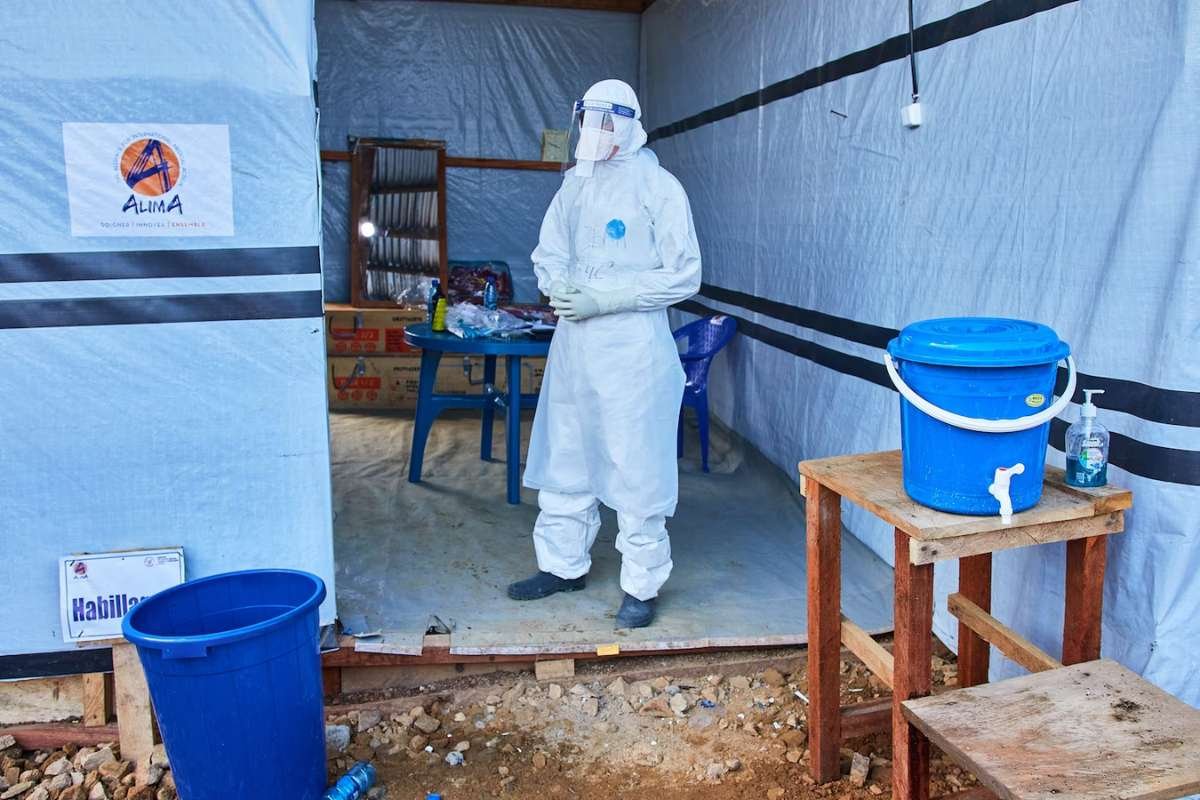
A second American infected with the Bundibugyo strain of Ebola in the Democratic Republic of the Congo has been evacuated to Germany for treatment after testing positive while supporting outbreak response efforts, health officials said Monday. This second American with Ebola case comes as the country’s Bundibugyo-strain Ebola outbreak continues to expand across Ituri province.
WHO confirms evacuation as outbreak continues
The World Health Organization said Monday that the patient had been receiving clinical care and close monitoring in Ituri province, the center of the Democratic Republic of the Congo’s ongoing Ebola outbreak.
The U.S. Centers for Disease Control and Prevention said over the weekend that the patient works for a humanitarian aid organization and tested positive for the Bundibugyo virus, the strain responsible for the current outbreak.
In a post on X, WHO Director-General Dr. Tedros Adhanom Ghebreyesus said the agency had supported the patient’s treatment before the transfer.
“As infections among response personnel are not unexpected in an outbreak of this scale, protecting frontline responders must remain a top priority,” Tedros wrote. “We are deeply grateful for the courage and commitment of all health workers working to end this outbreak.”
Samaritan’s Purse identifies staff member
Samaritan’s Purse confirmed Monday that this second American with Ebola is one of its staff members serving in Bunia, DRC.
“We can confirm that one of our Samaritan’s Purse staff members working in Bunia, Democratic Republic of the Congo, has tested positive for the Ebola virus,” Franklin Graham, the organization’s president and CEO, said in a statement.
Graham said the employee has served on the organization’s Disaster Assistance Response Team for 15 years and had worked in a logistics role in the DRC during the past month. He said the staff member was not involved in direct patient care at the group’s two Ebola treatment centers.
The organization said it immediately notified the CDC, the U.S. State Department, and the DRC government after learning of the positive test. It also began contact tracing to identify anyone who may have been exposed.
Previous American recovered after treatment
The latest evacuation follows an earlier case involving Dr. Peter Stafford, an American physician who contracted Ebola while treating patients in the DRC. Unlike the second American with Ebola announced this week, Stafford’s case ended in a full recovery, offering some reassurance as this new case unfolds.
Stafford was transferred to Charité University Hospital in Berlin for specialized care. His wife, Dr. Rebekah Stafford, and their four children were also evacuated to Germany as high-risk contacts and stayed in a separate area at the hospital.
Stafford was discharged in June after recovering from the illness, and his family has since returned to the United States.
The DRC’s Ministry of Health reports that the current outbreak has resulted in more than 1,900 confirmed cases and more than 700 deaths. Health authorities continue surveillance, treatment, and contact tracing efforts as they work to contain the spread of the virus, with updated figures available through CDC’s official outbreak tracker.
The Bundibugyo strain is one of several Ebola virus species known to infect humans. While vaccines and treatments have improved the response to some Ebola strains, outbreak control continues to rely heavily on rapid diagnosis, patient isolation, contact tracing, and infection prevention measures.