Key Takeaway:
- Cancer immunotherapy has significantly improved survival and become standard care for several cancer types over the past 15 years.
- Future breakthroughs depend on overcoming T-cell exhaustion, improving cancer vaccines, and expanding therapies for solid tumors.
- Researchers are prioritizing AI, neoantigen-based therapies, and in vivo immune engineering to make treatments more effective, accessible, and scalable.
Cancer immunotherapy has transformed treatment for many patients over the past 15 years, but researchers now say the field must overcome persistent scientific hurdles to deliver broader and more durable benefits.
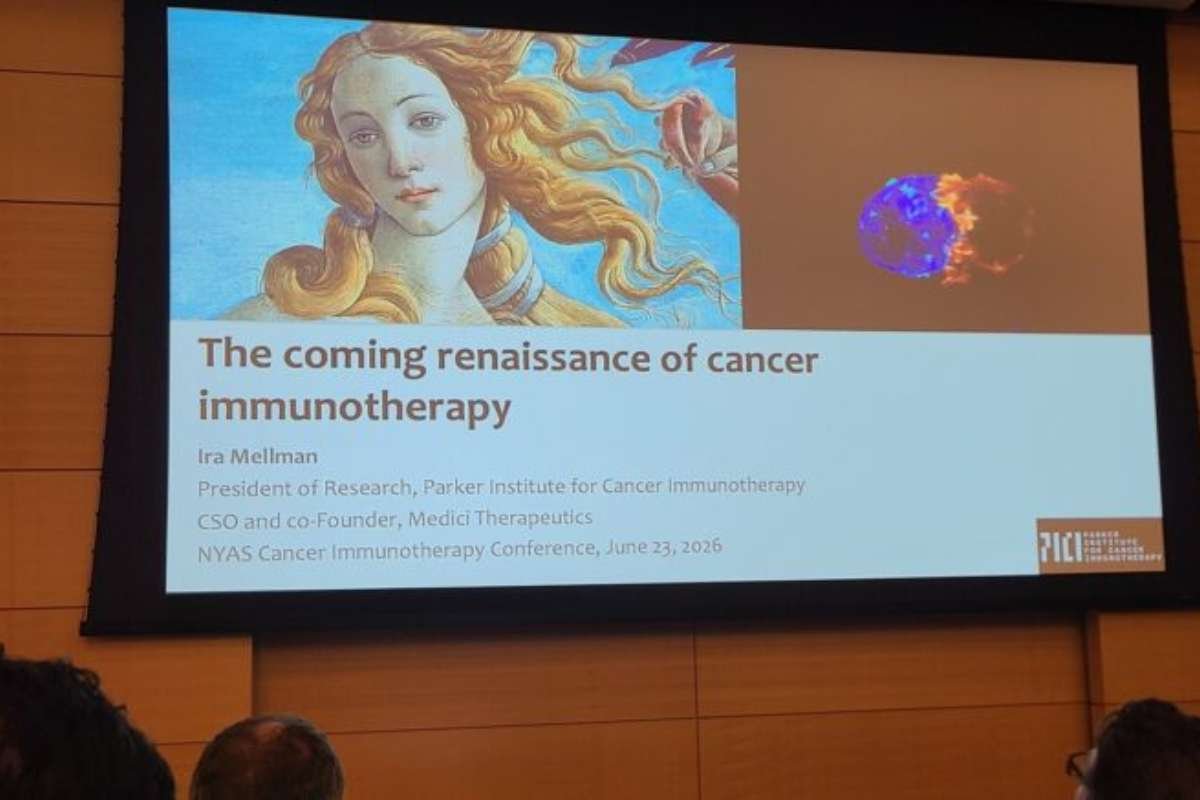
Speaking during the opening keynote at the Frontiers in Cancer Immunotherapy Symposium hosted by The New York Academy of Sciences on June 23, Ira Mellman, president of research at the Parker Institute for Cancer Immunotherapy, said recent advances have changed cancer care while exposing new challenges that require fresh approaches.
“We’ve had unprecedented success both clinically and commercially” across multiple cancer therapies, Mellman said. He added that many treatments have progressed from laboratory research to U.S. Food and Drug Administration approval within a relatively short period, improving survival and becoming standard care for several cancers.
Scientists Target T Cell Exhaustion and Vaccine Development
Mellman outlined how effective immune responses depend on activating T cells, which eventually become exhausted and lose their ability to attack tumors efficiently. Researchers initially focused on activating these immune cells, but are now studying ways to restore their function after exhaustion.
He said cancer vaccines represent one strategy to address that problem by generating larger numbers of effective T cells before exhaustion occurs.
“The sole purpose of vaccine therapy, as we think of it, is to generate more and better T cells,” Mellman said, describing vaccines as a way to stimulate the body’s own immune response against tumor-related targets.
He also emphasized the importance of the tumor microenvironment, describing it as a major influence on whether immune cells can effectively attack cancer. Understanding interactions between tumors and surrounding tissues, he said, could open new opportunities for treatment while presenting additional scientific challenges.
Researchers Outline Priorities for the Next Decade
Despite recent progress, Mellman said the field needs what he called a “renaissance” because many promising approaches have produced mixed results. Efforts to identify new immune checkpoint targets have largely stalled, CAR T-cell therapies remain less effective against solid tumors, and Cancer Immunotherapy vaccines still require stronger clinical evidence outside certain postoperative settings.
He identified four priorities for the next decade: developing next-generation cell therapies for solid tumors, expanding neoantigen-based targeting strategies, advancing in vivo immune engineering to improve access and reduce costs, and adopting a broader understanding of cancer biology that includes artificial intelligence and the tumor microenvironment.
Mellman also urged scientists to move promising discoveries into clinical studies while maintaining a strong foundation in basic science. He cited his team’s research on mRNA vaccines for pancreatic cancer, where intravenous delivery showed responses in some patients but revealed differences linked to previous spleen removal, underscoring the complexity of immune responses.
“There is a wealth of new understanding that we can generate if we move to the clinic quickly, but do so in a way that really still concentrates on the underlying basic science,” Mellman said.
He concluded that combining proven scientific concepts with engineering advances could improve Cancer Immunotherapy treatment options for more patients in the years ahead.
Visit The Lifesciences Magazine to read more.