Learn how atrial fibrillation affects your heart, why early detection matters, and what treatment and lifestyle changes can help reduce complications. This guide explains how AFib develops, the symptoms to watch for, stroke risk, treatment decisions, and everyday management. You’ll also discover what living with atrial fibrillation means and when to seek urgent medical care to protect your long-term heart health.
Atrial fibrillation is one of the most common types of abnormal heart rhythms. Many people don’t realise they have AFib until the symptoms are more obvious or it is detected during a routine exam. AFib may occur in brief episodes, but if left untreated, it can increase your risk of stroke, heart failure, and other cardiovascular complications. Knowing what happens after diagnosis, recognising subtle signs, and learning how it develops can help you get timely medical care and make informed treatment decisions.
This guide explains not only the condition itself but also what it means for daily life and long-term heart health.
Table of Contents
What is atrial fibrillation and why does it matter?
Atrial Fibrillation is an irregular heart rhythm where the upper chambers of the heart beat out of sync with the rest of the heartbeat. The main concern is not usually the episode itself. But what repeated episodes can do over months or years is increase the risk of blood clots, stroke, and heart failure.
Simple explanation
In a normal heartbeat, the heart beats in a steady, coordinated pattern. In AFib, that pattern becomes chaotic, so the heart does not pump blood as efficiently.
Why it matters
This irregular rhythm can let blood pool in the heart, which raises the chance of clot formation. If a clot travels to the brain, it can cause a stroke, which is why AFib is taken seriously even when symptoms feel mild.
Why do people miss it?
Many people with AFib do not notice symptoms at all. Others may only feel occasional palpitations, fatigue, shortness of breath, dizziness, or a fluttering heartbeat. This can be easy to ignore or blame on stress.
Why early detection helps
Finding AFib early matters because treatment can lower stroke risk and help control the heart rhythm or rate. Early diagnosis also gives time to manage related risks like high blood pressure and prevent the condition from quietly progressing.
How does atrial fibrillation affect the heart?
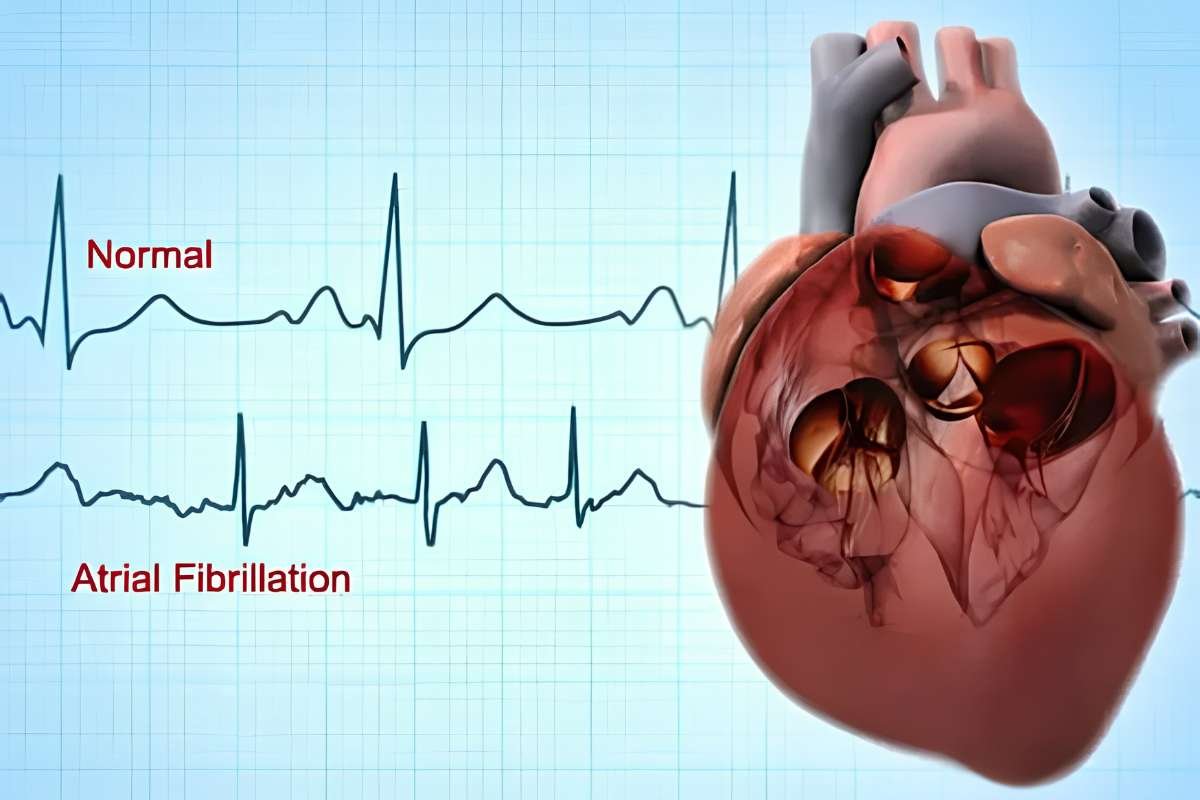
Atrial Fibrillation changes the heart’s normal electrical pattern so the upper chambers quiver instead of squeezing in a steady rhythm. That small change can start a chain reaction that affects blood flow, clot risk, and pumping strength.
How it affects the heart
- The heart’s electrical signals become irregular, so the atria do not contract in a coordinated way.
- Because the atria are not squeezing properly, blood can pool in them instead of moving forward smoothly.
- When blood sits still, it can clot more easily.
- If a clot leaves the heart and travels to the brain, it can block blood flow and cause a stroke.
- Over time, the fast and irregular rhythm can make the heart work harder and pump less efficiently, which can contribute to heart failure.
Why the progression matters
The key issue is that AFib is often not dangerous because of the beat itself in that moment; the bigger concern is what repeated episodes can do over time. As the rhythm stays irregular, the heart becomes less efficient, blood flow becomes more sluggish, and clot risk rises.
A simple way to picture it
Think of the atria as a pair of chambers that should squeeze blood forward in order. In AFib, they quiver instead, so blood moves less smoothly, may pool, and can form clots that create serious complications later.
Symptoms that shouldn’t be ignored:
The symptoms can range from obvious to completely silent. Some people feel palpitations or a fast, irregular heartbeat, while others only notice fatigue, dizziness, shortness of breath, weakness, or chest discomfort.
| Symptom group | What it can look like |
| Common symptoms | Fluttering or pounding heartbeat, rapid and irregular pulse, fatigue, shortness of breath, weakness |
| Less obvious symptoms | Dizziness, faintness, anxiety, sweating, reduced exercise tolerance, vague tiredness. |
| Symptoms requiring emergency care | Chest pain or pressure, stroke signs such as face drooping, arm weakness, speech trouble, sudden vision changes, severe headache, trouble walking, confusion |
Some people have no symptoms at all, and AFib is found only during a checkup or another test. Symptoms vary because AFib can be brief or constant, fast or just irregular, and people notice changes differently depending on age, activity level, and other health conditions.
The key warning sign is that symptoms can seem mild but still matter. Chest pain or stroke symptoms need urgent care right away because AFib can raise stroke risk.
Understanding stroke risk and possible complications:

Atrial Fibrillation creates an irregular electrical pattern in the atria, so the upper chambers quiver instead of squeezing in a coordinated way. That disruption is what starts the chain of problems, not just the fast pulse itself.
When the atria do not empty well, blood can pool, especially in the left atrial appendage, and blood clots more easily. If a clot forms and moves out of the heart, it can block blood flow to the brain and cause a stroke.
Not every person has the same risk because doctors weigh several factors, not AFib alone. Age, high blood pressure, diabetes, prior stroke, heart failure, and vascular disease all change the overall risk picture, which is why treatment decisions are individualized.
Doctors commonly estimate stroke risk with scoring tools such as CHA2DS2-VASc, then match treatment to that risk level. That helps decide whether a person may benefit from anticoagulant medicine to lower clot formation.
Long-term complications can go beyond stroke. Ongoing AFib may weaken the heart’s pumping efficiency and contribute to heart failure, more hospital visits, and reduced quality of life.
Treatment options and how they’re chosen:
AFib treatment is usually chosen by goal, not just by the name of a drug. Doctors match the plan to your stroke risk, symptoms, heart rate, how long AFib has been present, and whether the heart structure is normal.
1. Prevent stroke
If the main concern is clot formation, the priority is to lower stroke risk. Doctors do this when a person’s risk score and medical history suggest that clots are more likely, especially if there are added factors such as age, high blood pressure, diabetes, or prior stroke.
2. Slow heart rate
If the heart is beating too fast, the goal is rate control. A doctor may choose this when the rhythm is still irregular. But the main problem is that the heart is working too hard, and the person feels palpitations, fatigue, or shortness of breath.
3. Restore rhythm
If symptoms are strong, AFib is new, or the heart is not tolerating the rhythm well, a doctor may try rhythm control. The aim is to bring the heart back to a steadier pattern, which can improve symptoms and sometimes reduce longer-term strain on the heart.
4. Reduce future episodes
If AFib keeps coming back, the goal becomes preventing repeat episodes. A doctor may recommend rhythm-focused treatment, lifestyle changes, or both when AFib is recurrent or when repeated episodes are likely to keep causing symptoms or complications.
5. Procedures when medicine is not enough
When medicines do not control symptoms or the rhythm well enough, doctors may recommend cardioversion or catheter ablation. These are used when AFib keeps returning, symptoms remain troublesome, or a more durable rhythm strategy is needed.
Living with atrial fibrillation:
Living with Atrial Fibrillation is usually about steady habits, not constant restriction. Most people can keep working, exercising, traveling, and living normally once symptoms and triggers are understood.
Daily life
Exercise is usually encouraged, but the right intensity depends on symptoms, medications, and overall heart health. Work and travel are often fine too, though long flights, dehydration, stress, and missed doses can make AFib harder to manage.
Diet matters because hydration, alcohol, and large shifts in routine can affect symptoms or trigger episodes in some people. Regular checkups are important because AFib can change over time, and treatment may need adjustment.
Watching for changes
Many people track their own pulse, symptoms, and triggers so they can spot patterns early. Smartwatches can help flag an irregular rhythm, but they are not perfect and should not replace medical testing or diagnosis.
One limitation is that wearables may miss short episodes or misread other rhythm changes as AFib. That is why a clinician still needs to confirm the diagnosis and decide whether the alert is meaningful.
Mental health
A new AFib diagnosis can feel unsettling because symptoms may be unpredictable. Anxiety about stroke or sudden episodes is common, so mental health deserves attention along with the heart rhythm itself.
Real-life examples
- Sarann Kraushaar noticed unusual exhaustion during normal activities, then later improved after treatment and follow-up care.
- Mellanie True Hills described AFib-related blood clots and a close call with stroke after travel, showing how symptoms and risk can show up in everyday life.
- Patient experience research shows many people describe palpitations, fatigue, breathlessness, and anxiety, while some report little or no symptoms at all.
Conclusion:
Atrial Fibrillation is common and manageable, and it’s worth taking seriously because the main risk is what can happen over time, not just what happens during one episode. With proper treatment, monitoring of symptoms, and regular follow-up, many can go on to confidently continue to work, travel, and go about their daily business as usual. If you experience palpitations, unusual fatigue, shortness of breath, dizziness, chest discomfort, or a new irregular pulse, get it checked early. Early detection of AFib is the best way to prevent complications and protect the long-term health of the heart.
FAQ:
1. Can you live with AFib without medication
Yes, it is possible to live with atrial fibrillation (AFib) without long-term medication, but it depends entirely on your specific stroke risk.
2. What are the main causes of atrial fibrillation?
AFib is primarily caused by damage to the heart’s electrical system or structural changes in the heart tissue.
3. How long can AFib last?
An AFib episode can last anywhere from a few seconds to the rest of a person’s life.
4. Is it safe to sleep with AFib?
Sleeping with AFib is generally safe, provided the condition is properly managed and you aren’t experiencing new or severe symptoms.
5. What is the number one trigger for AFib?
The number one underlying trigger for AFib is high blood pressure (hypertension).
Links and Sources:
- https://www.cdc.gov/heart-disease/about/atrial-fibrillation.html
- https://my.clevelandclinic.org/health/diseases/16765-atrial-fibrillation-afib
- https://www.ncbi.nlm.nih.gov/books/NBK526072
- https://www.heart.org/en/health-topics/atrial-fibrillation/why-atrial-fibrillation-af-or-afib-matters
- https://www.chelwest.nhs.uk/your-visit/patient-leaflets/support-services/blood-clots-atrial-fibrillation-af
- https://www.mayoclinic.org/diseases-conditions/atrial-fibrillation/diagnosis-treatment/drc-20350630