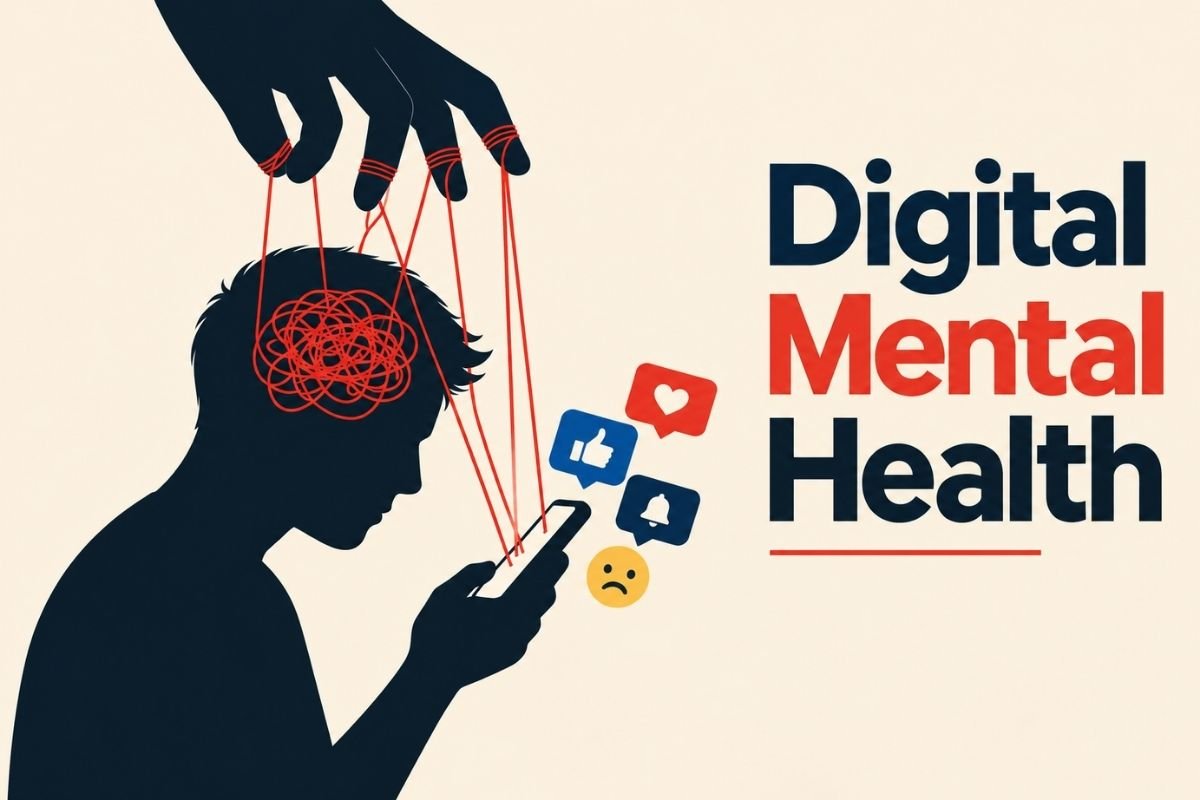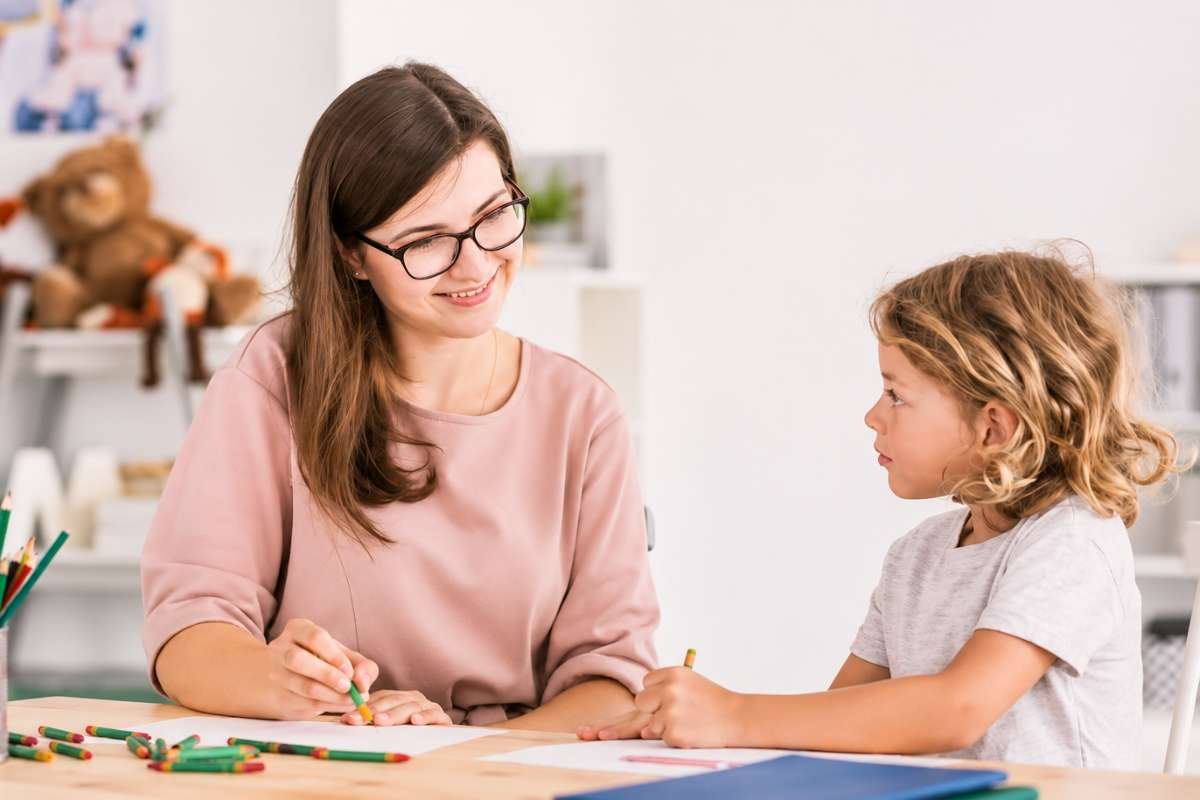
Your child leaves homework half-finished, interrupts conversations, and cannot stay seated through dinner. These behaviours are common in childhood and do not automatically mean ADHD, but when they persist and disrupt school, friendships, or home life, an evaluation may be worthwhile. Worldwide, roughly 5 to 7 percent of children meet the criteria for ADHD. ADHD in children is a neurodevelopmental condition affecting attention regulation, impulsivity, and activity levels. Understanding it means looking beyond visible behaviour.
This guide explains the brain processes involved, how clinicians diagnose it, what stimulant and non-stimulant treatments can achieve, and why many people continue to experience symptoms into adulthood.
Table of Contents
What Is ADHD in Children? What Happens in the Brain?
ADHD (attention-deficit/hyperactivity disorder) is a neurodevelopmental condition affecting attention, self-control, activity levels, and organisation. It is not “bad behaviour” or lack of effort. Symptoms must be persistent, appear in more than one setting, and interfere with school, friendships, or family life.
ADHD in children presents in three ways: inattentive, hyperactive-impulsive, or combined. Occasional restlessness is normal, but ADHD is a lasting pattern well beyond what is expected for the child’s age.
ADHD can present differently across children. Some girls may show less obvious inattentive symptoms, while some boys display more visible hyperactivity or impulsivity. These patterns can influence recognition and diagnosis, but ADHD can affect children of any gender in different ways.
What Happens in the Brain?
The prefrontal cortex at the front of the brain supports executive functions such as planning, working memory, attention, impulse control, and task completion. When these work less efficiently, everyday activities like starting homework, keeping track of belongings, or following multi-step directions can feel harder.
ADHD also involves prefrontal-striatal circuits, networks that support attention, motivation, and reward processing. Dopamine and norepinephrine, key chemical messengers in these pathways, work differently in ADHD, so rewards, time, and effort can feel less immediate.
This explains why a child may delay homework because starting feels overwhelming, lose focus during long tasks, or struggle to wait their turn. With understanding, structure, and support, children with ADHD can build skills and succeed.
What Are the Signs and Symptoms of ADHD?
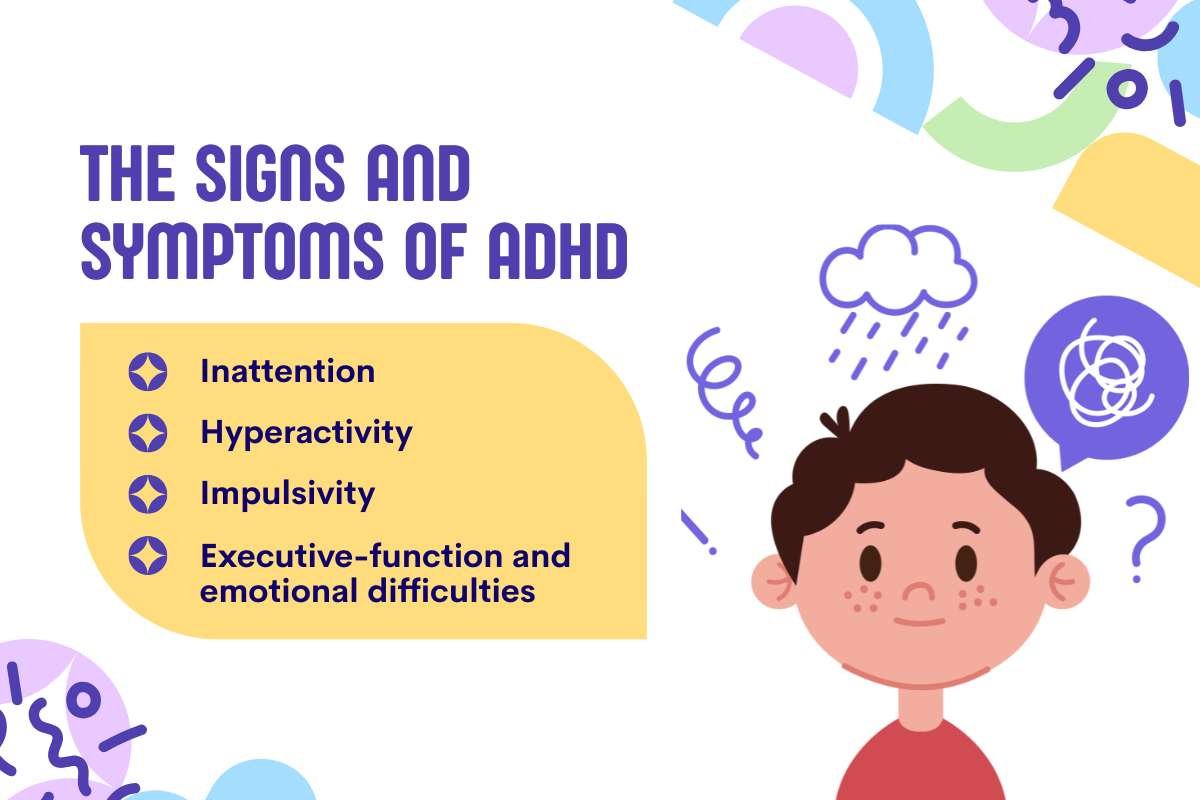
ADHD in children often involves ongoing difficulties with attention, activity level, and self-control that affect home, school, and friendships.
- Inattention: Daydreaming, losing or forgetting things, making careless mistakes, being easily distracted, and struggling to organise or finish tasks.
- Hyperactivity: Fidgeting, squirming, talking excessively, feeling restless, or finding it hard to stay seated.
- Impulsivity: Interrupting, acting without thinking, blurting out answers, or finding it hard to wait for a turn.
- Executive-function and emotional difficulties: Trouble planning, starting tasks, managing time, coping with frustration, and regulating emotions.
At home, this may look like forgotten routines or unfinished chores. At school, incomplete work or difficulty following instructions. Socially, interrupting or difficulty taking turns.
How Is ADHD Diagnosed in Children?
There is no single blood test, brain scan, or questionnaire that can confirm ADHD in children. A qualified clinician makes the diagnosis by gathering information from several sources and checking whether symptoms are persistent and affect daily life.
What Happens During an Assessment?
- A review of the child’s developmental, medical, and behavioural history.
- Interviews and observations from parents, teachers, and other caregivers.
- Standardised rating scales, questionnaires, and clinical interviews.
- An assessment of symptoms at home, school, and in social settings; symptoms must occur in more than one important setting.
Why Diagnosis Can Be Complicated
Symptoms of inattention, restlessness, or impulsivity can overlap with anxiety, depression, sleep problems, and learning disabilities, so clinicians consider these possibilities too.
Recognition can also differ by age and gender: girls may show quieter inattentive symptoms, while younger children may naturally be more active. This can contribute to underdiagnosis, while broad or incomplete assessment can contribute to diagnostic uncertainty or overdiagnosis.
A careful, multi-source assessment helps ensure that the diagnosis fits the child’s actual pattern of symptoms and everyday needs.
What Treatment Options Are Available for Childhood ADHD?

Treatment for ADHD in children is individualised and may include medication, behaviour therapy, parent training, and school support. For children aged 6 and older, guidelines commonly recommend combining medication with behavioural strategies. For children under 6, behaviour therapy is usually tried first.
Stimulant Medications
- Methylphenidate and amphetamine-based medicines (such as lisdexamfetamine) are commonly used stimulants.
- They increase signalling involving dopamine and norepinephrine, brain chemicals involved in attention, motivation, and self-control.
- They can improve focus and reduce hyperactivity and impulsivity. Common side effects include reduced appetite, sleep problems, headaches, and irritability. Clinicians monitor growth, blood pressure, heart rate, and response to treatment.
Non-Stimulant Medications
- Atomoxetine affects norepinephrine signalling; guanfacine and clonidine act on brain receptors that help regulate attention and impulsivity.
- Clinicians may consider them when stimulants cause side effects, are not effective, or when sleep problems, tics, or other needs make a non-stimulant more suitable.
Behaviour Therapy and Parent Training
- Parent-management training teaches practical strategies for routines, praise, clear instructions, and consistent consequences.
- Classroom interventions may include seating changes, breaks, visual schedules, and individualised school support.
- Combining approaches often works best because medication can reduce core symptoms while behavioural and educational strategies build everyday skills.
How Can Parents Support a Child With ADHD?
Parents can support ADHD in children by creating predictable routines, breaking tasks into small steps, and using calm, consistent expectations. Clear daily schedules help a child know what to expect and make transitions easier.
- Praise effort and specific positive behaviour rather than focusing only on mistakes.
- Use short, clear instructions and manageable tasks.
- Work with teachers on accommodations such as extra time, movement breaks, reduced distractions, visual reminders, and regular home-school communication.
- Seek parent-training in behaviour management, which can improve behaviour, self-control, and family relationships.
For example, a child who once struggled to start homework may do better with a set after-school routine, a five-minute timer, and praise for beginning. With patient support at home and school, many children develop stronger organisation, confidence, and independence over time.
What It Feels Like to Grow Up With ADHD

Growing up with predominantly hyperactive-impulsive ADHD can feel isolating. At home, a child may be left out of family play and drift into solitary activities, such as doing division problems for hours. At school, he may struggle to stay on one topic, yet hyperfixate on difficult subjects. Making friends is hard, and talking fast can invite bullying. Failures often land as major triggers. Emotions feel magnified and exaggerated, and he may find them harder to process than other children do. With patient understanding at home and in school, these struggles can be met with support rather than judgement.
More Info: ADD vs ADHD: The Surprising Differences Most People Don’t Know
Conclusion:
ADHD in children is more than restlessness or poor focus. It is a neurodevelopmental condition rooted in how the brain manages attention, motivation, and self-control, and it can shape school, friendships, and emotions in lasting ways. Diagnosis takes a careful, multi-source assessment, and treatment works best when medication, behaviour strategies, and school support work together. Just as important is understanding what growing up with ADHD feels like from the child’s side. With patience, structure, and encouragement, children can build skills and confidence that carry into adult life.
If your child’s behaviour is persistent and affecting daily life, speak with a qualified clinician about an evaluation.
FAQ:
1. What are the earliest signs of ADHD in children?
Early signs may include persistent inattention, excessive restlessness, impulsive behaviour, and difficulty following instructions.
2. Can children with ADHD lead successful lives?
Yes, with appropriate support, individualized treatment, and a supportive environment, children with ADHD can thrive academically, socially, and personally.
3. Can ADHD affect a child’s intelligence or academic performance?
ADHD does not determine intelligence, but difficulties with attention, organization, and impulse control can affect academic performance.
Links and Sources: