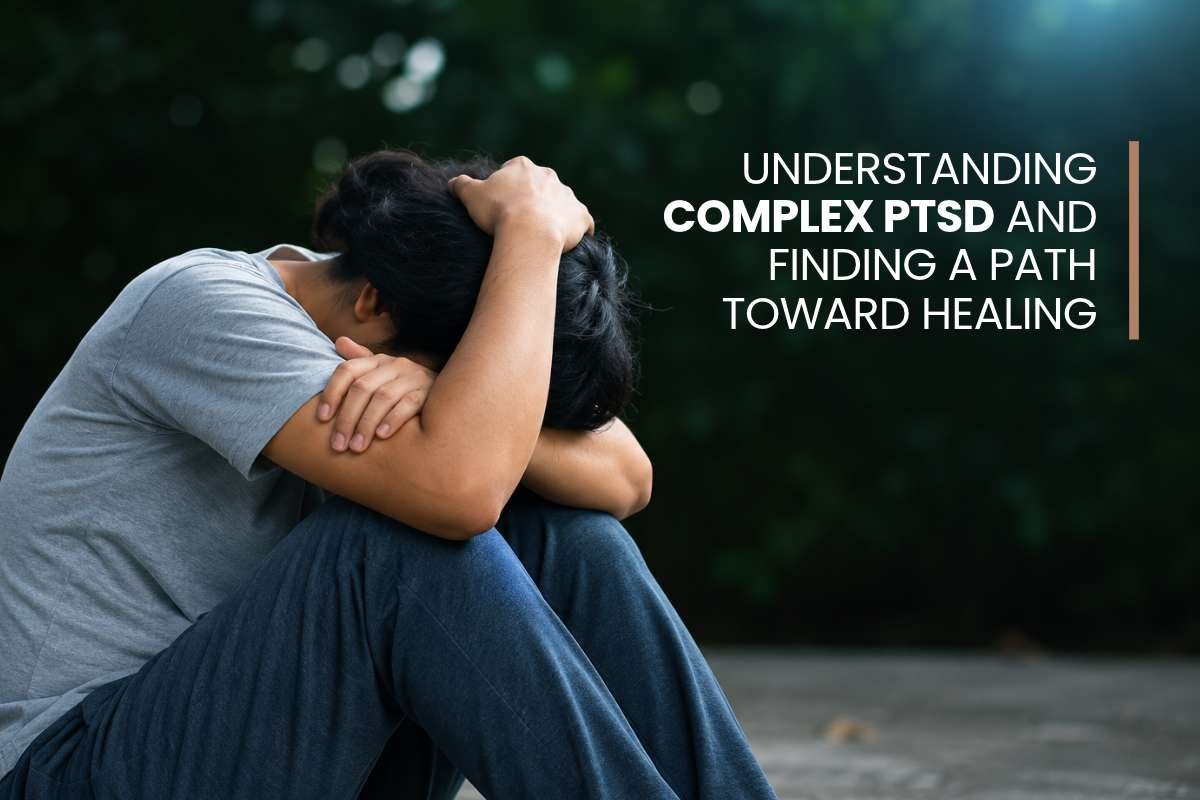
When trauma is repeated or prolonged, as in childhood abuse or years of domestic violence, it can reshape how a person handles emotions, sees themselves, and trusts others. It can reshape how a person handles emotions, sees themselves, and trusts others. This is the core of complex PTSD, a condition the WHO’s ICD-11 recognizes separately from PTSD. It includes the three core PTSD symptoms (re-experiencing, avoidance, and heightened threat) alongside difficulties with emotional regulation, self-concept, and relationships. Research suggests that PTSD affects approximately 3.9% of the global population at some point in their lives. However, estimates for Complex PTSD vary depending on the population and diagnostic criteria.
This guide explains the symptoms, how diagnosis differs from PTSD, and which treatment options help.
Table of Contents
What Is Complex PTSD? What Are the Causes?
Complex PTSD (C-PTSD) is a trauma-related condition most often linked to trauma that was repeated, prolonged, or hard to escape. Under the World Health Organization’s ICD-11, it has its own diagnostic code (6B41). The diagnosis rests on symptoms, not on one specific type of trauma. The DSM-5 does not list C-PTSD separately, so clinicians using it may diagnose PTSD and consider the related symptoms one by one
Under ICD-11, PTSD and C-PTSD are separate diagnostic categories, meaning a person receives one diagnosis rather than both. Complex PTSD includes all core PTSD symptoms alongside persistent difficulties in emotional regulation, self-concept, and relationships
DSO may involve intense anger, emotional numbness or dissociation, persistent shame or feelings of worthlessness, and trouble trusting or feeling close to others.
Possible causes include:
- Childhood abuse or neglect
- Domestic violence
- Sexual abuse or exploitation, including trafficking
- War, torture, captivity, or slavery
- Repeated interpersonal violence
Early trauma, lack of safety, prolonged exposure, and being unable to escape can increase vulnerability. However, not everyone who experiences trauma develops Complex PTSD. Trauma exposure is a risk factor, while a trauma-related disorder depends on the person’s symptoms and clinical assessment.
What Are the Signs and Symptoms of Complex PTSD?

C-PTSD can affect emotions, relationships, sleep, and daily life. It includes core PTSD symptoms plus ongoing difficulties with self-image and relationships.
Core PTSD symptoms
- Re-experiencing trauma through flashbacks, nightmares, intrusive memories, or physical reactions.
- Avoiding people, places, thoughts, or reminders connected to the trauma.
- Feeling constantly threatened, tense, or hypervigilant.
Disturbances in self-organization
- Emotional dysregulation, including intense anger, numbness, or difficulty calming down.
- Persistent shame, guilt, worthlessness, or negative self-perception.
- Difficulty trusting others, feeling close, or maintaining relationships.
Emotional flashbacks
An emotional flashback happens when a present situation triggers intense fear, shame, anger, or helplessness linked to past trauma. It may not include a clear visual memory, but the feelings can feel immediate and overwhelming. Although emotional flashbacks are commonly discussed in trauma-related care, they are not a separate diagnostic criterion for C-PTSD under ICD-11
Effects on daily life
Symptoms may disrupt sleep, concentration, work, social interactions, and everyday routines. Avoidance, mistrust, and emotional distress can make relationships and responsibilities harder to manage.
Complex PTSD vs. PTSD and Other Mental Health Conditions
Overlapping symptoms do not make these conditions interchangeable. Clinicians consider the full symptom pattern and diagnostic criteria. Some conditions can also occur together.
| Condition | Key distinction |
| PTSD | Trauma-related symptoms involve re-experiencing, avoidance, and a persistent sense of threat. |
| Complex PTSD | PTSD symptoms alongside disturbances in emotional regulation, self-concept, and relationships. |
| Borderline personality disorder | Can involve emotional instability, relationship difficulties, and identity-related challenges, but has different diagnostic criteria. |
| Depression | Primarily involves persistent low mood, reduced interest, and other depressive symptoms. |
Complex PTSD and PTSD share trauma-related symptoms. But C-PTSD adds persistent problems with emotions, self-view, and relationships. Depression and borderline personality disorder may overlap with some symptoms. Yet they are separate conditions with distinct criteria. PTSD can co-occur with depression, sleep problems, and other difficulties.
How Is Complex PTSD Diagnosed?

A mental health professional diagnoses C-PTSD through a clinical assessment of trauma history, symptoms, and their effect on daily life. They may use a structured interview and validated questionnaires to assess PTSD symptoms, emotional regulation, self-image, relationships, and functioning.
One tool clinicians and researchers may use is the International Trauma Questionnaire (ITQ), a self-report measure designed to assess ICD-11 PTSD and C-PTSD symptoms, including disturbances in self-organization. However, questionnaire results alone cannot establish a diagnosis
Under ICD-11, diagnosis requires exposure to an extremely threatening or horrific event or series of events, the presence of core PTSD symptoms, and persistent disturbances in self-organization involving emotional regulation, negative self-concept, and relationship difficulties. These symptoms must persist for at least several weeks, cause significant impairment in personal, family, social, educational, occupational, or other important areas of functioning, and meet the full diagnostic requirements.
There is no single blood test or brain scan that confirms Complex PTSD. Accurate assessment matters because symptoms can overlap with depression, personality disorders, and other conditions; a careful evaluation helps distinguish them and identify conditions that may coexist.
What Are The Possible Treatment Options For C-PTSD?
Treatment for Complex PTSD should be individualized and may combine approaches. Because trauma can affect emotions, identity, relationships, and safety, care often addresses these areas alongside traumatic memories.
Trauma-focused psychotherapy
Psychotherapy is an important part of PTSD and C-PTSD care. Depending on individual symptoms, clinical needs, and available evidence, a mental health professional may recommend:
- Trauma-focused cognitive behavioral therapy (CBT): Helps people process trauma-related thoughts, emotions, and responses.
- Eye movement desensitization and reprocessing (EMDR): Uses bilateral stimulation while helping people process distressing traumatic memories.
- Cognitive processing therapy (CPT): A structured form of trauma-focused therapy that helps people identify and address unhelpful beliefs associated with traumatic experiences.
These therapies have evidence supporting their use in PTSD, but research on their effectiveness and optimal application specifically for C-PTSD is still developing. Treatment should therefore be individualized.
Stabilization and emotional regulation
Treatment may include grounding and coping skills, emotional awareness, and distress tolerance. Building safety and stability before or alongside trauma processing can support engagement, depending on individual needs. For people with complex trauma-related difficulties, therapy may require additional time to build trust, develop emotional regulation skills, and address barriers such as dissociation, interpersonal difficulties, and negative self-perception. The pace of trauma processing should be adapted to individual needs.
Medication
Medication may help with depression, anxiety, or sleep difficulties. SSRIs, such as sertraline, and SNRIs, such as venlafaxine, may be considered when appropriate. Medication may help manage associated symptoms, but it is not a standalone treatment for the underlying effects of Complex PTSD; treatment decisions should be made with a qualified healthcare professional.
Conclusion:
Complex PTSD develops from repeated or prolonged trauma, and it reaches beyond painful memories into emotions, self-image, and relationships. Recognizing the signs, such as emotional flashbacks, persistent shame, and difficulty trusting others, is the first step toward understanding what is happening. Because symptoms can overlap with other conditions, a careful clinical assessment matters. Treatment is individualized and often begins with building safety and emotional stability. Recovery takes time, and progress looks different for each person. If these experiences affect your daily life, consider speaking with a qualified mental health professional experienced in trauma-informed care to discuss an assessment and treatment plan.
FAQ:
1. What is the biggest difference between PTSD and Complex PTSD?
It includes the core symptoms of PTSD alongside difficulties with emotional regulation, self-perception, and relationships.
2. Does C-PTSD ever go away completely?
Symptoms can improve significantly with appropriate treatment and support, although recovery experiences and timelines vary.
3. Can someone with Complex PTSD live a normal life?
Yes, with appropriate treatment, coping strategies, and support, many people with C-PTSD can build fulfilling relationships and lead meaningful lives.
Medical Disclaimer: This article is intended for informational and educational purposes only and should not replace professional medical advice, diagnosis, or treatment. Consult a qualified mental health professional if you have concerns about trauma-related symptoms or your mental well-being.
Links and Sources:
- https://www.nhs.uk/mental-health/conditions/ptsd-post-traumatic-stress-disorder
- https://www.ptsd.va.gov/professional/treat/txessentials/complex_ptsd_assessment.asp
- https://111.wales.nhs.uk/encyclopaedia/p/article/posttraumaticstressdisorder(ptsd)
- https://healthquality.va.gov/HEALTHQUALITY/guidelines/MH/ptsd/PTSD-Assessment_508.pdf
- https://www.nice.org.uk/guidance/NG116/chapter/recommendations