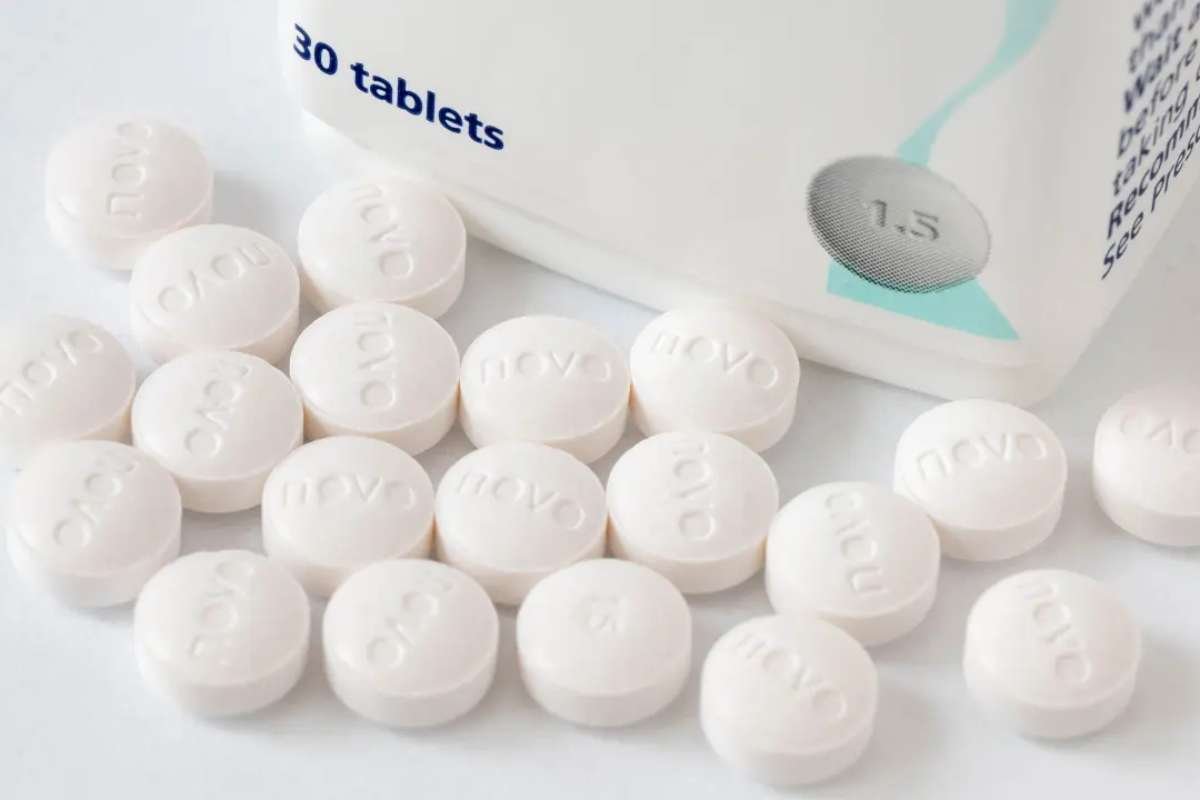
Key Takeaway:
- Oral GLP-1 drugs may reduce pleasure-driven cravings by affecting the brain’s reward circuitry.
- Researchers found activation of the central amygdala lowers dopamine linked to reward-seeking behavior.
- Findings suggest potential future treatments for addiction and substance-use disorders beyond weight loss.
A new NIH-funded study finds oral small-molecule GLP-1 drugs may reduce not only hunger but also pleasure-driven cravings by altering brain reward circuits, potentially opening new treatment pathways for addiction-related disorders.
Scientists Discover New Brain Mechanism Behind GLP-1 Drugs
Researchers funded by the National Institutes of Health report that newer oral GLP-1 weight-loss medications may influence the brain beyond appetite control, dampening reward-seeking behavior tied to cravings.
The study shows that small-molecule GLP-1 receptor agonists activate the central amygdala, a brain region linked to desire and emotional response. Activation of this area reduces dopamine release associated with pleasure-driven behaviors.
Scientists say the findings help explain why some patients taking GLP-1 drugs report reduced interest not only in food but also in other rewarding activities.
“As the accessibility of these medications continues to rise and patient uptake increases, we must understand the neural mechanisms underlying the effects we’re seeing,” Lorenzo Leggio, clinical director at the NIH’s National Institute on Drug Abuse, said in a statement.
Earlier research focused mainly on injectable peptide-based GLP-1 drugs such as semaglutide, which suppress hunger through appetite-regulation centers in the hypothalamus and hindbrain.
The new research examines how smaller, orally administered compounds interact directly with deeper brain reward systems.
Mouse Study Reveals Effects on Reward Circuitry
Researchers at the University of Virginia studied small-molecule Oral GLP-1 Drugs, including the FDA-approved oral medication orforglipron and the experimental drug danuglipron.
Using gene-editing techniques, scientists modified GLP-1 receptors in mice to more closely resemble human biology. The animals then received the medications while researchers mapped brain activity.
The drugs activated expected appetite-control regions but also stimulated the central amygdala, a finding scientists say was unexpected because earlier GLP-1 therapies were not believed to directly reach this area.
Further experiments showed that activation of the central amygdala reduced dopamine signaling in key reward centers during hedonic feeding, or eating driven by pleasure rather than energy needs.
“We’ve known that GLP-1 drugs suppress feeding behavior driven by energy demand,” said Ali Guler, a biology professor at the University of Virginia and co-corresponding author of the study. “Now it seems oral small-molecule GLP-1s also dial back eating for pleasure by engaging a brain reward circuit.”
Researchers say this mechanism differs from previously understood appetite-control pathways.
Findings Suggest Potential Future Addiction Treatments
Scientists believe the discovery may expand the clinical use of GLP-1 medications beyond obesity and diabetes treatment.
By regulating reward signaling, the drugs could eventually help address conditions linked to compulsive behavior, including substance-use disorder and binge eating.
The researchers caution that the findings remain preliminary and were demonstrated in animal models. Human clinical studies will be required to determine whether the same neurological effects translate to patients.
Still, experts say the results raise important questions about whether next-generation Oral GLP-1 Drugs might reduce cravings for substances other than food.
Follow-up research is expected to explore how these medications influence addiction pathways and whether they could become part of future treatment strategies.
The study adds to growing scientific interest in GLP-1 therapies, which have rapidly gained global popularity as treatments for obesity and metabolic disease.