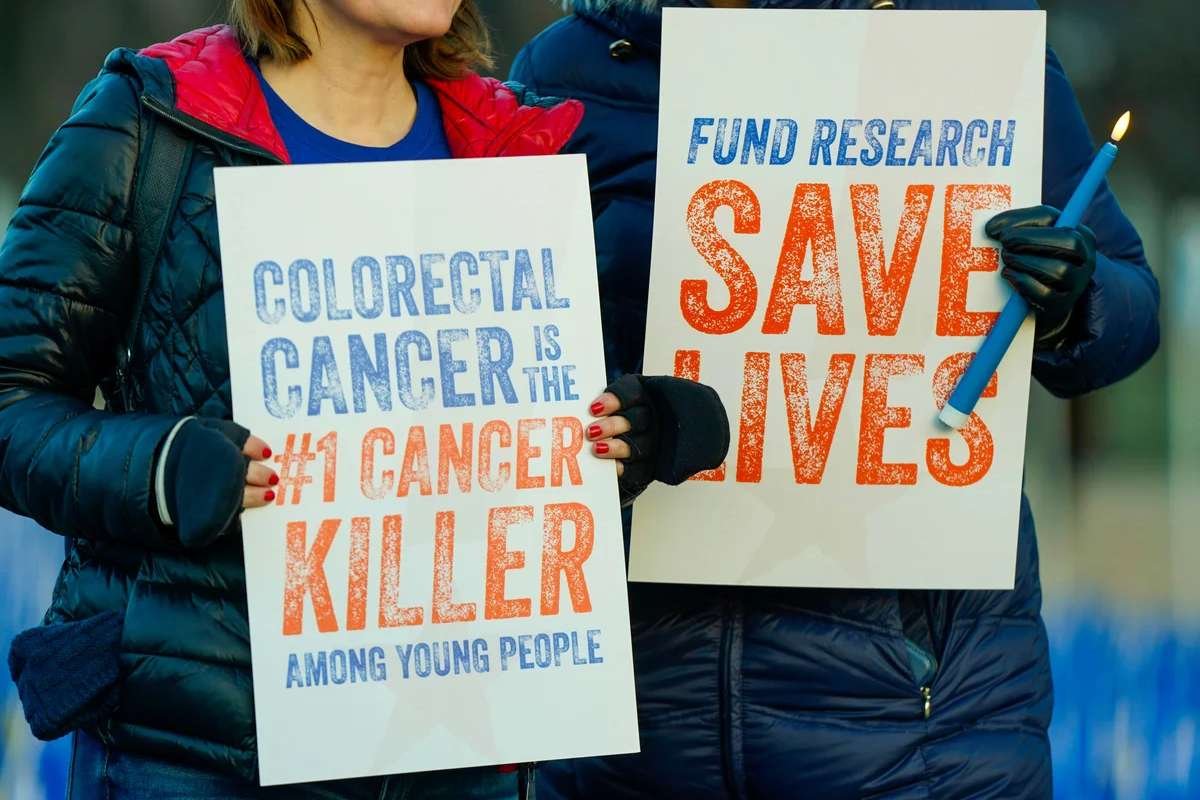
Colorectal cancer is now the leading cause of cancer death among Americans under 50, according to a new American Cancer Society analysis, as experts warn that rising colon cancer deaths under 50 are linked to younger patients often ignoring symptoms and missing early detection.
Body:
Health experts are urging younger adults to pay closer attention to symptoms such as rectal bleeding, changes in bowel habits, and persistent digestive issues as colorectal cancer diagnoses rise sharply among people under age 50.
The American Cancer Society analysis found that colon cancer deaths under 50 have climbed from the fifth-leading cause of cancer death in younger adults in the 1990s to the first today. At the same time, death rates among people over 65 are declining by more than two percent each year.
Rebecca Siegel, an epidemiologist and senior director of cancer surveillance research at the American Cancer Society, said many younger patients are diagnosed late because they do not expect to have the disease.
“Around three-quarters of people under 50 already have advanced colorectal cancer when they’re diagnosed,” Siegel said. “They haven’t been screened through regular colonoscopies, and they don’t take their symptoms seriously because they think they’re too young.”
Experts Warn Young Adults Not To Ignore Rectal Bleeding Symptoms
Becca Lynch, a cybersecurity worker in Denver, said she initially dismissed warning signs before being diagnosed with advanced colon cancer at age 29.
She said her symptoms included unusually thin bowel movements, frequent trips to the bathroom, and eventually dark blood during bowel movements – common colon cancer symptoms in young adults.
“I chalked it up to stress,” Lynch said.
After months of symptoms, Lynch decided to see a doctor following an Instagram video by Cass Costley, a cancer advocate who later died from the disease. A colonoscopy confirmed Lynch had stage 3B colon cancer.
Lynch now openly discusses her experience to encourage others to seek medical attention if they notice similar symptoms.
“I don’t want people to miss the signs,” she said.
Late Diagnoses Common As Screening Rates Remain Low
Doctors say younger adults often assume symptoms are caused by less serious conditions, such as hemorrhoids. Online searches for blood in stool frequently lead to that explanation, experts say, which can delay medical care.
Siegel said anyone experiencing rectal bleeding for more than a couple of weeks should consult a doctor immediately.
For people hesitant to undergo a colonoscopy, she said noninvasive screening tools such as stool tests can help detect potential Colon Cancer Deaths Under 50 earlier.
Patients without symptoms can use tests such as the fecal immunochemical test, known as FIT, or other stool-based screening options to identify warning signs before cancer progresses.
Researchers Probe Possible Causes Behind Rising Cancer Risk
Researchers are still investigating why colon cancer deaths under 50 are rising among younger generations. Siegel said the pattern reflects what scientists call a “birth cohort effect,” meaning people born after the 1950s face a higher risk.
“That tells us there was some exposure or risk factor introduced in the mid-20th century that’s increasing our risk,” Siegel said.
Some scientists suspect changes in diet and the modern food supply may play a role, including increased consumption of processed foods and processed meats. Exposure to substances such as microplastics is also being studied, though evidence remains inconclusive.
Certain populations face a particularly high risk. Alaska Native communities have the highest documented colorectal cancer mortality rates in the world, though their small population size makes research funding difficult to obtain.
Prosanta Chakrabarty, an evolutionary biologist in Louisiana, said his own diagnosis came despite maintaining a healthy lifestyle and undergoing regular colonoscopies.
“There are so many things I didn’t realize were options,” he said, describing ongoing treatment that has included multiple rounds of chemotherapy.
Patients like Lynch and Chakrabarty say speaking publicly about their experiences can reduce the stigma around discussing digestive symptoms and encourage earlier diagnosis.
Lynch said sharing her story is her way of helping others recognize warning signs before it is too late.
“That’s part of why I agreed to an interview about my poop,” she said.