Vitamin B9 plays a critical role in human health, from DNA synthesis and red blood cell production to proper fetal development. In fact, research shows that adequate Vitamin B9 intake before and during early pregnancy can reduce the risk of neural tube defects by up to 70%. Yet despite its importance, many people are still unclear about one key question: Folic Acid vs Folate, what’s the difference, and does it really matter?
Globally, more than 80 countries have mandated folic acid fortification in staple foods, leading to significant reductions in birth defects and population-wide deficiencies. At the same time, emerging research around genetics, particularly MTHFR gene variations, which may affect up to 30–40% of certain populations, has sparked new conversations about how efficiently some individuals metabolize synthetic folic acid.
The argument between folic acid and folate is now more pertinent than ever due to this increased awareness. Folate is the naturally occurring form found in leafy greens, legumes, and whole foods. Folic acid, on the other hand, is a stable, synthetic version used in supplements and fortified grains. Both serve the same fundamental purpose, but they are processed differently in the body.
So why does this distinction matter? Understanding how your body absorbs and converts Vitamin B9 can influence everything from energy levels to pregnancy outcomes and long-term health.
We’ll plainly and impartially compare folic acid and folate in this evidence-based guide, dispelling internet myths and isolating scientific facts so you can make confident, well-informed dietary decisions.
What Is Folate? The Natural Form of Vitamin B9 Your Body Recognizes
Now that we’ve clarified why the conversation around Folic Acid vs Folate matters, let’s start with the natural form: folate.
Folate is the naturally occurring form of Vitamin B9 found in whole foods. The name itself comes from the Latin word “folium,” meaning leaf, a reminder that leafy greens are among the richest sources. Spinach, kale, lentils, chickpeas, asparagus, avocado, and citrus fruits are all naturally high in folate.
From a biological standpoint, folate is essential for:
- DNA synthesis and repair
- Cell division and growth
- Red blood cell production
- Healthy fetal neural tube development
Because folate is already in a bioactive form, the body can use it more directly after digestion. It is absorbed primarily in the small intestine and converted into tetrahydrofolate (THF), which participates in crucial metabolic pathways, particularly those involving amino acids and homocysteine regulation.
Why Folate From Food Matters?
Epidemiological studies consistently show that diets rich in natural folate are associated with better cardiovascular outcomes and lower risks of certain deficiencies. However, there’s a catch: natural folate is less stable than synthetic folic acid. It can be partially destroyed during cooking or food processing, and its bioavailability from food is typically around 50–60%, compared to higher absorption rates from fortified sources.
This is one reason the broader Folic Acid vs Folate discussion exists. While folate from food is metabolically active, it can be harder to consume consistently in adequate amounts through diet alone, especially in populations with limited access to fresh produce.
Recommended Daily Intake
According to global health authorities:
| Adults | 400 mcg dietary folate equivalents (DFE) per day |
| Pregnant women | 600 mcg DFE per day |
| Breastfeeding women | 500 mcg DFE per day |
Reaching these levels purely through food requires consistent dietary planning, something not everyone achieves daily.
Understanding folate sets the foundation for a clearer comparison in the ongoing Folic Acid vs Folate debate. Next, we’ll explore folic acid, the synthetic form widely used in supplements and food fortification, and why it became a global public health strategy.
What Is Folic Acid? The Synthetic Form Designed for Stability and Prevention
Examining folic acid, the synthetic form of vitamin B9, comes next in the debate between folic acid and folate after knowing natural folate.
Folic acid is a laboratory-created version of Vitamin B9. Unlike natural folate, it does not occur in foods unless they are fortified. You’ll typically find folic acid in:
- Multivitamin supplements
- Prenatal vitamins
- Fortified cereals and flour
- Enriched bread, pasta, and rice
Why Was Folic Acid Introduced?
In the 1990s, large-scale clinical trials showed that folic acid supplementation before and during early pregnancy significantly reduced neural tube defects such as spina bifida. Based on this strong evidence, many governments mandated folic acid fortification in staple foods.
The impact was measurable and immediate. Countries that implemented fortification programs reported up to a 20–50% reduction in neural tube defect rates, making folic acid fortification one of the most successful public health nutrition strategies in modern history.
This is a critical point in the Folic Acid vs Folate conversation. While debates exist today, folic acid has undeniably saved thousands of lives through preventive policy.
How the Body Processes Folic Acid?
Unlike natural folate, folic acid is not biologically active when consumed. It must first be converted in the liver into its active form, 5-methyltetrahydrofolate (5-MTHF), before the body can use it.
For most people, this conversion process works efficiently. However, research suggests that in very high supplemental doses, some unmetabolized folic acid may remain in circulation. This has led to ongoing research and discussion, particularly in individuals with certain genetic variations affecting folate metabolism.
It’s important to note that mainstream health authorities continue to consider recommended doses of folic acid safe and effective.
Bioavailability and Stability Advantage
One reason folic acid is widely used is its stability. It withstands heat, storage, and processing better than natural folate. Its bioavailability from supplements taken on an empty stomach can reach up to 85%, which is significantly higher than food-based folate.
This practical advantage is a significant factor in the fact that the comparison of Folic Acid and Folate is not a matter of “good versus bad,” but rather of comprehending the context, dosage, and individual health requirements.
Folic Acid vs Folate: A Clear Side-by-Side Comparison
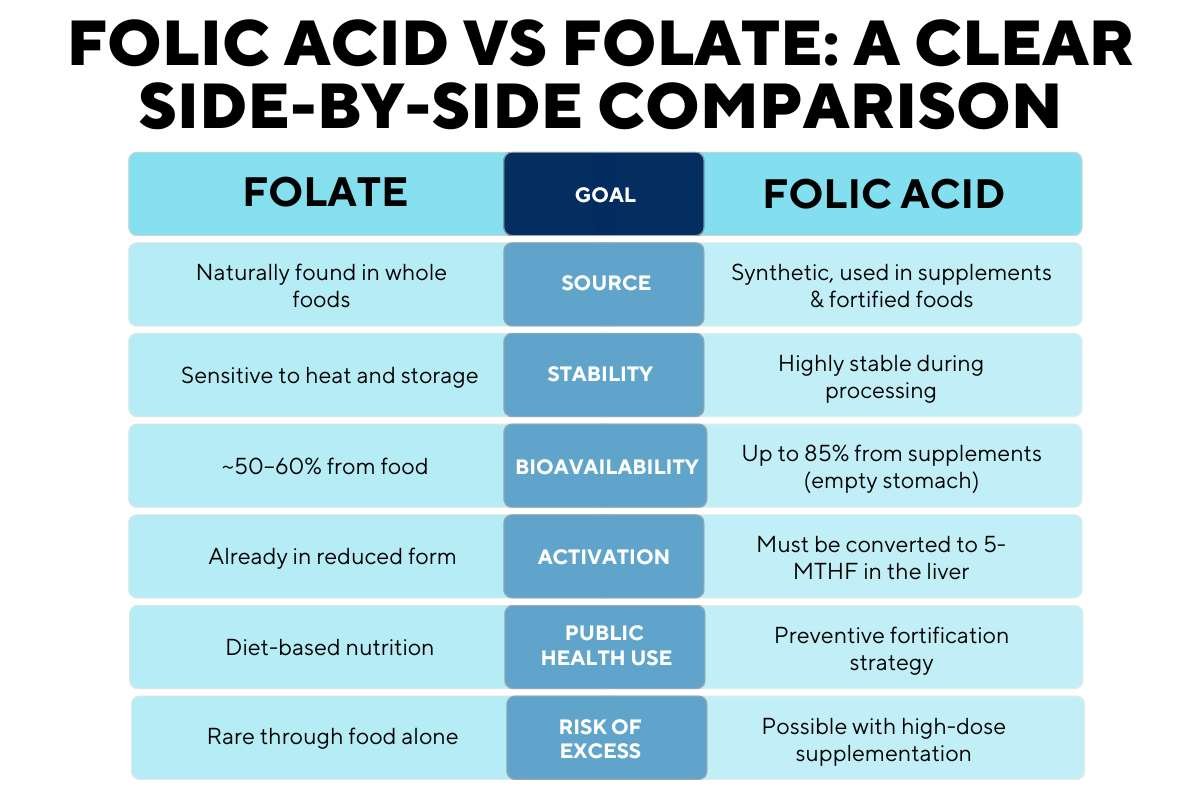
Given that we have examined each form individually, it is now time to consolidate the discussion of Folic Acid compared to Folate through a direct comparison. While both provide Vitamin B9 and support the same biological functions, their source, stability, metabolism, and clinical application differ in important ways.
Quick Comparison Overview
| Folate | Feature | Folic Acid |
| Naturally found in whole foods | Source | Synthetic, used in supplements & fortified foods |
| Sensitive to heat and storage | Stability | Highly stable during processing |
| ~50–60% from food | Bioavailability | Up to 85% from supplements (empty stomach) |
| Already in reduced form | Activation | Must be converted to 5-MTHF in the liver |
| Diet-based nutrition | Public Health Use | Preventive fortification strategy |
| Rare through food alone | Risk of Excess | Possible with high-dose supplementation |
1. Source and Natural Occurrence
The most obvious distinction in Folic Acid vs Folate is origin. Folate occurs naturally in foods like spinach, lentils, and asparagus. Folic acid is manufactured for supplements and food fortification. For individuals prioritizing whole-food nutrition, folate is part of a broader nutrient matrix that includes fiber, antioxidants, and phytonutrients.
2. Absorption and Bioavailability
Folic acid is generally more bioavailable than natural food folate. When consumed as a supplement on an empty stomach, absorption can reach up to 85%. In contrast, folate from food is absorbed at a lower rate due to cooking losses and digestive variability. This bioavailability advantage explains why folic acid became central to public health programs worldwide.
3. Metabolism and Conversion
Metabolic conversion is one of the most talked-about differences between folate and folic acid.
- Natural folate enters the body in a reduced form and participates directly in metabolic pathways.
- Folic acid must first be converted in the liver into 5-MTHF (its active form).
For most healthy individuals, this conversion is efficient. However, emerging research suggests that high supplemental doses may exceed the body’s conversion capacity in some cases.
4. Safety and Upper Limits
Because folate from food is water-soluble and naturally regulated, excess intake from diet alone is rare. Folic acid, however, has an established upper tolerable intake level of 1,000 mcg per day for adults from supplements and fortified foods combined. Exceeding this may mask symptoms of vitamin B12 deficiency, which is why medical guidance matters.
5. Real-World Application
The debate between folic acid and folate is not about which is better for everyone. Rather, context is important:
- Public health prevention relies heavily on folic acid fortification.
- Personalized nutrition discussions often explore natural folate intake or methylated forms.
- Pregnancy recommendations continue to prioritize adequate total Vitamin B9 intake — regardless of form.
Absorption, Genetics & the MTHFR Factor: Adding Context to Folic Acid vs Folate
One subject that keeps coming up in the discussion of folic acid versus folate is genetics, specifically the MTHFR gene.
Before diving in, it’s important to keep this grounded in science, not social media trends.
What Is the MTHFR Gene?
MTHFR (methylenetetrahydrofolate reductase) is a gene that provides instructions for making an enzyme involved in processing folate in the body. This enzyme helps convert folate and folic acid into their active form, 5-MTHF, which is used in critical processes like:
- DNA synthesis
- Homocysteine regulation
- Neurotransmitter production
- Cellular repair
Certain genetic variations (often called polymorphisms) in the MTHFR gene can reduce the efficiency of this enzyme. Some studies estimate that 30–40% of certain populations carry at least one variant, though the degree of impact varies widely.
How Does This Affect Folic Acid vs Folate?
This is where the debate between folic acid and folate gets more complicated. Because folic acid requires enzymatic conversion to become active, individuals with reduced MTHFR activity may process synthetic folic acid less efficiently. In such cases, some healthcare providers may recommend:
- Increased dietary folate intake
- Methylated folate (5-MTHF) supplements
- Personalized dosing strategies
However, it’s crucial to emphasize that most people, even with common MTHFR variants, can still process folic acid adequately at recommended doses. Major health organizations continue to support folic acid supplementation, particularly for women of reproductive age.
Homocysteine, Heart Health & Folate Metabolism
Another reason genetics enters the Folic Acid vs Folate conversation is homocysteine. Elevated homocysteine levels have been associated with cardiovascular risk. Since folate plays a role in converting homocysteine into methionine, impaired metabolism may influence these levels.
That said, current research suggests that while folate supplementation lowers homocysteine, the direct impact on heart disease outcomes remains complex and multifactorial.
Separating Facts from Fear
Online discussions sometimes portray folic acid as harmful for anyone with an MTHFR variant. The evidence does not support such extreme conclusions.
Key evidence-based points:
- Recommended folic acid doses are considered safe for the general population.
- Genetic testing should guide personalized decisions, not internet assumptions.
- Public health policies continue to show strong benefits from folic acid fortification.
The conclusion drawn from the folic acid vs. folate controversy is not that one form is “dangerous,” but rather that individual variations may affect the metabolism of vitamin B9.
Health Benefits Backed by Research: Why Vitamin B9 Is Non-Negotiable
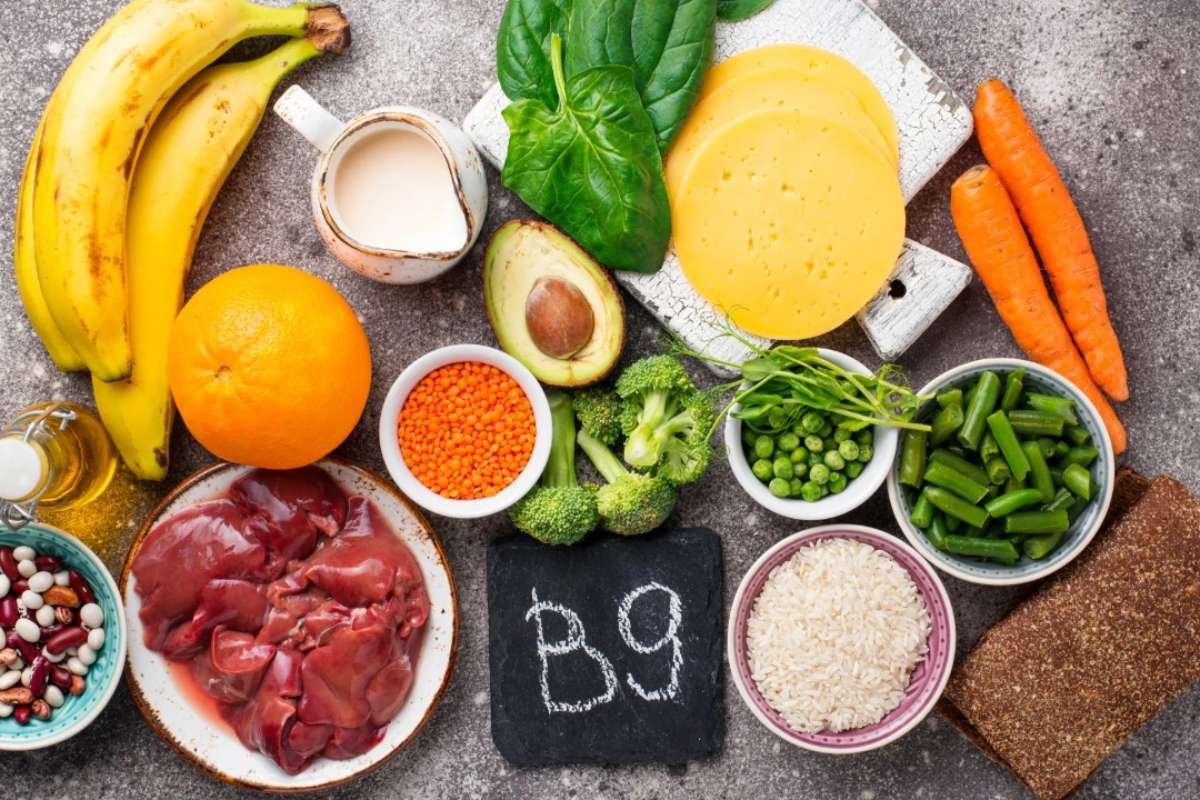
Now that we’ve unpacked metabolism and genetics, let’s step back and look at the bigger picture. Beyond the technical debate of Folic Acid vs Folate, one fact remains clear: adequate Vitamin B9 intake is essential for human health at every stage of life.
Here’s what decades of research consistently show.
1. Prevention of Neural Tube Defects (NTDs)
This is the most well-documented benefit of Vitamin B9. Adequate intake before conception and during early pregnancy can reduce the risk of neural tube defects such as spina bifida by up to 70%. This evidence is the foundation of global folic acid fortification policies. In the context of Folic Acid vs Folate, both forms contribute to this protective effect. However, folic acid’s stability and higher bioavailability made it the preferred choice for public health programs.
2. Red Blood Cell Formation & Anemia Prevention
Vitamin B9 is critical for red blood cell production. A deficiency can lead to megaloblastic anemia, a condition characterized by fatigue, weakness, and impaired oxygen transport. Whether obtained through dietary folate or folic acid supplementation, maintaining adequate levels supports healthy blood formation and energy metabolism.
3. DNA Synthesis & Cellular Growth
Every time your body creates new cells, which happens constantly, it relies on Vitamin B9. This makes it particularly important during:
- Pregnancy
- Infancy and childhood growth
- Tissue repair
- Rapid cell turnover
This basic biological requirement to ultimately promote DNA replication and repair is unaffected by the difference between folic acid and folate.
Who Should Take What? Practical Guidance for Real-Life Decisions
After understanding the science, benefits, and metabolism behind Folic Acid vs Folate, the next logical question is simple: What should you actually take? The answer depends on life stage, health status, and individual risk factors, not trends or fear-based marketing.
1. Women Planning Pregnancy or Currently Pregnant
This group has the strongest evidence-based recommendation. Health authorities worldwide advise women of reproductive age to consume 400–600 mcg of folic acid daily, starting at least one month before conception. This is because neural tube development occurs very early in pregnancy, often before a woman even knows she’s pregnant.
In the debate between folic acid and folate, folic acid is still advised because:
- Proven effectiveness
- High stability
- Strong public health data
However, women with known MTHFR variants or prior pregnancy complications may be advised by their healthcare provider to consider methylated folate instead.
2. Individuals with Diagnosed Folate Deficiency
If blood tests confirm deficiency, supplementation is often necessary. In these cases:
- Folic acid is commonly prescribed due to its potency and absorption rate.
- Dietary folate intake should also be increased through whole foods.
- Medical supervision is important, as high-dose supplementation may be required temporarily.
3. Individuals with MTHFR Variants
For those who have undergone genetic testing and confirmed reduced enzyme activity, healthcare providers may recommend:
- Methylated folate (5-MTHF)
- Personalized dosing
- Monitoring homocysteine levels
That said, most people with common variants still metabolize folic acid adequately at standard doses. The Folic Acid vs Folate decision here should be evidence-based and clinician-guided, not assumption-driven. Making sure you get enough vitamin B9 overall without going over acceptable upper limits is more important in the debate between folic acid and folate than picking one “better” form.
Can You Get Enough from Food Alone?

A practical question inevitably comes up at this point in the Folic Acid vs. Folate debate: Can your daily needs be met by diet alone if entire foods include folate?
The answer depends on consistency, life stage, and overall dietary quality.
Understanding Daily Requirements
Health authorities recommend the following daily intake levels (measured as Dietary Folate Equivalents or DFE):
| Adults (19+ years) | 400 mcg DFE |
| Pregnant women | 600 mcg DFE |
| Breastfeeding women | 500 mcg DFE |
While these numbers may seem achievable, real-world intake data show that many adults fall short, particularly those with limited vegetable consumption or highly processed diets.
Top Folate-Rich Foods
Here are some of the most reliable dietary sources of natural folate:
| Spinach (1 cup cooked) | 260 mcg |
| Lentils (½ cup cooked) | 180 mcg |
| Chickpeas (½ cup) | 140 mcg |
| Asparagus (½ cup cooked) | 130 mcg |
| Avocado (1 medium) | 120 mcg |
| Oranges (1 medium) | 40 mcg |
On paper, combining these foods could meet daily requirements. But here’s the nuance in the Folic Acid vs Folate conversation:
- Natural folate is sensitive to heat and can degrade during cooking.
- Bioavailability from food averages around 50–60%.
- Intake may fluctuate daily based on eating patterns.
This means consistently reaching 400–600 mcg purely through diet requires intentional planning.
When Food May Not Be Enough?
Certain situations increase the likelihood that diet alone may fall short:
- Pregnancy or preconception planning
- Digestive disorders affecting absorption
- Highly restrictive diets
- Increased metabolic demand
- Confirmed deficiency
This is where supplementation, often in the form of folic acid, becomes practical and evidence-based.
The Balance Between Diet and Supplementation
The Folic Acid vs Folate discussion should not frame supplementation as a failure of diet. Instead, it reflects modern realities:
- Fortification policies exist because deficiency was widespread.
- Supplements provide consistency where dietary intake may vary.
- Food-based folate offers additional phytonutrients and fiber benefits.
In short, food should form the foundation. Supplements serve as a safety net when needed.
Risks, Myths & Misconceptions: Separating Science from Noise
Myths have grown in popularity along with the debate over folic acid versus folate, particularly on the internet. Even though personalized nutrition is developing, it’s critical to distinguish between claims that are overstated and those that are supported by data.
Let’s address the most common misconceptions clearly and objectively.
Myth 1: “Folic Acid Is Toxic”
The statement that produced folic acid is dangerous is one of the most frequently made arguments in the folate vs. folic acid debate.
The reality? At recommended doses (400–600 mcg daily for most adults), folic acid is considered safe by major global health organizations. Decades of fortification programs have significantly reduced neural tube defects without evidence of widespread harm.
Concerns typically arise only when intake exceeds the upper tolerable limit of 1,000 mcg per day from supplements and fortified foods combined and even then, the primary concern is masking a vitamin B12 deficiency, not toxicity in the traditional sense.
Myth 2: “Natural
Is Always Better”
While whole-food nutrition is foundational, the idea that “natural” automatically equals superior oversimplifies the Folic Acid vs Folate conversation.
| Natural folate | Is less stable |
| Has lower bioavailability | |
| Can degrade during cooking | |
| Folic acid | Is highly stable |
| Is more bioavailable | |
| Has strong public health outcome data |
Both forms ultimately serve the same biological purpose once converted to active folate in the body.
Myth 3: “Everyone with MTHFR Should Avoid Folic Acid”
This claim is often overstated.
While certain MTHFR variants may reduce enzyme efficiency, most individuals, even with common polymorphisms, can still process folic acid adequately at recommended doses.
Mainstream clinical guidelines do not advise routine avoidance without testing or medical assistance. The choice between folic acid and folate should be made on an individual basis rather than out of fear.
Conclusion:
There isn’t a clear winner in the folic acid vs. folate dispute, and there’s no need for one. Both types supply vital vitamin B9, which promotes proper embryonic growth, red blood cell creation, and DNA synthesis.
Folate from whole foods builds a strong nutritional foundation, while folic acid offers stability and proven public health benefits, especially in pregnancy. For most people, meeting recommended daily intake levels safely and consistently matters more than the form itself.
The key is simple: prioritize adequate Vitamin B9, avoid unnecessary excess, and personalize your approach when medically advised. In the Folic Acid vs Folate conversation, evidence, not trends, should guide your decision.
FAQs
1. Is folic acid the same as folate?
Not exactly. The naturally occurring form of vitamin B9, folate, is present in foods like legumes and leafy greens. The synthetic form of folic acid is found in fortified foods and supplements. When folate and folic acid are transformed into their active forms in the body, they ultimately fulfill the identical biological function.
2. Is folic acid safe for long-term use?
Yes, when taken within recommended limits (typically 400–600 mcg daily for most adults), folic acid is considered safe by major health authorities. The upper tolerable limit is 1,000 mcg per day from supplements and fortified foods combined. Staying within guidelines is key in the Folic Acid vs Folate conversation.
3. Should I take methylated folate instead of folic acid?
Standard folic acid is beneficial for the majority of people. If you have a verified MTHFR gene variation or special medical advice, you might want to think about taking methylated folate (5-MTHF). The choice in the folate against folic acid controversy should be individualized and supported by data.
4. How much Vitamin B9 do I need daily?
Adults: 400 mcg DFE
Pregnant women: 600 mcg DFE
Breastfeeding women: 500 mcg DFE
Individual needs may vary based on health status and life stage.
5. Can I get enough folate from food alone?
It’s possible with a well-planned diet rich in leafy greens, legumes, and whole foods. However, consistency matters. This is why supplementation, particularly in pregnancy, remains a strong recommendation within the broader Folic Acid vs Folate framework.