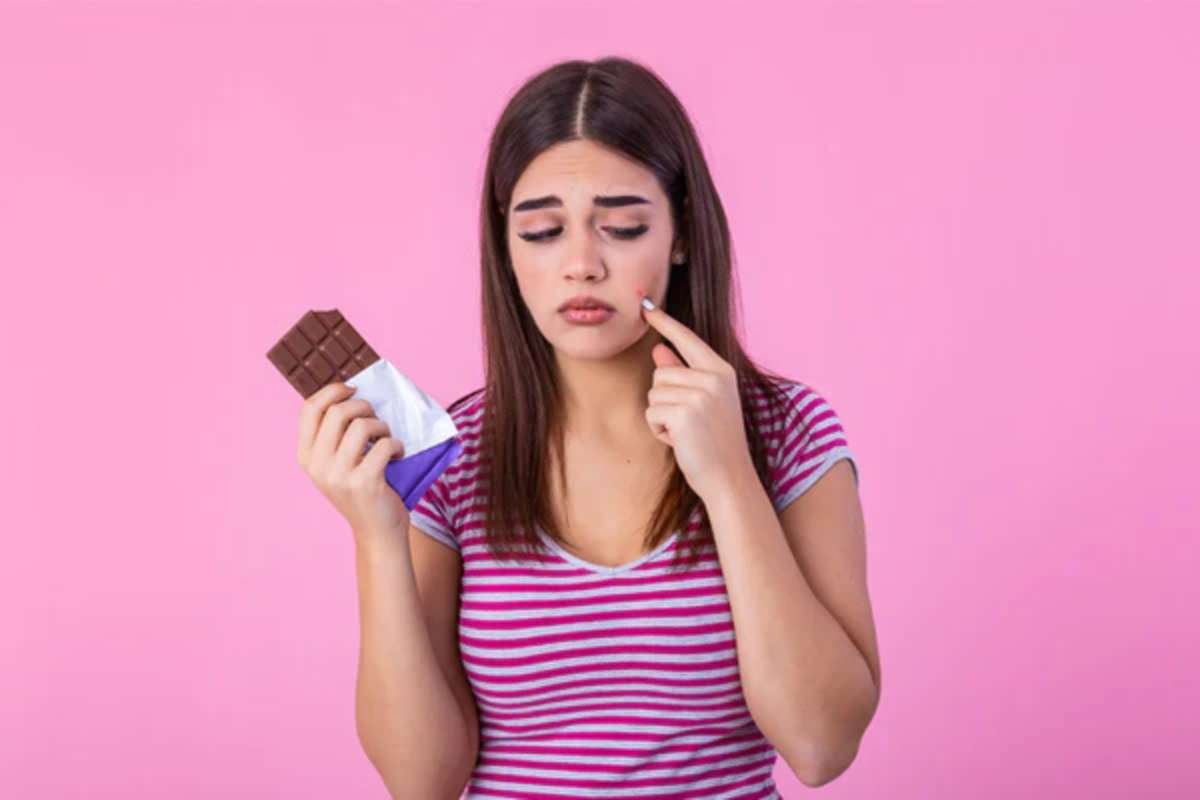
You open a chocolate bar. One square turns into three. Life feels better. Then your brain whispers, “Tomorrow my face will pay for this.”
That fear has lived in our heads for years. Chocolate has been blamed for pimples more times than late nights and stress combined. But here is the truth. Skin problems rarely come from one food alone.
Many people still ask Does chocolate cause acne because breakouts feel personal. When a pimple appears, we look for something to blame. Chocolate becomes the easiest target. It tastes good. It feels sinful. And guilt loves company.
Your skin is not your enemy. It reacts to hormones, habits, sleep, stress, and yes, sometimes food. But the story is much bigger than one sweet bite. This article breaks the myth calmly, clearly, and without drama. You deserve facts, not fear.
What Science Says About Chocolate and Breakouts?
Researchers have studied chocolate for decades. Results stay mixed, not dramatic. Most studies show no direct link between pure cocoa and acne. The real issue appears when chocolate comes loaded with sugar and milk.
A study published by the American Academy of Dermatology explains that acne forms when pores clog with oil and dead skin. Hormones increase oil. Bacteria grow. Inflammation follows. Chocolate alone does not trigger this process.
So when people ask Does chocolate cause acne, science answers carefully. It depends on what kind of chocolate and how your body reacts to it.
The Role of Sugar and Dairy

Milk chocolate contains high sugar and dairy. Sugar spikes insulin levels. High insulin can increase oil production in the skin. Dairy may influence hormones that affect pores. This combination explains why some people notice breakouts after eating certain chocolates.
Dark chocolate contains more cocoa and less sugar. Cocoa itself holds antioxidants that reduce inflammation. That makes dark chocolate a better option for skin-conscious snackers.
This means the problem is not chocolate as a whole. It is the ingredients mixed into it. When asking Does chocolate cause acne, the answer shifts toward processed chocolate, not cocoa itself.
Why Chocolate Gets Blamed So Easily?
Chocolate sits in the guilt zone. People eat it during stress, late nights, or emotional moments. These moments already increase cortisol levels. Cortisol increases oil production. Pimples follow. Chocolate gets blamed, stress walks free.
When people repeat Does chocolate cause acne, they often ignore sleep habits, hydration, skincare routine, and daily stress. Skin reflects lifestyle more than snacks.
Skin Type Matters More Than Food
When it comes to acne, your skin type has a bigger impact than the food you eat. This is why the same chocolate bar can give one person a pimple and give another person absolutely nothing but happiness.
Let’s break it down in very simple words.
Oily Skin Reacts Faster
Oily skin produces more natural oil, also called sebum. Hormones control this oil. When hormones change due to stress, lack of sleep, periods, or puberty, oily skin reacts quickly. The pores fill up faster, bacteria grow, and pimples appear.
So if someone with oily skin eats chocolate during a stressful week, the breakout is often blamed on food. In reality, hormones and oil production are doing most of the work.
Dry Skin Behaves Differently
Dry skin produces less oil. Because of this, pores clog less often. Even if a person with dry skin eats the same chocolate, their skin may not react at all. Instead of pimples, dry skin usually struggles more with flakiness, tightness, or dullness.
This is why many people with dry skin can enjoy sweets without seeing any change on their face.
Sensitive Skin Reacts to Irritation, Not Food
Sensitive skin does not flare up because of chocolate or snacks. It reacts to irritation. This includes harsh skincare products, pollution, weather changes, or friction from masks or towels.
For sensitive skin, redness, itching, or small bumps appear due to external triggers, not diet. Chocolate rarely plays a role here.
Genetics Shapes Your Skin’s Behavior
Genetics decides how active your oil glands are, how easily pores clog, and how your skin heals. If acne runs in your family, your skin may react faster than others, even if you eat clean and follow a routine.
That is why two people can eat the same chocolate. One wakes up with a pimple. The other wakes up glowing. Their skin is simply built differently.
Acne Is Personal, Not Universal
This difference proves one clear truth. Acne is personal. There is no single food that controls everyone’s skin. What affects one person may do nothing to another.
Chocolate is not a universal trigger. For some, sugar or dairy may worsen breakouts. For others, it has no effect at all. Skin responds to a mix of hormones, genetics, stress, sleep, skincare, and lifestyle.
How to Enjoy Chocolate Without Skin Stress?

You do not need to quit chocolate to protect your skin. Small choices make a difference.
- Choose dark chocolate with high cocoa content.
- Limit added sugar intake.
- Drink enough water.
- Maintain a gentle skincare routine.
- Manage stress and sleep well.
These habits matter more than cutting one food. Asking Does chocolate cause acne becomes less important when the whole routine supports healthy skin.
Common Myths That Need to Go
Many people worry about acne because they believe things that are not true. These myths create fear, guilt, and confusion. Let’s break each one in a calm and easy way.
Myth 1: Chocolate Causes Instant Pimples
This is one of the most common beliefs. People think eating chocolate today means a pimple will show up tomorrow. That is not how skin works.
Acne does not appear overnight because of one food. Pimples form slowly. Oil builds up inside pores over several days. Dead skin cells block the opening. Bacteria grow inside. Inflammation develops. Only then does a pimple show up.
Chocolate cannot start this whole process in a few hours. If a breakout appears after eating chocolate, it usually means the skin was already reacting to hormones, stress, or oil buildup. Chocolate just gets blamed because it was eaten recently.
Myth 2: One Bar Ruins Skin Health
This myth creates unnecessary guilt. One chocolate bar does not damage your skin. Skin health depends on what you do every day, not on one snack.
Your skin responds to long-term habits like sleep, hydration, stress levels, skincare routine, and overall diet. Eating chocolate once in a while does not cancel out good habits.
Problems happen when high-sugar foods become a daily routine. Balance matters more than perfection. Enjoying chocolate occasionally is normal and harmless for most people.
Myth 3: Acne Means Poor Hygiene
This belief is harmful and untrue. Acne does not mean someone is dirty or careless. In fact, over-washing can make acne worse.
Acne starts under the skin. Hormones increase oil production. Pores clog from the inside. Bacteria grow deep inside the pore. Washing the face cannot stop this process completely.
Clean skin helps, but acne is not caused by being unclean. Many people with great hygiene still get acne. Questions like Does Chocolate Cause Acne often distract from the real causes. Blaming hygiene creates shame instead of solutions.
Myth 4: Diet Alone Controls Breakouts

Food affects the body, but it is not the only factor behind acne. Skin reacts to many things at the same time.
Hormones, genetics, stress, sleep, skincare products, climate, and even exercise habits play roles. Diet is just one part of the picture.
Some people break out after certain foods. Others do not. That difference proves acne is personal. No single diet works the same for everyone.
Conclusion:
So Does chocolate cause acne? Not directly. Chocolate is not the villain it has been made to be. Poor sleep, stress, sugar overload, and hormonal shifts deserve more attention than cocoa.
You should enjoy food without fear. Skin improves with balance, patience, and care. One chocolate square does not undo healthy habits.
Your face does not need punishment. It needs kindness, consistency, and calm choices. Eat smart. Live well. Smile while enjoying your chocolate.