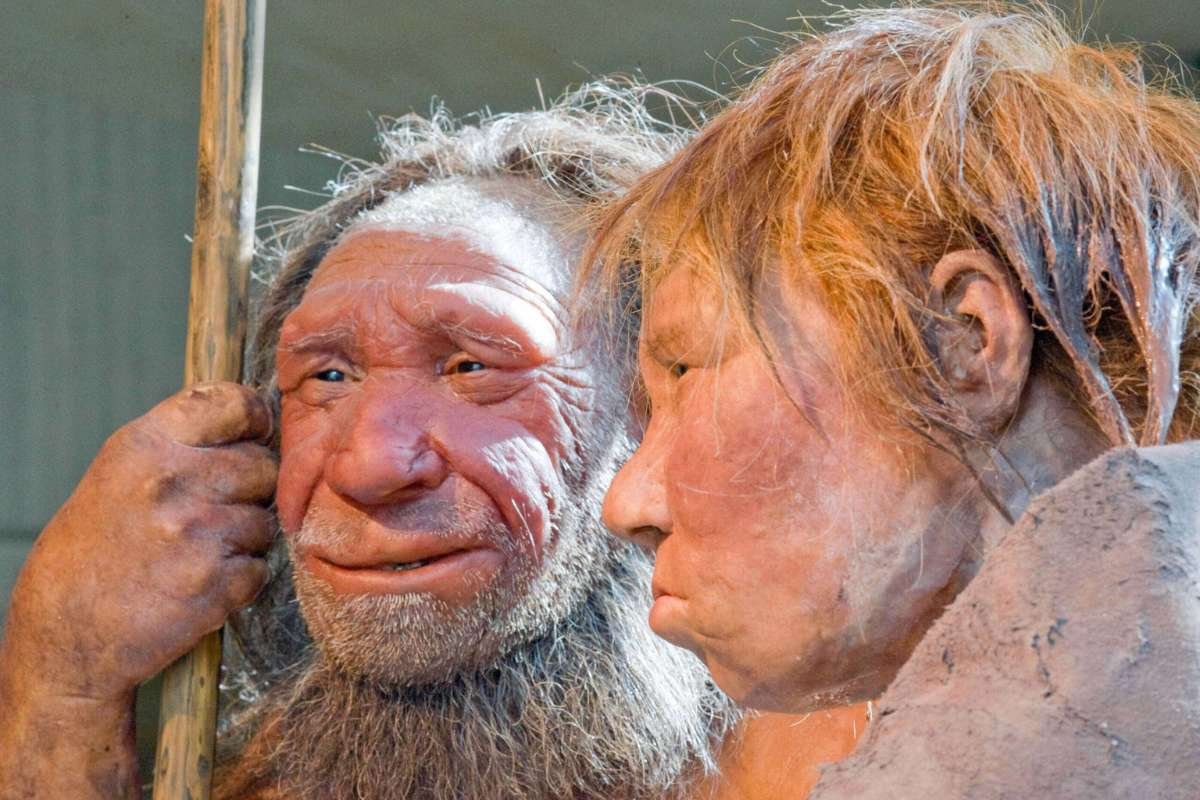
A new genetic analysis published Thursday finds that ancient Human Neanderthal interbreeding between modern humans and Neanderthals more often involved female humans and male Neanderthals, based on patterns in sex chromosomes preserved in both genomes.
A study published Thursday in the journal Science reports that when modern humans and Neanderthals interbred tens of thousands of years ago, the pairings more frequently involved female humans and male Neanderthals.
Researchers concluded by examining patterns in the X chromosome, one of the two sex chromosomes that determine biological sex. Their findings offer new clues about how the two groups interacted, though major questions remain about the nature of those encounters.
Study Analyzes X Chromosome Patterns
Scientists have long known that modern humans carry a small percentage of Neanderthal DNA, particularly those outside sub-Saharan Africa. Some of those inherited genes influence disease resistance and other biological traits.
But researchers have also observed that Neanderthal DNA is unevenly distributed across the human genome. In particular, there is less Neanderthal DNA than expected on the human X chromosome compared with non-sex chromosomes.
To investigate why, study author Alexander Platt of the University of Pennsylvania and colleagues analyzed the Neanderthal genome and segments of human DNA that entered it during an interbreeding event about 250,000 years ago.
They found a mirror-image pattern: while modern humans show reduced Neanderthal DNA on the X chromosome, Neanderthals carried more human DNA on their X chromosomes than expected.
“That whenever Neanderthals and modern humans have mated, there has been a preference for male Neanderthals and female modern humans, as opposed to the other way around,” Platt said.
Inheritance Patterns Offer Clues
The explanation centers on how sex chromosomes are passed down. Females have two X chromosomes, while males have one X and one Y. As a result, two out of every three X chromosomes in a population are inherited from mothers.
If human females more often mated with Neanderthal males, researchers would expect to see more human DNA accumulating on Neanderthal X chromosomes over time, while Neanderthal DNA would be less common on the human X chromosome. That is the pattern the team observed.
The study suggests social behavior, rather than purely biological fitness, may have shaped the genetic legacy of Human Neanderthal interbreeding.
“It’s not the result of a strictly Darwinian survival of the fittest,” Platt said. “It’s really the result of how we interact with each other, and what our culture and society and behavior are like.”
Questions About Ancient Encounters Remain
The findings do not explain how or why these encounters occurred during ancient Human Neanderthal interbreeding. It remains unclear whether human women entered Neanderthal groups, Neanderthal males approached human communities, or whether interactions were cooperative or coercive.
“I don’t know if we’ll ever get a definitive answer to how this happened, since we can’t travel back in time,” said Xinjun Zhang, a population genetics expert at the University of Michigan, who commented on the research.
Joshua Akey, an evolutionary genomics researcher at Princeton University who was not involved in the study, said the work helps clarify a long-standing puzzle.
“I think that they’ve taken some really important steps in filling in the missing pieces to the puzzle,” Akey said.
Researchers caution that alternative explanations remain possible. For example, offspring from human males and Neanderthal females may have survived at lower rates, which could also influence genetic patterns observed today.
Still, the authors argue that mating behavior offers the simplest explanation consistent with the data.
While the study cannot reconstruct the social dynamics of ancient encounters, it adds new detail to a relationship that left a lasting imprint on the human genome.