Key Points:
- A volcanic eruption in 1345 caused cooling and crop failures in Europe.
- Grain imports from the Black Sea brought plague-carrying rat fleas to Italy.
- The Black Death arose from a rare mix of climate, trade, and societal factors.
A volcanic eruption in 1345 may have sparked climate shifts that disrupted grain supplies in Europe and opened trade routes that carried Yersinia pestis, launching the Black Death, researchers report.
Scientists Link Climate Shock to Plague’s Arrival
A new study published in Communications Earth & Environment suggests a volcanic eruption in the mid-fourteenth century set off a cascade of events that preceded the Black Death, one of history’s deadliest pandemics. Researchers examined thousands of European tree rings, ice cores from both poles, and medieval documents to reconstruct the years before the plague reached Europe in 1347.
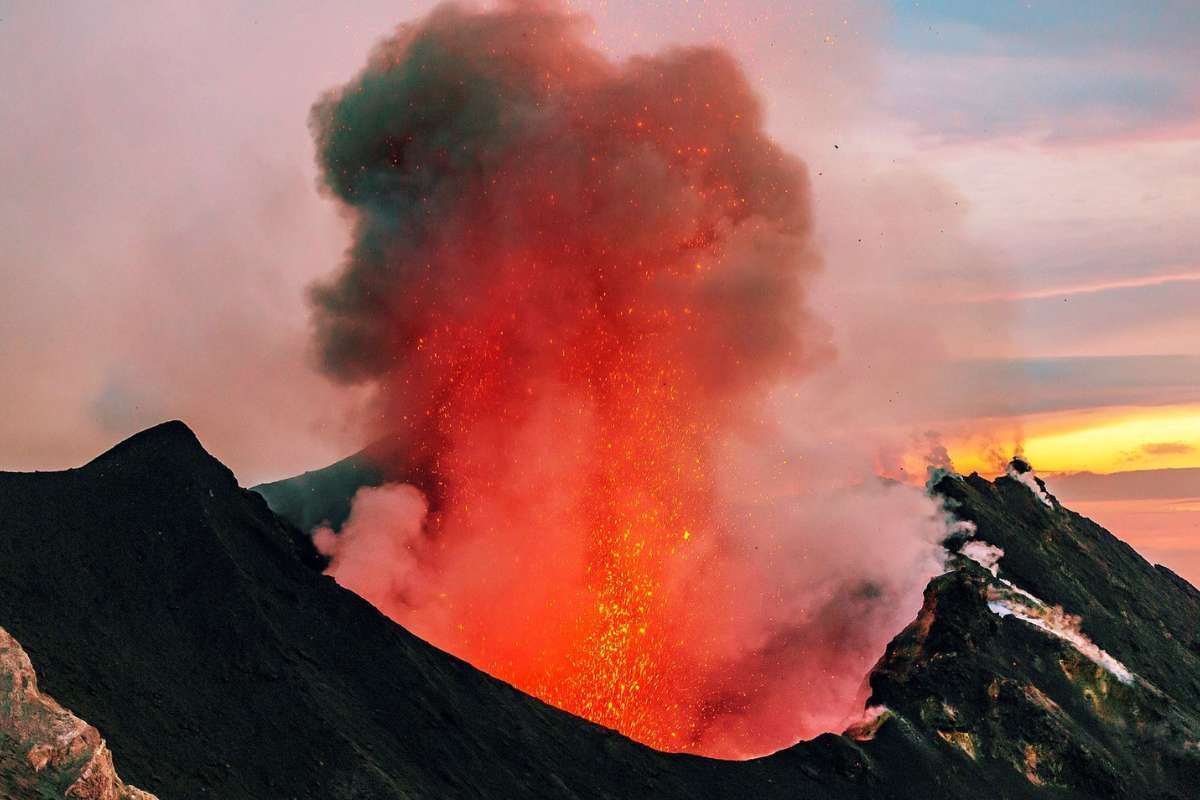
The findings point to an eruption—likely from a tropical volcano or cluster of volcanoes around 1345—that cooled the Mediterranean region. “In the tree ring we see a climatic downturn, which means colder than normal temperatures for two to three years,” said Ulf Büntgen, a professor of environmental systems analysis at the University of Cambridge and a study coauthor.
Ice cores that showed sulfur spikes supported the tree-ring results. Large, sulfur-rich volcanic eruptions are known to trigger cooler summers by blocking sunlight.
Cooling, Crop Failures, and Emergency Grain Imports
The researchers argue that the sudden temperature drop caused crop failures across southern Europe. Facing food shortages, Italian city-states, including Venice and Genoa, increased grain imports from the Black Sea region to prevent famine and unrest.
But those shipments carried rat fleas infected with Yersinia pestis, the bacterium behind the bubonic plague. “Rat fleas are drawn to grain stores and can survive for months on grain dust,” said study coauthor Martin Bauch of the Leibniz Institute for the History and Culture of Eastern Europe. “That enabled them to endure the long voyage from the Black Sea to Italy.”
Once the fleas’ rodent hosts died, they sought new hosts, including humans. The plague spread rapidly after arriving in Mediterranean ports, ultimately killing at least 25 million people between 1347 and 1351.
Some regions were spared, such as Rome and Milan—cities surrounded by grain-producing areas that did not rely as heavily on imports. Their relative self-sufficiency may explain why they avoided the worst of the outbreak.
Experts Say Study Adds Key Piece to Pandemic Puzzle
Scholars not involved in the research said the work offers fresh insight into how natural forces and trade networks shaped the pandemic. “The authors recognise that an event as exceptional as the Black Death must have been due to an exceptional coincidence of natural and social forces,” said Mark Bailey, a professor of late medieval history at the University of East Anglia.
Mark Welford, a geography professor at the University of Northern Iowa, said the study strengthens the case for how climate shifts, triggered by volcanic eruptions, can influence disease dynamics. Alex Brown, a medieval history scholar at Durham University, called the findings a reminder of the deep interconnectedness between people, animals, and the environment.
Researchers emphasize that the plague’s arrival depended on a combination of climate stress, economic pressure, and trade routes. “A lot of things needed to come together,” Büntgen said. “If only one of them wasn’t there, then this pandemic wouldn’t have happened.”
Visit The Lifesciences Magazine For The Most Recent Information.