What if eating less could actually make you healthier? Sounds surprising, right? But that’s exactly what happens when you choose the most nutrient-dense foods, the ones packed with vitamins, minerals, and antioxidants your body truly needs.
While most people focus on calories, science says quality matters more than quantity. According to the USDA, nutrient-dense foods can have up to 10 times more vitamins and minerals per calorie than processed foods. That means a bowl of spinach or salmon gives your body far more value than the same calories from chips or soda.
Studies in The Lancet show that people who eat more nutrient-rich foods like leafy greens, fruits, and seafood have a 25% lower risk of heart disease and often live longer, healthier lives.
In this blog, we’ll explore what makes a food nutrient-dense, reveal the nutrient-dense foods backed by science, and show you easy ways to include them in your daily diet. Because when it comes to real nutrition, it’s not about eating more, it’s about eating better.
What Constitutes a Food That Is Actually High in Nutrients?
So, what actually makes some foods more powerful than others? The answer lies in how many essential nutrients you get from every bite. Simply put, nutrient-dense foods give you more vitamins, minerals, and antioxidants for fewer calories, meaning you get more health benefits without overeating.
For example, 100 calories of kale or salmon deliver far more nutrients than 100 calories of fries or white bread. It’s not about how much food you eat, but how much nutrition that food gives back.
Here’s what really defines the most nutrient-dense foods?
| High in essential nutrients | They’re loaded with vitamins (A, C, K, B12) and minerals like iron, zinc, and calcium. |
| Rich in antioxidants | These compounds protect your body from cell damage and support heart and brain health. |
| Good source of fibre and protein | They keep you full longer and help maintain steady energy levels. |
| Low in added sugars or unhealthy fats | Real nutrient-dense foods are naturally balanced and don’t need artificial additives. |
According to research from the BBC’s Global Nutrition Database, foods like leafy greens, seafood, nuts, and seeds consistently rank among the world’s top nutrient sources. They score high not just for vitamins, but also for their bioavailability how easily your body can actually absorb those nutrients.
In short, the most nutrient-dense foods are nature’s way of giving you more for less, more energy, more strength, and more protection in every meal.
How to Identify the Most Nutrient-Dense Foods?
Now that you know why nutrient-dense foods matter, the next question is, how do you actually spot them? The good news: it’s easier than you think. Most of the nutrient-dense foods share a few common signs: they’re colorful, close to their natural form, and full of flavor without needing much processing.
Here’s how you can easily identify them:
| Go for natural colors | The deeper the color, the richer the nutrients. Think dark leafy greens, bright berries, orange carrots, or red peppers. Nature uses color as a clue. |
| Choose whole over processed. | Foods that look like they did when they came from the earth or ocean, not from a factory, are usually more nutrient-dense. |
| Check the ingredients | The fewer the ingredients, the better. A single ingredient (like “spinach” or “salmon”) usually means it’s nutrient-rich. |
| Watch out for hidden sugars. | Packaged foods, even “healthy” ones, can lose their nutrient value with added sugar or refined oils. |
| Think balance | A nutrient-dense diet mixes plants, proteins, and healthy fats. That’s what gives your body complete nourishment. |
According to a global nutrition study by the BBC Future, foods like spinach, almonds, salmon, and chia seeds rank among the top 100 most nutritious options worldwide, not because they’re trendy, but because they’re packed with essential nutrients your body actually absorbs.
The takeaway? If your food is colorful, natural, and unprocessed, it’s likely one of the nutrient-dense foods you can eat.
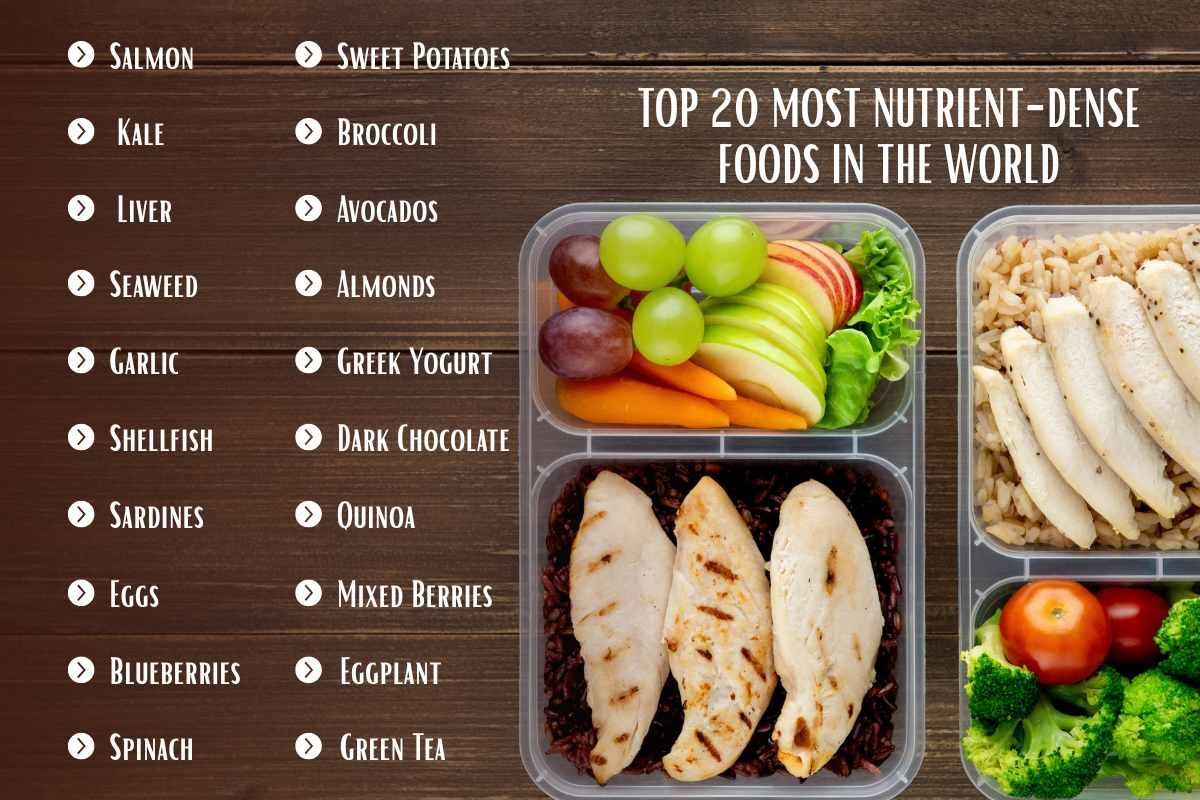
Top 20 Most Nutrient-Dense Foods in the World:
Eating smart isn’t about eating more; it’s about choosing foods that give your body the best nutritional return for every calorie. These 20 nutrient-dense foods are packed with vitamins, minerals, antioxidants, and healthy fats that support overall wellness, energy, and longevity.
1. Salmon
| Calories | 206 |
| Protein (g) | 22 |
| Fiber (g) | 0 |
| Key Nutrients | Vitamin D, Omega-3s, Selenium |
| Main Benefits | Heart health, brain support, lean muscle growth |
Salmon is one of the most nutrient-packed sources of protein you can find. It’s rich in omega-3 fatty acids, vitamin D, and B vitamins that support heart and brain health. Regular consumption has been linked to lower inflammation and improved mental focus. Wild-caught varieties are especially nutrient-dense, offering a clean source of healthy fats.
2. Kale
| Calories | 35 |
| Protein (g) | 3.3 |
| Fiber (g) | 4.1 |
| Key Nutrients | Vitamins A, C, and K, Calcium |
| Main Benefits | Boosts immunity, supports bone and eye health |
Kale is a true superfood, loaded with vitamins A, C, and K, along with antioxidants like lutein and beta-carotene. It’s also rich in fiber and calcium, helping strengthen bones and boost immunity. Studies show that people who eat kale regularly have lower risks of chronic diseases.
3. Liver
| Calories | 175 |
| Protein (g) | 26 |
| Fiber (g) | 0 |
| Key Nutrients | Iron, Vitamin A, B12, Folate |
| Main Benefits | Improves red blood cell production and energy levels |
Liver is considered one of the most nutrient-dense foods and a powerful source of important vitamins. It’s loaded with vitamin A, B12, folate, and iron, all vital for energy, red blood cell production, and healthy vision. Just one serving can exceed your daily nutrient requirements for several vitamins, making it a true nutritional gem.
4. Seaweed
| Calories | 45 |
| Protein (g) | 1.7 |
| Fiber (g) | 3 |
| Key Nutrients | Iodine, Magnesium, Calcium |
| Main Benefits | Supports thyroid function and detoxification |
Seaweed is a unique ocean vegetable rich in iodine, magnesium, and antioxidants. It plays a crucial role in supporting thyroid health and metabolism. Common in Japanese diets, it’s known to help regulate hormones and improve energy. It’s also one of the few plant-based sources of omega-3s.
5. Garlic
| Calories | 149 |
| Protein (g) | 6.4 |
| Fiber (g) | 2.1 |
| Key Nutrients | Manganese, Vitamin C, Selenium |
| Main Benefits | Natural antibiotic, boosts immunity, lowers BP |
Garlic is a natural immune booster known for its sulfur compounds, particularly allicin. It can help lower cholesterol, improve heart function, and fight infections. Regular garlic intake has also been shown to improve blood pressure and reduce inflammation in the body.
6. Shellfish (Oysters, Clams, Mussels)
| Calories | 90 |
| Protein (g) | 10 |
| Fiber (g) | 0 |
| Key Nutrients | Zinc, Iron, B12, Omega-3s |
| Main Benefits | Strengthens immunity, promotes cell regeneration |
Shellfish deserve a top spot among the most nutrient-dense foods thanks to their exceptional zinc, selenium, and vitamin B12 content. Oysters alone provide more than 400% of your daily zinc needs, crucial for immunity and cell repair. They’re also a fantastic source of lean protein and healthy fats, supporting metabolism and skin health.
7. Sardines
| Calories | 208 |
| Protein (g) | 25 |
| Fiber (g) | 0 |
| Key Nutrients | Calcium, Vitamin D, Omega-3s |
| Main Benefits | Improves bone and heart health |
Sardines are tiny fish with massive nutritional benefits. They’re loaded with calcium, vitamin D, and omega-3s, promoting strong bones and a healthy heart. Because they’re low on the food chain, sardines are also low in mercury, making them a clean, sustainable protein choice.
8. Eggs
| Calories | 155 |
| Protein (g) | 13 |
| Fiber (g) | 0 |
| Key Nutrients | Protein, Choline, Vitamin D |
| Main Benefits | Supports brain function and muscle repair |
Eggs are among the most complete foods nature offers. They’re rich in protein, choline (vital for brain function), and healthy fats. Eating whole eggs supports muscle growth, cognitive health, and hormone balance. Don’t skip the yolk, that’s where most nutrients are concentrated.
9. Blueberries
| Calories | 57 |
| Protein (g) | 0.7 |
| Fiber (g) | 2.4 |
| Key Nutrients | Vitamin C, K Antioxidants |
| Main Benefits | Protects cells from oxidative stress |
Being the most nutrient-dense foods, blueberries are tiny but highly potent. They’re rich in anthocyanins, antioxidants that support heart health, brain function, and slow aging. Studies suggest that just one cup of blueberries a day can help reduce oxidative stress and inflammation significantly.
10. Spinach
| Calories | 23 |
| Protein (g) | 2.9 |
| Fiber (g) | 2.2 |
| Key Nutrients | Iron, Folate, Magnesium |
| Main Benefits | Supports oxygen flow and skin health |
Spinach is a leafy green superstar rich in iron, folate, and vitamins A and C. It helps with blood health, skin repair, and muscle recovery. Regular spinach consumption can reduce oxidative stress and improve energy metabolism naturally.
11. Sweet Potatoes
| Calories | 86 |
| Protein (g) | 1.6 |
| Fiber (g) | 3 |
| Key Nutrients | Vitamin A, Potassium, Fiber |
| Main Benefits | Improves digestion and eye health |
Sweet potatoes are a vibrant source of beta-carotene, which the body converts to vitamin A. They’re great for vision, immunity, and gut health. Their slow-digesting carbs help maintain stable blood sugar levels while providing long-lasting energy.
12. Broccoli
| Calories | 34 |
| Protein (g) | 2.8 |
| Fiber (g) | 2.6 |
| Key Nutrients | Vitamin C, K, Folate |
| Main Benefits | Strengthens immunity and supports metabolism |
Broccoli, packed with vitamin C, fiber, and sulforaphane, stands out as one of the most nutrient-dense foods known for its potential cancer-fighting properties. It supports detoxification, strengthens immunity, and promotes heart health. Lightly steaming broccoli helps preserve its nutrients best.
13. Avocados
| Calories | 160 |
| Protein (g) | 2 |
| Fiber (g) | 7 |
| Key Nutrients | Potassium, Vitamin E, Healthy Fats |
| Main Benefits | Heart-healthy fats support skin and joints |
Avocados are nature’s butter: creamy, rich, and full of heart-healthy monounsaturated fats. They’re packed with potassium, folate, and vitamin E, which support brain and heart function. Adding avocados to meals also improves nutrient absorption from other foods.
14. Almonds
| Calories | 579 |
| Protein (g) | 21 |
| Fiber (g) | 12.5 |
| Key Nutrients | Vitamin E, Magnesium, Calcium |
| Main Benefits | Boosts energy and supports brain health |
Almonds deliver a powerful mix of vitamin E, magnesium, and plant protein. They help lower bad cholesterol and improve skin health. Regular almond intake is also linked to better cognitive performance and steady energy levels throughout the day.
15. Greek Yogurt
| Calories | 59 |
| Protein (g) | 10 |
| Fiber (g) | 0 |
| Key Nutrients | Calcium, Probiotics, B12 |
| Main Benefits | Gut health and protein-rich nourishment |
Greek yogurt’s high protein, calcium, and probiotic content make it one of the most nutrient-dense foods. It strengthens bones, boosts gut health, and supports muscle recovery. Choose unsweetened Greek yogurt to get the maximum health benefits without added sugar.
16. Dark Chocolate (85% and above)
| Calories | 598 |
| Protein (g) | 7.8 |
| Fiber (g) | 10.9 |
| Key Nutrients | Iron, Magnesium, Flavonoids |
| Main Benefits | Antioxidant-rich, improves mood and circulation |
Dark chocolate isn’t just a treat; it’s a nutrient-rich food filled with antioxidants like flavonoids and minerals such as iron and magnesium. It helps improve circulation, reduce inflammation, and enhance mood. Just a small square of daily can provide powerful health benefits.
17. Quinoa
| Calories | 120 |
| Protein (g) | 4.4 |
| Fiber (g) | 2.8 |
| Key Nutrients | Magnesium, Iron, Amino Acids |
| Main Benefits | Complete plant protein supports recovery |
Quinoa is a gluten-free grain and a complete protein source, containing all nine essential amino acids. It’s rich in iron, magnesium, and fiber, helping with digestion, energy, and muscle recovery. It’s also low on the glycemic index, keeping blood sugar stable.
18. Mixed Berries (Strawberries, Raspberries, Blackberries)
| Calories | 50 |
| Protein (g) | 1 |
| Fiber (g) | 5 |
| Key Nutrients | Vitamin C, Fiber, Polyphenols |
| Main Benefits | Anti-aging and improves gut health |
Probably the most nutrient-dense foods are mixed berries, which are fruits high in antioxidants. They’re high in vitamin C, fiber, and polyphenols, which help fight free radicals and improve heart health. Berries are also great for skin, thanks to their natural collagen-boosting properties.
19. Eggplant
| Calories | 25 |
| Protein (g) | 1 |
| Fiber (g) | 3 |
| Key Nutrients | Manganese, Antioxidants, Fiber |
| Main Benefits | Supports heart and liver function |
Eggplant is rich in anthocyanins, fiber, and antioxidants that support heart and brain health. It helps regulate blood sugar and protects against oxidative damage. The purple pigment in eggplant skins also promotes healthy aging and better circulation.
20. Green Tea
| Calories | 1 |
| Protein (g) | 0 |
| Fiber (g) | 0 |
| Key Nutrients | Catechins, PolyphenolsAntioxidants |
| Main Benefits | Boosts metabolism, supports brain and heart health |
Green tea isn’t just a beverage; it’s a nutrient powerhouse in liquid form. Packed with catechins, it boosts metabolism, enhances brain function, and reduces inflammation. Drinking green tea regularly has been linked to longevity and improved cardiovascular health.
These 20 most nutrient-dense foods show that real nutrition isn’t about restriction, it’s about making smarter, richer choices. Whether you’re adding them to smoothies, salads, or meals, each of these foods brings your body closer to optimal wellness from the inside out.
Read Next:
- Why Super Healthy Foods Are the Secret Weapon of Lifelong Energy?
- These 50 High-Fiber Foods That Keep You Full and Fit All Day
- 8 Healthy Foods That Don’t Deserve Their Bad Reputations
How to Add These Nutrient-Dense Foods to Your Daily Diet?
Eating healthy doesn’t have to mean giving up flavor or convenience. The secret is to weave nutrient-dense foods into your everyday meals in small, sustainable ways. From breakfast bowls to dinner plates, these smart swaps and combinations can elevate your nutrition without overhauling your routine.
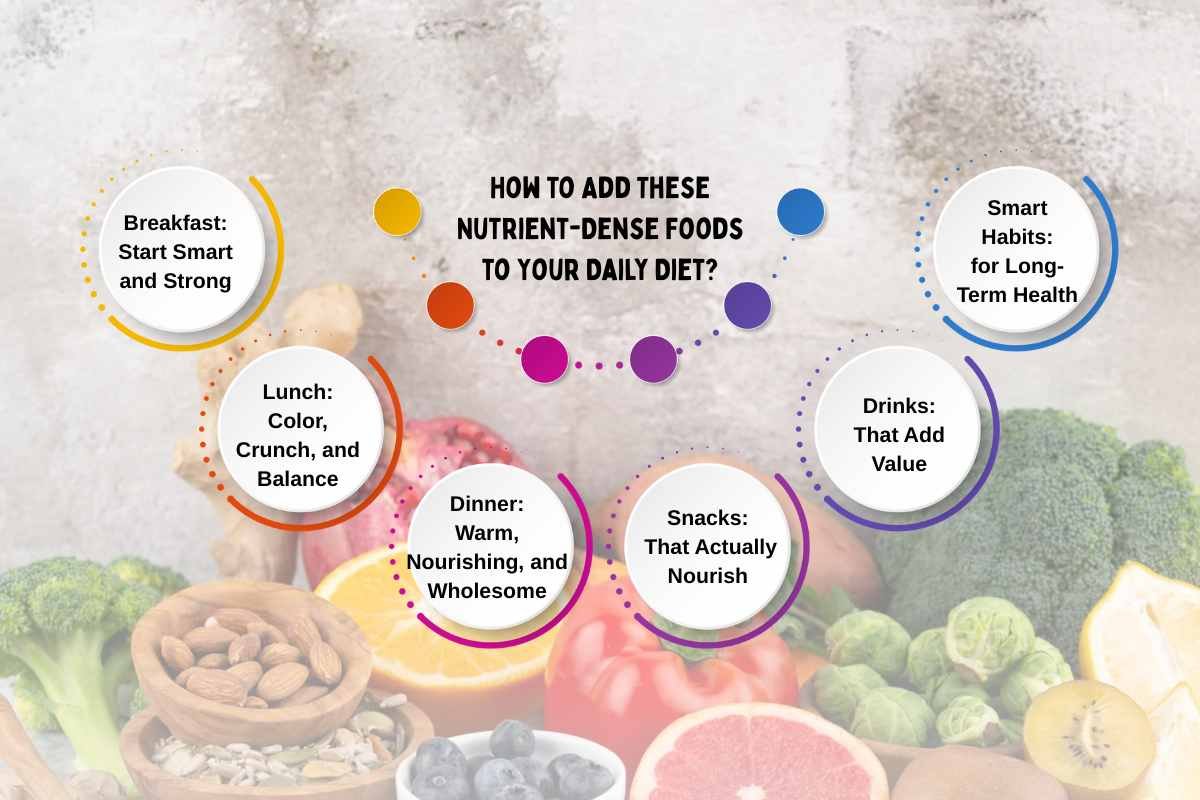
1. Breakfast: Start Smart and Strong
| Oatmeal with Greek Yogurt & Berries | Combine oats with unsweetened Greek yogurt and a handful of blueberries or raspberries. You’ll get probiotics, antioxidants, and steady morning energy. |
| Avocado Toast with Egg | Whole-grain toast topped with mashed avocado and a poached egg delivers healthy fats and protein in one go. |
| Green Smoothie | Blend spinach, banana, and almond butter with a splash of green tea for a refreshing, nutrient-packed start. |
Tip: Prep smoothie ingredients the night before for a grab-and-go breakfast that includes several of the most nutrient-dense foods without any extra effort.
2. Lunch: Color, Crunch, and Balance
| Kale & Quinoa Bowl | Toss kale, quinoa, chickpeas, and a squeeze of lemon for a high-protein, fiber-rich meal. |
| Salmon or Sardine Salad | Add canned salmon or sardines to mixed greens with avocado slices for omega-3s and healthy fats. |
| Seaweed Wraps | Use seaweed sheets to roll veggies, rice, and tofu for a light yet nutrient-rich lunch. |
Tip: Rotate different proteins (like eggs, lentils, or Greek yogurt) throughout the week to keep your meals balanced and exciting.
3. Dinner: Warm, Nourishing, and Wholesome
| Garlic & Broccoli Stir-Fry | Sauté garlic, broccoli, and almonds in olive oil for a vitamin-packed side dish. |
| Grilled Chicken or Liver with Sweet Potatoes | A hearty, high-protein dinner that delivers iron, vitamin A, and energy-rich carbs. |
| Avocado-Topped Grain Bowl | Mix brown rice, spinach, and roasted vegetables, topped with avocado slices for extra potassium and creamy texture. |
Tip: Pair plant-based and animal-based foods to get the full spectrum of nutrients. That’s how you build meals around the most nutrient-dense foods naturally.
4. Snacks That Actually Nourish
| Dark Chocolate & Almonds | A handful of almonds with a small square of dark chocolate satisfies cravings while boosting magnesium and antioxidants. |
| Greek Yogurt with Honey & Seeds | Perfect for gut health and protein between meals. |
| Boiled Eggs or Roasted Chickpeas | Quick snacks that are both filling and packed with nutrients. |
Tip: Avoid packaged snacks; nutrient-dense options keep your energy levels stable and reduce unnecessary sugar intake.
5. Drinks That Add Value
| Green Tea | Sip throughout the day to boost metabolism and reduce inflammation. |
| Smoothies with Spinach or Kale | An easy way to sneak in leafy greens without sacrificing taste. |
| Lemon-Infused Water | Supports hydration and digestion, helping your body absorb nutrients more efficiently. |
Tip: Stay hydrated; even the most nutrient-dense foods can’t do their job if your body lacks fluids to transport those nutrients effectively.
6. Smart Habits for Long-Term Health
| Eat the Rainbow | Aim for a mix of colors on your plate; each hue represents a unique nutrient group. |
| Shop Fresh | Choose whole, minimally processed foods whenever possible. |
| Cook Simply | Steaming, baking, and grilling preserve nutrients better than frying. |
| Plan Ahead | Prepping ingredients or meals on Sundays helps you stay consistent. |
| Listen to Your Body | Nutrient-dense eating is about nourishment, not restriction. |
By slowly adding these most nutrient-dense foods into your daily meals, you’ll not only fuel your body better but also feel more energized, focused, and strong from within. Remember, nutrition isn’t a quick fix; it’s a lifestyle shift that starts one meal at a time.
Read Next:
- High-Protein Diet Plan: Benefits, Foods, and How to Get Started
- Burn Fat, Boost Energy, and Transform Your Health with This Low-Carb Diet Meal Plan
Why You Should Care About Nutrient-Dense Foods?
Your body doesn’t just need food, it needs fuel. And the quality of that fuel determines how well you think, move, and feel every day. That’s where nutrient-dense foods make all the difference.
When you eat more of the most nutrient-dense foods, you’re not just filling your stomach; you’re nourishing every cell in your body. Studies published in the American Journal of Clinical Nutrition show that people who eat nutrient-rich diets have better immunity, sharper focus, and lower risks of chronic diseases like diabetes and heart problems.
Think about it this way: your body is like an engine. Processed foods are cheap fuel; they get you going but wear you down fast. Nutrient-dense foods, on the other hand, are premium fuel; they help your body run smoother, longer, and stronger.
Here are a few key benefits of including more nutrient-dense foods in your diet:
| Boosts immunity | Nutrients like vitamin C, zinc, and antioxidants strengthen your defense system. |
| Supports muscle and bone health | Protein, calcium, and magnesium keep your body strong and active. |
| Improves focus and mood | Omega-3s and B vitamins support brain function and mental clarity. |
| Protects long-term health | Research links nutrient-dense diets to lower inflammation and longer lifespans. |
So, the next time you build your plate, think beyond calories. Because the more nutrient-dense foods you add to your meals, the more your body rewards you with lasting energy, better health, and a happier you.
Conclusion
When it comes to health, it’s not just about eating more; it’s about eating better. The secret to a stronger body, sharper mind, and longer life lies in choosing the most nutrient-dense foods that give you the maximum nutrition in every bite. From the omega-3 power of salmon to the antioxidant burst of berries and the mineral magic of kale, these foods prove that quality always beats quantity.
Research published by BBC Future and Healthline confirms that foods like leafy greens, seafood, nuts, and seeds consistently rank among the nutrient-dense foods on the planet, not because they’re trendy, but because they fuel your body the way nature intended.
So, next time you plan your meal, think color, think balance, and think nourishment. Even small swaps spinach over fries, salmon over processed meat, or green tea over soda, can completely transform your health over time.
In the end, nutrient density is more than just a diet trend; it’s a lifestyle choice that helps you thrive, not just survive.