Key Takeaway:
- Researchers identified a 14-protein blood signature that can predict lung cancer risk more than five years before diagnosis.
- The blood marker works in both smokers and non-smokers, potentially expanding early detection beyond current screening programs.
- The findings suggest preventive treatments could target high-risk individuals before cancer develops, reducing future lung cancer cases.
Researchers have identified a 14-protein blood signature that can predict a person’s risk of developing lung cancer more than five years before diagnosis, a breakthrough that could expand screening and prevention efforts for the disease.
Researchers identify early warning signal in blood
The findings, published in the journal Cell, stem from a collaboration between the Francis Crick Institute and University College London. The study was co-led by Dr. Clare Weeden, now a laboratory head at the Walter and Eliza Hall Institute of Medical Research in Australia.
Researchers analyzed blood plasma protein data from more than 48,000 participants in the UK Biobank and compared the information with cancer registry records. Using machine learning, they identified 14 proteins linked to an increased risk of lung cancer within five years.
The protein signature was validated across eight international datasets and consistently appeared at higher levels in people who later developed lung cancer, including individuals with no history of smoking.
“Figuring out who is at risk of developing cancer is the holy grail of cancer prevention medicine,” Weeden said. “These findings bring us closer to a future where early intervention is possible, even before the cancer has a chance to develop.”
Lung cancer remains Australia’s leading cause of cancer deaths. About 15,000 Australians are diagnosed with the disease each year, and roughly one-quarter have never smoked.
Scientists link inflammation to future cancer risk
The study builds on earlier research showing that air pollution can trigger inflammation in the lungs and activate dormant cells carrying cancer-causing mutations.
Researchers found that the newly identified 14-protein blood signature reflects an inflammatory lung environment that develops before cancer forms rather than signals from an existing tumor.
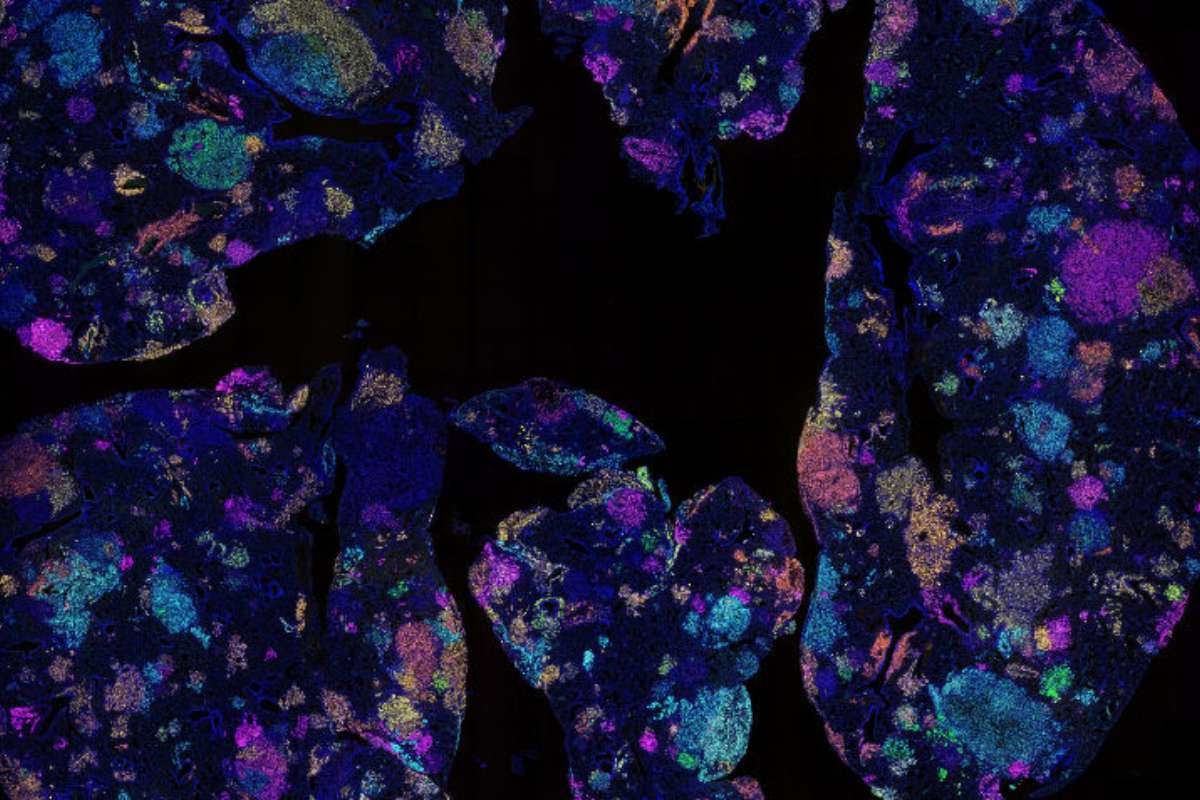
The team also identified a cell state known as “KAC cells,” which emerges in response to lung injury and can become cancerous when mutations are present. Exposure to air pollution increased both the protein signature and the number of KAC cells in laboratory models.
Charlie Swanton, clinical research director at the Francis Crick Institute and professor of cancer at University College London, said the discovery provides insight into a critical period before disease develops.
“Finding a signal for an inflammatory state in the lungs has given us insight into this window of opportunity, when preventative treatment could work best,” Swanton said.
Researchers also found elevated levels of the signature in people who later developed chronic obstructive pulmonary disease and idiopathic pulmonary fibrosis, suggesting a broader link to inflammatory lung diseases.
Study points to new prevention strategies
The research suggests the 14-protein blood signature could help identify people most likely to benefit from preventive treatment.
Scientists examined data from 4,651 participants in Novartis’ CANTOS clinical trial, which tested the anti-inflammatory drug canakinumab. They found that participants with high levels of the protein signature experienced nearly a 50% reduction in lung cancer risk when treated with the drug.
By targeting individuals with elevated signature levels, researchers estimated that 55 people would need treatment to prevent one lung cancer case, a rate comparable to established cardiovascular prevention strategies.
“What surprised us was that very different lung cell types all seemed to converge on the same intermediate state before becoming cancerous,” Weeden said. “If we can identify people in whom this process is active and intervene at that stage, we may be able to prevent cancer before it develops.”
Tej Pandya, a clinical Ph.D. student at University College London, said the findings provide proof of concept for future prevention programs.
“It’s a proof of concept that, one day, we could use this signature to offer preventive treatment to people at risk of lung cancer,” Pandya said.
Researchers said additional studies will be needed before the test can be used routinely in clinical practice, but the findings may pave the way for more inclusive screening and prevention programs worldwide.