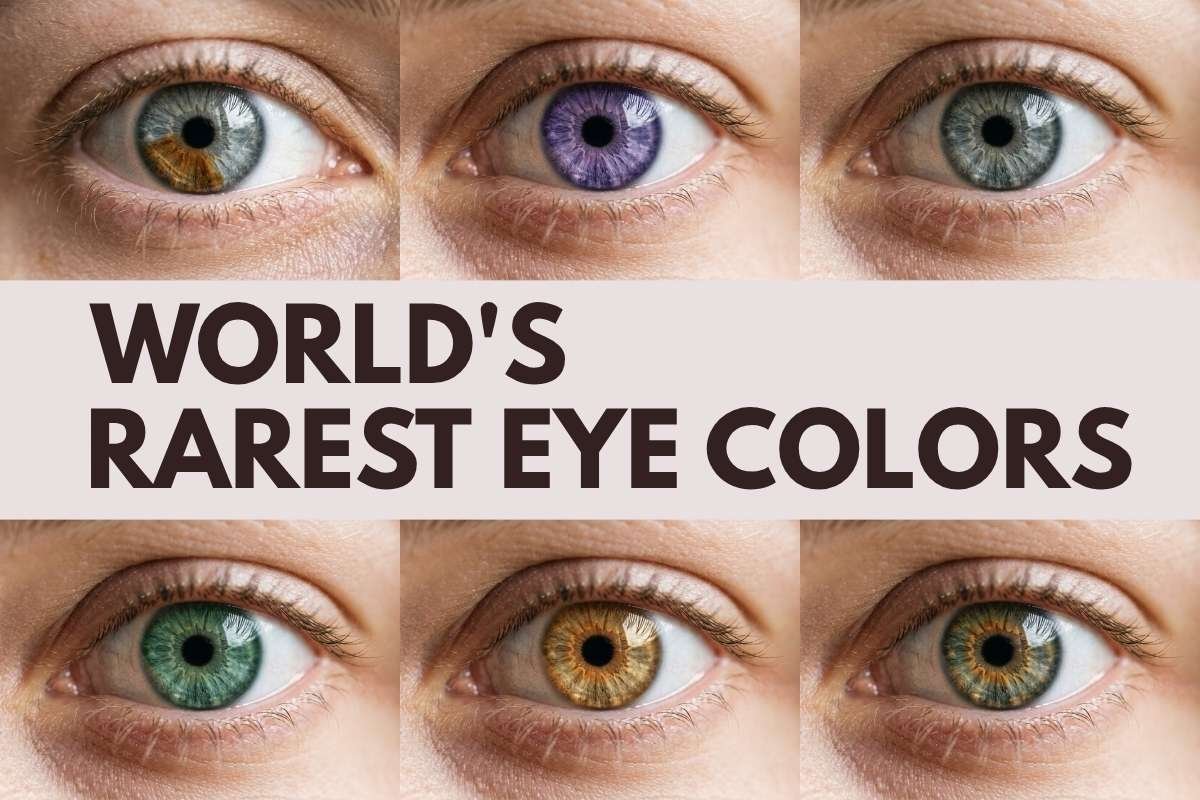
“The eyes are the window to the soul.” — William Shakespeare.
Across the world, billions of people share the same familiar eye colors, mostly shades of brown. In fact, nearly 70–80% of the global population has brown eyes, making it by far the most common eye color on Earth. But beyond this majority lies a fascinating world of rare and unusual eye shades that appear in only a tiny fraction of humanity. From the captivating green eyes seen in just about 2% of people, to mysterious gray or violet tones that occur in less than 1%, these eye colors are truly extraordinary.
The fact that eye color is influenced by intricate genetics, melanin levels, and light interaction within the iris makes it even more fascinating. Some of the most beautiful eye colors in the world can be produced by little differences in various biological elements, transforming a basic human characteristic into something remarkably distinctive.
In this guide, we explore the world’s rarest eye colors, uncovering the science behind these rare shades, their global prevalence, and the fascinating genetic factors that make them so uncommon. From the striking contrast of heterochromia to the golden glow of amber eyes, these rare eye colors reveal just how diverse and remarkable human genetics can be.
What Determines Eye Color in Humans?
Before exploring the rarest eye colors in the world, it’s important to understand what actually determines eye color in the first place. Eye color is not controlled by a single gene or a simple genetic rule. Instead, it is the result of a complex interaction between multiple genes, pigment levels, and the way light scatters within the iris.
The Role of Genetics
Genetics plays the most significant role in determining eye color. Scientists have identified more than 16 genes that influence the pigmentation of the iris, with two key genes, OCA2 and HERC2, having the strongest impact.
These genes regulate how much pigment is produced in the iris. Higher levels of pigmentation typically lead to darker eye colors, such as brown, while lower levels allow lighter shades like blue, gray, or green to appear. Because these genetic combinations vary widely from person to person, they can produce some of the world’s rarest eye colors.
Melanin and Eye Pigmentation
The amount and distribution of melanin, the pigment responsible for coloring our skin, hair, and eyes, largely determine how dark or light eye color appears.
- High melanin levels → darker eyes (brown or dark hazel)
- Moderate melanin levels → green or hazel eyes
- Low melanin levels → blue, gray, or other rare eye shades
Interestingly, blue and gray eyes do not actually contain blue pigment. Instead, they appear blue because of light scattering in the iris, similar to how the sky appears blue.
Environmental and Evolutionary Factors
Eye color distribution around the world has also been shaped by human migration and evolutionary adaptation. Lighter eye colors are more common in regions such as Northern and Eastern Europe, while darker eye colors dominate in areas with stronger sunlight exposure.
Over thousands of years, genetic variations and mutations created new eye color combinations. Some of these variations are extremely uncommon, which is why certain shades are now recognized as part of the world’s rarest eye colors.
Understanding these genetic and biological factors helps explain why rare eye colors exist and why they appear in only a small percentage of the global population.
Global Eye Color Distribution
To truly understand the rarest eye colors in the world, it helps to first look at how eye colors are distributed across the global population. While the human eye can display a fascinating range of shades, the majority of people share only a few common colors.
Studies show that brown eyes dominate worldwide, largely due to higher melanin levels and strong genetic inheritance. In contrast, lighter shades such as green, gray, and amber occur far less frequently, making them significantly more distinctive.
Geography also plays a major role in eye color distribution. Darker eye colors are more common in regions with intense sunlight, such as Asia, Africa, and South America, because higher melanin levels help protect the eyes from ultraviolet radiation. Meanwhile, lighter eye colors are found more often in parts of Northern and Eastern Europe, where genetic mutations thousands of years ago introduced new pigmentation patterns.
As a result, only a small percentage of people possess some of the world’s rarest eye colors, which appear due to unique genetic combinations and lower pigment levels.
Global Eye Color Prevalence
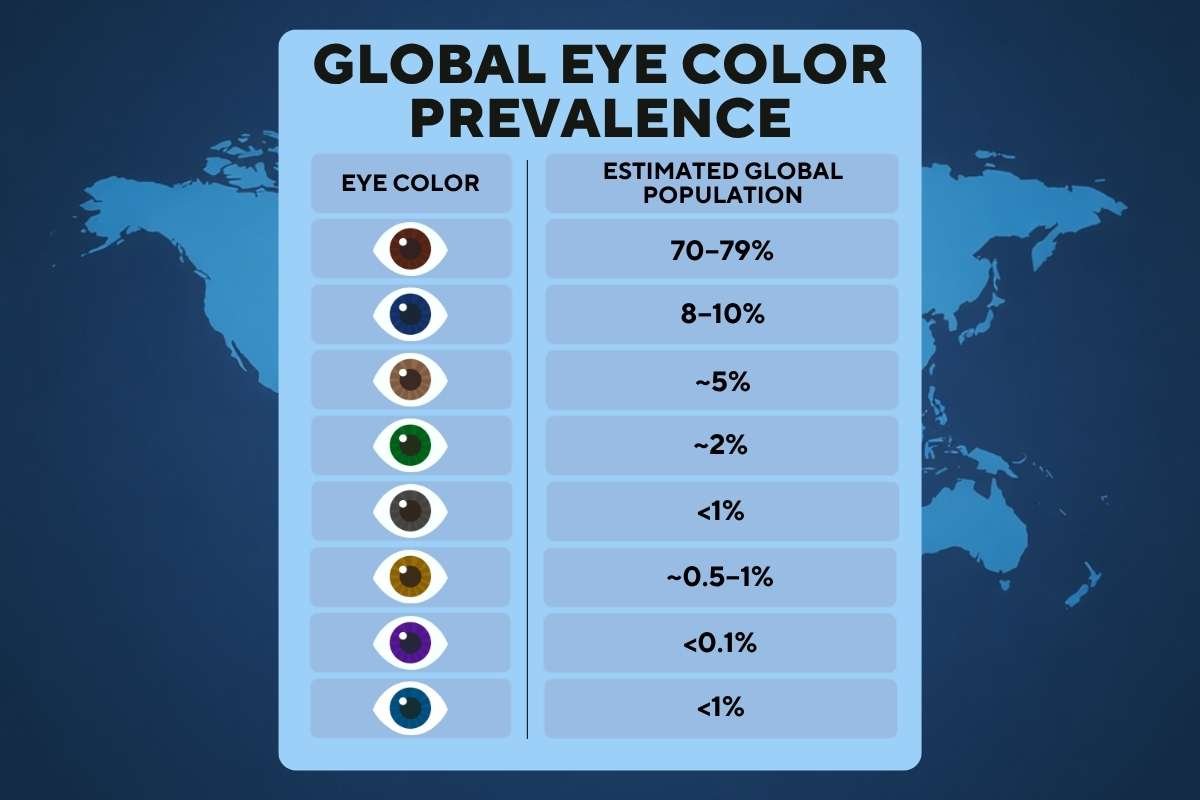
| Eye Color | Estimated Global Population |
| Brown | 70–79% |
| Blue | 8–10% |
| Hazel | ~5% |
| Green | ~2% |
| Gray | <1% |
| Amber | ~0.5–1% |
| Violet / Red | <0.1% |
| Heterochromia | <1% |
This distribution clearly shows that while billions of people share common eye colors, only a tiny fraction have some of the world’s rarest eye colors. These rare shades are what make human eye diversity so remarkable and scientifically fascinating.
With this context in mind, let’s explore the rarest eye colors in the world, ranked by rarity, uncovering the unique characteristics and genetics behind each one.
World’s Rarest Eye Colors Ranked
Now that we understand how genetics and global distribution influence eye color, let’s explore the rarest eye colors in the world, ranked by their estimated rarity. These unique shades occur in only a small percentage of the global population and often stand out because of unusual pigment combinations or genetic variations.
While rarity can vary slightly depending on geographic ancestry, the following eye colors are widely recognized as some of the world’s rarest eye colors found in humans today.
1. Heterochromia (Two Different Eye Colors)
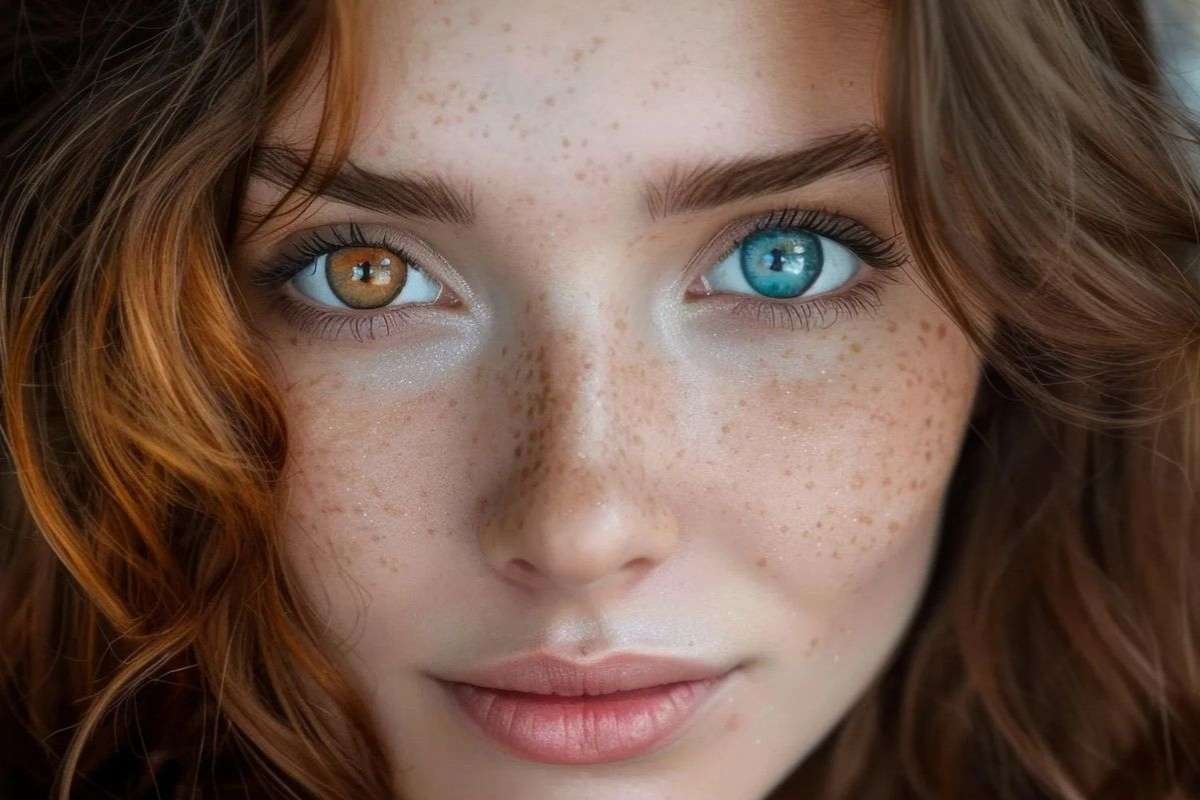
- Estimated occurrence: Less than 1% of the global population
Heterochromia is one of the most fascinating and visually striking entries among the rarest eye colors in the world. Instead of having a single eye color, people with this condition have two different colored eyes or multiple colors within the same iris.
There are three main types of heterochromia:
| Complete heterochromia | Each eye has a completely different color |
| Sectoral heterochromia | A portion of one iris has a different color |
| Central heterochromia | Rings of different colors appear around the pupil |
This rare phenomenon occurs when melanin distribution varies between the irises, usually due to genetics or minor developmental variations. Although it looks unusual, heterochromia is generally harmless and simply reflects a unique genetic trait.
2. Violet Eyes
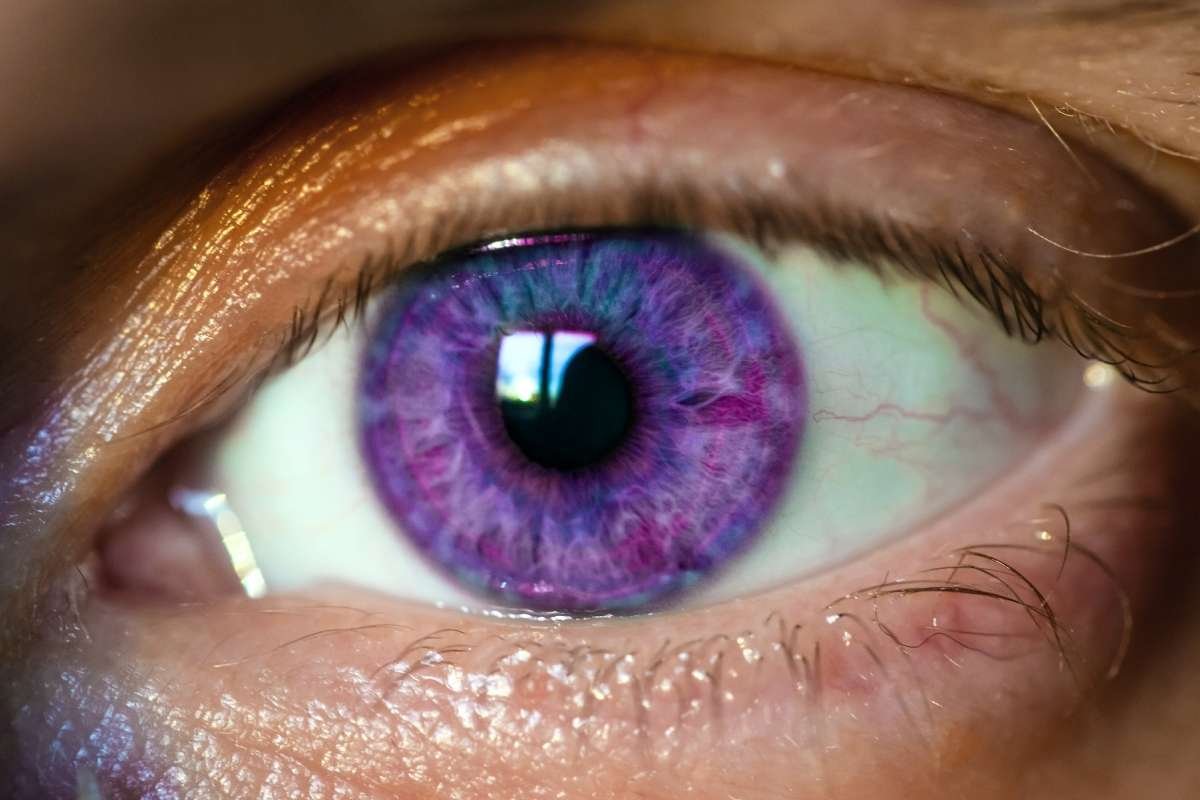
- Estimated occurrence: Less than 0.1% of the population
Among the world’s rarest eye colors, violet eyes are perhaps the most mysterious. These eyes appear to have a purple tint, which is typically the result of extremely low melanin levels combined with light scattering within the iris.
True violet eyes are exceptionally rare and are often linked to conditions such as albinism, where pigment production is reduced. In some cases, lighting conditions can also enhance a bluish eye color to appear violet.
The idea of violet eyes became widely popular due to Elizabeth Taylor, whose eyes sometimes appeared purple under certain lighting conditions.
3. Gray Eyes
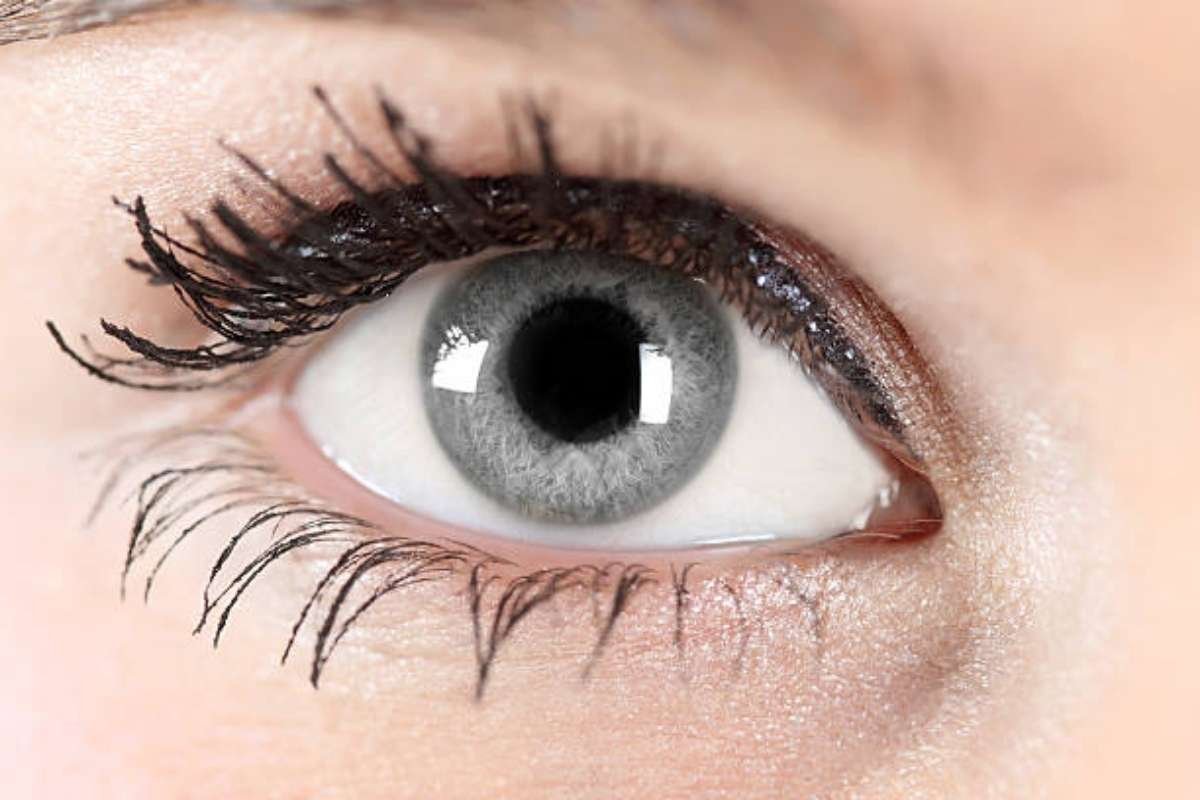
- Estimated occurrence: Around 1% of people worldwide
Gray eyes are another rare shade that often gets mistaken for blue. However, they are distinct because of unique collagen deposits in the iris, which scatter light differently and produce a soft gray appearance.
People with gray eyes often notice that their eye color changes slightly depending on lighting, clothing, or mood, sometimes appearing blue or even green. This subtle variability makes gray eyes one of the most intriguing entries in the world’s rarest eye colors.
Gray eyes are most commonly found in Northern and Eastern European populations, where lighter eye colors are more prevalent.
4. Green Eyes
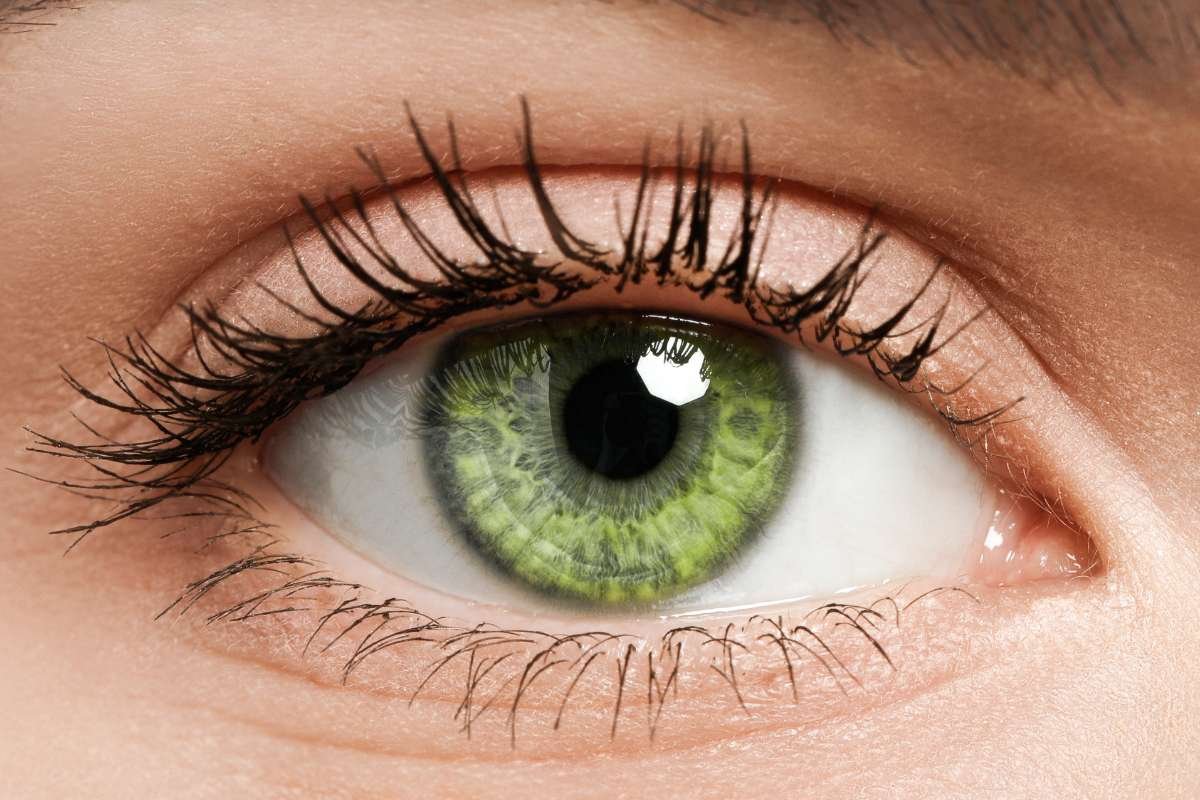
- Estimated occurrence: About 2% of the global population
Green eyes are widely considered one of the most captivating eye colors among the rarest eye colors in the world. Their distinctive shade is created by a combination of low melanin levels and a yellowish pigment known as lipochrome.
Unlike brown or blue eyes, green eyes result from a delicate balance of pigmentation and light scattering, giving them their vibrant appearance.
Interestingly, green eyes are most common in countries such as Ireland and Scotland, where genetic factors have allowed this rare color to persist across generations.
5. Amber Eyes
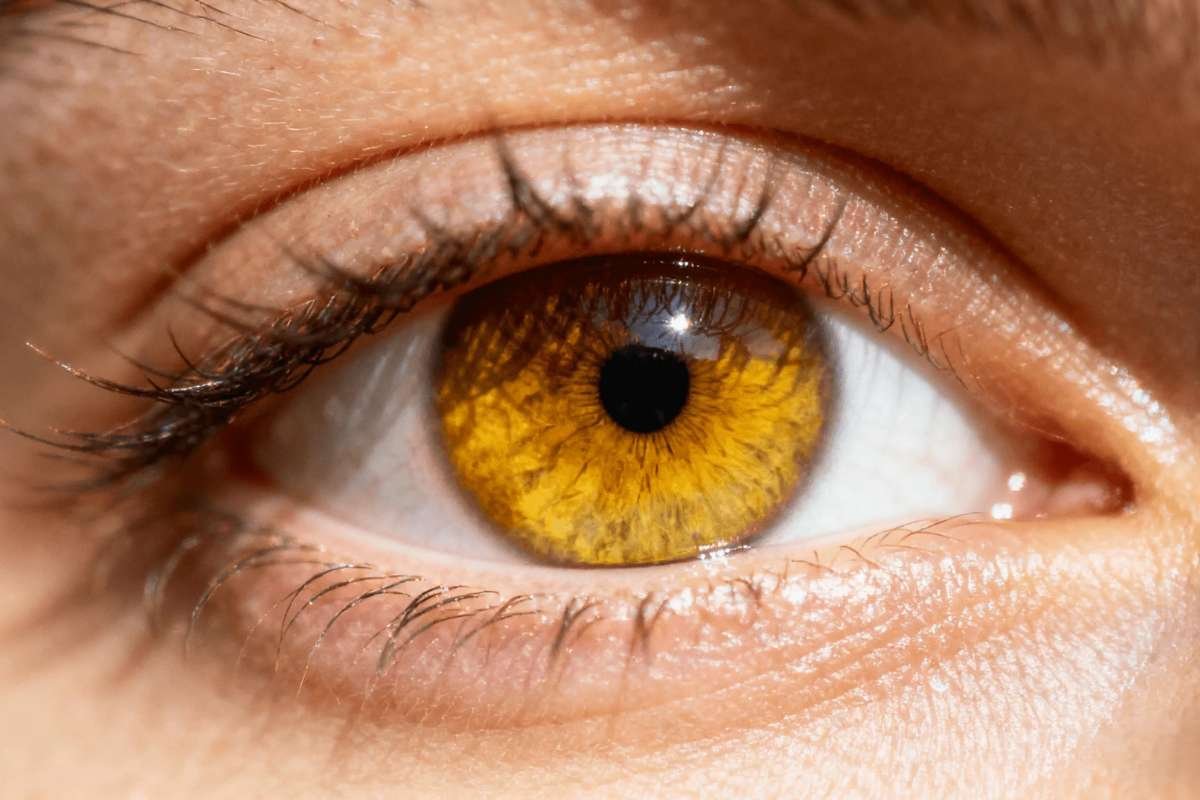
- Estimated occurrence: Around 0.5–1% of the population
Amber eyes are known for their warm golden, copper, or honey-like tones, making them one of the most unique shades among the world’s rarest eye colors.
This eye color is caused by higher concentrations of a pigment called pheomelanin, which creates a uniform golden hue. Unlike hazel eyes, amber eyes usually do not contain multiple color variations; they tend to appear as a consistent golden shade.
Although rare in humans, amber eyes are commonly seen in certain animals such as wolves, owls, and cats, which adds to their distinctive and striking appearance.
6. Hazel Eyes
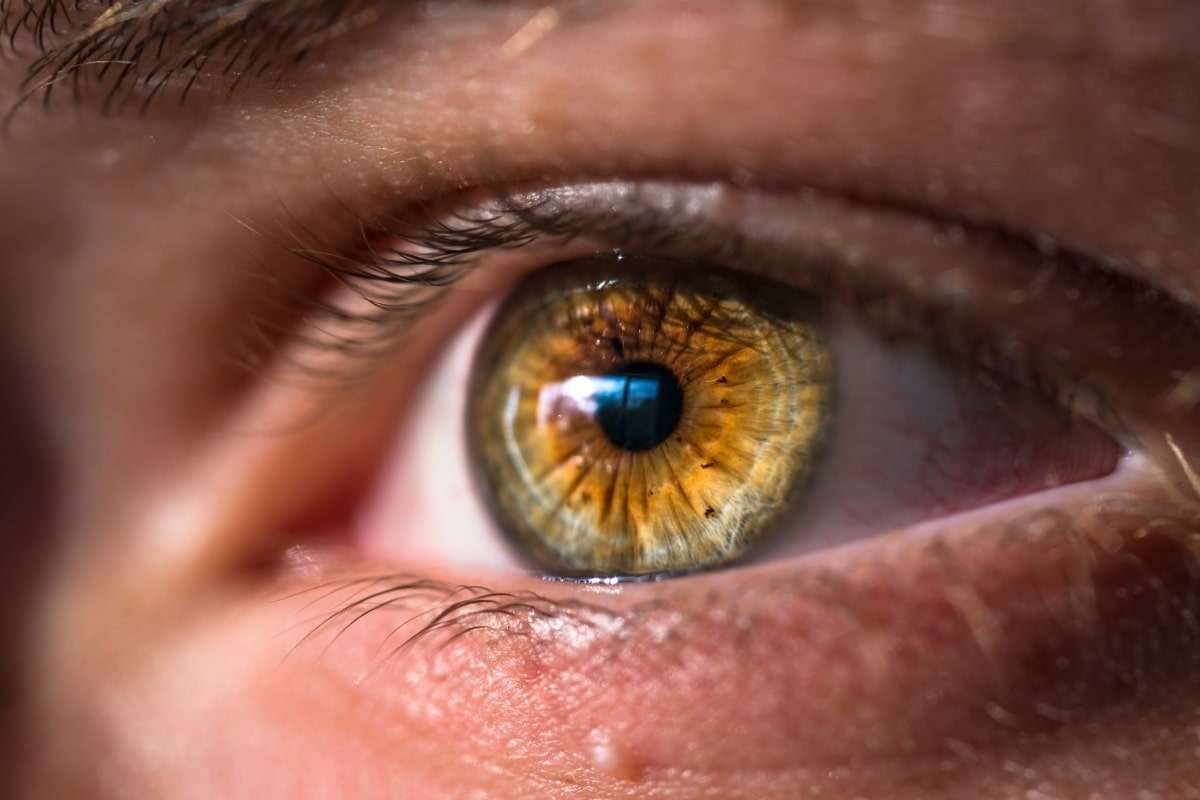
- Estimated occurrence: About 5% of the global population
Hazel eyes may be slightly more common than other shades on this list, but they are still considered part of the world’s rarest eye colors because of their unique multi-toned appearance.
Hazel eyes are characterized by a blend of green, brown, and gold pigments, which can cause the eye color to appear different depending on lighting conditions. In some lighting, hazel eyes may appear green, while in others they may look brown or golden.
This dynamic color shift is what makes hazel eyes particularly distinctive and visually captivating.
Why Some Eye Colors Are So Rare?
After exploring the rarest eye colors in the world, a natural question arises—why do some eye shades appear in only a tiny fraction of the global population? The answer lies in a fascinating mix of genetics, evolution, and pigment biology. Small variations in these factors can create unique eye colors that are seen only rarely across the world.
1. Genetic Variations and Mutations
One of the biggest reasons behind the world’s rarest eye colors is genetic variation. Unlike traits controlled by a single gene, eye color is influenced by multiple genes working together, including key genes like OCA2 and HERC2.
Occasionally, small genetic mutations alter the way pigment is produced or distributed in the iris. These variations can lead to unusual eye shades such as gray, amber, or even heterochromia. Because these genetic combinations are uncommon, the resulting eye colors appear only in a small percentage of people.
2. Low Melanin Levels
Melanin is the pigment responsible for coloring the eyes, skin, and hair, and it also plays a major role in eye color rarity.
- Higher melanin levels produce darker eye colors, such as brown.
- Lower melanin levels allow lighter colors like blue, gray, or green to appear.
Some of the world’s rarest eye colors occur when melanin levels are extremely low or distributed unevenly in the iris. This creates unique light-scattering effects that produce rare shades like violet or gray.
3. Evolution and Geographic Distribution
Human migration and evolution have also shaped the distribution of eye colors. Thousands of years ago, genetic mutations introduced lighter eye colors into certain populations, particularly in Northern and Eastern Europe.
Because these mutations remained concentrated in specific regions, many lighter eye shades never spread widely across the globe. As a result, several of the rarest eye colors in the world remain geographically limited and relatively uncommon worldwide.
4. Unique Pigment Combinations
Some rare eye colors emerge from unusual combinations of pigments in the iris. For example, green eyes form when low melanin interacts with yellowish pigments, while amber eyes appear due to higher levels of pheomelanin.
These delicate pigment balances occur rarely in nature, which is why certain shades continue to stand out as part of the rarest eye colors in the world.
Fascinating Facts About the World’s Rarest Eye Colors
The world’s rarest eye colors are not only visually striking—they also reveal some fascinating insights about human genetics, biology, and evolution. Scientists have spent decades studying eye pigmentation, and their findings show that eye color is far more complex than most people realize. Here are some intriguing facts that highlight just how remarkable these rare eye shades truly are.
1. Eye Color Is Controlled by Multiple Genes
Many people believe eye color follows a simple inheritance pattern, but research shows that at least 16 different genes influence eye color. These genes interact to determine how much pigment forms in the iris, which is why rare shades like green, gray, or amber appear in only a small percentage of people. This genetic complexity is one reason the world’s rarest eye colors are so uncommon.
2. Most Babies Are Born With Blue or Gray Eyes
Newborn babies often have blue or gray eyes at birth because melanin production in the iris has not fully developed yet. As babies grow, their bodies produce more melanin, which can gradually darken the eye color. By early childhood, the final eye color becomes more permanent.
3. Rare Eye Colors Can Appear Unexpectedly
Eye color inheritance can sometimes be unpredictable. Even if both parents have brown eyes, their child can still inherit a lighter eye color depending on the genetic combinations passed down. This is another reason some of the rarest eye colors in the world occasionally appear in families where they were not previously common.
4. Lighting Can Change How Eye Color Appears
Eye color can look different depending on lighting conditions, surroundings, and even clothing colors. For example, gray or hazel eyes may appear blue, green, or golden in different lighting environments. This optical effect happens because light interacts with the iris structure and pigment distribution.
5. Some Rare Eye Colors Are Linked to Unique Genetic Traits
In certain cases, rare eye conditions are connected to specific genetic conditions. For instance, albinism can create very light blue, red, or violet-looking eyes, while heterochromia results from uneven pigment distribution in the iris. However, most people with rare eye colors are completely healthy.
Are Rare Eye Colors Linked to Health Conditions?
While the world’s rarest eye colors are often admired for their uniqueness and beauty, some people wonder whether these unusual shades are connected to health conditions. In most cases, rare eye colors are simply the result of genetic variation and do not indicate any medical issues. However, in a few instances, certain eye colors may be associated with specific genetic traits or conditions.
1. Albinism and Light Eye Colors
One of the most well-known conditions linked to rare eye pigmentation is albinism. This genetic condition affects the body’s ability to produce melanin, the pigment responsible for coloring the skin, hair, and eyes.
People with albinism often have very light blue, gray, or even reddish-looking eyes because the iris lacks sufficient pigment. In some lighting conditions, the eyes may appear violet due to the way light reflects from blood vessels inside the eye. Although this can contribute to some of the world’s rarest eye colors, individuals with albinism may also experience vision sensitivity or reduced visual acuity.
2. Waardenburg Syndrome
Another rare genetic condition sometimes associated with unusual eye colors is Waardenburg syndrome. This condition can cause distinctive physical traits, including bright blue eyes, different colored eyes (heterochromia), or patches of varying pigmentation in the iris.
While heterochromia is often harmless and purely genetic, in some cases, it may occur alongside this syndrome, which can also affect hearing or facial development.
3. Pigment Disorders of the Iris
Certain pigment disorders can also influence eye color. For example, variations in melanin distribution within the iris may lead to central or sectoral heterochromia, where multiple colors appear in the same eye. These variations are usually benign and simply contribute to the diversity seen in the rarest eye colors in the world.
4. Most Rare Eye Colors Are Completely Healthy
It is important to note that the vast majority of rare eye colors are completely normal and not linked to medical conditions. Shades like green, gray, amber, or hazel are simply the result of natural genetic diversity in human populations.
Ultimately, the world’s rarest eye colors are a fascinating example of how genetics can create unique and beautiful variations in human appearance.
Read Next:
Conclusion:
The human eye is one of the most distinctive features of our appearance, and its color is shaped by a remarkable blend of genetics, biology, and evolution. While billions of people share common shades like brown or blue, a small fraction of the global population possesses some of the world’s rarest eye colors, making these eye shades truly extraordinary.
From the mesmerizing contrast of heterochromia to the striking tones of green, gray, amber, and even violet, these rare eye colors highlight the incredible diversity found within human genetics. Their rarity is largely determined by unique combinations of genes, variations in melanin levels, and evolutionary patterns that have developed over thousands of years.
What makes the rarest eye colors in the world so fascinating is not just their visual appeal, but the science behind them. Each rare shade tells a story about genetic inheritance, pigment distribution, and the complex processes that shape human traits.
Ultimately, these uncommon eye colors remind us that even the smallest biological variations can create something truly remarkable, making every pair of eyes a unique reflection of human diversity.