We still haven’t discovered a large section of our planet. Every time we think we know everything, our planet throws something in our faces that changes our entire understanding of what Earth is even about. The smallest animals in the world are one such subject.
These tiny animals change our understanding of biology and help us understand how the environment influences the biodiversity of each region. So, who are the smallest animals in the world? It is an important question that helps us answer many questions about this creation.
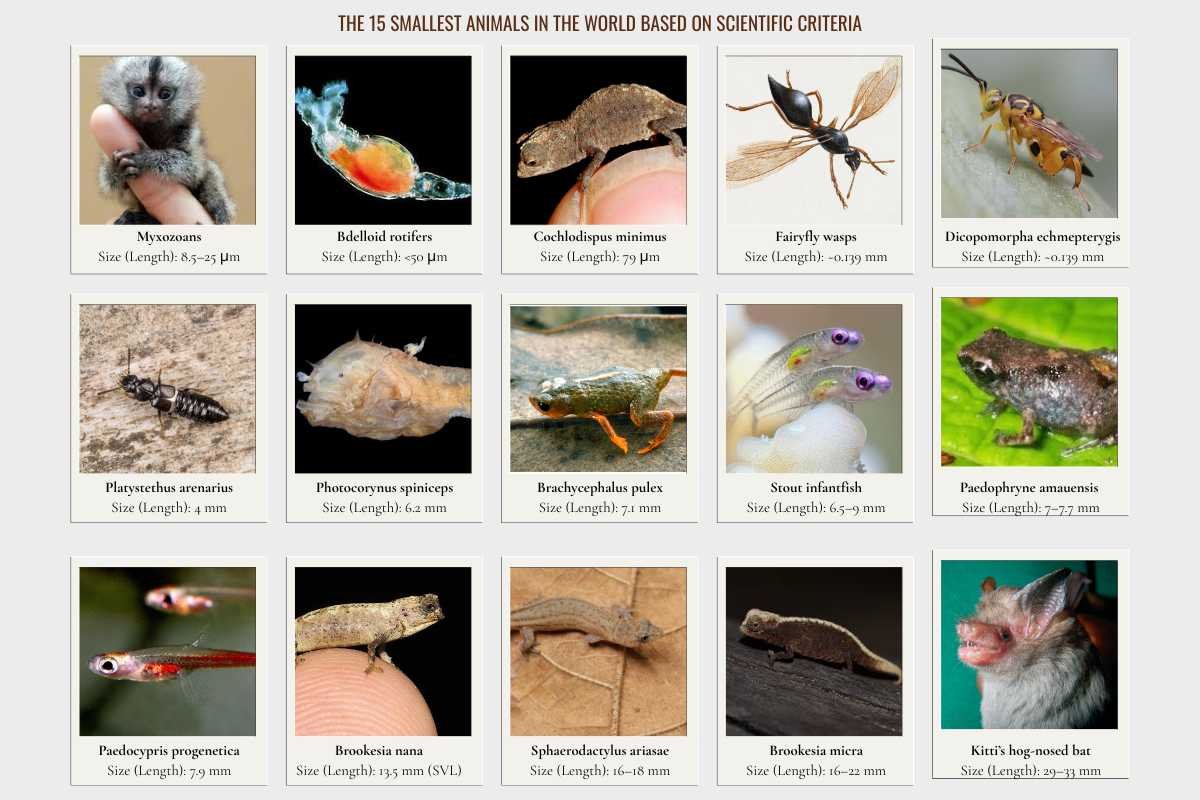
The 15 Smallest Animals in the World Based on Scientific Criteria:
Before we check out the smallest creatures on our beautiful planet, let’s understand how we categorize them.
Scientists and record keepers prioritize adult animals to avoid juvenile sizes, comparing across taxa such as mammals, birds, or fish.
Length is typically snout-to-vent for amphibians/reptiles. It means their total body, excluding appendages, is measured. Their weight is estimated using sensitive scales (e.g., milligrams for shrews).
As for the microscopic forms, they apply volume. Guinness specifies the standards of vertical height from paw to shoulder for mammals.
So based on all these criteria, here are the 15 smallest animals in the world:
1. Myxozoans (Myxobolus shekel)
- Size (Length): 8.5–25 µm
- Category: Invertebrate (Parasite)
- Habitat: Fish hosts worldwide
Myxozoans are the smallest animals in the world. They belong to the Myxozoa group, which are simplified relatives of jellyfish and corals (Cnidaria). The adult is about 8.5 micrometers long, making it one of the smallest animals known. Like other myxozoans, it forms spores that infect two different hosts, usually a fish and a worm. The spores use specialized stinging capsules to attach to the host.
2. Bdelloid rotifers
- Size (Length): <50 µm
- Category: Invertebrate
- Habitat: Freshwater globally
Bdelloid rotifers are usually 150 to 700 micrometers long and feed on bacteria and algae. A key trait is that no males exist; all reproduction is by females (parthenogenesis). These creatures are incredibly tough. They can survive being dehydrated and are highly resistant to freezing and radiation. It allows them to thrive in unstable environments such as moss and temporary pools.
3. Cochlodispus minimus (mite)
- Size (Length): 79 µm
- Category: Arthropod
- Habitat: Soil worldwide
Cochlodispus minimus is a microscopic mite species that lives in soil and leaf litter. The species is known as the tiniest mite ever measured. An adult of this species was just 79 micrometers long. These tiny arthropods primarily eat fungi, such as fungal spores and strands. The first mention of the species was in 1976 from a sample collected in Ethiopia.
4. Fairyfly wasps (females)
- Size (Length): ~0.139 mm
- Category: Insect
- Habitat: Worldwide
Fairyfly wasps are minute parasitic insects and include the world’s smallest known insects. Females are typically 0.5 to 1.0 millimeters long, and some are even smaller. They are parasitoids, meaning they lay a single egg inside the eggs of other insects, like leafhoppers. The larva develops inside. In the process, it consumes the host egg. Fairyflies have distinctive feathery wings that help them “swim” through the air.
5. Dicopomorpha echmepterygis (wasp males)
- Size (Length): ~0.139 mm
- Category: Insect
- Habitat: USA
The male Dicopomorpha echmepterygis is the smallest known adult insect. It is a type of fairyfly wasp that measures just 139 to 240 micrometers long. These males are blind, wingless, and mouthless. They do not feed after emerging. They develop inside the egg of a barklouse. Once grown, the males mate with their sisters while still inside the host egg.
6. Platystethus arenarius (rove beetle)
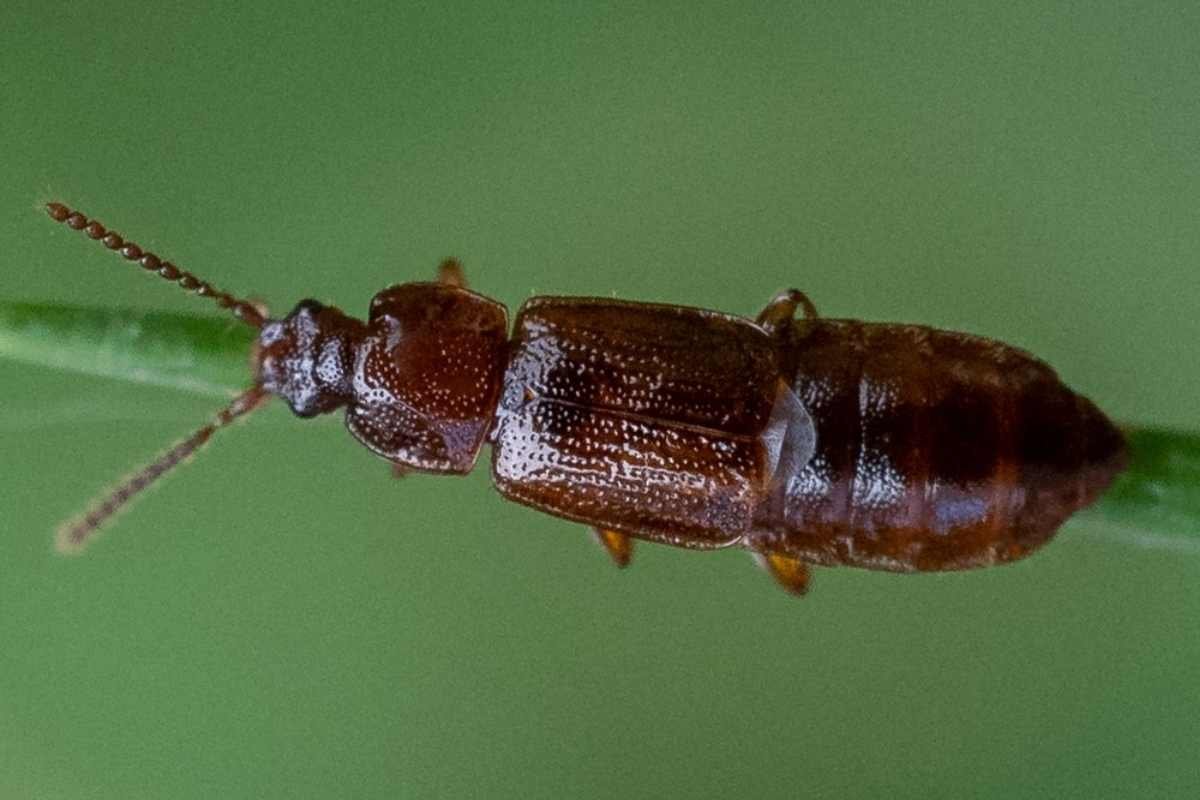
- Size (Length): 4 mm
- Category: Insect
- Habitat: Europe
Platystethus arenarius is a small rove beetle about 4 to 5 millimeters long, found in grasslands across Europe. They often dwell near herbivore dung. The beetle’s spiny legs help it dig in the dung. It is a predator and scavenger that eats fly larvae and mites. The beetle shows parental care, where the adults build a nest and guard their eggs and young.
7. Photocorynus spiniceps (anglerfish male)
- Size (Length): 6.2 mm
- Category: Fish
- Habitat: Pacific Ocean
Anglerfish (scientific name: Photocorynus Spiniceps) measure only 6.2 to 7.3 millimeters long. The tiny male lacks a working digestive system and must find a female to survive. He bites onto the much larger female and fuses his body with hers. The female’s blood then nourishes him for the rest of his life, turning him into a sperm producer. They are the smallest animals in the world among vertebrates.
8. Brachycephalus pulex (frog)
- Size (Length): 7.1 mm
- Category: Amphibian
- Habitat: Brazil
Brachycephalus pulex is a tiny frog found only in the Atlantic Forest of Brazil. They hold the record as the smallest frog species. A mature male averages only 7.1 millimeters long. This species is often called the Brazilian flea toad because of its flea-like size and its ability to make long jumps. It lives among the dense leaf litter on the forest floor.
9. Stout infantfish
- Size (Length): 6.5–9 mm
- Category: Fish
- Habitat: Australia
The stout infantfish is one of the smallest known fish in the world. Mature males average about 7.7 millimeters long. This fish is transparent and lacks scales, teeth, and a stomach. It retains many larval traits as an adult. The stout infantfish lives in the water near coral reefs in the Indo-Pacific. It has a very short lifespan of only about two months and eats tiny plankton.
10. Paedophryne amauensis (frog)
- Size (Length): 7–7.7 mm
- Category: Amphibian
- Habitat: Papua New Guinea
Paedophryne amauensis is an extremely tiny frog found in the rainforests of New Guinea. Adult males average about 7.7 millimeters long. We used to think it was the smallest vertebrate in the world. This frog lives exclusively in the moist leaf litter on the forest floor. It has excellent camouflage and feeds on extremely tiny insects such as ants and mites.
11. Paedocypris progenetica (fish)
- Size (Length): 7.9 mm
- Category: Fish
- Habitat: Indonesia
Paedocypris progenetica is a superdwarf fish found in acidic peat swamps in Indonesia. The smallest of the mature females measured at just 7.9 millimeters long. This tiny fish has a translucent body with many traits of a larva, including an exposed brain. Males have modified fins used as a clasping device during mating. Its small size helps it survive in the low-oxygen swamp puddles.
12. Brookesia nana (nano chameleon)
- Size (Length): 13.5 mm (SVL)
- Category: Reptile
- Habitat: Madagascar
The Brookesia nana, or nano-chameleon, is the smallest known reptile in the world, with adult males being only about 13.5 millimeters long from snout to vent. They live on the rainforest floor in the leaf litter of northern Madagascar. This tiny chameleon eats small insects such as mites and springtails. It relies on its blotchy brown skin for camouflage instead of changing color.
13. Sphaerodactylus ariasae (dwarf gecko)
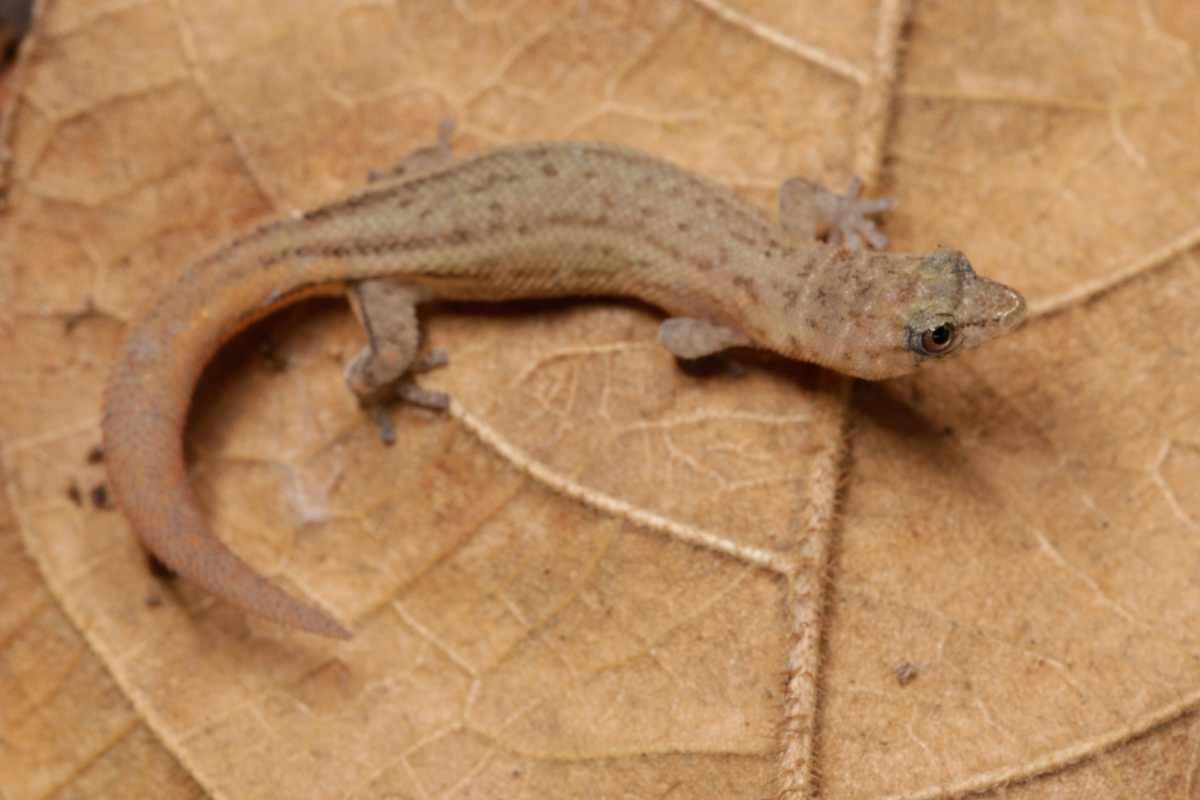
- Size (Length): 16–18 mm
- Category: Reptile
- Habitat: Dominican Republic
Sphaerodactylus ariasae is known as the smallest lizard species in the world. The dwarf gecko lives in the dry forests of the Dominican Republic. Its size, at 16 to 18 millimeters long, excluding its tail, makes it one of the smallest animals in the world. The gecko has a rounded body and uses adhesive toe pads for climbing.
14. Brookesia micra (chameleon)
- Size (Length): 16–22 mm
- Category: Reptile
- Habitat: Madagascar
Brookesia micra is one of the smallest chameleon species in the world, found only on the tiny island of Nosy Hara off the coast of Madagascar. Adult males are only about 15.3 millimeters long from snout to vent. This chameleon lives on the rainforest floor in Madagascar in the leaf litter. It is on the brink of extinction due to the loss of its small habitat, creating a big issue for the ecosystem.
Read Next:
- 15 Dinosaur Size Comparison That Will Make You Feel Tiny
- These Gentle Giants are Real! Meet the Biggest Dog Breeds in the World
15. Kitti’s hog-nosed bat
- Size (Length): 29–33 mm
- Category: Mammal
- Habitat: Thailand/Myanmar
Kitti’s hog-nosed bat is the smallest and arguably the smallest mammal by body length. It is also called the bumblebee bat. The bat’s head and body measure only 29 to 33 millimeters long. This insectivorous bat has a pig-like snout and uses echolocation to hunt flies and beetles. It is currently listed as Vulnerable due to habitat disturbance.
| Rank | Animal | Size (Length) | Category | Habitat |
|---|---|---|---|---|
| 1 | Myxozoans (Myxobolus shekel) | 8.5–25 µm | Invertebrate (Parasite) | Fish hosts worldwide |
| 2 | Bdelloid rotifers | <50 µm | Invertebrate | Freshwater globally |
| 3 | Cochlodispus minimus (mite) | 79 µm | Arthropod | Soil worldwide |
| 4 | Fairyfly wasps (females) | ~0.139 mm | Insect | Worldwide |
| 5 | Dicopomorpha echmepterygis (wasp males) | ~0.139 mm | Insect | USA |
| 6 | Platystethus arenarius (rove beetle) | 4 mm | Insect | Europe |
| 7 | Photocorynus spiniceps (anglerfish male) | 6.2 mm | Fish | Pacific Ocean |
| 8 | Stout infantfish | 6.5–9 mm | Fish | Australia |
| 9 | Brachycephalus pulex (frog) | 7.1 mm | Amphibian | Brazil |
| 10 | Paedophryne amauensis (frog) | 7–7.7 mm | Amphibian | Papua New Guinea |
| 11 | Paedocypris progenetica (fish) | 7.9 mm | Fish | Indonesia |
| 12 | Brookesia nana (nano chameleon) | 13.5 mm (SVL) | Reptile | Madagascar |
| 13 | Sphaerodactylus ariasae (dwarf gecko) | 16–18 mm | Reptile | Dominican Republic |
| 14 | Brookesia micra (chameleon) | 16–22 mm | Reptile | Madagascar |
| 15 | Kitti’s hog-nosed bat | 29–33 mm | Mammal | Thailand/Myanmar |
What Smallest Animals in The World Tell Us About Our Planet?
Now that we know the smallest animals, let’s understand how these species have helped us better understand our world.
For example, the smallest animals, such as myxozoans, bdelloid rotifers, fairyflies, and nano-chameleons, reveal evolutionary pressures toward extreme miniaturization, often via paedomorphosis and genomic simplification. This evolution enables niche exploitation in leaf litter, peat swamps, or plankton.
As foundational ecosystem players, tiny invertebrates like rotifers and mites signal health. The high abundance of the smallest animals in the world sustains food webs, but ~5% of species face climate threats, with ocean invertebrates vulnerable to warming/acidification.
Restricted ranges amplify extinction risks from drying, deforestation, or sea rise; the first mammal loss (Brambly Cay melomys) underscores the sensitivity of the smallest animals. Fluctuating microhabitats aid invasion resistance but falter under extremes.
Read Next:
- If You Think T-Rex are the Biggest Dinosaurs? Wait Till You Meet These Titans
- Are You Brave Enough to Face the Biggest Spiders in the World
- You Won’t Believe, These Were the Top 15 Biggest Carnivorous Dinosaurs of the Jurassic period!
Conclusion
The smallest animals in the world are an integral part of our ecosystem. They are the foundational building blocks of our biodiversity. The 15 smallest animals change the way we view nature and evolution. They are a good reminder of how significantly lucky our species is to have evolved the way we did.
These species and creatures are essential study material for biologists. But they are also our responsibility. They are a testament to nature’s beauty, and it is our duty to preserve it. As many of these animals are slowly reaching extinction, governments and non-profit organizations are making great efforts to protect them.
So, which is your favorite among the smallest animals in the world?
FAQs
1. How do bdelloid rotifers survive extreme radiation?
They use an efficient DNA repair mechanism called mitotic recombination. This allows them to effectively fix severe DNA breaks caused by high levels of ionizing radiation.
2. Do they show any signs of aging, despite being asexual for millions of years?
Research suggests they may have strategies to avoid common asexual problems like mutational meltdown. They appear to maintain genomic stability over evolutionary time.
3. What is the main food source for these “ancient asexuals?”
Bdelloid rotifers primarily feed on bacteria, algae, and detritus (organic waste). They use their ciliated corona to sweep food particles into their mouth.