The world of orchids has captivated botanists, passionate collectors, and photographers. It’s an extraordinary diversity, sophisticated evolutionary tricks, and breathtaking, frequently bizarre beauty. Despite their diversity, the most vulnerable species still face a threat. Relentless habitat destruction, growing climate change threats, and their own hyper-specialized biology. They frequently require a symbiotic fungal partner or a restricted blooming window. This makes these botanical marvels extremely rare.
This is the fascinating, high-stakes world of the rarest orchids in the world. Join us as we explore the mysterious, underground, and incredibly costly species. As they are on the verge of extinction. Identify the factors causing their decline. Learn about the efforts being made to preserve these incredible. Yet disappearing, treasures of the plant kingdom.
What Makes an Orchid Rare?
An orchid is deemed exceptionally rare based on a combination of critical scientific and ecological parameters, establishing its global conservation priority.
Limited Geographic Distribution: True rarity often stems from being micro-endemic. These species are native to a single, tiny, highly specific area. Such as one remote mountain range, a particular cave system, or a solitary forest patch on an island.
Extremely Low Population Numbers: One major factor is how few mature plants are left. Many of the rarest orchids in the world have fewer than a few hundred healthy plants. The reproducing individuals are still surviving in the wild.
Hard-to-Replicate Growing Conditions: Orchids possess unique biological dependencies. Many require a specific symbiotic mycorrhizal fungus to germinate and thrive. Coupled with strict altitude, humidity, and temperature sensitivities. This makes successful propagation challenging.
Threats & Conservation Status: High-stakes rarity is formalized by global listings. This includes classification under severe IUCN Red List Categories. Like Critically Endangered. With CITES Appendix listings to prevent illegal trade. And the direct, catastrophic impact of habitat loss and deforestation.
Specialized Blooming Behavior: Some species exhibit rarity through their reproductive habits. Flowering only once every several years or requiring very specific, unpredictable environmental triggers. This further limits their chance to reproduce and be spotted by scientists.
These are the Top 12 Rarest Orchids in the World That You Must See Once:
These Top 12 Rarest Orchids in the World. They represent nature’s most beautiful, delicate, and often ghostly botanical treasures. They are battling for survival against extinction. They range from species that bloom only once every ten years to those that are completely underground.
1. Ghost Orchid (Dendrophylax lindenii)
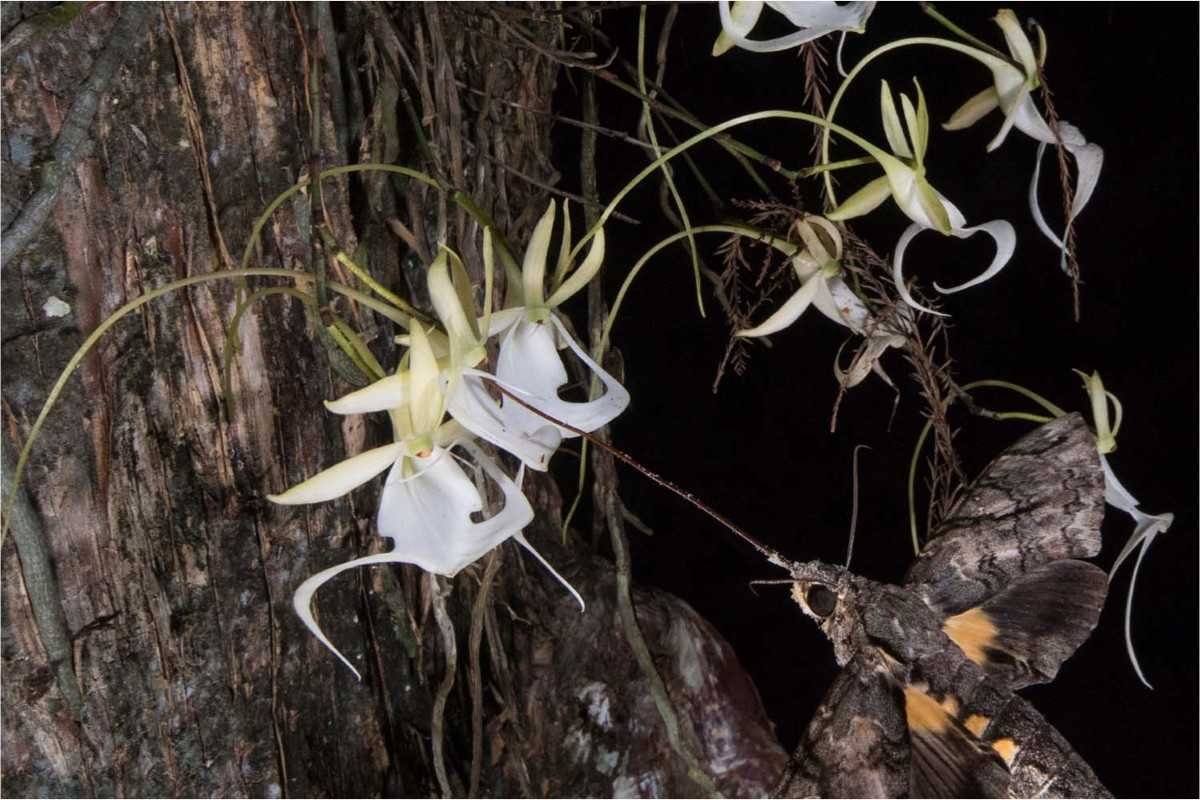
Native Location: Swamps of Florida (USA) and Cuba
Rarity Status: Critically rare; extremely low population numbers
Unique Feature: Appears to “float” because it has no leaves. Only roots and a white ghostly flower
Conservation Outlook: Highly threatened due to habitat loss, poaching, and climate change. Ongoing rescue programs in Florida aim to restore its population.
The Ghost Orchid is one of the most mysterious flowers in the botanical world. Native to the swamps of Florida and Cuba. This orchid is famous for its leafless structure and floating white blooms. They appear almost supernatural in the humid air. Its rarity comes from its extremely delicate growing conditions. It needs warm, swampy tree trunks and perfect humidity levels to survive. With fewer than 2,000 plants left in the wild, its conservation outlook is fragile. Experts continue to monitor its numbers as habitat loss and climate change threaten. This is why many consider it one of the rarest Orchids in the world.
2. Rothschild’s Slipper Orchid (Paphiopedilum rothschildianum)
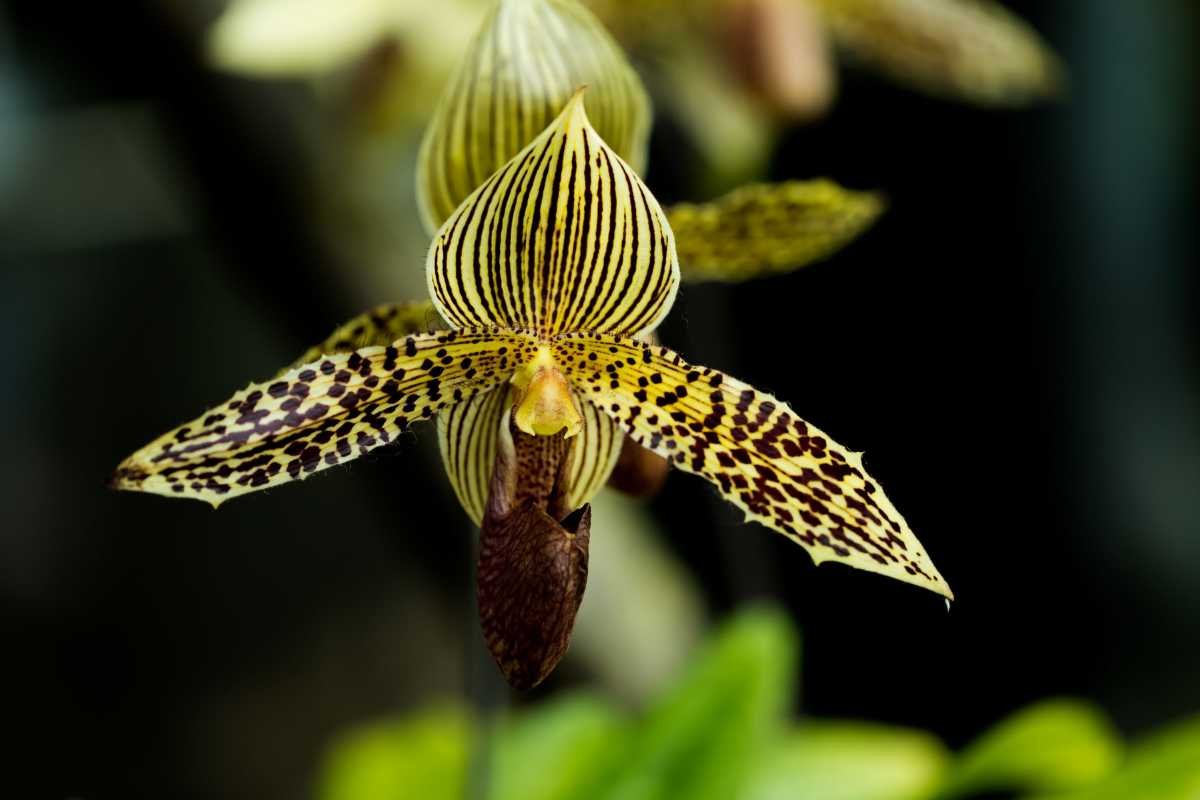
Native Location: Mt. Kinabalu, Borneo (Malaysia)
Rarity Status: One of the rarest and most expensive orchids globally
Unique Feature: Horizontal striped petals that resemble long “arms.”
Conservation Outlook: Critically endangered. Strict protections exist, but illegal poaching remains a major threat.
Found only on Mount Kinabalu in Borneo, this orchid is considered a botanical jewel. It takes years to bloom and requires highly specific altitude and climate conditions. Known for its long, striped petals. Rothschild’s Slipper Orchid has faced severe over-collection. Due to its beauty and high black-market value. Today, preservation programs are active. But the species remains endangered because of illegal trade and habitat destruction.
3. Gold of Kinabalu Orchid (Paphiopedilum rothschildianum variant)
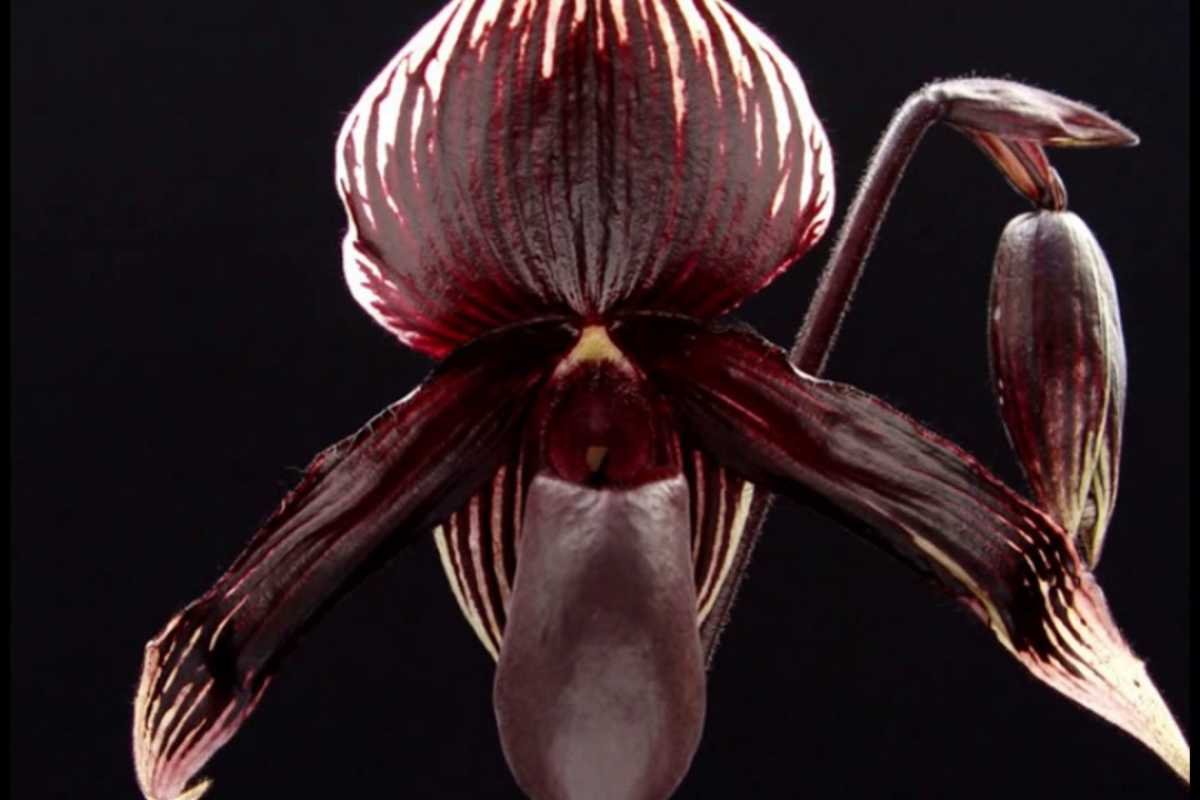
Native Location: Slopes of Kinabalu National Park, Borneo
Rarity Status: Ultra-rare and extremely slow-growing; blooms only after 15 years
Unique Feature: Golden-yellow petals with striking red spots
Conservation Outlook: Heavily guarded; limited natural range and climate sensitivity keep the species endangered
Often called the “holy grail” for orchid collectors. This rare flower grows only inside Malaysia’s Kinabalu National Park. It produces golden-green petals with unique spots. This makes it incomparable to other species. Blooming is extremely slow, and a single plant can take up to 15 years to display flowers. Its conservation status is critically endangered. And strict protection measures prevent tourists from approaching its growing areas.
4. Shenzhen Nongke Orchid
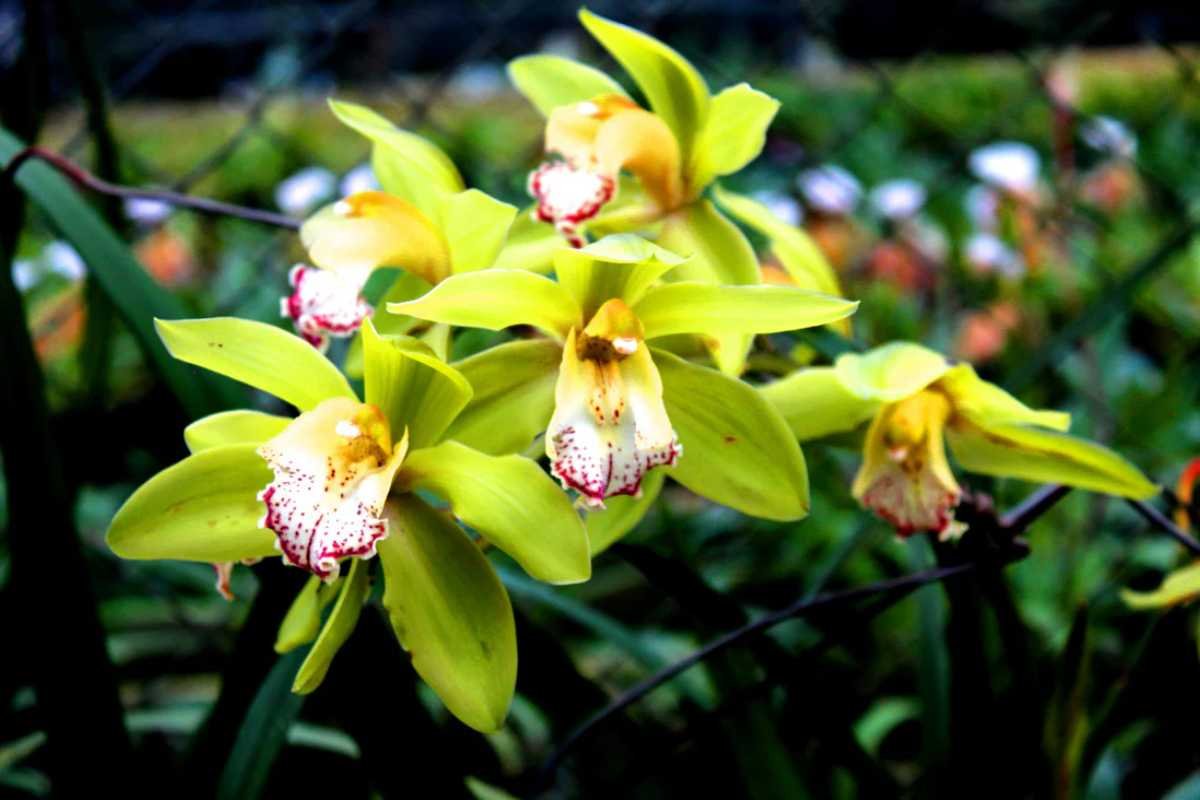
Native Location: Created in China after eight years of scientific cultivation (lab-born rarity)
Rarity Status: Exceptionally rare. Only a few specimens exist.
Unique Feature: Entirely human-grown; once sold for over $200,000 at auction
Conservation Outlook: Very limited availability; preserved and bred under controlled conditions
Created through years of scientific research, this orchid is a man-made marvel developed by the Shenzhen Nongke Group in China. What makes it extraordinary is its decade-long blooming cycle and rarity. Only a few plants exist. It once sold for hundreds of thousands of dollars at auction, highlighting its status among the rarest Orchids in the world. Controlled propagation ensures that the species continues under careful scientific supervision.
5. Blue Vanda Orchid (Vanda coerulea)
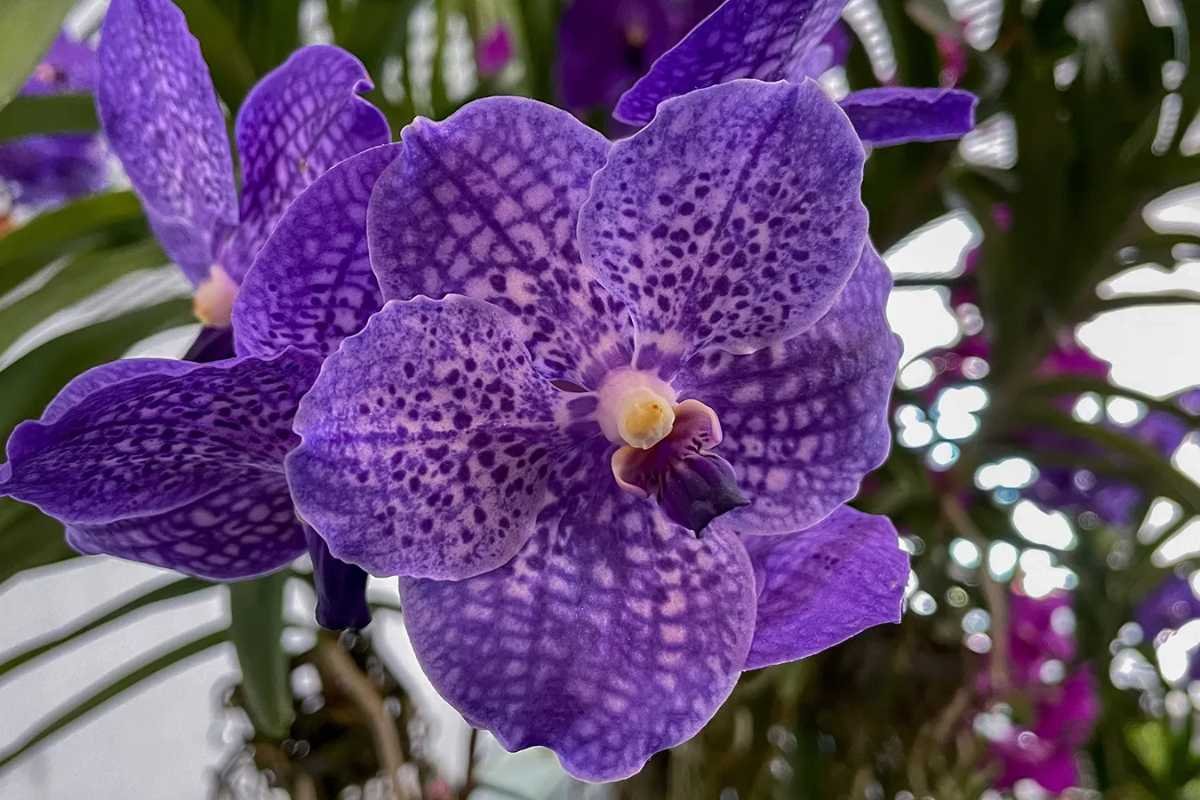
Native Location: Northeast India, Myanmar, Thailand.
Rarity Status: Rare in the wild due to overharvesting
Unique Feature: Naturally occurring blue-colored orchid—one of the very few
Conservation Outlook: Listed as threatened; conservation nurseries are helping stabilize its population
Treasured for its natural blue coloration. This is extremely rare in flowers. The Blue Vanda grows in the Himalayan foothills of India, Myanmar, and Thailand. It thrives only in cool, high-altitude climates, making it difficult to cultivate. Overharvesting for the floral trade. This led to a rapid population decline. But conservation programs and regulated farming have gradually increased their numbers.
6. Western Underground Orchid (Rhizanthella gardneri)
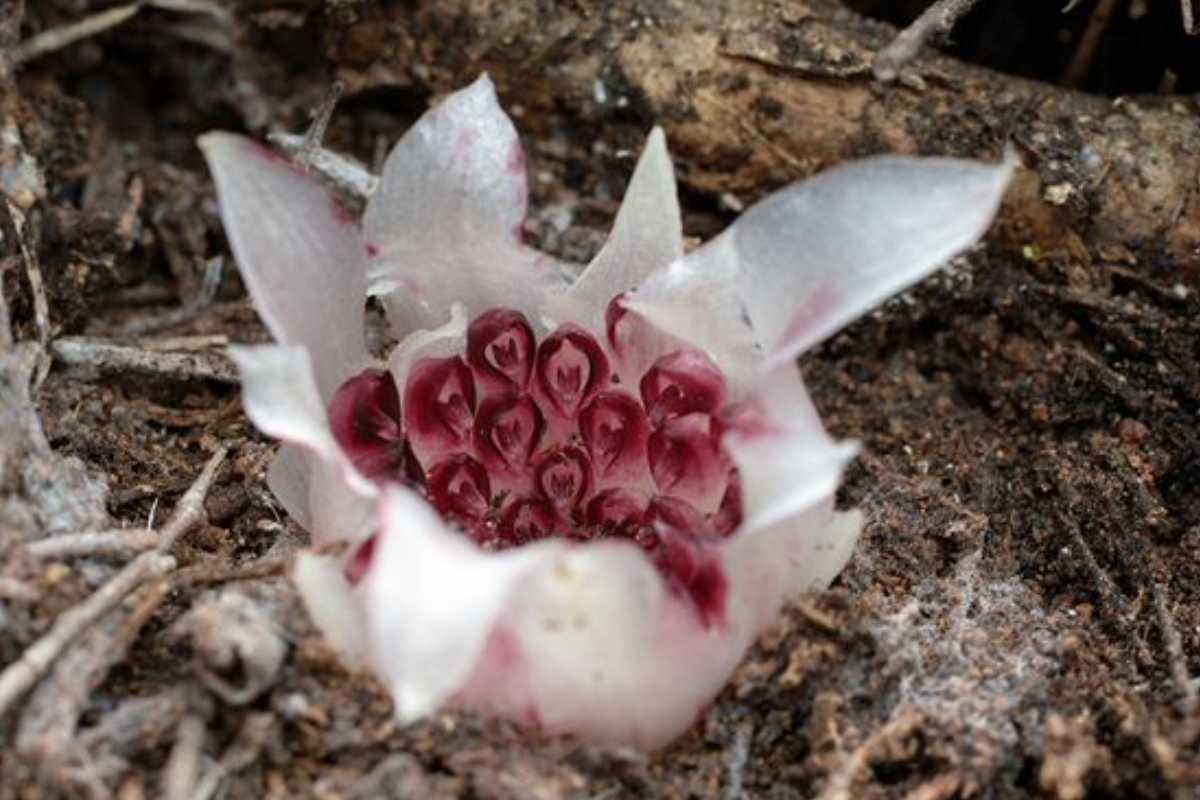
Native Location: Western Australia
Rarity Status: Extremely rare—fewer than 50 plants estimated in the wild
Unique Feature: Lives entirely underground and never sees sunlight
Conservation Outlook: Critically endangered; protected by Australian conservation authorities with strict habitat monitoring
This orchid is truly unique because it blooms entirely beneath the soil surface. Native to Western Australia, it feeds through a complex relationship with underground fungi rather than sunlight. Its hidden nature and extremely small geographic range make it one of the rarest Orchids in the world. Scientists are working to understand its biology better to support long-term preservation.
7. Hawaiian Bog Orchid (Platanthera holochila)
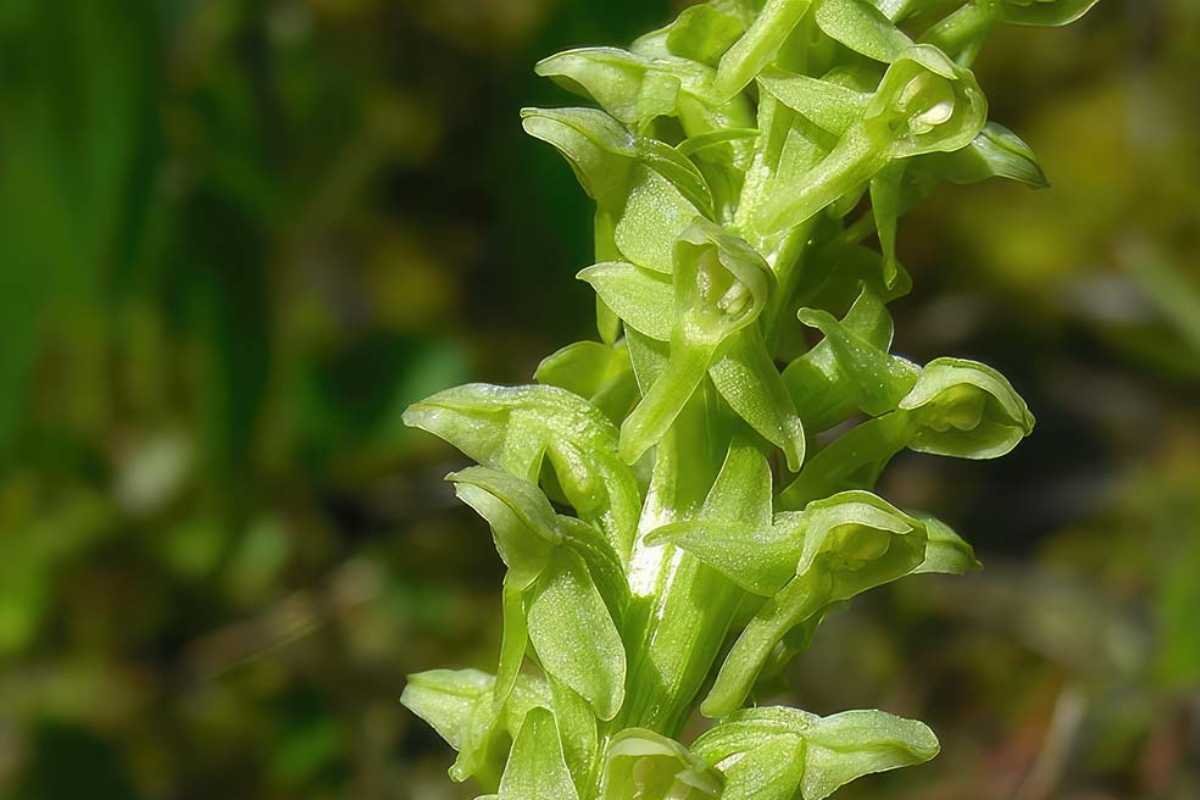
Native Location: Islands of Kauai, Molokai, and Maui
Rarity Status: One of the rarest orchids in the U.S., with fewer than 50–100 left
Unique Feature: Requires specific wet bog ecosystems that are rapidly disappearing
Conservation Outlook: Endangered; reintroduction programs are underway to revive populations
This orchid grows in remote high-elevation bogs across three Hawaiian Islands. These wetlands are fragile and prone to damage. There are only a handful of plants that survive today. The species faces threats from invasive animals and environmental changes. Conservationists are investing in propagation and habitat restoration. This helps to protect this critically endangered orchid.
8. Lady Slipper Orchid (Cypripedium calceolus)
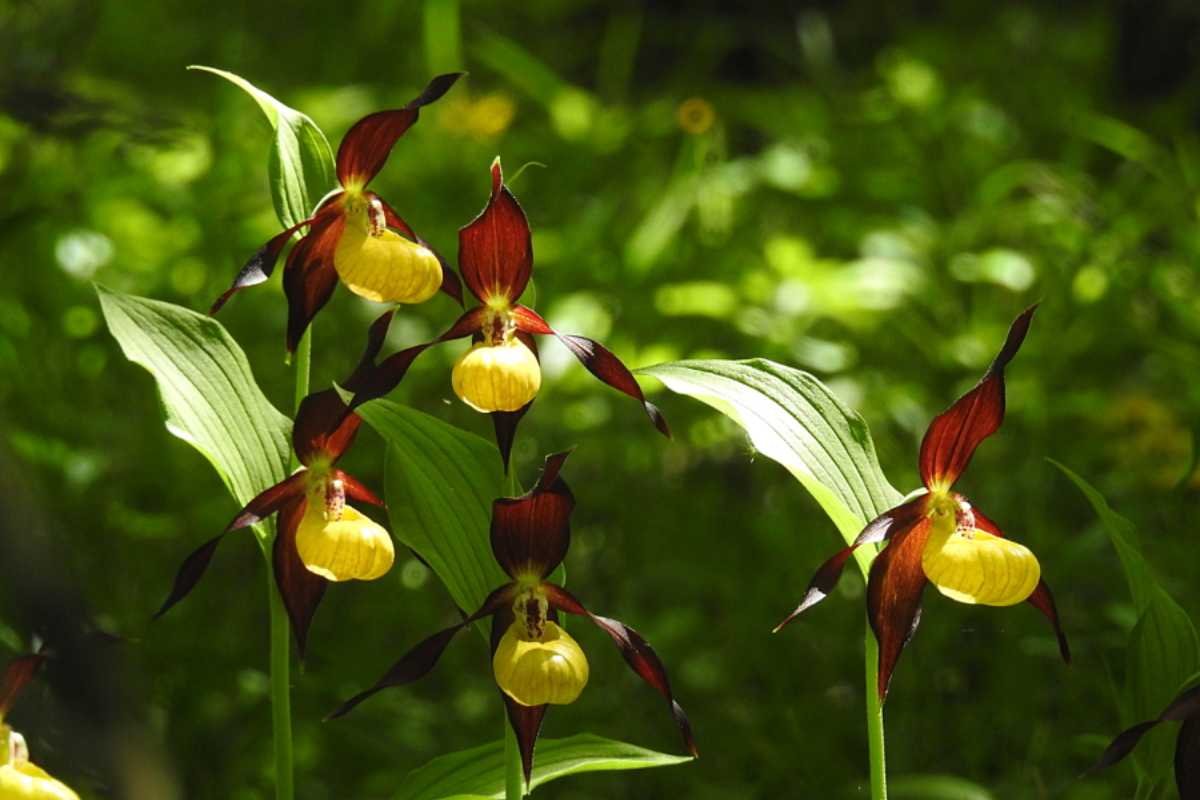
Native Location: Europe and parts of Asia
Rarity Status: Rare due to habitat loss and historical over-collection
Unique Feature: Distinct yellow “slipper”-shaped pouch
Conservation Outlook: Protected in many countries. Recovery has begun in some regions due to legal protection and rewilding.
Easily recognizable by its slipper-shaped pouch. This orchid is native to Europe and parts of Asia. It prefers cool forest floors with rich, moist soil. Over the years, land development and illegal collection drastically reduced its wild population. Today, Europe enforces strict protections. And controlled propagation has slowly revived this elegant species.
9. Monkey Face Orchid (Dracula simia)
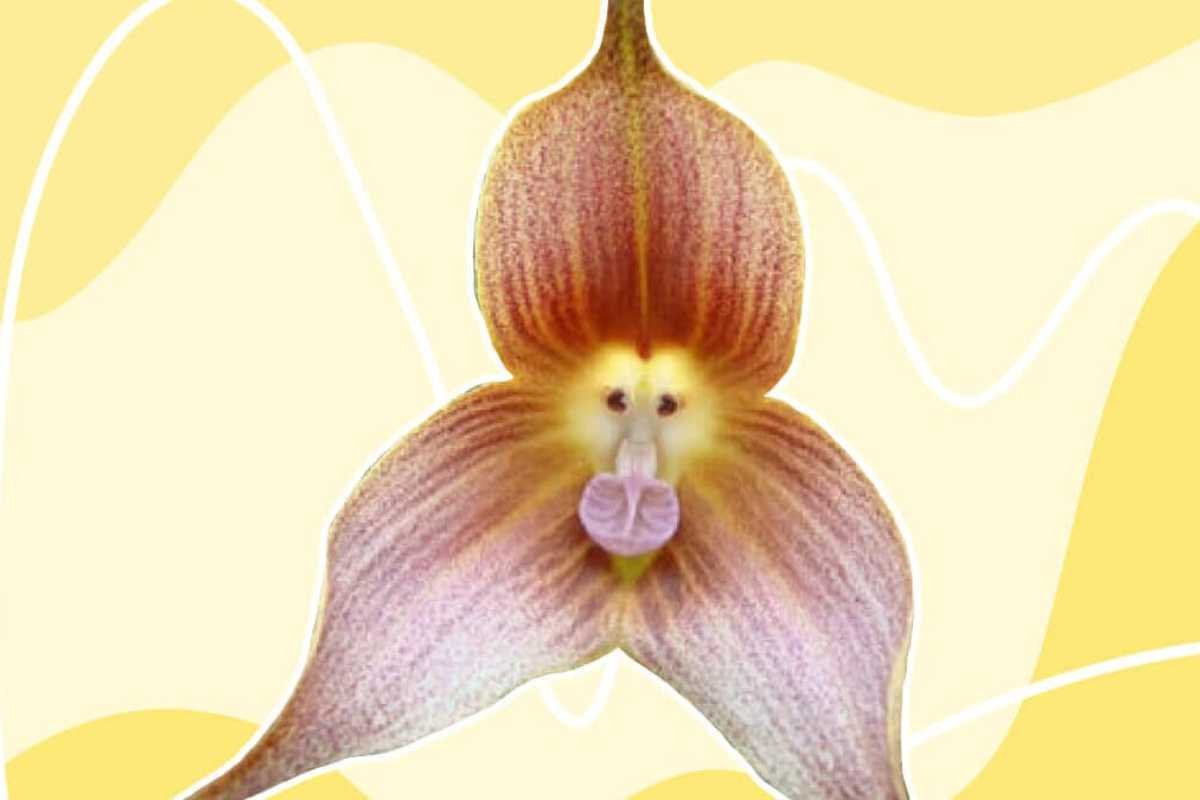
Native Location: Cloud forests of Ecuador and Peru
Rarity Status: Rare because it grows at very specific elevations and humidity levels
Unique Feature: Flowers that look exactly like a monkey’s face
Conservation Outlook: Threatened by deforestation; protected forest zones help preserve remaining populations
Named for its petals that resemble a monkey’s face, this orchid grows in the misty cloud forests of Ecuador and Peru. It blooms at high elevations where humidity and temperature must remain perfectly balanced. Deforestation has made it harder to find in the wild. Although cultivated specimens exist, true wild plants remain extremely rare.
10. Kadupul Flower (Epiphyllum oxypetalum – orchid-like cactus)
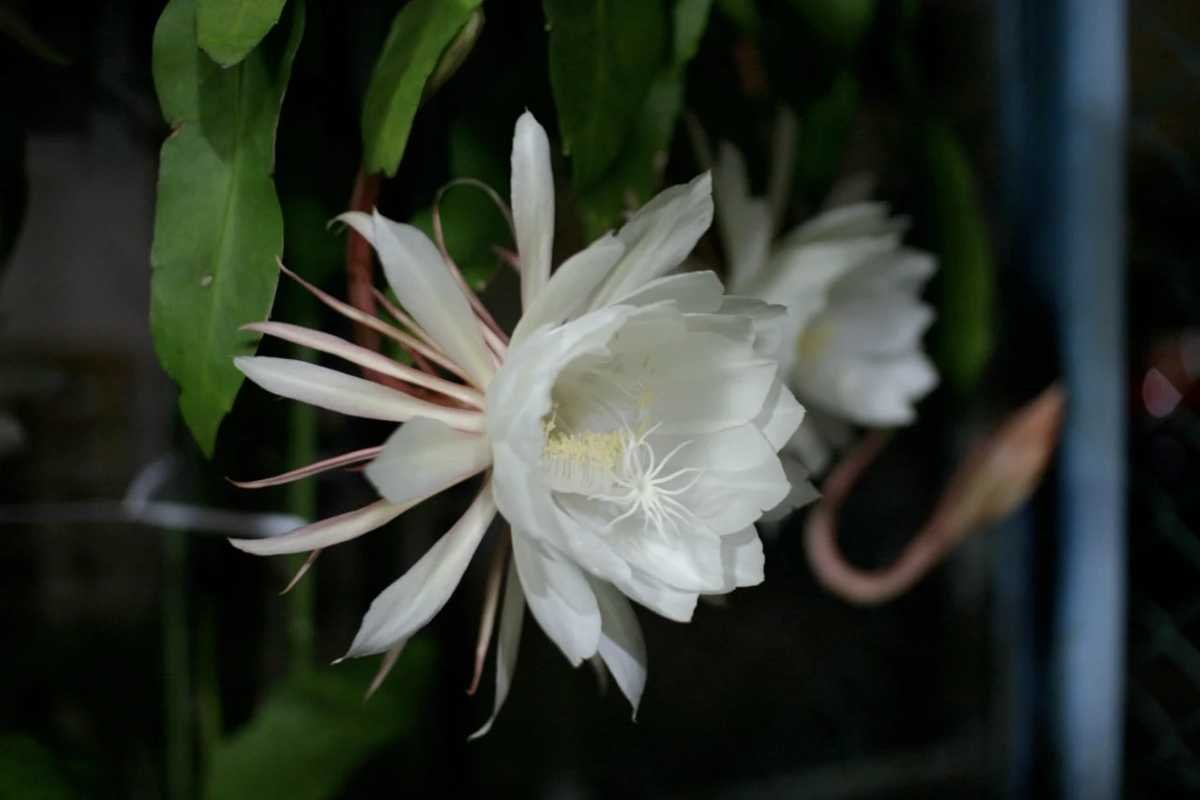
Native Location: Sri Lanka
Rarity Status: Extremely rare in the wild and nearly impossible to cultivate
Unique Feature: Blooms only at night and wilts before sunrise
Conservation Outlook: Vulnerable due to habitat disturbance and climate instability. It is considered spiritually significant locally.
Although technically a cactus. The Kadupul Flower is often included among the rarest Orchids in the world. Because of its orchid-like shape and rarity. It blooms only at night and wilts before dawn, making sightings incredibly special. Native to Sri Lanka. It holds cultural significance and is considered priceless. Because it cannot be picked or transported without dying immediately.
11. Black Orchid (Coelogyne pandurata)
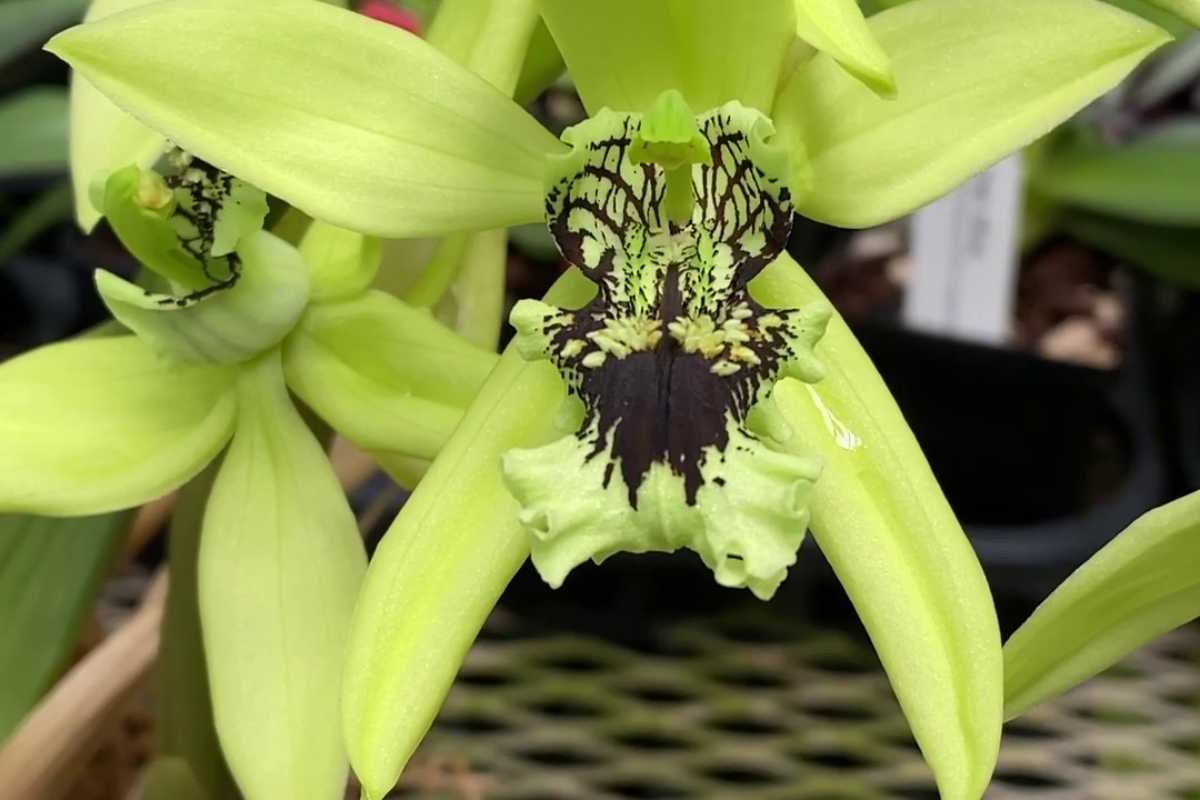
Native Location: Borneo, Sumatra, Malaysia
Rarity Status: Rare in the wild; often illegally traded
Unique Feature: Deep green-black lips and dramatic dark markings
Conservation Outlook: Threatened due to deforestation; several conservation centers now protect native populations.
This orchid grows in the rainforests of Borneo. Where its dark, velvety lips give it a mysterious appearance. It flourishes in humid, lowland forests. But habitat destruction has drastically limited its range. While not completely extinct in the wild. It remains endangered and difficult to find outside protected reserves.
12. Fire Orchid (Renanthera imschootiana)
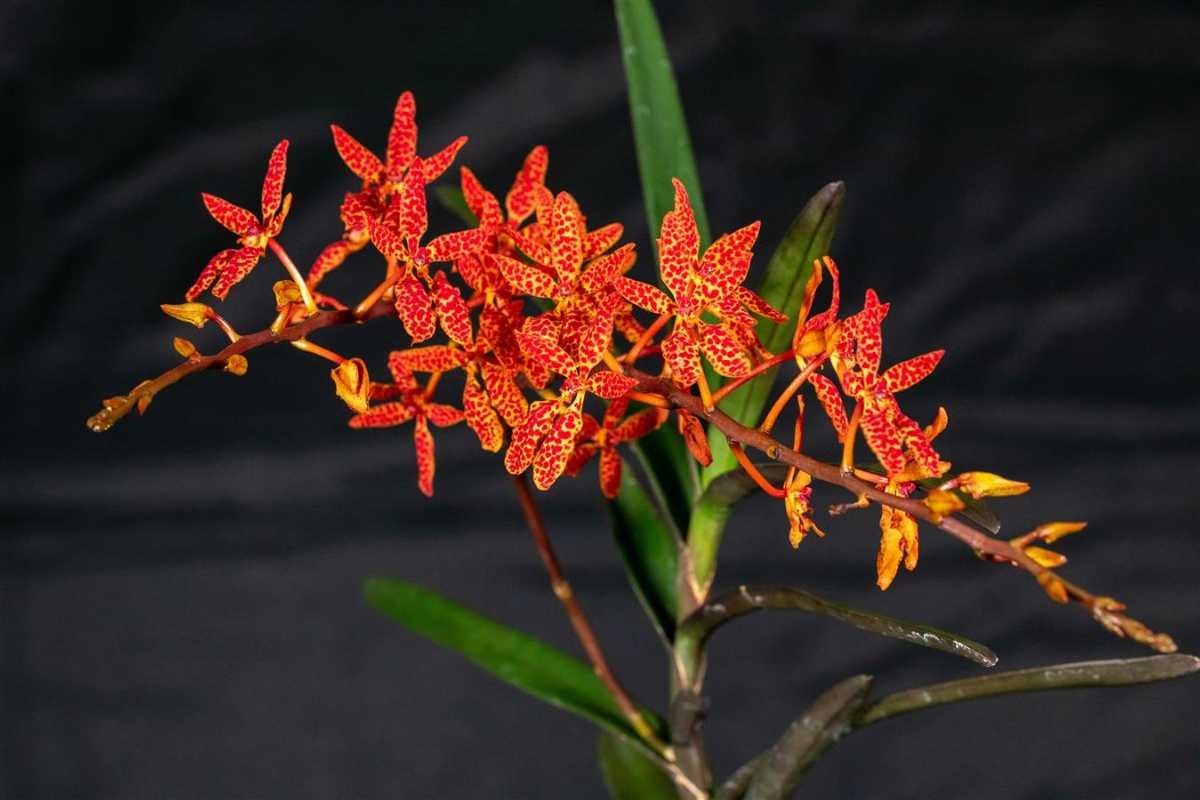
Native Location: India, Myanmar, Vietnam, and parts of Southeast Asia
Rarity Status: Rare and protected under CITES due to over-collection
Unique Feature: Bright red, flame-like flowers resembling sparks of fire
Conservation Outlook: Near-threatened; habitat protection and controlled propagation programs support its survival.
The Fire Orchid earns its name from its brilliant red flowers that look like flames. Native to Northeast India, China, and Myanmar. It grows on tree trunks and rocky surfaces in warm, moist regions. Deforestation and over-collection once pushed it toward rarity. But cultivation programs have helped stabilize its population. Still, its wild occurrences are limited, keeping it among the rarest Orchids in the world.
Read Next:
- Can You Guess the Top 30 Most Rare Flowers in the World? Most People Get It Wrong
- The 10 Most Expensive Flowers in the World, And Why They Cost More Than Gold
Why Studying the Rarest Orchids in the World Matters Today?
These orchids’ extreme rarity acts as a crucial biological indicator. It provides important early warnings about the state of the planet. Their disappearance frequently indicates disastrous changes in fungal, insect, and habitat relationships. Their delicate existence highlights the ecological significance of maintaining highly specialized and delicate ecosystems. Important insights into evolutionary biology, plant resilience, and the speed at which environmental changes can drive a species to extinction. This can be gained by investigating these species through scientific research and fieldwork. In the end, conservation organizations’ efforts to save these disappearing treasures. This directly contributes to the preservation of biodiversity worldwide.
Conversation: How Scientists and the Government Are Protecting These Rare Orchids?
There are several scientific fronts in the battle. They help to preserve the rarest orchids in the world. Understanding the particular symbiotic fungi needed for germination. This is crucial for orchid seed banking success. It is the focus of cutting-edge current research projects. Botanical gardens around the world serve as vital global conservation networks. They have been successfully propagating endangered species outside of their natural habitats. By using advanced tissue culture techniques.
Promising reintroduction initiatives that return genetically diverse plants to their natural habitats. They are directly impacted by these efforts. Additionally, advanced digital mapping and satellite tracking. It enables scientists to precisely monitor and safeguard the dispersed surviving populations. This guarantees the survival of these remarkable species.
Conclusion
The exploration of the rarest orchids in the world. It reveals a profound truth. The most beautiful things are frequently the most delicate. The combined efforts in seed banking, tissue culture, and field protection. It provides a ray of hope despite the major threats posed by climate change and habitat loss. We protect not just a flower but also an essential component of the planet’s ecological puzzle. By comprehending their particular requirements and promoting conservation. Our commitment to protecting the untamed environments. These disappearing treasures’ inhabitants will ultimately determine their survival.
FAQ:
1. Are rare orchids illegal to buy or own?
Many rare orchids are protected under international conservation laws such as CITES. This means it is illegal to buy, sell, or trade them. Unless they are propagated legally in certified nurseries. Always check documentation to ensure ethical sourcing. This protects the rarest orchids in the world. Save them from illegal collection and habitat destruction.
2. Can rare orchids be grown at home?
Most rare orchids cannot be grown at home. Because they have extremely specific environmental needs. Like humidity, temperature, host trees, soil fungi, or altitude requirements. However, some near-rare species have cultivated versions suitable for hobbyists. True rare orchids, especially the rarest orchids in the world. They must remain in protected environments or botanical gardens to ensure survival.
3. How many rare orchids are currently endangered?
According to global biodiversity reports. Over 70% of rare orchids are considered vulnerable, endangered, or critically endangered. Habitat loss is the biggest threat. Many of the rarest orchids in the world. They may disappear within decades without strong conservation interventions.