Choosing between juicing and blending depends on your health goals. This guide explains the key differences in fiber, nutrition, digestion, weight management, and blood sugar. Learn when each method works best, avoid common mistakes, and find out why neither is always the better choice. The right option is the one that fits your lifestyle and nutrition needs.
Have you ever stood in your kitchen holding a handful of spinach, an apple, and a blender jar, wondering, “What now?” You are not alone. Some people swear by fresh juice. Others would defend their morning smoothie like it is a family tradition.
The truth is, both can be healthy. They just work differently. One gives you a light drink packed with vitamins. The other keeps everything together, including the fiber that makes your stomach happy. Knowing which one fits your goal can save you money, time, and a lot of fruit that deserves a better ending than the trash bin.
By the time you finish reading, Juicing vs Blending will feel much less like a debate and much more like an easy choice.
What Is the Difference Between Juicing and Blending?
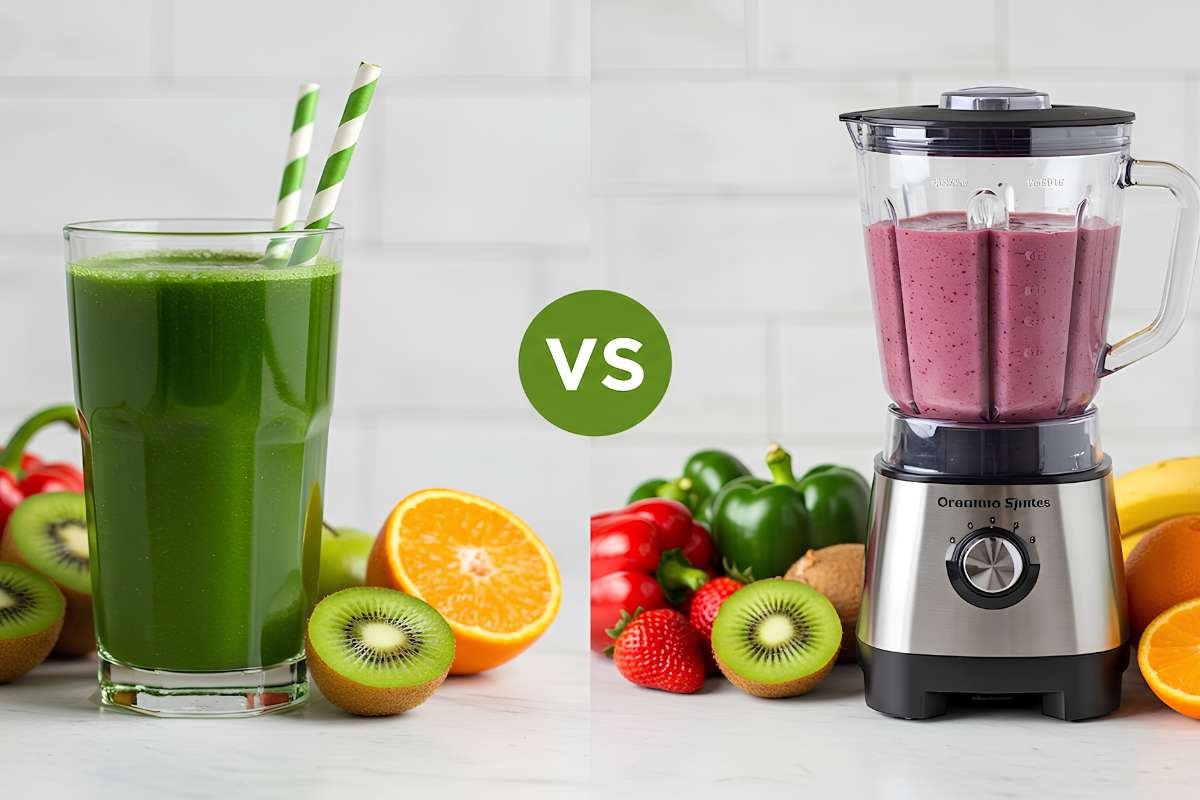
Think of juicing as inviting only the liquid to the party. Everything else gets left outside.
A juicer squeezes fruits and vegetables until only the juice remains. Most of the pulp and fiber stay behind. The result is a smooth, light drink that is easy to sip.
A blender has a different personality. It throws everything into one jar and refuses to leave anyone behind. Fruit, vegetables, pulp, seeds, and fiber all stay together, creating a thicker drink called a smoothie.
Right in the middle of Juicing vs Blending, this is the biggest difference. One removes fiber, while the other keeps it.
| Juicing | Blending |
| Removes pulp | Keeps whole fruit and vegetables |
| Low in fiber | High in fiber |
| Thin drink | Thick smoothie |
| Easy to drink quickly | More filling |
Both methods still provide vitamins, minerals, and plant compounds. The better choice depends on what your body needs that day.
Nutrition Comparison: Which Keeps More Nutrients?
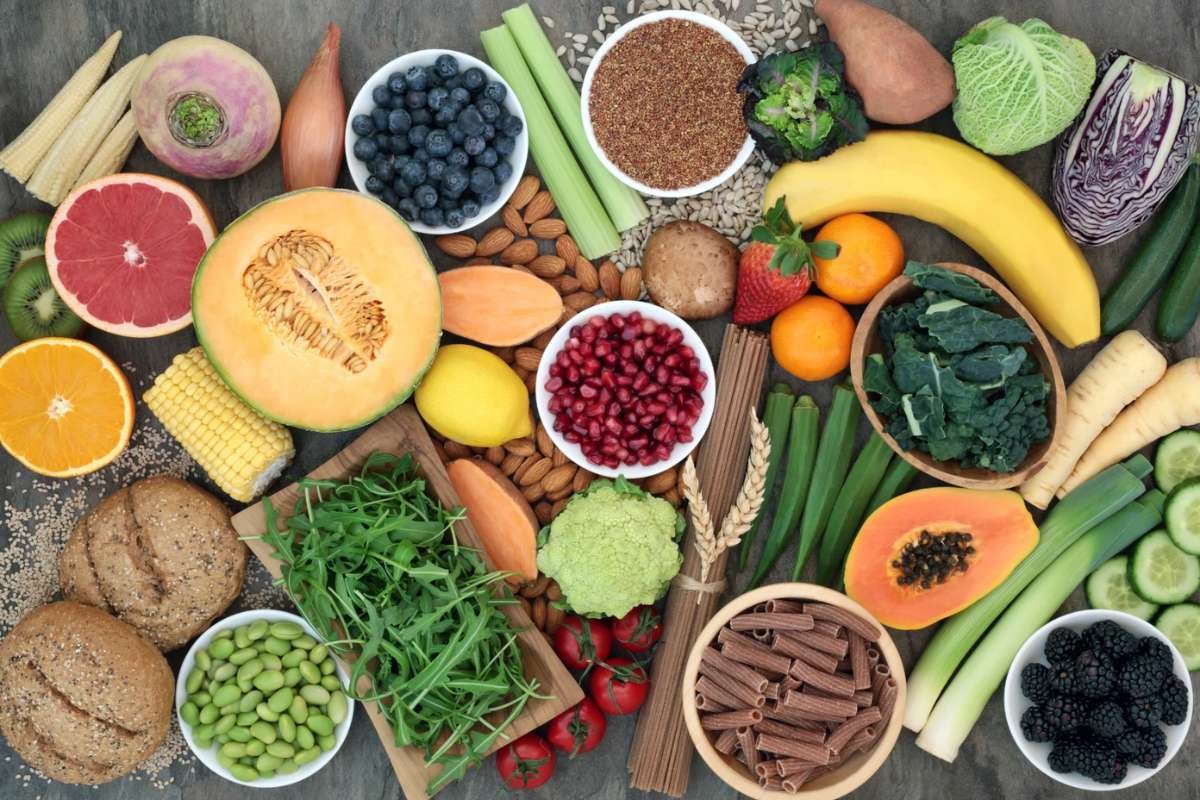
Many people believe juice loses every good nutrient once the pulp is gone. That is simply not true.
Fresh juice still contains many vitamins, minerals, and antioxidants. Vitamin C, potassium, and several plant compounds remain in the liquid. The biggest thing missing is fiber.
According to the USDA FoodData Central, removing pulp greatly lowers fiber while most vitamins and minerals remain in fresh juice.
Fiber does more than help you stay regular. It slows digestion, helps you feel full, and keeps natural fruit sugars from entering your bloodstream too quickly. That is why smoothies often keep people satisfied longer.
Another point many blogs skip is freshness. Whether you juice or blend, nutrients slowly break down when the drink sits in air. Making your drink fresh and enjoying it soon gives you the most nutrition.
Some people also think blending destroys nutrients because the blades spin fast. In reality, the loss is very small when you drink it right away. At the end of the day, Juicing vs Blending is less about vitamin loss and more about whether you want fiber in your glass.
Which Is Better for Weight Loss, Digestion, and Blood Sugar?
Juicing vs Blending becomes much easier once you decide what you want your drink to do.
Weight loss
If your goal is staying full without reaching for another snack thirty minutes later, blending usually wins.
Fiber slows digestion and helps your stomach feel satisfied. Smoothies also take longer to drink because they are thicker. That extra time gives your brain a better chance to notice that you have eaten enough. It sounds simple, but it works.
Digestion
Not everyone needs lots of fiber every day.
People recovering from certain medical procedures or dealing with digestive flare-ups may temporarily do better with lower-fiber drinks. In those cases, fresh juice can be easier to tolerate. For most healthy adults, though, fiber supports regular digestion and feeds the good bacteria living in the gut.
Blood sugar
Here is where fiber quietly becomes the hero again.
Juice is absorbed faster because the fiber has mostly been removed. Smoothies slow down how quickly natural sugars enter your bloodstream.
The American Heart Association recommends adults get 25 to 38 grams of fiber each day, but most people fall short. Choosing smoothies more often can make reaching that goal much easier.
In short, if fullness, steady energy, and blood sugar matter most, blending usually comes out ahead.
When Should You Choose Juicing and When Should You Blend?
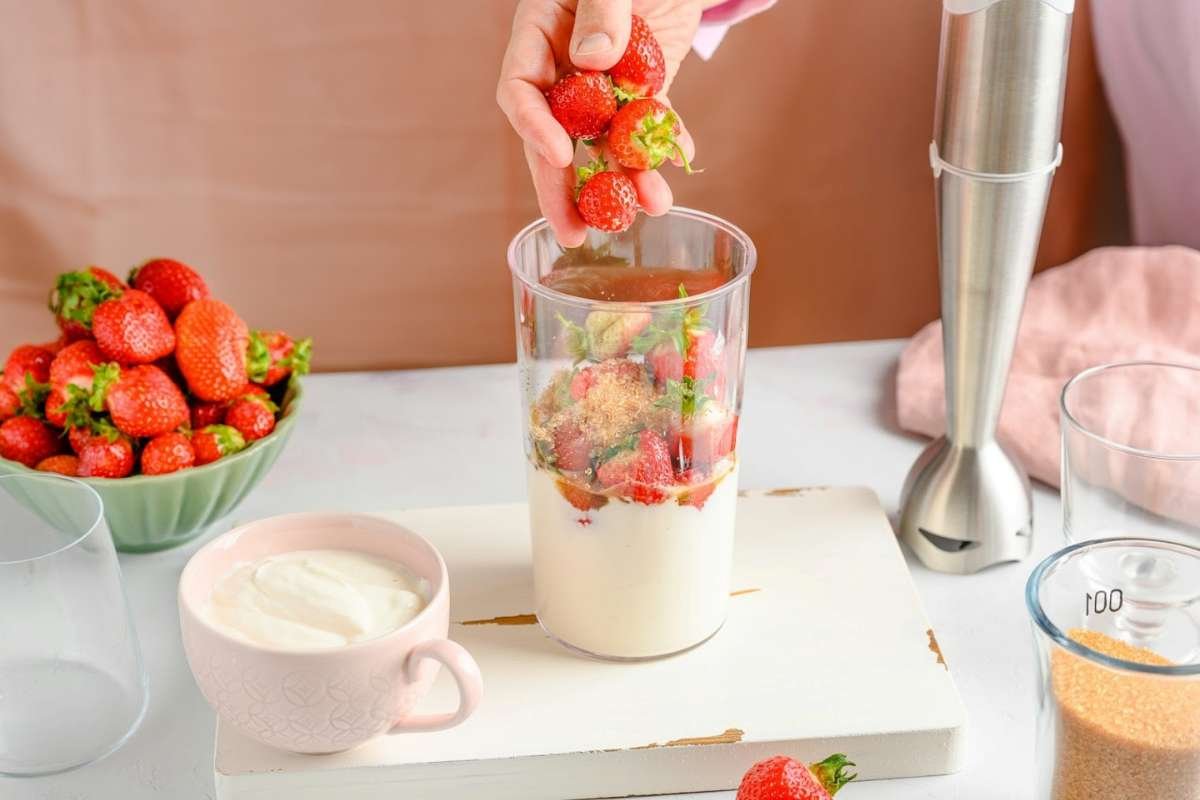
There is no trophy for picking one every single time. Juicing vs Blending is really about choosing the right tool for the job.
If you struggle to eat enough vegetables, juicing can help. A single glass can hold cucumber, celery, spinach, ginger, and carrots without feeling like you are eating a salad through a straw.
If your goal is to stay full until lunch, blending is the smarter choice. Since the fiber stays in, your smoothie feels more like a meal than a drink.
Here’s a simple guide.
| Your Goal | Better Choice |
| Eat more fiber | Blend |
| Drink more vegetables | Either |
| Quick nutrients after exercise | Juice |
| Stay full longer | Blend |
| Sensitive digestion | Depends on your doctor’s advice |
You can also make smoothies more balanced than juice. Adding Greek yogurt, milk, protein powder, chia seeds, flaxseeds, oats, or peanut butter turns a smoothie into a complete meal with protein, healthy fats, and fiber. Juice cannot do that without changing what it is.
The best answer is not picking sides. It is picking what fits your day.
Read More: Juicing: Good or Bad? The Truth Doctors Want You to Know
Common Mistakes People Make
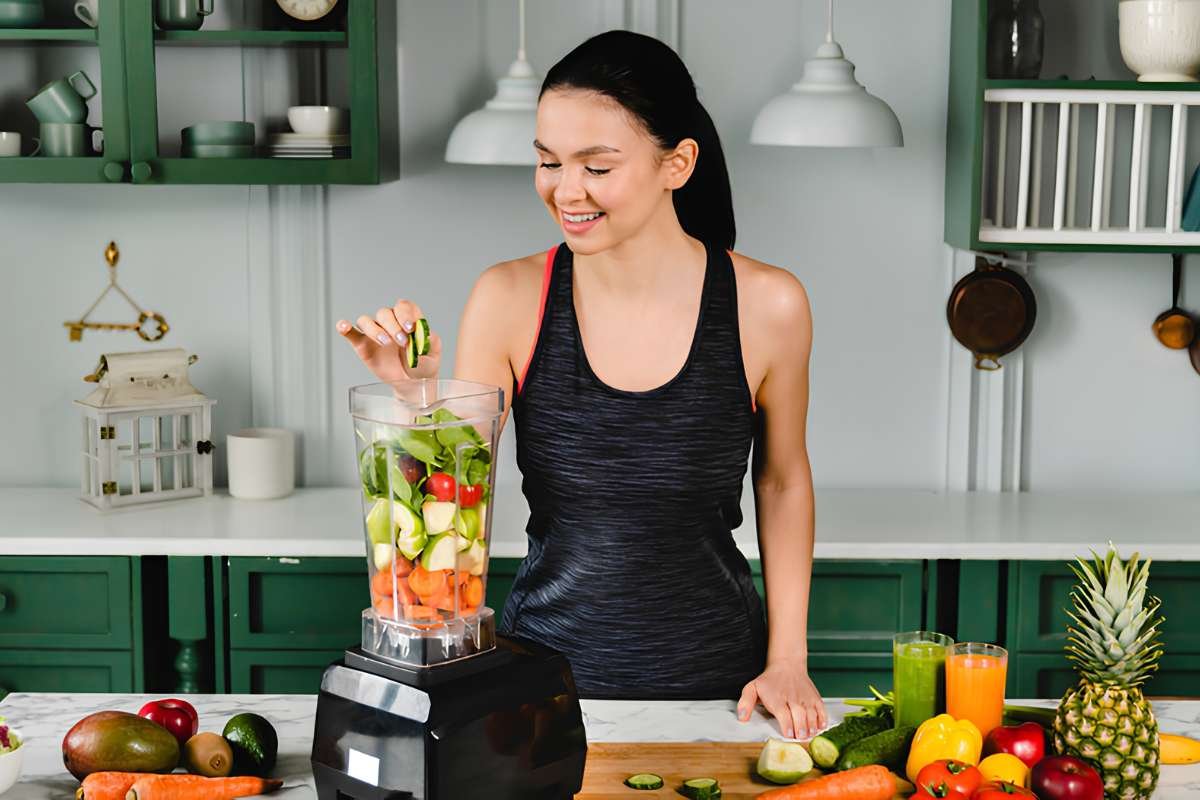
Healthy drinks can stop being healthy surprisingly fast.
One common mistake is adding five or six fruits because “fruit is healthy.” It is, but too much fruit also means more natural sugar.
Another mistake is forgetting vegetables. A smoothie made with only bananas, mangoes, and juice is basically dessert wearing gym clothes.
People also believe juice cleanses wash toxins out of the body. They do not. According to the Academy of Nutrition and Dietetics, your liver and kidneys already remove waste from your body every day.
Store-bought juices can be another trap. Many contain far more fruit than vegetables, making them much sweeter than homemade versions. Reading the label takes ten seconds and can save you from drinking more sugar than you expected.
Small choices like these often matter more than arguing about Juicing vs Blending.
Final Verdict
So, who wins?
The answer depends on your goal.
Choose juice when you want a light drink packed with vitamins or need an easy way to enjoy more vegetables.
Choose smoothies when you want more fiber, better fullness, steadier energy, and a drink that can double as a meal.
Neither one replaces eating whole fruits and vegetables, which should still make up most of your diet.
Instead of asking which is better forever, ask which is better for today. That simple question usually settles Juicing vs Blending without another kitchen debate.
Frequently Asked Questions
1. Is blending healthier than juicing?
For most people, yes. Blending keeps the fiber, which helps you stay full, supports digestion, and slows how quickly natural sugar enters your bloodstream.
2. Does juicing remove all nutrients?
No. Fresh juice still contains many vitamins, minerals, and antioxidants. The biggest loss is fiber, which stays behind with the pulp.
3. Can I lose weight with juice?
You can, but smoothies usually keep you full longer because they contain fiber. Feeling full makes it easier to avoid extra snacks during the day.
4. Is it okay to drink juice every day?
Yes, as long as portions stay reasonable and you also eat whole fruits and vegetables instead of relying only on juice.
5. Can I use the same fruits and vegetables for both?
Absolutely. Apples, carrots, berries, spinach, cucumbers, and many other ingredients work well in both. The biggest difference is how your body experiences the final drink.
Sources
- USDA FoodData Central. FoodData Central Database.
https://fdc.nal.usda.gov/ - American Heart Association. Dietary Recommendations for Healthy Children and Adults. (Fiber intake recommendations)
https://www.heart.org/en/healthy-living/healthy-eating/eat-smart/nutrition-basics