Okinawa and Sardinia are among the regions studied for unusually high concentrations of centenarians, prompting researchers to examine the dietary and lifestyle patterns associated with longevity.
That’s where the blue zone diet comes in. It’s not one fixed meal plan. But recurring habits are found across five regions: Okinawa, Sardinia, Ikaria, Nicoya, and Loma Linda. In this guide, you’ll learn exactly which foods and habits these populations share. And how to realistically apply them to your own routine.
Note: longevity in these regions is linked to diet alongside lifestyle, social, and environmental factors. It hasn’t been proven that diet alone causes it.
Table of Contents
What Is the Blue Zone Diet?
These five regions are the commonly cited Blue Zones in the Blue Zones framework, although the strength and scope of scientific evidence differ across regions. Okinawa in Japan, Sardinia in Italy, Ikaria in Greece, Nicoya in Costa Rica, and Loma Linda in California. It is not one standardized diet or a fixed meal plan. Each region has its own traditional foods, cooking methods, and cultural context.
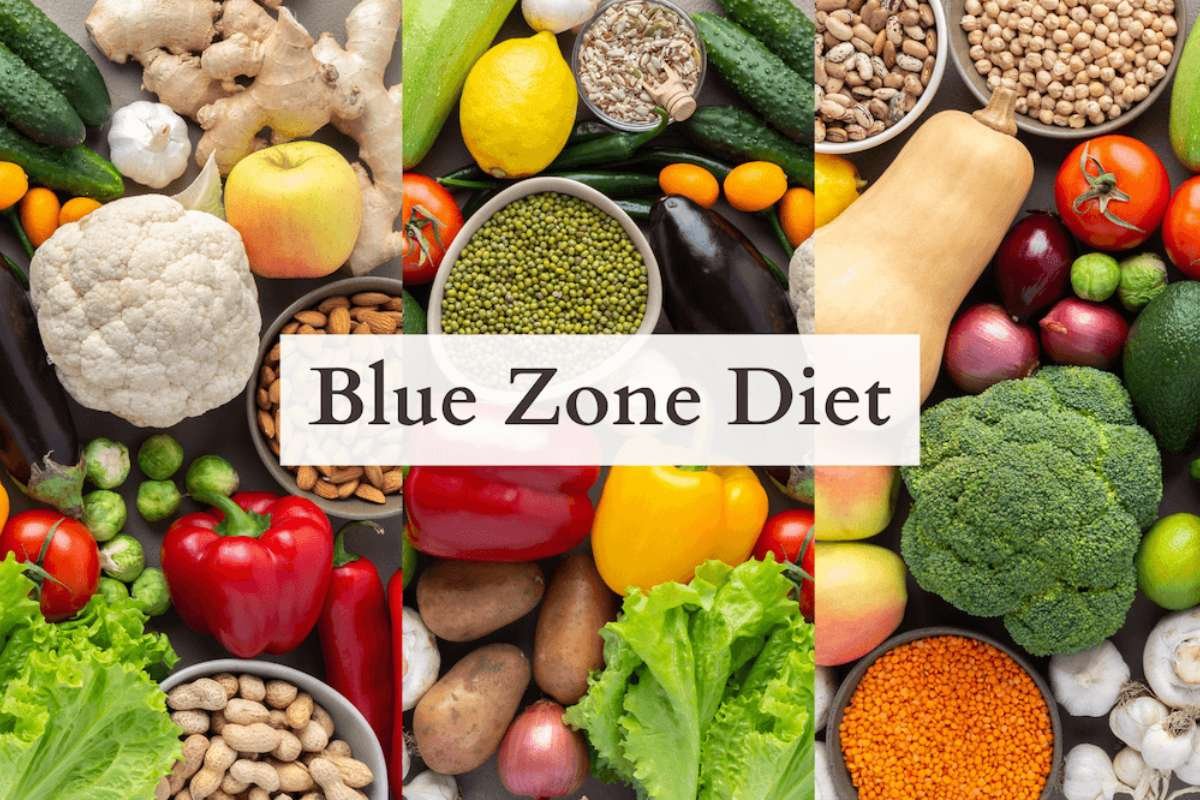
The common denominator is an emphasis on whole or minimally processed foods, including vegetables, fruits, beans, whole grains, nuts, seeds, and tubers. Research supports this pattern: an analysis of 154 dietary surveys across the five Blue Zones found that 95% of centenarians in these regions ate plant-based diets, with beans as a staple, a finding published in peer-reviewed literature on aging and nutrition.
| Region | Dietary Pattern | Staple Foods |
| Sardinia | Mediterranean | Vegetables, legumes, whole grains, olive oil |
| Ikaria | Mediterranean | Vegetables, legumes, whole grains, olive oil |
| Okinawa | Distinctly different, plant-forward Asian pattern | Sweet potatoes, tofu, soy products, local vegetables |
| Nicoya | Traditional Central American pattern | Regional staples reflecting local agriculture |
| Loma Linda | Influenced by Seventh-day Adventist dietary practices | Predominantly plant-based, community-driven habits |
How Do the Five Blue Zone Diets Compare?
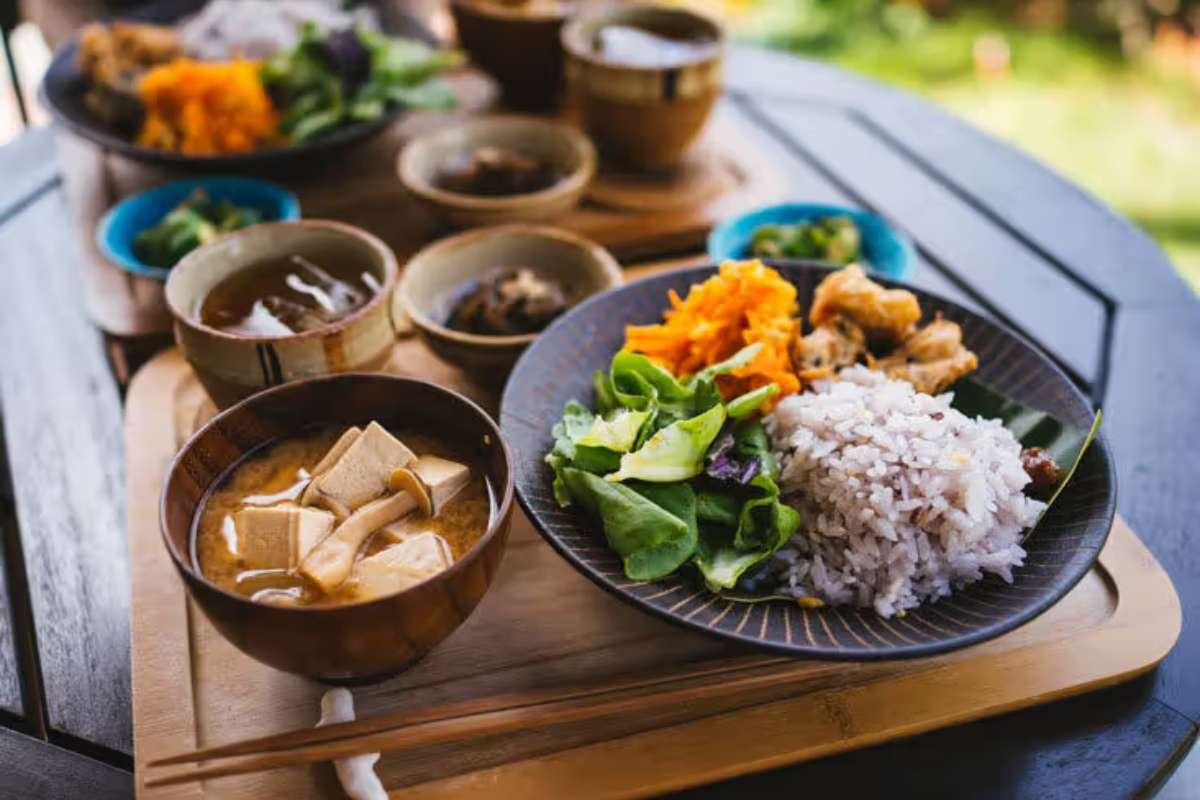
The five regional eating patterns behind the Blue Zone diet share a strong emphasis on plants, beans, and minimally processed foods, but their traditional ingredients differ. Sardinia and Ikaria are closest to the Mediterranean Diet, while Okinawa, Nicoya, and Loma Linda have distinct cultural patterns.
| Blue Zone | Core plant foods | Common protein sources | Distinctive foods or pattern |
| Okinawa | Sweet potatoes, vegetables, and soy | Tofu, other soy foods, some fish and pork | Strong plant focus with traditional Japanese ingredients |
| Sardinia | Vegetables, legumes, and whole grains | Beans, fish, sheep’s or goat’s dairy | Mediterranean-style pattern with local produce and dairy |
| Ikaria | Vegetables, legumes, and whole grains | Fish, goat’s or sheep’s dairy | Mediterranean pattern featuring herbs and olive oil |
| Nicoya | Beans, corn, squash, and tropical produce | Beans, eggs, and poultry | Traditional corn-and-beans combination |
| Loma Linda | Vegetables, legumes, nuts, and whole grains | Mostly plant proteins | Predominantly plant-based Adventist pattern |
Across all five regions, beans, fruits, vegetables, whole grains, nuts and seeds provide fibre and nutrients. These foods may also fit a diet for diabetes when portions and overall carbohydrate intake are appropriate. Nicoya’s beans, corn and squash can be discussed alongside low glycemic index foods.
What Do All Five Blue Zones Have in Common?
Although the traditional foods differ, the five Blue Zones share a recurring eating pattern. The Blue Zone diet is best understood through these common principles.
- Plants form the foundation. Vegetables, fruits, legumes, greens, roots, and other plant foods make up most meals.
- Beans and legumes are unusually consistent. Beans appear in every region, from soy and tofu in Okinawa to black beans in Nicoya and chickpeas or lentils in Ikaria. Official Blue Zones guidance identifies beans as a cornerstone food and recommends eating them regularly.
- Whole grains and traditional starches remain important. Barley, wheat, corn, rice, and sweet potatoes provide energy and fibre without relying mainly on refined products. Blue Zones guidance specifically highlights whole grains and starchy tubers.
- Nuts and seeds provide concentrated nutrients. Nuts feature prominently in several Blue Zone patterns and are commonly recommended as a regular snack or meal addition.
- Highly processed foods are less central. Traditional meals are generally prepared from basic ingredients, with fewer packaged sweets, sugary drinks, salty snacks, and processed meats.
Best Foods for a Blue Zone-Inspired Longevity Diet
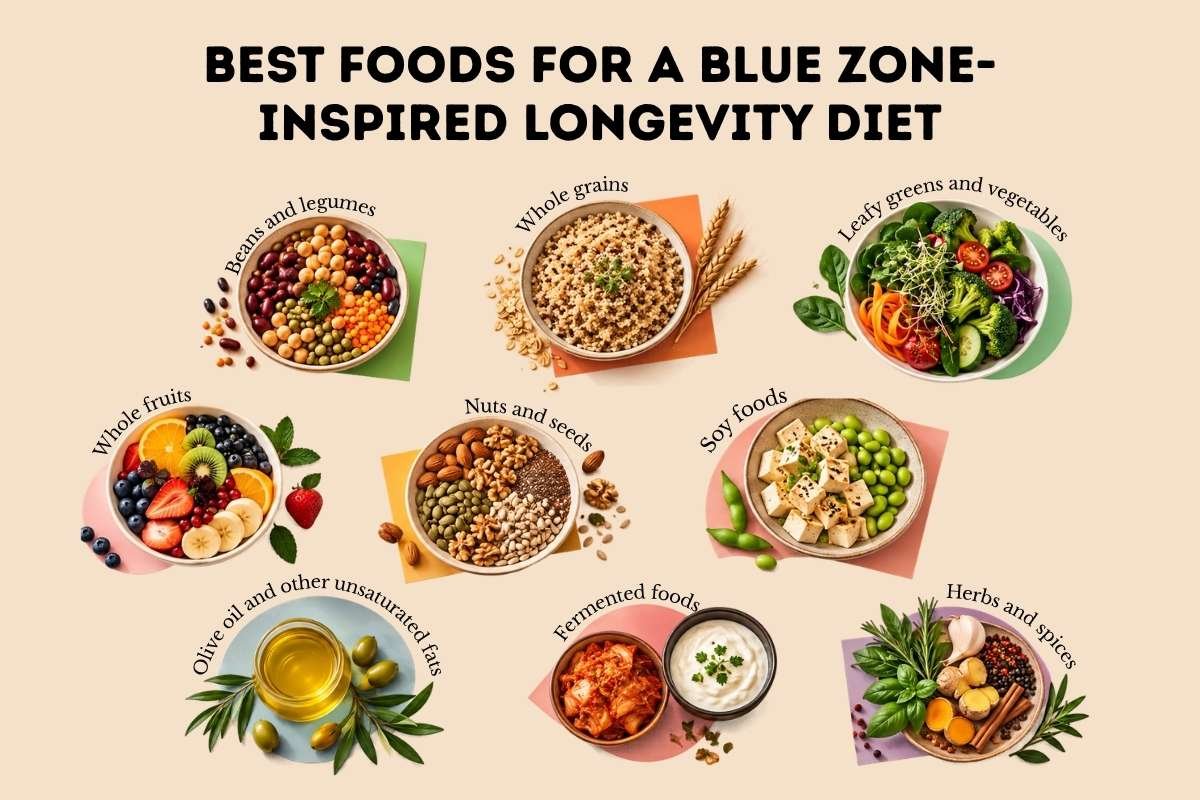
No individual food is proven to extend lifespan. Instead, the best foods for longevity are those that repeatedly appear in healthy, traditional dietary patterns. They provide fibre, plant protein, vitamins, minerals and unsaturated fats. The Blue Zone Diet therefore emphasizes a varied combination of the following foods.
- Beans and legumes
- Whole grains
- Leafy greens and vegetables
- Whole fruits
- Nuts and seeds
- Soy foods
- Olive oil and other unsaturated fats
- Fermented foods
- Herbs and spices
Blue Zones food guidance similarly highlights beans, whole grains, nuts, seeds, vegetables, and soy foods as practical staples. The editorial point is to rank foods by their recurring dietary role, not to claim that one food is “the best.” A plant-rich pattern built around these foods is more important than any single longevity ingredient.
Why These Foods May Support Healthy Aging
The Blue Zone Diet is not proven to slow aging or extend lifespan on its own. However, its recurring nutritional features are associated with better diet quality and healthier cardiometabolic outcomes. A simple way to understand the possible benefits is food → nutritional features → potential health relevance.
| Dietary feature | Examples | Why it may matter |
| Fibre | Beans, whole grains and vegetables | Supports digestion, blood sugar, and cholesterol. |
| Unsaturated fats | Nuts, seeds, olive oil and some fish | Can support heart health when replacing saturated fat. |
| Plant diversity | Vegetables, fruits and legumes | Provides more vitamins, minerals, and plant compounds. |
| Plant protein | Beans, lentils and soy | Provides protein while replacing some animal foods. |
| Minimally processed foods | Whole grains, vegetables and legumes | Improves diet quality and cuts reliance on added sugars and processed foods. |
The Blue Zone Diet’s emphasis on these foods also aligns with World Health Organization guidance to eat more fibre-rich foods and prefer unsaturated fats from sources such as fish, nuts and olive oil.
A 2025 review discusses possible links between Blue Zone-style dietary patterns, inflammation, oxidative stress and telomere biology. However, much of the evidence is population-specific, and stronger prospective studies and controlled interventions are still needed before firm cause-and-effect claims can be made.
How to Build a Blue Zone-Inspired Plate

You do not need a rigid meal plan to follow the Blue Zone Diet. Use this flexible plate formula instead. It reflects the broader healthy-diet principle of combining vegetables, legumes, whole grains, nuts, and fruit in varied meals.
- Start with plant food: Add vegetables, leafy greens, or another seasonal plant food.
- Add legumes or plant protein: Choose beans, lentils, chickpeas, tofu, or another soy food.
- Choose a whole grain or traditional starch: Try barley, oats, whole wheat, brown rice, corn, millet, or sweet potato.
- Add healthy fats: Use nuts, seeds, or an unsaturated plant oil such as olive oil.
- Add fruit if desired: Choose whole fruit rather than juice.
- Use herbs and spices: Add flavour with herbs, spices, garlic, ginger, lemon, or other natural seasonings.
The formula is flexible enough to work with different cuisines:
- Indian-inspired: Dal, seasonal sabzi, whole-grain roti, curd, and fruit or nuts.
- Mediterranean-inspired: Lentils, roasted vegetables, a whole grain, herbs, and olive oil.
- Latin American-inspired: Black beans, corn, squash, and additional vegetables.
- Okinawan-inspired: Tofu, sweet potato, leafy greens, and fermented soy such as miso.
Conclusion:
The Blue Zone Diet isn’t about chasing one perfect longevity food or copying a village menu exactly. It’s about a repeatable pattern: plenty of plants, regular beans, whole grains, nuts, and minimally processed ingredients, with room for your own culture and taste.
None of this guarantees a longer life on its own, since lifestyle, community, and environment all play a role too. But building meals around these foods is a realistic, evidence-informed way to eat better starting today.
Try the plate formula above for your next meal, and see how naturally it fits into your routine.
FAQ:
1. What is the Blue Zone Diet?
The Blue Zone Diet refers to the common dietary patterns observed across five regions associated with exceptional longevity, rather than one standardized diet.
2. What foods do people in Blue Zones eat most?
Common foods include beans and other legumes, vegetables, fruits, whole grains, nuts, and other minimally processed plant foods.
3. What are the best foods for longevity?
Foods such as beans, vegetables, whole grains, fruits, nuts, seeds, and soy can form the foundation of a nutrient-dense diet associated with healthy aging.
4. Is the Blue Zone Diet the same as the Mediterranean Diet?
No. Sardinia and Ikaria have Mediterranean characteristics, but Okinawa, Nicoya, and Loma Linda have distinct traditional dietary patterns.
5. What are the five Blue Zones?
The five commonly cited Blue Zones are Okinawa, Sardinia, Ikaria, Nicoya, and Loma Linda.
Links and Sources:
- https://wellbeingintl.org/the-blue-zones-well-being-and-feel-better/?gad_source=1&gad_campaignid=22780261368&gbraid=0AAAAACQfav1wLxXAXhI6BRQq5irP67eLA&gclid=Cj0KCQjw8c3VBhCsARIsAA_xJ91olbVCphassWC9yHU0b59-asHm7HGOE6nvd7OxgNaYCCKNfJwN86UaAhsqEALw_wcB
- https://www.who.int/westernpacific/health-topics/healthy-diet#tab=tab_1
- https://pubmed.ncbi.nlm.nih.gov/40120947
- https://www.foodandnutritionjournal.org/volume13number2/blue-zone-dietary-patterns-telomere-length-maintenance-and-longevity-a-critical-review/
- https://www.bluezones.com/2026/06/consuming-processed-foods-may-be-increasing-your-risk-for-dementia-type-2-diabetes-and-cutting-your-lifespan-short/
- https://www.healthline.com/nutrition/blue-zone-diets