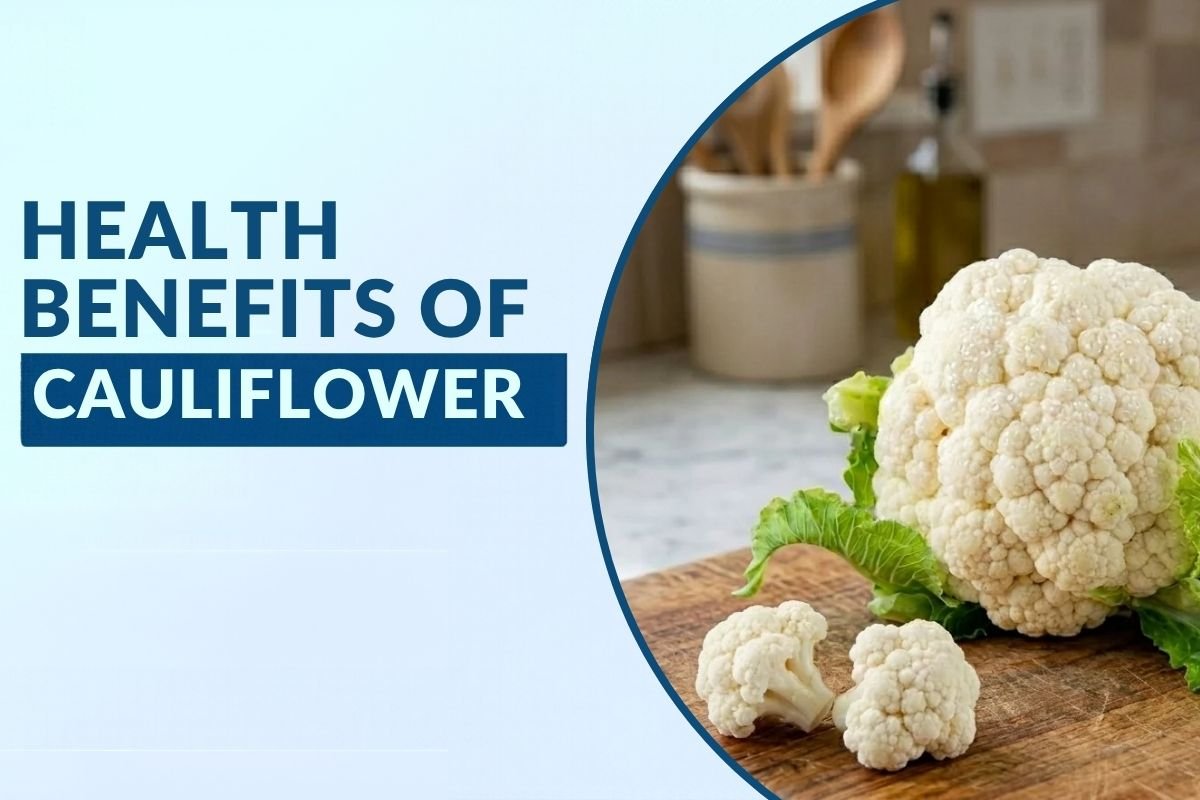
The health benefits of cauliflower include better digestion, stronger immunity, and brain support, all for very few calories. This cruciferous vegetable packs fiber, vitamin C, choline, and plant compounds into every pale floret.
Cauliflower gets huge hype online, so what does the evidence really say? You will see the proven perks, the claims that need more research, and the easiest ways to eat more. We will also flag the downsides, because every food has a few.
What are the Top Health Benefits of Cauliflower?
Think of cauliflower as a budget multivitamin you can roast. It delivers fiber, vitamins C and K, folate, and choline. It also contains glucosinolates, which are sulfur compounds. Chewing and digestion turn them into active compounds like indoles and isothiocyanates, according to the National Cancer Institute.
| Benefit | Key nutrient or compound | What it does |
| Digestion | Fiber | Feeds gut bacteria and keeps you regular |
| Heart support | Sulforaphane, potassium | May support blood pressure and artery health |
| Immunity | Vitamin C | Supports immune cells and collagen |
| Brain health | Choline | Helps build cell membranes |
| Bone strength | Vitamin K | Helps your body use calcium |
| Inflammation | Antioxidants | Shields cells from free radical damage |
Can Cauliflower Improve Digestion and Gut Health?

Yes, and fiber does most of the work. One cup of raw cauliflower gives you 2.14 grams of fiber, which covers about 7% of your daily needs. That number looks small. It adds up fast when you eat a few servings each week.
Fiber feeds the healthy bacteria in your gut. Those bacteria help calm inflammation and keep your bowels regular. Digestion ranks high among the health benefits of cauliflower because fiber and water team up to keep things moving.
Cauliflower also holds a lot of water, so it adds bulk without many calories. That bulk helps you feel full after a meal. You may find yourself snacking less later.
Does Cauliflower Support Heart Health and Blood Pressure?

It may, though the proof is still growing. Sulforaphane forms when you chew raw florets. Early research links this compound to healthier blood pressure and stronger artery walls. Researchers still need more human trials to measure how big the effect really is.
Cauliflower also brings potassium, a mineral that helps balance sodium in your body. Salt-heavy diets push blood pressure up, so that balance matters. Roasted florets also replace creamy, high-fat sides on your plate.
Small swaps like that add up over a year. You do not need a dramatic diet overhaul. One smarter side dish at dinner is a solid start.
Does Cauliflower Help Fight Cancer?
Maybe, but nobody can promise it. Lab and animal studies show that glucosinolate breakdown products can slow cancer cell growth. Human studies give mixed results, the National Cancer Institute reports. Some case-control studies found lower prostate and breast cancer risk among high eaters. Large cohort studies often found little or no link.
The picture gets messy for another reason. People who eat more cruciferous vegetables often follow other healthy habits too. Researchers struggle to separate the vegetable from the lifestyle.
So skip the miracle claims. Cancer prevention belongs on the list of promising health benefits of cauliflower. Eat it because it is nutritious, and keep your regular screenings on the calendar.
How Does Cauliflower Boost Immunity, Brain, and Bones?
Vitamin C leads the pack here. USDA FoodData Central lists 48.2 milligrams of vitamin C per 100 grams of raw cauliflower. Your body uses that vitamin to support immune cells and build collagen. Collagen holds your skin, joints, and bones together.
Choline deserves a shout too. This nutrient helps build cell membranes and supports brain development and memory. Many people miss it in their daily diet, and cauliflower offers an easy top-up.
Vitamin K rounds out the team. It helps your body use calcium, which keeps bones strong as you age. Cauliflower also provides folate, so if you are pregnant or planning to be, ask your doctor how much you need.
Read More: 10 Healthy Winter Vegetables Worth Adding to Your Plate
Is Cauliflower Good for Weight Loss?

Yes, as part of balanced eating. Cauliflower is low in calories, high in water, and a decent source of fiber. That mix fills your plate without filling out your waistline. It also costs little and sits in almost every grocery store.
The easy win is swapping it for heavier foods. Rice it for stir-fries, mash it with a little butter, or blend it into soup. Many people enjoy these swaps because the health benefits of cauliflower come with a satisfying bite.
Keep expectations realistic, though. A cauliflower pizza crust loaded with cheese and oil still adds calories. Check the whole dish, not just the star ingredient.
What are the Downsides and Best Ways to Eat Cauliflower?
Cauliflower can cause gas and bloating, like other cruciferous vegetables. Start with a small portion and build up. It also contains goitrogens, which can affect thyroid function in sensitive people. Varying your diet and getting enough iodine and selenium can limit that effect. If you have a thyroid condition, check with your doctor.
The cooking method changes what you keep. To protect the health benefits of cauliflower, cook it lightly.
| Method | Best for | Trade-off |
| Raw | Maximum vitamin C and sulforaphane | Harder to digest for some |
| Steaming (about 5 minutes) | Balance of nutrients and texture | Needs a quick timer |
| Roasting | Big, nutty flavor | Loses some vitamin C |
| Boiling | Soups where you drink the liquid | Vitamin C leaches into the water |
Conclusion
The health benefits of cauliflower are real, especially for digestion, immunity, and everyday nutrition. The cancer and heart claims look promising but need more human proof. Add one serving of cauliflower to dinner this week. Steam it, roast it, or rice it, and notice how you feel. Then share this guide with a friend who needs fresh veggie ideas.
Read More: Why Is Everyone Talking About the Plant-Based Diet? Here’s What You Need to Know
FAQs
1. Can you eat cauliflower every day?
Most people can, but vary your vegetables and watch for gas or bloating.
2. Are cauliflower leaves and stems edible?
Yes. Roast the leaves and slice the stems into soups or stir-fries.
3. Is frozen cauliflower as healthy as fresh?
Usually, yes. Producers freeze it quickly, which keeps most nutrients intact.
4. Does cauliflower rice keep the health benefits of cauliflower?
Yes, it keeps most of them and has fewer carbs than white rice. Pair it with protein to stay full.