Key Takeaway:
- Ebola spreads to a new province: Congo reported two cases and one death in Nord-Ubangi, expanding the outbreak to an eighth province.
- Containment remains challenging: Poor infrastructure, armed violence, community fear, and population movements complicate efforts to stop transmission.
- Authorities tighten restrictions: Officials are limiting travel and public gatherings in affected areas as health workers continue case detection and community outreach.
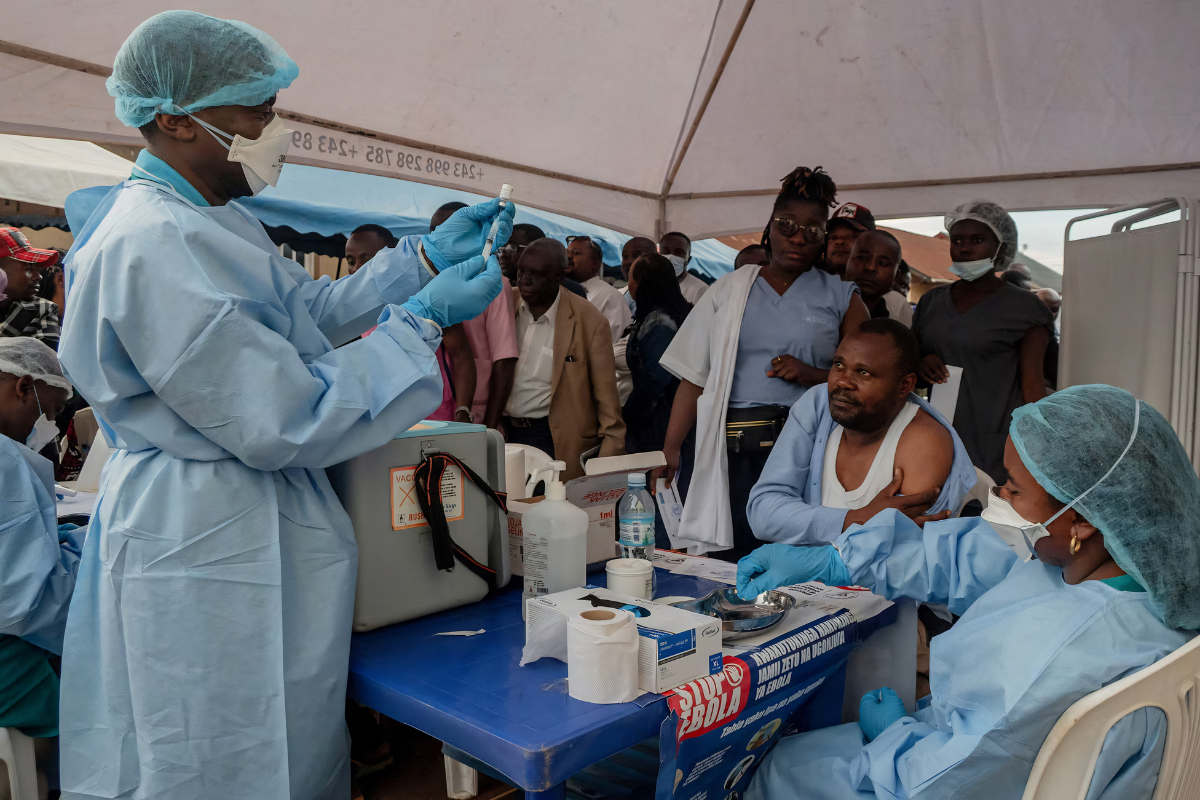
Congo’s Ebola outbreak has reached an eighth province, with two cases and one death reported in Nord-Ubangi near the Central African Republic border, as authorities struggle to contain the country’s deadliest outbreak.
New Cases Expand Congo’s Ebola Outbreak Across More Provinces
Congo’s Health Ministry reported the two cases Sunday in the Wapinda health zone, where both patients were men in their 20s. The area borders Bas-Uele province, which has previously reported infections, raising concerns about further spread along the country’s northern border.
Authorities have recorded at least 9,400 cases and more than 4,500 deaths since the outbreak was declared in mid-May. The epidemic, caused by the rare Bundibugyo strain of the Ebola virus, has become the deadliest in Congo’s history.
The virus has also crossed international borders. Uganda has declared itself free of the disease, while neighboring Kenya reported its seventh case Saturday. The Central African Republic has not reported any confirmed cases.
Mohamed Yakub Janabi, the World Health Organization’s regional director for Africa, told The Associated Press that infections were declining in some areas but spreading geographically.
“We see pockets of Ebola generally going down, but unfortunately geographically it’s spreading out,” Janabi said in an interview Friday in Beni, eastern Congo.
Health Workers Face Fear and Access Challenges
Ituri province in eastern Congo remains the outbreak’s epicenter, accounting for nearly three-quarters of confirmed cases, according to the government’s latest data. The outbreak has affected 66 health zones, placing pressure on health workers trying to trace infections and reach vulnerable communities.
Janabi said one major challenge is persuading infected people to seek medical care. Some patients die in their communities without reaching health facilities, complicating efforts to identify cases and prevent further transmission.
Poor roads and limited communication networks make it difficult to reach remote areas, including communities near the Central African Republic border. Armed violence in the region has also displaced thousands of people, increasing movement between communities and complicating containment efforts.
Serge Ngalebato, an epidemiologist and field coordinator for the Wamba health zone in Haut-Uele province, said health workers began making regular home visits because residents were too afraid to go to hospitals.
Although some residents initially resisted containment measures, Ngalebato said community cooperation improved over time, with people increasingly reporting suspected infections.
“Ebola is a community disease. If the community does not cooperate, it will be very difficult,” he told the AP.
Authorities Tighten Measures as Transmission Continues
Authorities are introducing additional restrictions in affected areas to slow transmission. Congo’s state news agency, ACP, reported Sunday that North Kivu province would impose a one-week ban beginning Monday on people entering from Ituri.
Officials also plan to restrict passenger numbers on motorcycles and in cars and suspend large public gatherings, including sporting events, nightclub activities and political demonstrations.
The current outbreak is caused by the Bundibugyo virus, a rare Ebola strain for which no approved vaccine or treatment is available. The response has been further complicated by population movements, violence involving armed groups, mistrust of health workers and difficult working conditions for frontline teams.
Public health officials continue to rely on early detection, community reporting and measures to limit transmission. The latest cases in Nord-Ubangi underscore the difficulty of containing Congo’s Ebola outbreak, which continues to expand geographically even as some local clusters decline.