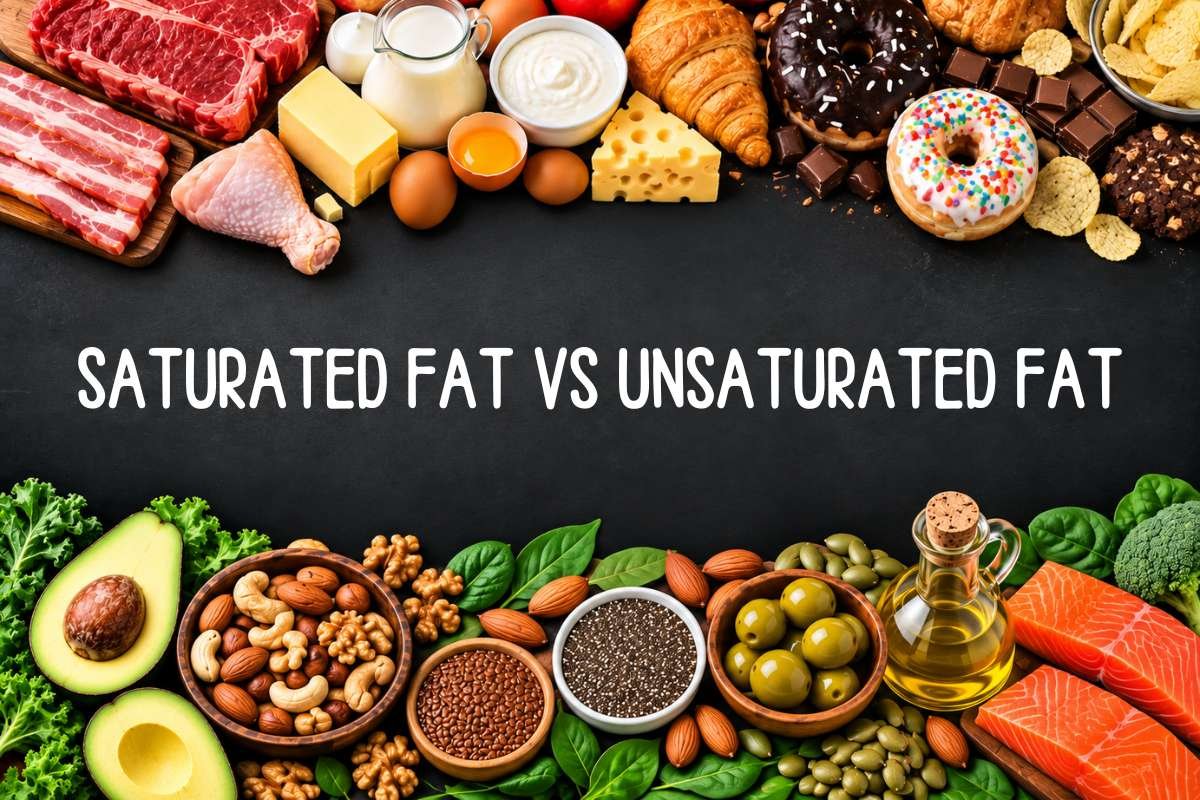
If you’re choosing between saturated fat and unsaturated fat, the answer isn’t simply to avoid all fat. Fat is essential for absorbing vitamins and producing hormones. But the two types behave differently in your body. Replacing 5% of calories from saturated fat with polyunsaturated fat was associated with a 25% lower risk of coronary heart disease in a large prospective cohort study. The 2026 evidence increasingly focuses on what replaces saturated fat, not saturated fat alone.
In this guide to saturated fat vs unsaturated fat, you’ll learn the key differences. You’ll also learn about food sources, effects on cholesterol and heart health, the latest research, and practical swaps you can make today.
Table of Contents
Saturated Fat vs Unsaturated Fat: What’s the Difference?
Saturated fat and unsaturated fat are both types of dietary fat. But they differ in structure, physical properties, and health effects. Saturated fat tends to be solid at room temperature and is linked to higher LDL (“bad”) cholesterol when eaten in excess. Unsaturated fats are generally favored for heart health, particularly when they replace saturated fats in an overall healthy dietary pattern. Especially when it replaces saturated fat in the diet.
Definitions and types
- Saturated fat: Fat molecules with no double bonds between carbon atoms, so they are “saturated” with hydrogen. This tight packing makes them typically solid at room temperature.
- Unsaturated fat: Fat molecules with one or more double bonds, creating kinks that prevent tight packing. These are usually liquid at room temperature.
Unsaturated fats split into:
- MUFA (monounsaturated fat): One double bond (e.g., olive oil, avocados, many nuts).
- PUFA (polyunsaturated fat): Two or more double bonds. This group includes omega-3 and omega-6 fatty acids. Omega-3s are found in fatty fish and certain plant foods. See more in this guide to Omega-3 foods.
Simple chemistry and physical traits
In simple terms, saturated fats have straight chains that stack easily, so they’re often solid (butter, coconut oil). Unsaturated fats have bends at their double bonds, so they don’t stack well and stay liquid (olive oil, most seed oils).
Common food sources
Most foods contain a mixture of fatty acids; one type usually predominates.
- Saturated fat–predominant: Butter, fatty cuts of meat, full-fat dairy, coconut and palm oils.
- Unsaturated fat–predominant: Olive oil, nuts, seeds, avocado, and fish.
Saturated Fat vs Unsaturated Fat: Key differences
| Feature | Saturated Fat | Unsaturated Fat |
| Chemical structure | No double bonds | One or more double bonds |
| Main types | Various saturated fatty acids | MUFA and PUFA |
| Common sources | Butter, fatty meat, full-fat dairy, coconut/palm oils | Olive oil, nuts, seeds, avocado, fish |
| Typical room temperature | Often solid | Often liquid |
| Main dietary consideration | Limit major sources | Prefer as replacement for saturated fat |
How Saturated and Unsaturated Fats Affect Cholesterol
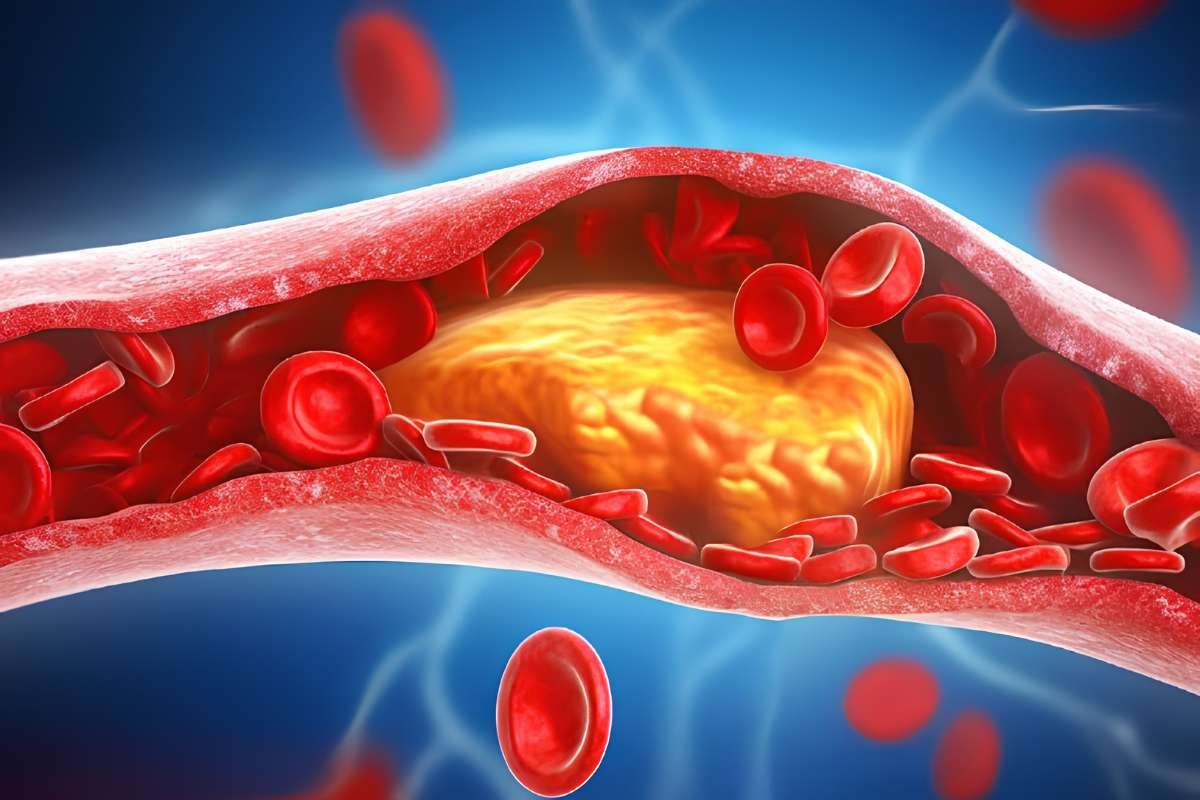
Yes, saturated fat raises LDL cholesterol. In the bloodstream, LDL carries cholesterol to tissues. When LDL is high, more cholesterol can deposit in artery walls, raising cardiovascular risk. That’s why lowering LDL is a central goal in preventing heart attack and stroke.
LDL (“bad”) and HDL (“good”) cholesterol play different roles. LDL delivers cholesterol and can contribute to plaque. HDL helps remove excess cholesterol. Dietary cholesterol (from foods like eggs) and dietary fat are not the same: for most people, saturated and trans fats have a larger effect on LDL than the cholesterol you eat.
Reducing saturated fat lowers LDL because the liver makes less LDL when saturated fatty acid intake drops. But what you replace it with matters. Replacing saturated fat with refined carbs doesn’t help much. Replacing it with unsaturated fats (MUFA/PUFA) and fiber-rich foods does. Current 2026 dyslipidemia guidance recommends replacing saturated and trans fats with MUFA and PUFA to reduce LDL-C and ASCVD risk.
This is where saturated fat vs unsaturated fat becomes practical. The goal isn’t “eat less fat,” but to build meals around foods that lower cholesterol, such as nuts, seeds, legumes, whole grains, fish, and plant oils. At the same time, limit unhealthy foods to avoid, especially processed items that combine saturated fat, refined carbohydrates, sodium, and additives (think many pastries, fried fast foods, and processed meats).
Sodium and additives think many pastries, fried fast foods, and processed meats.
Small, consistent swaps, such as olive oil instead of butter, nuts instead of chips, and beans or lentils instead of processed meat. It can help improve your overall fat quality and support healthier LDL levels.
What Does 2026 Research Actually Say About Saturated Fat and Heart Health?
The latest evidence doesn’t support a simple ‘saturated fat is always harmful’ or ‘saturated fat doesn’t matter’ conclusion. A February 2026 systematic review published in the Annals of Internal Medicine analyzed 17 randomized trials involving 66,337 participants and found low-to-moderate-certainty evidence overall. Across five years, reducing or modifying saturated fat showed little or no clear benefit for people at low cardiovascular risk, while higher-risk groups saw more meaningful reductions in major cardiac events. Earlier cohort evidence found that replacing 5% of energy from saturated fat with PUFA was associated with a 25% lower risk of coronary heart disease, while the 2026 randomized-trial review found more nuanced, risk-dependent effects; evidence for replacement with MUFA or protein was less consistent.
This nuance helps explain the saturated fat vs unsaturated fat debate: People with high LDL cholesterol, established cardiovascular disease, diabetes, or other risk factors may need more individualized dietary advice from a qualified health professional.
“If the evidence is nuanced, why do health organizations still recommend replacing saturated fat?” Because current data still support swapping major saturated-fat sources (butter, fatty meats, tropical oils) for unsaturated fats (olive and other plant oils, nuts, seeds, fish) to lower LDL and cardiovascular risk. The 2026 American Heart Association dietary guidance continues to recommend choosing unsaturated fats in place of saturated fats as part of lifelong heart-healthy eating patterns.
Saturated Fat vs Unsaturated Fat: Which Foods Should You Choose?
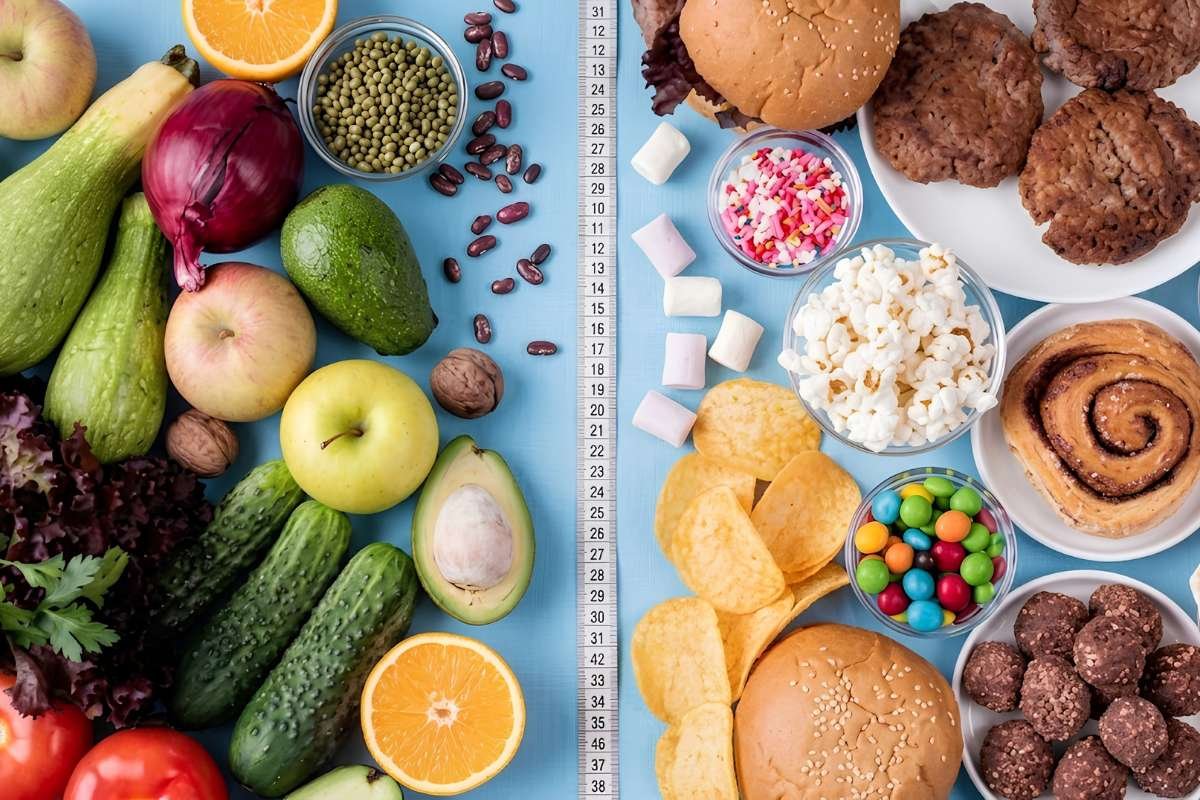
When thinking about saturated fat vs unsaturated fat, focus on patterns, not perfection. Consider choosing more unsaturated-fat sources most of the time, while allowing flexibility based on your preferences and health goals.
| Instead of | Try |
| Butter | Olive or canola oil |
| Fatty meat | Fish, legumes or lean protein |
| Processed meat | Fish, beans or nuts |
| High-saturated-fat snack | Nuts or seeds |
| Cream-heavy preparation | Unsaturated plant-oil-based preparation |
| Frequent coconut/palm oil | Variety of unsaturated plant oils |
These swaps work best as part of an overall heart-healthy pattern that emphasizes plants, minimally processed foods, and high fibre foods such as whole grains, beans, lentils, fruits, and vegetables. Fiber helps improve cholesterol profiles, especially when it replaces refined carbs and saturated-fat-heavy dishes.
You don’t need to eliminate every saturated-fat source. Instead, consider choosing these alternatives more often at meals and snacks, and let unsaturated oils, nuts, seeds, fish, and legumes feature more often in your meals.
What Happens When You Replace Saturated Fat With Unsaturated Fat?
Replacing saturated fat doesn’t automatically improve heart health. But what you replace it with matters. Evidence most consistently supports replacing saturated fat with PUFA to lower LDL cholesterol, with cardiovascular benefits depending on the population, replacement food, and overall dietary pattern.
Saturated fat → MUFA (monounsaturated fat) can also be beneficial, but effects depend on food sources (e.g., olive oil, nuts) and the overall dietary pattern.
Saturated fat → refined carbohydrates is not an automatic upgrade. It may lower LDL but can worsen triglycerides and HDL, offering little cardiovascular benefit.
Saturated fat → whole grains/high-quality carbohydrates can be a healthier swap within a balanced diet, especially when fiber-rich. The 2026 ACC statement emphasizes choosing whole grains over refined carbs while replacing saturated fat with unsaturated fats to lower LDL-C and risk.
Saturated fat → plant protein (beans, lentils, soy, and nuts) also fits a heart-healthier pattern by reducing saturated fat and increasing fiber and unsaturated fats.
In short, saturated fat vs unsaturated fat is only part of the story. The replacement food and overall diet quality determine the real impact.
Simple Saturated-to-Unsaturated Fat Swaps to Try:

Try this:
- Butter → olive oil
- Fatty meat → fish or beans
- Processed meat → nuts, legumes, or fish
- Cream-based dressing → olive-oil-based dressing
- Refined snack → nuts or seeds
- High-saturated-fat breakfast → whole-grain plus nut/seed combination
These small shifts add up when done consistently.
Understanding saturated fat vs unsaturated fat helps. But execution matters more than theory.
Don’t make these mistakes:
- Don’t eliminate all dietary fat.
- Don’t assume every unsaturated-fat food is automatically healthy.
- Don’t replace saturated fat with refined carbohydrates and assume the change is beneficial.
- Don’t treat coconut oil as equivalent to olive oil simply because both are plant-derived.
- Don’t ignore calories and portion size.
Focus on pattern changes, not perfection.
Conclusion:
When it comes to saturated fat vs unsaturated fat, the goal isn’t to cut fat out. It’s to choose better fats more often. The evidence increasingly shows that what replaces saturated fat matters. Polyunsaturated fats have some of the strongest evidence for beneficial substitution, while overall dietary pattern and food quality also matter. Swap butter for olive oil, processed meat for beans or fish, and refined snacks for nuts. Pair these changes with fiber-rich whole foods, and you’ll see steady improvements in cholesterol over time. You don’t need perfection, just consistency.
Start today: pick one swap from this guide and make it part of your next meal.
FAQ:
1. Is saturated fat always bad for you?
Not necessarily. Current evidence does not support treating all saturated fat intake as an isolated measure of health risk.
2. Does saturated fat raise LDL cholesterol?
Yes, saturated fat can raise LDL cholesterol, particularly when consumed in excess.
3. What should you replace saturated fat with?
Replace major sources of saturated fat with unsaturated fats, especially PUFA-rich foods, or minimally processed high-fiber foods such as whole grains and legumes.
4. What is the difference between saturated fat vs unsaturated fat?
Saturated fat has no double bonds, while unsaturated fat has one or more double bonds.
5. Should I completely avoid saturated fat?
No; focus on limiting major sources and replacing them with healthier unsaturated fats.
Links and sources:
- https://nutritionsource.hsph.harvard.edu/food-features/coconut-oil/
- https://pmc.ncbi.nlm.nih.gov/articles/PMC12914412
- https://www.ahajournals.org/doi/10.1161/01.cir.95.12.2701
- https://pubmed.ncbi.nlm.nih.gov/41914202
- https://www.health.harvard.edu/diet-and-nutrition/does-everyone-benefit-from-cutting-saturated-fat-in-their-diet
- https://www.ncbi.nlm.nih.gov/sites/books/NBK551722
- https://ods.od.nih.gov/factsheets/Omega3FattyAcids-HealthProfessional
- https://www.mayoclinic.org/healthy-lifestyle/nutrition-and-healthy-eating/in-depth/fat/art-20045550