Key Takeaway:
- A Doctors Without Borders worker in Congo tested positive for Ebola and is being evacuated to the Netherlands for treatment.
- Congo has reported 8,224 Ebola cases and 3,982 deaths, making this its largest recorded outbreak.
- Conflict, limited resources and community mistrust continue to complicate efforts to contain the outbreak.
A Doctors Without Borders worker has tested positive for Ebola while responding to the Ebola Outbreak in Congo, as the outbreak reaches 8,224 cases and 3,982 deaths, officials said Thursday.
MSF Worker Heads To Netherlands For Treatment
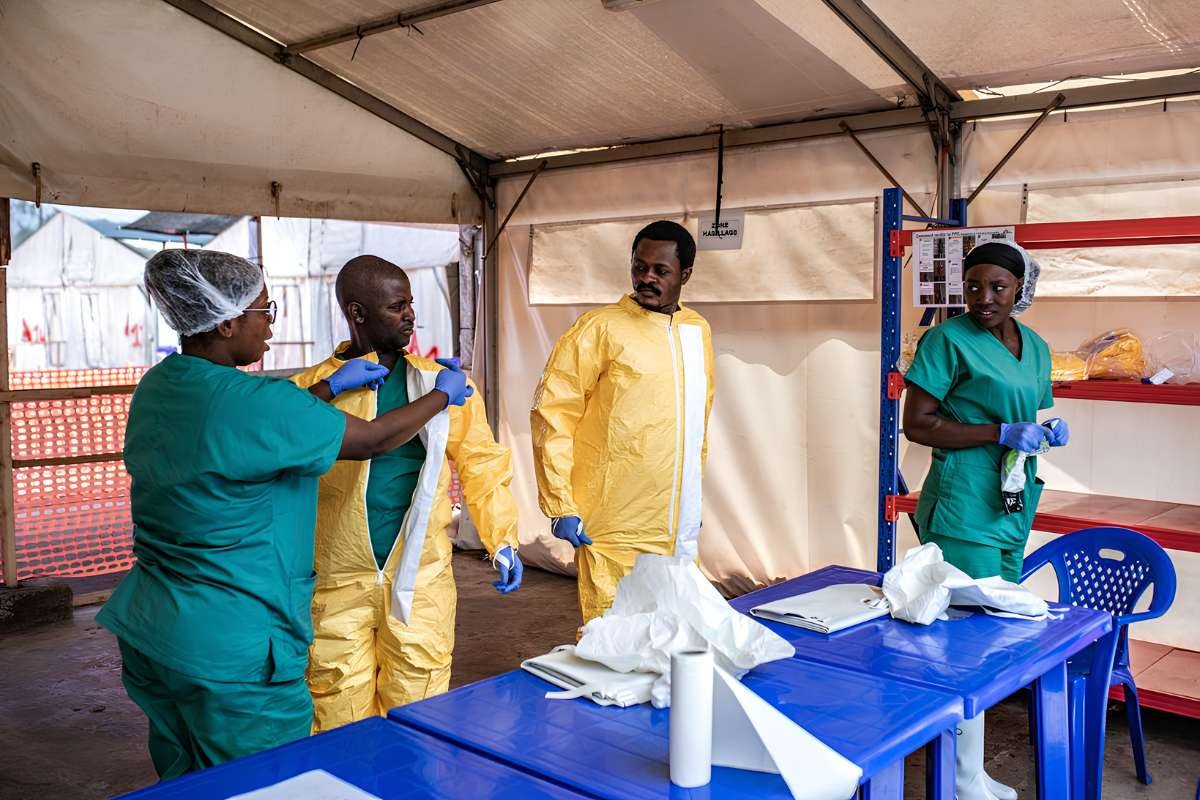
Médecins Sans Frontières, known as Doctors Without Borders, said the staff member was working on the Ebola response in the Democratic Republic of the Congo when the infection was confirmed. The person is being evacuated to the Netherlands for treatment at a designated hospital.
“This person is being safely evacuated under a strict medical protocol in close coordination with the relevant health authorities in the DRC and the Netherlands,” MSF said in a statement.
MSF did not release additional details about the worker, citing medical confidentiality and privacy. The organization said it is responding to the outbreak in Ituri, North Kivu, Tshopo and Haut-Uélé provinces.
The case highlights the risks faced by health workers during the response. MSF said that even with training and protective measures, exposure to Ebola cannot be completely eliminated.
Congo Records Nearly 4,000 Ebola Deaths
The Congolese government reported 8,224 cases and 3,982 deaths in its Thursday update. The outbreak is caused by the Bundibugyo species of Ebola virus and was declared May 15.
The World Health Organization has described the outbreak as the largest Ebola outbreak ever reported in Congo. By Sept. 23, WHO had recorded 7,890 confirmed cases and 3,799 deaths across 63 health zones in seven provinces.
The outbreak has already surpassed Congo’s previous largest Ebola epidemic, which occurred from 2018 to 2020. Globally, it remains smaller than the 2014-2016 West African Ebola epidemic, which infected more than 28,600 people and killed more than 11,000 across Guinea, Liberia and Sierra Leone.
WHO declared the outbreak a public health emergency of international concern on May 17, citing the risk of further spread and the need for coordinated international action.
Conflict And Mistrust Complicate Response
Health officials face major obstacles in controlling transmission, including insecurity, population displacement, limited access to affected areas and mistrust among some communities.
“In some areas of eastern DRC, the Ebola outbreak is outpacing our response,” WHO Director-General Tedros Adhanom Ghebreyesus said in August, calling for a rapid expansion of containment efforts.
Tedros also emphasized the importance of community involvement. “Ebola is ultimately stopped in communities,” he said in August, adding that response teams must listen to communities and work with them.
WHO said in September that transmission remained sustained and that delayed detection was increasing the risk of spread within households, communities and health care settings. The organization has urged stronger surveillance, contact tracing, access to care and support for frontline workers.
The latest infection among an MSF worker comes as responders continue efforts to contain an outbreak that has spread across multiple provinces and placed additional pressure on Congo’s health system.