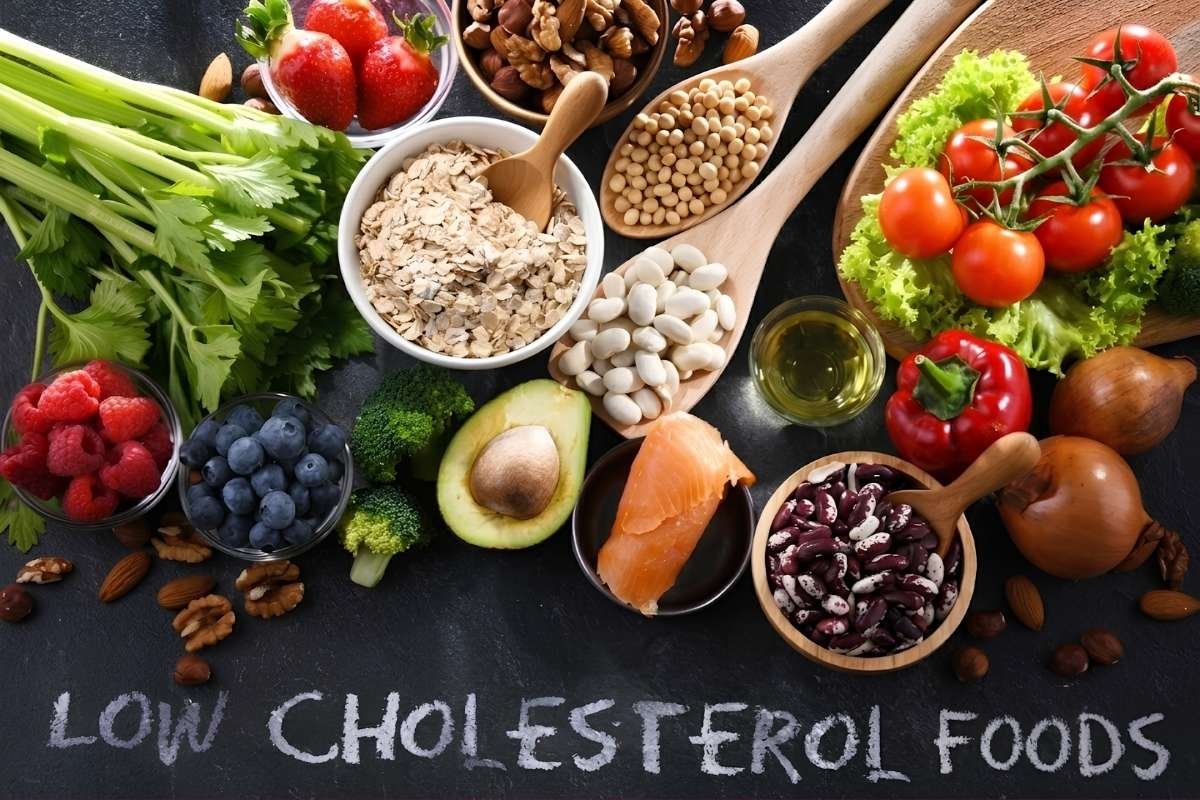
Nearly 40% of adults have borderline-high LDL cholesterol. Yet most still reach for the same short list of “heart-healthy” staples. The best foods that lower cholesterol aren’t limited to oatmeal. Oats, beans, nuts, soy, and oily fish all carry clinical evidence for improving one or more blood lipid markers. But not every food works the same way: some lower LDL through soluble fiber or plant sterols. Others work by swapping saturated fat for unsaturated fat. And omega-3-rich foods often show stronger results for triglycerides than LDL.
This guide breaks down 15 foods by evidence and mechanism, not popularity. Diet can meaningfully support healthier lipid levels. But it isn’t a substitute for prescribed treatment when medication is indicated. 2026 guidance still emphasizes lifestyle changes alongside risk-based lipid management.
Table of Contents
Which Foods Actually Lower Cholesterol?
The most useful foods for improving cholesterol are oats and barley, beans and lentils, fruits, vegetables, nuts, seeds, and olive or other unsaturated oils. These foods work best as part of an overall eating pattern, such as the Mediterranean Diet, rather than as isolated “cholesterol-lowering” foods.
LDL-C is the main cholesterol measure linked with artery-clogging plaque. HDL-C helps transport cholesterol away from tissues. While triglycerides are blood fats used for energy. However, LDL-C is not the only relevant measure: the 2026 ACC/AHA guideline also highlights non-HDL cholesterol, triglyceride-rich remnant particles, lipoprotein (a), and triglycerides as important atherogenic risks. Therefore, “lowering cholesterol” should not mean trying to raise HDL-C with individual foods. Dietary changes have not been shown to reliably improve outcomes by boosting HDL alone.
The best-supported Foods That Lower Cholesterol include high fibre foods. Studies show oat beta-glucan (at least 3g/day) can lower LDL by 5–10%, while about 2g of plant sterols or stanols daily reduces LDL by roughly 7.5–12% within three weeks. Soluble fibre from oats, barley, beans, apples, citrus fruit, and psyllium helps reduce cholesterol absorption, with oat and barley beta-glucan being especially useful. Plant sterols, found in fortified products and smaller amounts in nuts, seeds, and vegetables, further support LDL-C reduction.
Replace butter, ghee, fatty meat, and coconut or palm oil with olive oil, nuts, seeds, avocado, and fish. This saturated fat vs unsaturated fat substitution is more important than simply eating less fat. EPA and DHA in Omega-3 Foods, such as salmon, sardines, and trout, mainly help lower triglycerides. Also, replace refined carbohydrates, sugary foods, and excess alcohol with whole grains, legumes, vegetables, and protein-rich foods, which can further improve triglycerides.
15 Foods That Lower Cholesterol With the Strongest Evidence
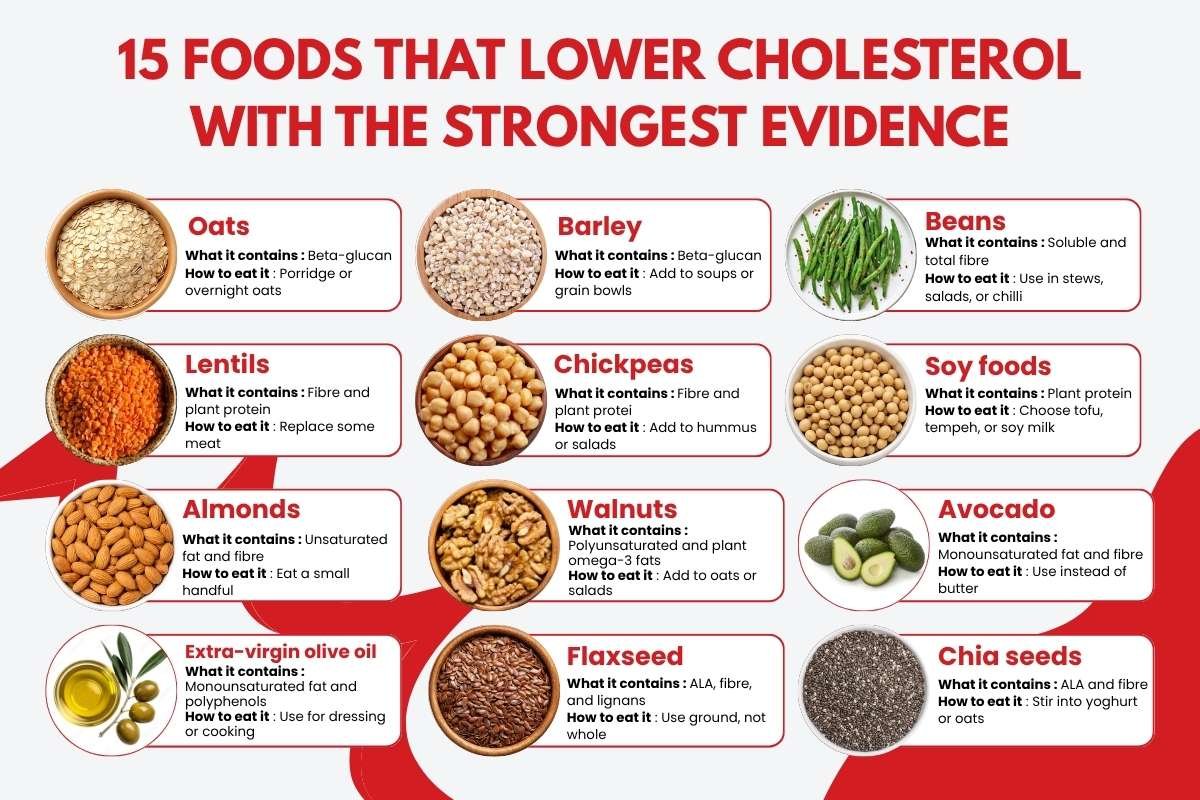
The strongest evidence supports foods that provide soluble fibre, beta-glucan, plant protein, unsaturated fats, omega-3 fats, or plant sterols. However, these foods that lower cholesterol do not all affect every lipid measure; most evidence relates to LDL-C, while fatty fish mainly lowers triglycerides.
| Food | What it contains | Main lipid relevance | How to eat it |
| Oats | Beta-glucan | LDL-C | Porridge or overnight oats |
| Barley | Beta-glucan | LDL-C | Add to soups or grain bowls |
| Beans | Soluble and total fibre | LDL-C | Use in stews, salads, or chilli |
| Lentils | Fibre and plant protein | LDL-C and overall profile | Replace some meat |
| Chickpeas | Fibre and plant protein | LDL-C and overall profile | Add to hummus or salads |
| Soy foods | Plant protein | LDL-C. Possibly triglycerides | Choose tofu, tempeh, or soy milk |
| Almonds | Unsaturated fat and fibre | LDL-C | Eat a small handful |
| Walnuts | Polyunsaturated and plant omega-3 fats | LDL-C and overall lipids | Add to oats or salads |
| Avocado | Monounsaturated fat and fibre | LDL-C and overall profile | Use instead of butter |
| Extra-virgin olive oil | Monounsaturated fat and polyphenols | LDL-C when replacing saturated fat | Use for dressing or cooking |
| Flaxseed | ALA, fibre, and lignans | LDL-C and lipids | Use ground, not whole |
| Chia seeds | ALA and fibre | Overall lipid profile | Stir into yoghurt or oats |
| Fatty fish | EPA and DHA | Triglycerides | Eat salmon, sardines, or trout |
| Plant-sterol-fortified foods | Plant sterols | LDL-C | Use fortified spreads or yoghurt |
| Fibre-rich fruits and berries | Soluble fibre and bioactive compounds | LDL-C and diet quality | Eat whole, not juiced |
How to Use the List
Oats, barley, beans, lentils, chickpeas, fruit, flaxseed, and chia provide soluble or viscous fibre, which can reduce cholesterol absorption. Include several sources daily and increase fibre gradually with enough water.
Nuts, avocado, olive oil, soy, and fatty fish are most useful when they replace foods high in saturated fat, rather than simply being added to the existing diet. Fatty fish supplies EPA and DHA, which primarily reduce triglycerides, not necessarily LDL-C.
A practical plate might combine barley, chickpeas, vegetables, olive-oil dressing, and salmon. This reflects the 2026 guideline’s emphasis on vegetables, fruits, whole grains, beans, nuts, seeds, unsaturated fats, and lean proteins within an overall dietary pattern.
How Do These Foods Affect LDL, HDL, and Triglycerides?
Different foods influence LDL-C, HDL-C, and triglycerides in different ways. The strongest dietary goal is usually reducing atherogenic cholesterol. Especially LDL-C and non-HDL-C, rather than trying to change one number in isolation.
| Food group | LDL-C | Triglycerides | HDL-C | Main mechanism |
| Oats and barley | ↓ | — | — | Beta-glucan |
| Beans and lentils | ↓ | Possible modest ↓ | — | Soluble fibre and plant protein |
| Nuts | ↓ | Possible ↓ | — or variable | Unsaturated fats and fibre |
| Plant sterols | ↓ | — | — | Reduced cholesterol absorption |
| Oily fish | Variable | ↓ | Variable | EPA and DHA |
| Olive oil | ↓ when replacing saturated fat | — or variable | — or variable | Fat substitution |
| Soy foods | Modest ↓ | Possible ↓ | — | Plant protein |
| Fruits and vegetables | Supportive | Supportive | — | Fibre and overall dietary pattern |
Picture two people with identical LDL numbers. One eating oatmeal every morning, the other snacking on walnuts. Both are “doing the right thing.” Yet their cholesterol may respond in completely different ways. That’s because the best foods that lower cholesterol aren’t limited to oatmeal: oats, beans, nuts, soy, and oily fish each earn their reputation through distinct, clinically studied mechanisms. Some work through soluble fiber that traps cholesterol in the gut. Others rely on plant sterols, or simply replace saturated fat with unsaturated fat. Omega-3-rich foods, meanwhile, often move the needle more on triglycerides than LDL. This guide ranks 15 foods by evidence and mechanism, not hype. Diet still can’t replace prescribed treatment when medication is warranted, as 2026 guidelines make clear.
What to Eat Instead of Cholesterol-Raising Foods?
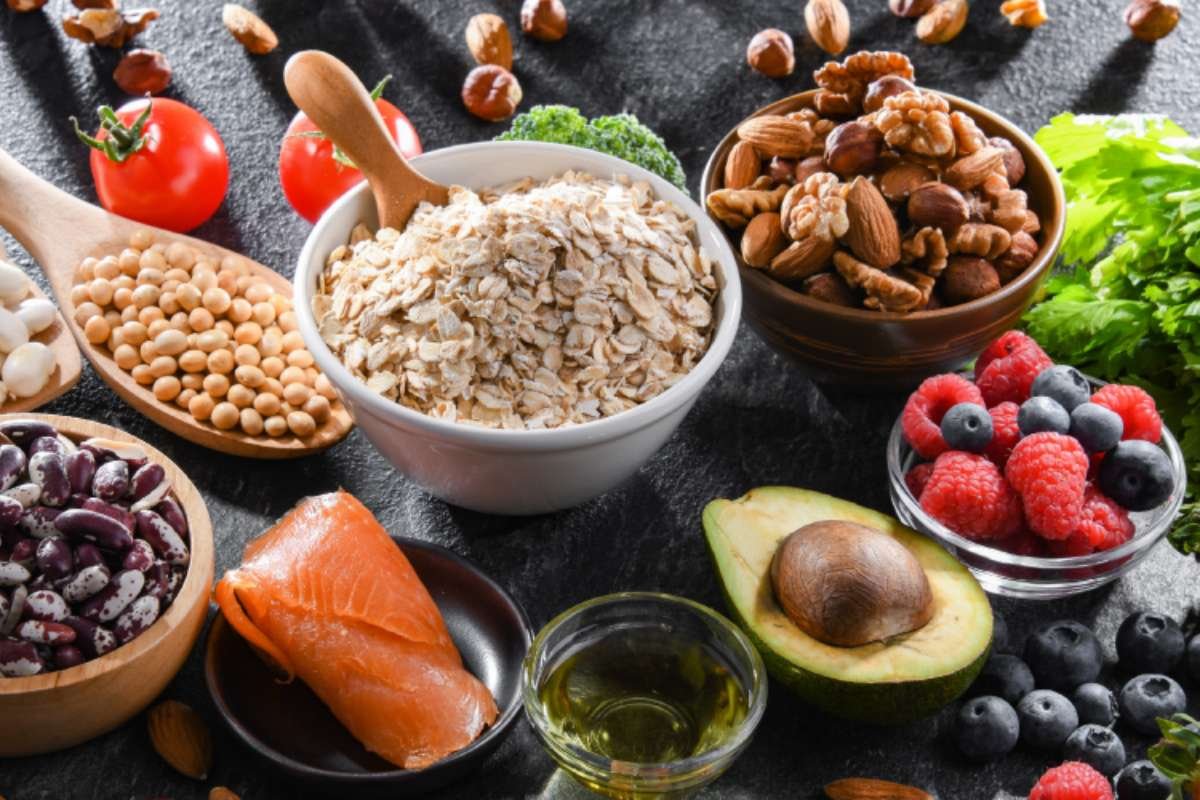
The most effective change is not simply adding foods that lower cholesterol to your meals. It is replacing foods high in saturated fat with foods containing unsaturated fat, fibre, or plant protein. This replacement can lower LDL-C more effectively than adding healthy foods while keeping the same high-saturated-fat diet.
| Instead of | Try |
| Butter | Olive, canola, soybean, or another unsaturated plant oil |
| Fatty or processed meat | Beans, lentils, soy foods, or fish |
| Refined grains | Whole grains such as oats or barley |
| Full-fat dairy | Lower-saturated-fat alternatives where appropriate |
| Fried foods | Baked, grilled, steamed, or roasted foods |
| Pastries and biscuits | Nuts, fruit, or minimally processed snacks |
| Coconut- or palm-heavy foods | Unsaturated plant oils |
Butter, fatty meat, full-fat dairy, and tropical oils can raise LDL-C. Because they are common sources of saturated fat. The American Heart Association recommends replacing them with liquid plant oils, beans, lentils, tofu, nuts, seeds, fish, and lower-fat dairy options.
How to Build a Cholesterol-Friendly Plate?
A simple plate method makes foods that lower cholesterol easier to eat regularly:
- ½ plate: Vegetables and fruit, with extra non-starchy vegetables.
- ¼ plate: Beans, lentils, tofu, tempeh, fish, or another lean protein.
- ¼ plate: Whole grains such as oats, barley, brown rice, or whole-wheat bread.
- Add: A moderate amount of unsaturated fat, such as olive oil, avocado, nuts, or seeds.
- Include daily: At least one soluble-fibre food, such as oats, barley, beans, lentils, apples, berries, or psyllium.
This structure follows the basic food-group approach used by USDA MyPlate while adding choices that can support healthier LDL-C levels. Soluble fibre is particularly useful because it can help reduce cholesterol absorption.
Simple Meal Examples
Breakfast: Oats with berries or another fruit, plus walnuts, almonds, chia seeds, or ground flaxseed. This combines soluble fibre, healthy fats, and foods commonly included in a gut-friendly eating pattern.
Lunch: Brown rice or barley with dal or lentils, plenty of vegetables, and an olive-oil-and-lemon dressing. This can also fit a balanced, healthy diet plan for weight loss when portions match your energy needs.
Dinner: Beans, tofu, or fish with roasted vegetables and a serving of whole grain.
Snack: Fruit with a small handful of unsalted nuts.
If you are wondering how to start eating healthy, begin by changing one meal rather than redesigning your entire diet. Add more high-fibre foods gradually, drink enough water, and choose whole or minimally processed foods most of the time. Portion size still matters: olive oil, nuts, avocado, and whole grains are nutritious but calorie-dense.
When Food Changes May Not Be Enough?

Diet can improve lipid levels substantially, especially when it replaces saturated fat, adds soluble fibre, and reduces refined carbohydrates. However, the response varies. Some people may still need medication based on their LDL-C level. Overall cardiovascular risk, age, diabetes, blood pressure, smoking history, family history, or previous heart disease.
Very high LDL-C deserves medical evaluation, particularly when close relatives had early heart disease or similarly high cholesterol. This may indicate familial hypercholesterolemia, an inherited condition in which people are born with very high LDL-C levels. Diagnosis considers blood tests, physical findings, and personal and family history.
The 2026 ACC/AHA guideline supports risk-based management. Lifestyle improvement is recommended for everyone, but medication may be appropriate when estimated cardiovascular risk or LDL-C levels are high enough. For example, lipid-lowering therapy is recommended for many adults with a 10-year cardiovascular risk of at least 5% and may be considered at lower risk in selected situations.
Do not stop, reduce, or change a prescribed statin or other cholesterol medication because your numbers improve after dietary changes. The improvement may partly reflect the treatment, and stopping it can allow LDL-C to rise again.
After making dietary or lifestyle changes, repeat lipid testing should be discussed with a healthcare professional. Results are best interpreted alongside your complete lipid profile, blood pressure, medical history, family history, and overall cardiovascular risk, not as a single number in isolation.
Conclusion:
Cholesterol isn’t lowered by a single miracle food. It responds to patterns repeated meal after meal. The most effective foods that lower cholesterol work through distinct pathways: soluble fiber from oats and beans, plant sterols from fortified foods, unsaturated fats replacing saturated ones, and omega-3s easing triglycerides. Stacking several of these into your weekly routine matters more than perfecting any single choice.
Diet is a powerful lever, but it isn’t the only one. If your LDL-C remains high, or you have additional risk factors like family history or diabetes. Talk to your doctor about whether testing or medication should complement your dietary changes.
Start small: swap one saturated fat for an unsaturated one today, and build from there.
FAQ:
1. What are the best foods that lower cholesterol?
Oats, barley, beans, lentils, nuts, seeds, soy foods, fruits, vegetables, and foods rich in unsaturated fats can support healthier cholesterol levels.
2. Which foods lower LDL cholesterol most effectively?
Foods rich in soluble fiber, such as oats, barley, beans, and lentils, can help reduce LDL cholesterol. Nuts, soy protein, and plant sterols may also provide modest benefits.
3. Are there foods that increase HDL cholesterol?
Some dietary patterns and foods may modestly influence HDL, but raising HDL alone isn’t the primary goal of cholesterol management. Reducing LDL and other atherogenic lipoproteins is generally more important.
4. Can one food lower cholesterol on its own?
No single food is a substitute for an overall heart-healthy eating pattern. Combining soluble-fiber foods, plant proteins, nuts, seeds, and unsaturated fats can be more meaningful than relying on one “superfood.”
5. Are eggs bad for cholesterol?
Not necessarily. The effect of dietary cholesterol varies among individuals and depends on overall dietary pattern, particularly saturated fat intake. They also matter when managing blood cholesterol.