
News 1: General-Purpose AI Outperforms Specialized Clinical Tools
The growing use of artificial intelligence in healthcare is raising a new question: are specialized medical AI tools actually better than general-purpose models?
A new study published in Nature Medicine suggests they may not be. Researchers compared OpenEvidence and UpToDate Expert AI with GPT-5.2, Gemini 3.1 Pro, and Claude Opus 4.6 across medical knowledge, clinical reasoning, and real-world physician queries.
Gemini scored highest on the medical knowledge test at 97.4%, followed by GPT at 94.2% and Claude at 90.2%. OpenEvidence and UpToDate scored 89.6% and 88.4%, respectively. The general-purpose models also performed better when 12 US clinicians evaluated responses to real clinical questions.
The findings could influence how hospitals and healthcare organizations assess AI tools for clinical support. However, the researchers stress that strong test results do not automatically make an AI system suitable for medical use. Safety, reliability, transparency, and performance in real clinical settings will remain critical.
As AI adoption accelerates across healthcare, the study adds to a growing debate over whether specialized systems or increasingly capable general-purpose models will play the bigger role in the future of clinical decision support.
News 2: Philips and Cent Join Forces to Advance Preventive Diagnostics in India

Philips and Cent have announced a strategic collaboration aimed at strengthening preventive diagnostics and early risk detection in India.
Under the partnership, Philips will deploy its helium-free, wide-bore 70 cm 1.5T MRI systems with AI-enabled SmartSpeed image acceleration at Cent’s preventive health screening centres. The initiative will assess how advanced imaging can support earlier identification of health risks, particularly among people who may not yet show symptoms.
The collaboration will focus on neurological, spine, and oncology-related indications while also evaluating MRI protocols, clinical workflows, and risk-assessment pathways for preventive screening. The companies will study how imaging technology can improve screening experiences and make MRI workflows more efficient.
The partnership reflects a broader shift in healthcare toward prevention and earlier intervention rather than waiting for diseases to become symptomatic. For India, where many serious conditions are often identified only after symptoms appear, improving access to early risk assessment could have a significant impact.
Bharath Sesha, Managing Director, Philips Indian Subcontinent, said advanced imaging and AI-enabled solutions can support earlier risk identification, stronger diagnostic confidence, and better patient experiences.
Cent Co-Founder Anshul Khandelwal said the company is focused on developing AI-led research, imaging protocols, and clinical workflows designed specifically for preventive screening of asymptomatic individuals.
The collaboration marks another step toward using AI and advanced imaging to make healthcare more proactive, with early detection and timely intervention becoming increasingly important priorities.
News 3: Medtronic Invests $700 Million to Expand Robotic Surgery Access
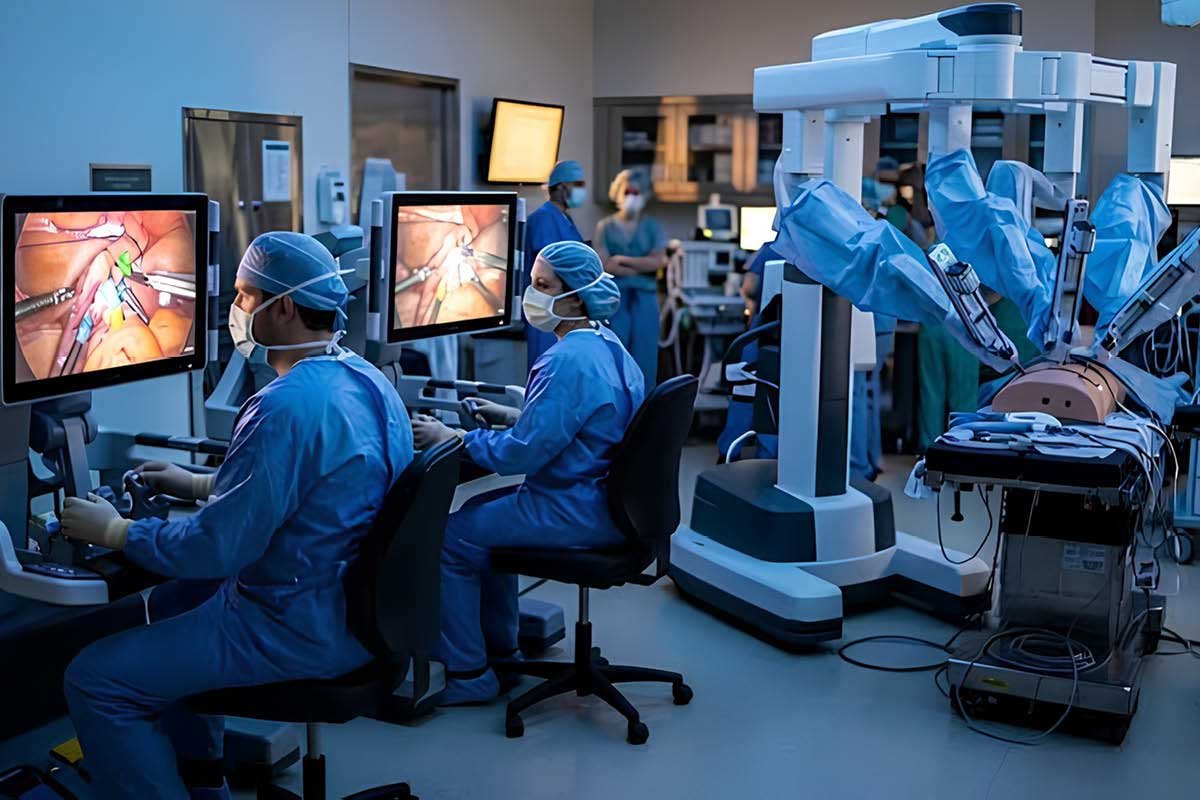
Medtronic is strengthening its robotic-assisted surgery portfolio through a strategic partnership with Cornerstone Robotics, backed by an investment of approximately $700 million.
Under the partnership, Medtronic will gain rights to distribute Cornerstone Robotics’ Sentire surgical system in select markets outside the U.S. Sentire will complement Medtronic’s Hugo robotic-assisted surgery platform, giving hospitals and surgeons greater choice for minimally invasive procedures.
Sentire has completed multi-specialty clinical trials and received CE Mark approval in May 2026 for general, gynecologic, thoracic, and urologic procedures. It is also approved for use in China and Singapore.
The deal comes as robotic-assisted surgery continues to expand globally, although adoption remains in the single digits. Medtronic sees an opportunity to widen access to advanced surgical technologies across different healthcare markets.
Meanwhile, Hugo is now being used in more than 35 countries across six continents, with Medtronic expecting more than 50,000 procedures globally by the end of its fiscal year.
The partnership adds another platform to Medtronic’s growing robotics portfolio and supports its broader investment in digital surgery, artificial intelligence, and connected surgical technologies. For Cornerstone Robotics, the agreement provides a major opportunity to expand the reach of Sentire through Medtronic’s global presence.