Learn what heart health anxiety is, why it feels so real, and how to tell anxiety from true heart warning signs. This guide explains why normal heart sensations can trigger persistent fear, when symptoms require emergency care, and how repeated checking can keep anxiety going. You’ll also discover practical strategies to break the fear cycle, regain confidence, and protect both your mental and heart health.
You are not alone. If you’ve ever felt a missed beat, checked your pulse multiple times, or worried that every chest feeling means something serious, you might have heart health anxiety. This condition can magnify benign physical sensations, such as palpitations, brief chest twinges or tightness, into a threatening feeling, even if your heart has been checked out and is healthy according to medical tests.
Understanding how and why this happens helps you distinguish normal bodily noise from signs that need medical attention, reduces persistent fear, and helps you respond calmly and effectively when you do have real symptoms.
Table of Contents
What is heart health anxiety? Why does it feel so convincing?
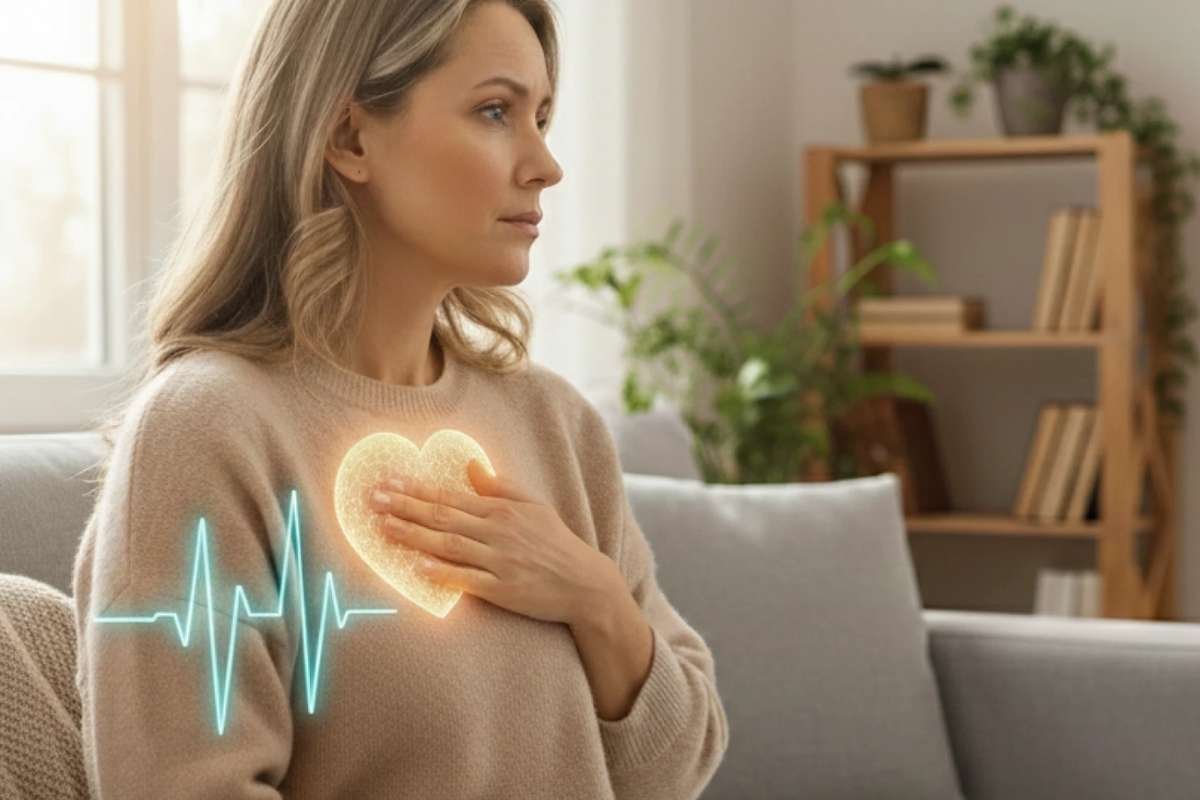
Heart Health Anxiety is a persistent fear that normal or minor body sensations mean something is wrong with your heart. It’s different from normal concern because the worry keeps coming back, even after tests are reassuring, and it can lead to repeated checking, reassurance-seeking, or avoiding activity. It often develops after chest pain, a panic attack, a family history of heart disease, or repeated exposure to alarming social media posts, news stories, and wearable device alerts that draw attention to every heartbeat. A common pattern is the fear-monitor-fear loop: you notice a sensation, monitor it more closely, notice it more, and the fear grows.
Why It Feels So Real
Anxiety can trigger the fight-or-flight response, which releases adrenaline and raises heart rate, breathing, and muscle tension. That can cause hyperawareness of the heartbeat, chest tightness, shortness of breath, sweating, and palpitations. Symptoms that feel very physical because they are physical. The overlap is why anxiety and heart problems are sometimes hard to tell apart, but overlap does not mean anxiety is always the cause. If symptoms are new, severe, or happen with exertion, medical evaluation is important.
| Anxiety can cause | Heart disease can cause |
| Fast heartbeat | Fast or irregular heartbeat |
| Chest tightness | Chest pressure or pain |
| Sweating | Sweating |
| Breathlessness | Breathlessness |
These symptoms can look similar because both anxiety and heart conditions affect the body’s stress and cardiovascular systems.
Anxiety vs. Heart problems: how to tell the difference?
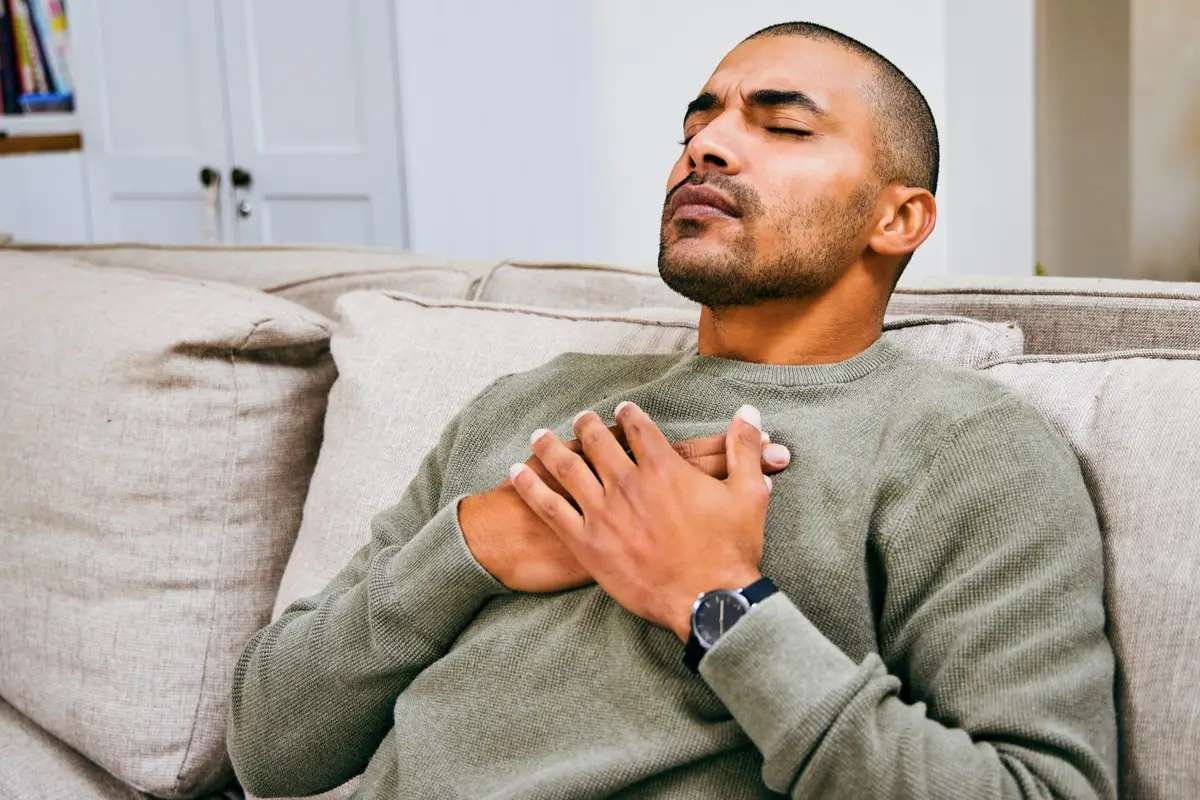
With Heart Health Anxiety, it’s easy to mistake panic symptoms for a heart problem. A useful rule: anxiety symptoms often rise quickly and ease as the panic settles. While heart-related symptoms are more likely to persist or worsen.
1. Get emergency help now.
Seek urgent care or call emergency services if you have crushing chest pain, pain spreading to the jaw, arm, back, or neck, fainting, severe breathlessness, or symptoms that last more than a few minutes. New or sudden chest pain should never be ignored, especially if it feels heavy, tight, or pressure-like. Mayo Clinic also notes that loss of consciousness, difficulty breathing, and chest pain lasting more than a few minutes need emergency evaluation.
2. More typical of anxiety
Symptoms that commonly fit anxiety include tingling, racing thoughts, trembling, dizziness, and palpitations that improve as the panic episode fades. People with Heart Health Anxiety also tend to have recurring episodes, especially after normal tests or reassuring evaluations. Anxiety can make the heart race and breathing feel difficult, which is why the experience feels so convincing even when the heart is not the cause.
| Anxiety may cause | A heart problem may cause |
| Fast heartbeat | Fast or irregular heartbeat |
| Chest tightness | Chest pressure or pain |
| Sweating | Sweating |
| Breathlessness | Breathlessness |
Important note
Because symptoms overlap, uncertainty should always be checked by a healthcare professional. If symptoms are severe, new, or unclear, it is safest to get medical help right away.
The cycle that keeps heart health anxiety going:
Heart Health Anxiety often stays strong because the very habits that bring short-term relief also train the brain to stay alert for danger. Checking your pulse every few minutes, taking repeated blood pressure readings, asking for more ECGs, Googling symptoms, and obsessing over smartwatch data can make you feel safer for a moment. But they also teach your mind that the body is unsafe and must be monitored constantly. The same is true for repeated reassurance from doctors, family, or friends: it calms the fear briefly, then the doubt comes back.
Avoiding exercise can also keep the cycle going. When you skip movement because you fear raising your heart rate, your body gets less used to normal exertion, so normal sensations can feel even more alarming later. That makes it easier to misread everyday changes as warning signs.
This is the problem: the habit reduces anxiety now, but reinforces it over time. Each check or reassurance becomes proof that you needed to check, so the brain learns to stay on guard. That is why the fear-monitor-fear loop keeps repeating.
Breaking the cycle usually means checking less, not more, and gradually trusting normal body sensations again. If symptoms are severe, new, or uncertain, they should still be evaluated by a healthcare professional.
When you should seek medical care?

With heart health anxiety, the goal is not to stop every worry. It is important to know when symptoms need real medical attention. If you have crushing chest pain, pain that spreads to the jaw or arm, fainting, severe breathlessness, or symptoms that do not go away, seek emergency care right away. It is safest to treat new, severe, or persistent symptoms as urgent until a healthcare professional says otherwise.
Some habits can keep heart health anxiety going even when they briefly lower fear. Checking your pulse every few minutes, constantly monitoring blood pressure, repeatedly asking for ECGs, Googling symptoms, watching your smartwatch every hour, and seeking reassurance can feel comforting in the moment. But over time, these habits teach your brain that the body is dangerous and must be checked again and again, which keeps the fear cycle alive.
Avoiding exercise works the same way. It may lower anxiety for a short time, but it also prevents you from learning that a faster heartbeat or heavier breathing can be normal during activity. That makes ordinary body sensations feel more alarming later, so the fear returns more easily.
A better approach is to notice symptoms once, avoid repeated checking, and follow a doctor’s advice about when testing is actually needed. If symptoms are uncertain, new, or severe, they should be evaluated by a healthcare professional.
Practical ways to break the cycle:
With heart health anxiety, the goal is to stay medically sensible without feeding the fear loop. After a proper evaluation, follow your clinician’s advice and use symptom checks on a schedule, not all day long. Limit online symptom searches because repeated searching usually increases uncertainty instead of reducing it.
If you were cleared to be active, return to exercise gradually. Avoiding movement can make normal increases in heart rate feel more alarming later, so gentle, steady activity helps retrain your confidence. Grounding and breathing exercises can also help in the moment by lowering the body’s stress response. If anxiety keeps returning, CBT is a strong next step because it helps you change the thought-checking-reassurance cycle that keeps fear going.
What to do when anxiety spikes
- Pause and notice the feeling without checking your pulse again.
- Take slow breaths and extend the exhale.
- Use a grounding exercise: name 5 things you see, 4 you feel, 3 you hear.
- Check whether this is a new, severe, or worsening symptom.
- If it is not severe and you were medically cleared, wait before seeking reassurance.
- Follow your plan for exercise, medications, and follow-up.
- Seek urgent care if symptoms are severe, persistent, or different from your usual anxiety pattern.
A simple rule helps: reassurance should come from a clear medical plan, not from repeated checking. If symptoms change or you feel unsafe, a healthcare professional should evaluate them.
Building long-term confidence in the heart:
Building confidence after heart health anxiety is about giving your body steady support, not demanding perfect certainty. Focus on the basics: a heart-healthy diet, regular sleep, safe exercise, stress management, and follow-up care with your clinician. The American Heart Association and other medical sources emphasize that healthy habits work best when they are consistent and realistic, not extreme.
Sleep matters because poor or irregular sleep can raise cardiovascular risk and make stress feel harder to manage. Exercise helps the heart, lowers stress, and improves sleep, but it should be resumed gradually if you have been cleared to do so. Nutrition also supports confidence over time by keeping blood pressure, weight, and energy more stable, which makes body sensations less likely to feel alarming.
Mental health support is just as important. If worry stays high, CBT or other counseling can help you respond to sensations without immediately interpreting them as danger. Real recovery also includes realistic expectations: progress is usually gradual, and occasional worry does not mean you are going backward.
Follow-up care matters because it gives your anxiety a medical framework. Instead of constant checking, you have a plan for what is normal, what needs attention, and when to call for help.
Recovery isn’t learning that you’ll never notice your heartbeat again. It’s learning that noticing it doesn’t automatically mean danger.
Conclusion:
Heart health anxiety can make every skipped beat or chest sensation feel urgent, but fear isn’t danger. The goal is not to stop every heartbeat sensation, but to learn when a symptom is part of anxiety and when it really does need medical attention. With time, gentle routines, slow activity, healthy habits, and proper follow-up, you can learn to trust your body again. Always see a healthcare professional if symptoms are new, severe, or unclear. Recovery doesn’t mean you will never hear your heartbeat again. It is about understanding that noting something does not mean something is wrong.
FAQ:
How do I stop worrying about my heart health?
Practice relaxation: Try deep breathing, mindfulness techniques, or muscle relaxation. These can help you calm anxiety and reduce any physical symptoms.
What are the symptoms of cardiac anxiety?
Cardiac anxiety, whether a standalone panic episode or cardio phobia. Manifests as intense physical heart sensations accompanied by deep fear. Common symptoms include a rapid or pounding heart rate, chest tightness or sharp pain, shortness of breath, lightheadedness, and sweating, often peaking within minutes and mimicking a heart attack.
How to calm a nervous heart?
Simple breathing exercises can help with anxiety. Taking slow, deeper breaths can calm the body’s stress response.
How to handle extreme health anxiety?
Handle extreme health anxiety by stopping safety-seeking behaviors like “Googling” symptoms, repeatedly checking your body, and demanding medical reassurance.
What lifestyle triggers heart failure?
Heart failure is primarily triggered or worsened by long-term lifestyle habits like smoking, a sedentary routine, and poor diets high in sodium, trans fats, and sugar.
Links and Sources:
- https://www.heart.org/en/health-topics/cardiac-rehab/getting-physically-active/whats-the-link-between-physical-activity-and-health
- https://odphp.health.gov/myhealthfinder/health-conditions/heart-health/keep-your-heart-healthy
- https://my.clevelandclinic.org/health/diseases/21677-heart-palpitations-and-anxiety
- https://www.uhs.nhs.uk/Media/UHS-website-2019/Patientinformation/Cardiovascular-and-thoracic/Coping-with-anxiety-when-you-have-a-heart-condition-4011-PIL.pdf
- https://www.jeffersonhealth.org/your-health/living-well/how-to-tell-the-difference-between-panic-and-heart-attacks
- https://www.hopkinsmedicine.org/health/conditions-and-diseases/anxiety-and-heart-disease