Key Takeaway:
- Dopamine deficiency in the entorhinal cortex directly contributes to memory loss in Alzheimer’s disease.
- Restoring dopamine levels in animal models successfully improved memory formation and brain activity.
- Existing drugs like Levodopa may offer a new therapeutic path for treating cognitive decline.
University of California, Irvine researchers report that dopamine deficiency in a key brain memory region drives memory impairment in Alzheimer’s disease, raising the possibility that existing drugs such as Levodopa could help restore cognitive function.
Scientists Identify Dopamine Deficiency’s Role in Memory Loss
Researchers at the University of California, Irvine, have identified dopamine dysfunction as a direct cause of memory impairment in Alzheimer’s disease, according to a study published Thursday in Nature Neuroscience.
The research shows that reduced dopamine activity in the entorhinal cortex — a brain region essential for forming memories — disrupts the brain’s ability to connect experiences and store new information. Scientists say the findings reveal a previously unknown biological driver of cognitive decline.
Led by neuroscientist Kei Igarashi, the team investigated how neural circuits responsible for memory formation fail during Alzheimer’s progression.
“We did not initially expect dopamine to be affected in Alzheimer’s disease,” Igarashi said. “However, as the evidence accumulated, it became clear that dopamine dysfunction plays a central role in memory impairment.”
Alzheimer’s disease affects tens of millions of people worldwide and remains one of the leading causes of dementia, with limited treatments capable of restoring lost memory.
Experiments Show Memory Restoration in Animal Models
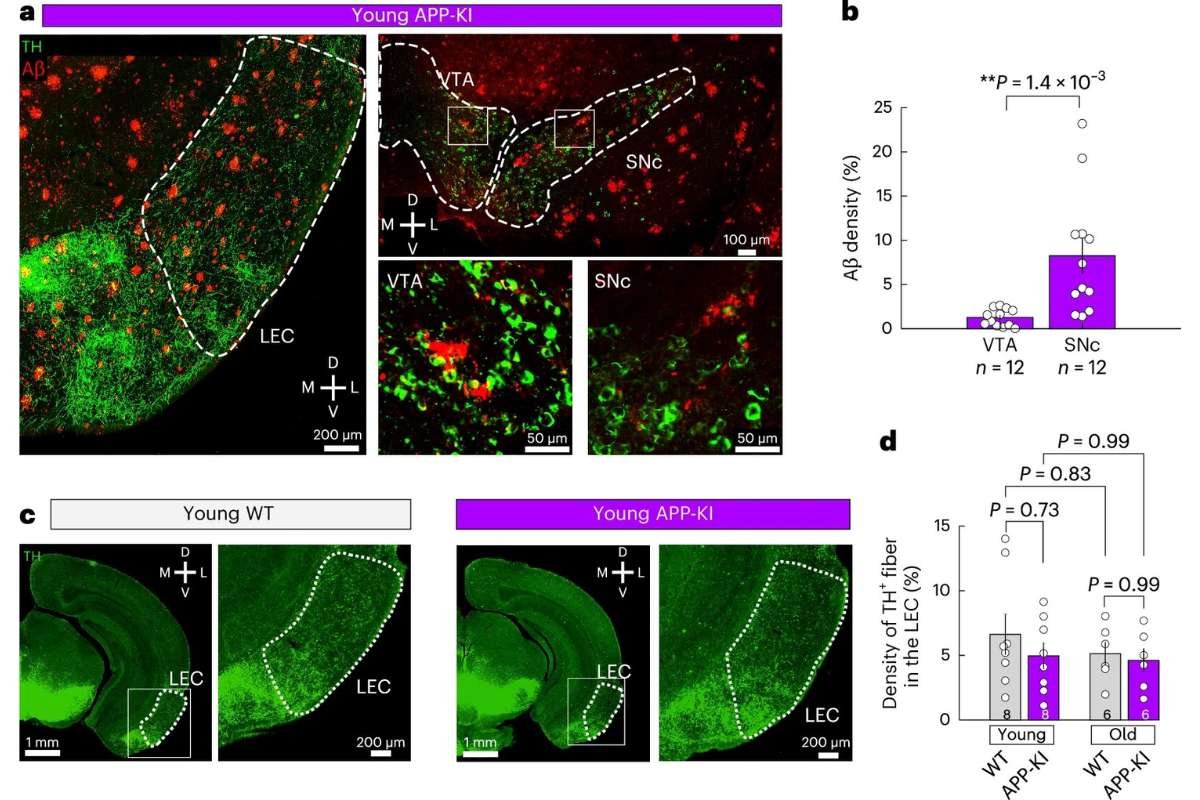
Using a mouse model of Alzheimer’s disease, researchers measured dopamine levels in the entorhinal cortex and found they dropped to less than one-fifth of normal levels. Neurons in the region failed to respond to learning-related signals, preventing new memories from forming.
Scientists then used optogenetic stimulation — a technique that activates brain cells with light — to increase dopamine activity. The intervention restored the animals’ ability to learn and retain memories.
In a separate experiment, researchers administered Levodopa, a medication commonly prescribed for Parkinson’s disease. The treatment normalized neural responses and significantly improved memory performance in the mice.
The results suggest dopamine signaling plays a more direct role in memory formation than previously understood, researchers said.
Findings Could Shift Alzheimer’s Treatment Strategies
Most Alzheimer’s research has focused on removing toxic proteins such as amyloid-beta and tau from the brain. While those approaches target disease pathology, they often fail to reverse memory loss once brain circuits are damaged.
The new findings indicate that restoring neurotransmitter balance may help repair memory-related neural networks even after symptoms appear.
Researchers say targeting associative memory — the brain’s ability to link experiences such as sounds, smells, and events — could become a new therapeutic direction.
“This discovery provides an important new piece in understanding how memory circuits break down,” Igarashi said, adding that dopamine-based treatments could potentially slow cognitive decline if applied early.
The study’s authors caution that human clinical trials are needed before dopamine deficiency -targeted therapies can be recommended for Alzheimer’s patients. Still, because drugs like Levodopa are already widely used and approved for other neurological conditions, researchers say translation to clinical testing may be faster than with entirely new medications.
Scientists hope the work will guide future therapies aimed not only at preventing damage but also at restoring lost memory function.