Ever wonder why everyone is talking about Low Calorie High Protein Foods lately? The reason for this is that people all over the world want to feel strong and fit without constantly being hungry. These special foods are the “secret sauce” for anyone who wants to look great and have plenty of energy for their busy day.
When you eat this way, your body burns fat while maintaining the health of your muscles. Additionally, it prevents you from reaching for unhealthy snacks by keeping you feeling full. Whether you want to lose weight or just feel better, picking the right fuel is the best way to support your body’s natural power.
What Are Low Calorie High Protein Foods?
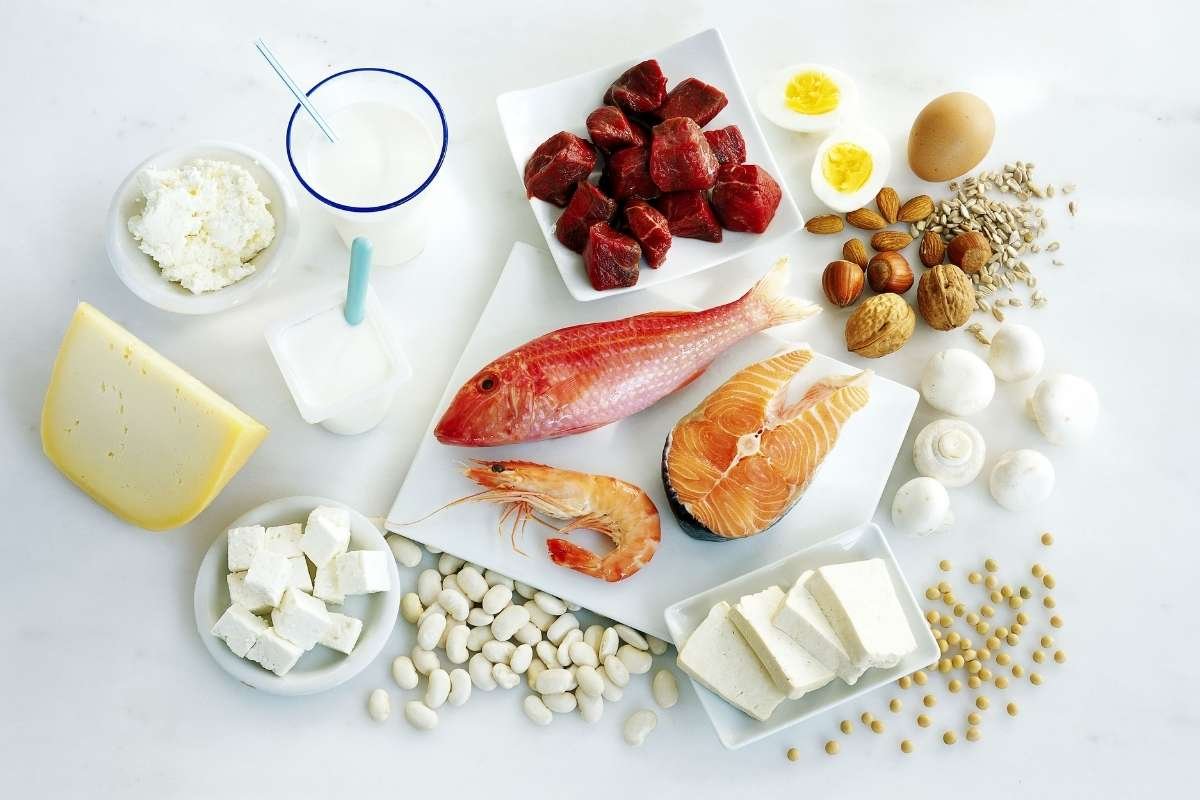
Low Calorie High Protein Foods are items that give you lots of protein without many calories. Think of them as high-quality fuel that doesn’t “overflow” your energy tank. While fats and carbs are important, protein is unique because it helps build your muscles and keeps you feeling full much longer. It also takes more energy for your body to digest protein, which gives your metabolism a nice little boost.
Not all “healthy” foods are created equal. Some options might be high in protein but come with a heavy dose of fat, which drives up the energy count. By focusing on nutrient-dense staples like egg whites or white fish, you get the muscle-building benefits without the “energy overflow” that leads to weight gain.
Most adults benefit from 1.2–2.0 grams of protein per kilogram of body weight each day (NIH, 2023).
These are the Benefits of Low Calories High Protein Foods:
“Protein is a key building block, but it works best when part of a balanced team. While high-protein choices help with fullness and muscle repair. They should be paired with colorful plants. This ensures your body gets the fiber and vitamins it needs to function at its best.”
By Nancy Clark, MS, RD, CSSD. She is a world-renowned sports dietitian and author of the Sports Nutrition Guidebook.
Choosing Low Calorie High Protein Foods does more than just fill your plate. It changes how your body works. Here is why this combination is so powerful for your health:
1. Supports Weight Management and Satiety:
Protein is the “king” of fullness. When you eat protein, your body sends strong signals to your brain that you are full, which helps you stop snacking on junk food. There is also a cool process called the Thermic Effect of Food (TEF). Your body actually has to work harder and burn more energy just to digest protein compared to fats or carbs (Harvard Health, 2022).
2. Helps Preserve Lean Muscle:
When people try to lose weight by eating less, the body sometimes tries to burn muscle for energy. This is bad because muscle helps you stay strong and keeps your metabolism fast. By eating plenty of protein while keeping calories low, you tell your body to “save the muscle and burn the fat” (Academy of Nutrition & Dietetics, 2021). This keeps you looking toned and feeling powerful.
3. Improves Metabolic Health:
Eating protein helps keep your blood sugar steady. Instead of the “sugar crashes” you get from treats, protein provides a slow and steady stream of energy. This is great for your heart and helps prevent you from feeling tired or grumpy in the afternoon. It’s an easy way to keep your internal engine running smoothly.
4. Enhances Nutrition Quality
Many foods that are high in protein are also “superfoods” packed with vitamins. For example, lean fish have Omega-3s for your brain, and lean meats have Iron for your blood and B Vitamins for energy. You get all these amazing nutrients to help you grow and stay healthy without the “empty calories” found in soda or chips.
Here are the Top 25 Low Calorie High Protein Foods You Must Try:
To help you reach your goals, here are 25 of the best foods for getting the most protein with the fewest calories. We have broken them down by category so you can find exactly what you need for your next meal.
Low Calorie High Protein Foods (Per 100g)
| Name | Category | Calories (kcal) | Protein (g) |
| Chicken Breast (Skinless) | Lean Poultry | 165 | 31 |
| Turkey Breast | Lean Poultry | 135 | 30 |
| Venison (Deer Meat) | Game Meat | 158 | 30 |
| Elk Meat | Game Meat | 146 | 30 |
| Bison (Buffalo) | Lean Red Meat | 143 | 28 |
| Lean Ground Beef (95% Lean) | Lean Red Meat | 137 | 26 |
| Cod (White Fish) | Lean Fish | 82 | 18 |
| Shrimp / Prawns | Shellfish | 99 | 24 |
| Tuna (Canned in Water) | Fish | 116 | 26 |
| Tilapia | Lean Fish | 96 | 20 |
| Salmon (Wild Caught) | Fatty Fish | 142 | 20 |
| Scallops | Shellfish | 88 | 17 |
| Egg Whites | Egg Product | 52 | 11 |
| Greek Yogurt (Non-fat) | Dairy | 59 | 10 |
| Cottage Cheese (Low-fat) | Dairy | 98 | 11 |
| Skimmed Milk | Dairy | 34 | 3.4 |
| Seitan (“Wheat Meat”) | Plant Protein | 120 | 25 |
| Tempeh (Fermented Soy) | Fermented Plant Protein | 193 | 20 |
| Tofu (Extra Firm) | Soy Protein | 76 | 8 |
| Edamame (Soybeans) | Legumes | 121 | 11 |
| Soy Chunks / Soya Mince (Dry) | Processed Soy Protein | 345 | 52 |
| Lentils (Cooked) | Legumes | 116 | 9 |
| Black Beans (Cooked) | Legumes | 132 | 8.9 |
| Lupini Beans | Legumes | 119 | 16 |
| Quinoa (Cooked) | Whole Grain | 120 | 4.4 |
Lean Meats & Poultry:
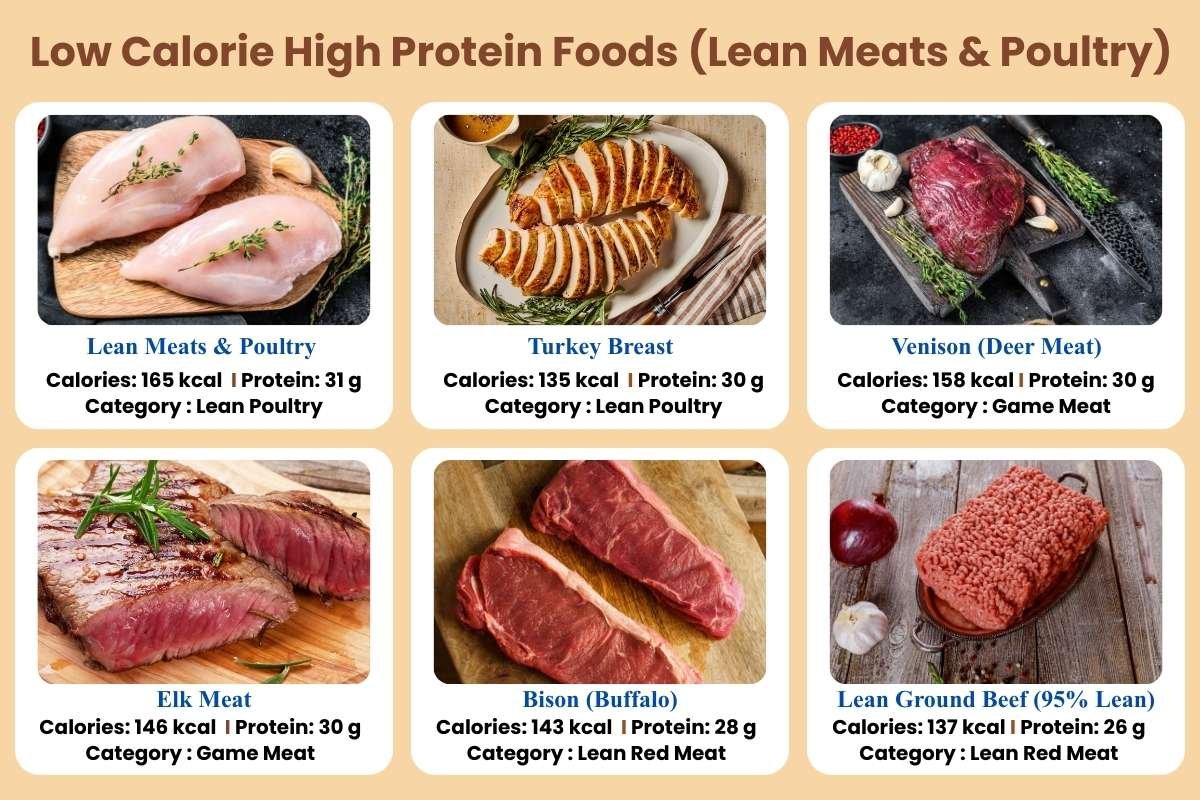
1. Chicken Breast (Skinless)
- Calories: 165 kcal
- Protein: 31 g
- Category: Lean Poultry
- Best For: Fat loss, muscle building, meal prep
This is the ultimate classic for fitness fans. It is very low in fat and packed with pure muscle-building power. Because it has a neutral taste, it works in almost any recipe. It is one of the most popular low calorie high protein foods because it is easy to find and very simple to cook.
2. Turkey Breast
- Calories: 135 kcal
- Protein: 30 g
- Category: Lean Poultry
- Best For: High-protein diets, heart-healthy eating
Much like chicken, turkey is a very lean white meat. It is naturally low in calories but provides a lot of energy. It is great for sandwiches or roasted dinners when you want a hearty meal that won’t make you feel heavy.
3. Venison (Deer Meat)
- Calories: 158 kcal
- Protein: 30 g
- Category: Game Meat
- Best For: Iron intake, lean muscle support
This “game” meat is much leaner than traditional beef. Since deer live in the wild and eat natural greens, their meat is high in nutrients and very low in fat. It has a rich, earthy flavor that is perfect for steaks or stews.
4. Elk Meat
- Calories: 146 kcal
- Protein: 30 g
- Category: Game Meat
- Best For: Low-fat, high-protein nutrition
Elk is another fantastic wild meat that is surprisingly tender. It has almost no “fatty” marbling, which keeps the calorie count down. It is a great choice for people who want the taste of red meat without the extra saturated fat.
5. Bison (Buffalo)
- Calories: 143 kcal
- Protein: 28 g
- Category: Lean Red Meat
- Best For: Muscle recovery, lower saturated fat diets
Bison tastes very similar to beef but is much leaner. It is also a great source of iron, which helps your blood carry oxygen to your muscles. Using bison for burgers is a smart way to enjoy a “treat” meal while staying healthy.
6. Lean Ground Beef (95% Lean)
- Calories: 137 kcal
- Protein: 26 g
- Category: Lean Red Meat
- Best For: Strength training, iron, and B12 intake
If you love beef, choosing the 95% lean version is the way to go. It gives you the zinc and B-vitamins your body needs while cutting out the extra grease. It is perfect for making healthy tacos or chili.
Seafood & Fish:
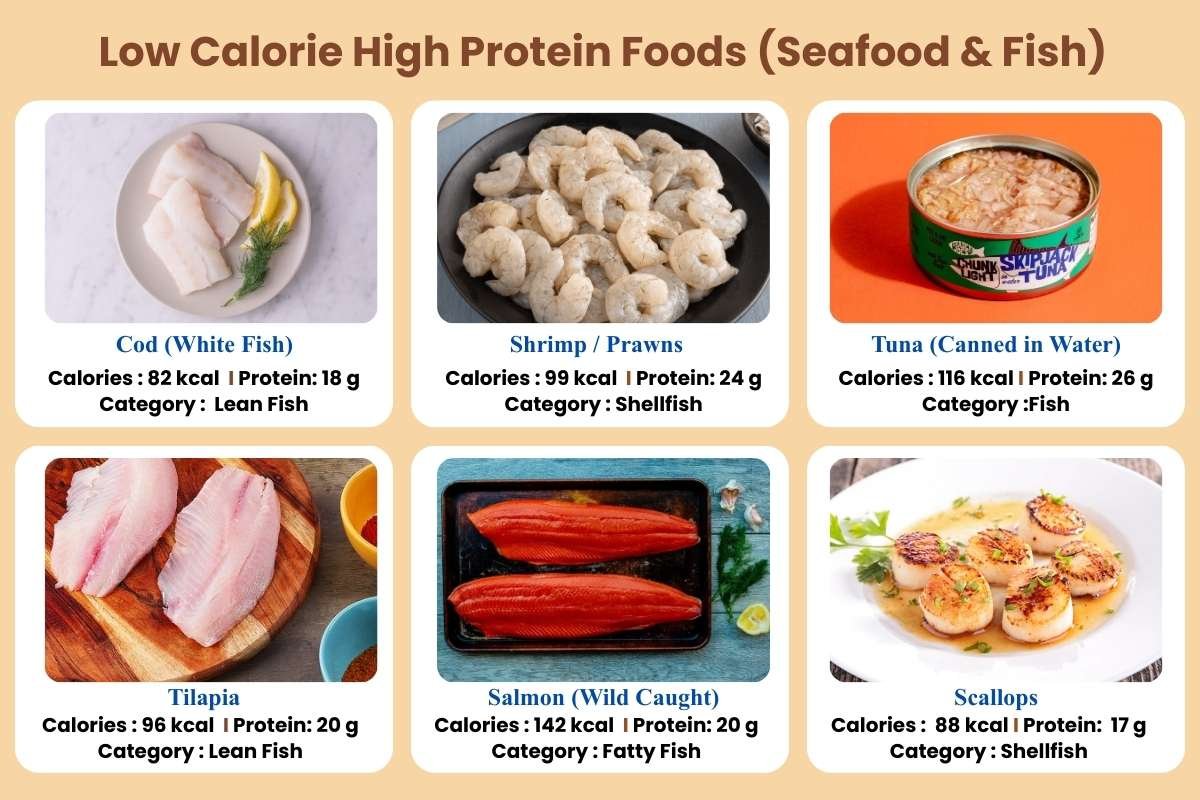
7. Cod (White Fish)
- Calories: 82 kcal
- Protein: 18 g
- Category: Lean Fish
- Best For: Weight loss, light meals
This flaky fish is incredibly light. It has almost no fat, making it one of the best low calorie high protein foods from the ocean. Since it is so mild, you can season it with lemon and herbs for a delicious, quick dinner that helps with weight loss.
8. Shrimp / Prawns
- Calories: 99 kcal
- Protein: 24 g
- Category: Shellfish
- Best For: Low-calorie protein boosts
Shrimp are like “protein popcorn” because they are so small and easy to eat. They cook in just a few minutes and are almost pure protein. They are perfect for adding to pasta dishes or spicy stir-fries.
9. Tuna (Canned in Water)
- Calories: 116 kcal
- Protein: 26 g
- Category: Fish
- Best For: Quick protein, meal prep
Canned tuna is a pantry superstar. It is very affordable and stays fresh for a long time. It provides a huge amount of protein for very few calories, making it a perfect lunch for busy people on the go.
10. Tilapia
- Calories: 96 kcal
- Protein: 20 g
- Category: Lean Fish
- Best For: Budget-friendly high protein meals
This is a budget-friendly white fish that is very easy to find. It has a very soft texture and a mild taste, which makes it a great “entry-level” fish for people who don’t like a strong “fishy” flavor.
Read More:
- Why These Are the Most Weight Loss Friendly Foods You’re Not Eating Yet
- Nourishing and Flavorful: Exploring 15 Creative Low-Calorie Lunch Ideas
11. Salmon (Wild Caught)
- Calories: 142 kcal
- Protein: 20 g
- Category: Fatty Fish
- Best For: Omega-3 intake, metabolic health
While salmon has slightly more calories than white fish, those calories come from healthy Omega-3 fats. These fats are amazing for your brain and heart health. It is a very filling meal that keeps you satisfied for hours.
12. Scallops
- Calories: 88 kcal
- Protein: 17 g
- Category: Shellfish
- Best For: Low-fat gourmet protein meals
These are a fancy seafood treat that is actually very healthy. They are very low in fat and provide a unique, sweet flavor. Searing them in a pan for a few minutes gives you a high-end meal that is still very light.
Dairy & Eggs:
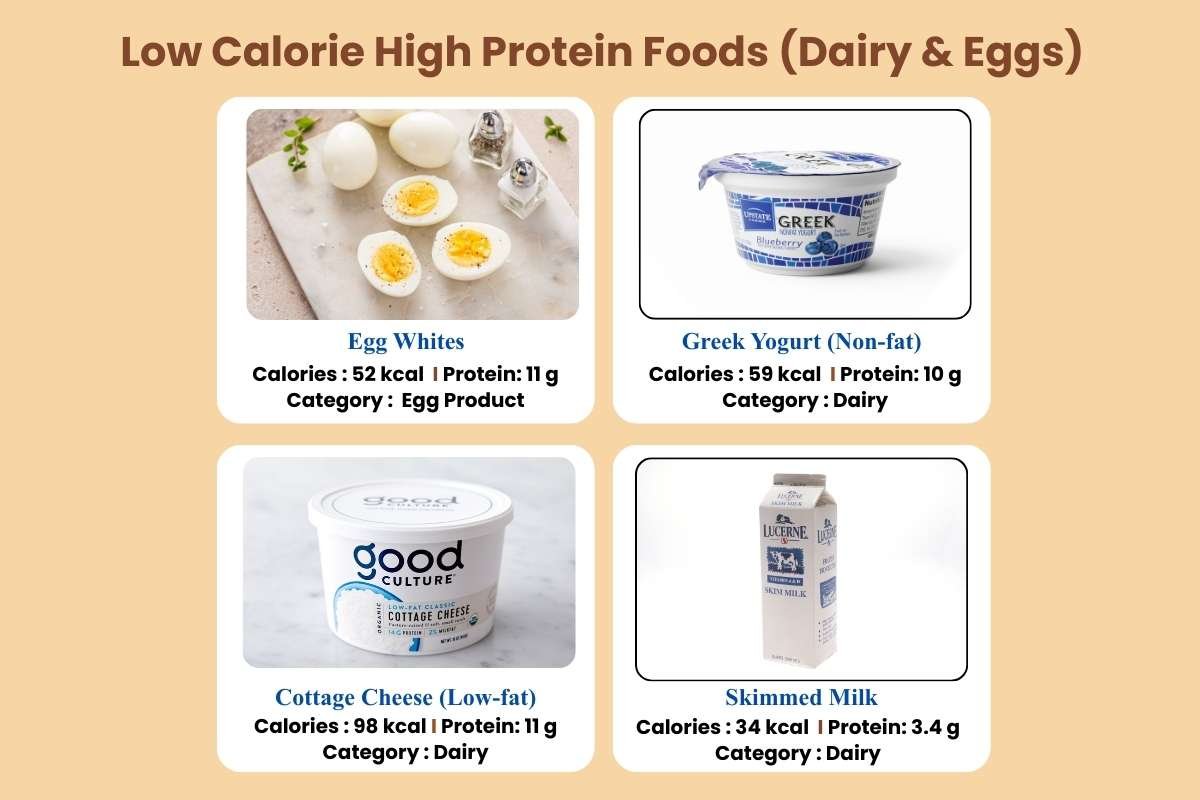
13. Egg Whites
- Calories: 52 kcal
- Protein: 11 g
- Category: Egg Product
- Best For: Pure protein, calorie control
If you want the protein of an egg without the fat found in the yolk, egg whites are perfect. They are one of the most versatile low calorie high protein foods because you can scramble them, bake them into muffins, or even add them to oatmeal for a protein boost.
14. Greek Yogurt (Non-fat)
- Calories: 59 kcal
- Protein: 10 g
- Category: Dairy
- Best For: Gut health, breakfast protein
This yogurt is strained to remove the liquid whey, leaving behind a thick, creamy snack that is loaded with protein. It also contains “good bacteria” called probiotics that help your tummy stay happy and healthy.
15. Cottage Cheese (Low-fat)
- Calories: 98 kcal
- Protein: 11 g
- Category: Dairy
- Best For: Slow-digesting protein, satiety
This is a slow-digesting protein source, which means it keeps you full for a long time. It is great as a snack with some cracked black pepper or mixed with a little bit of fresh fruit.
16. Skimmed Milk
- Calories: 34 kcal
- Protein: 3.4 g
- Category: Dairy
- Best For: Light protein addition, smoothies
By removing the cream from whole milk, you get a drink that is low in calories but still has all the calcium and protein. It is a simple way to make your morning coffee or cereal more nutritious.
Plant-Based & Vegan Powerhouses:
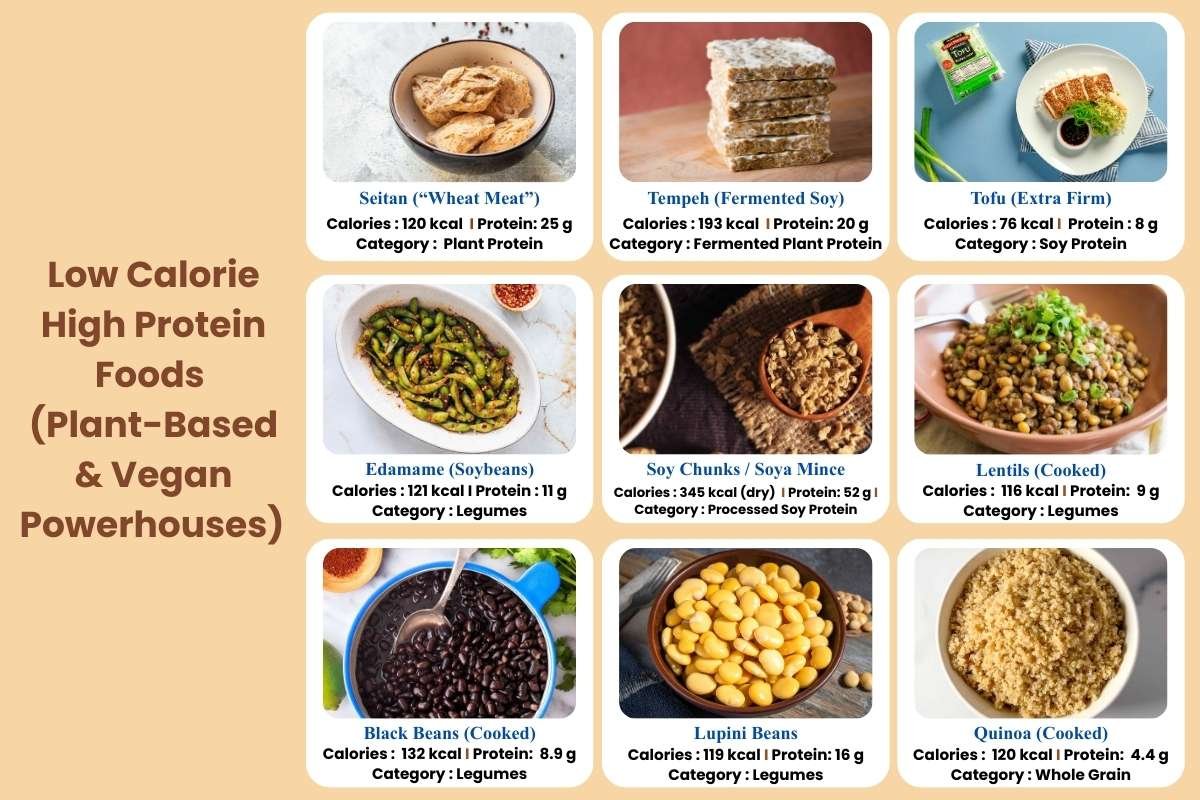
17. Seitan (“Wheat Meat”)
- Calories: 120 kcal
- Protein: 25 g
- Category: Plant Protein
- Best For: Vegan muscle building
Made from wheat gluten, seitan has a texture very similar to chicken or beef. It is one of the densest low calorie high protein foods for vegans. It soaks up sauces beautifully, making it a star ingredient in stir-fry dishes.
18. Tempeh (Fermented Soy)
- Calories: 193 kcal
- Protein: 20 g
- Category: Fermented Plant Protein
- Best For: Gut health, sustained energy
This is made from fermented soybeans pressed into a firm cake. It has a nutty, savory taste. Because it is fermented, it is very easy on the digestion and provides a great “meaty” bite to plant-based meals.
19. Tofu (Extra Firm)
- Calories: 76 kcal
- Protein: 8 g
- Category: Soy Protein
- Best For: Versatile plant-based meals
Tofu is a plant-based classic. It is very low in calories and can be cooked in many ways. You can fry it, bake it, or even blend it. The extra-firm version holds its shape best in hot pans.
20. Edamame (Soybeans)
- Calories: 121 kcal
- Protein: 11 g
- Category: Legumes
- Best For: Snacks, complete plant protein
These are young soybeans often served in their pods. They are a fun, “snackable” protein source that also gives you plenty of fiber. Fiber is great because it helps you feel full and keeps your digestion moving.
21. Soy Chunks / Soya Mince
- Calories: 345 kcal (dry)
- Protein: 52 g
- Category: Processed Soy Protein
- Best For: High-protein vegetarian diets
These are made from defatted soy flour and are a global staple. They are among the most affordable low calorie high protein foods available. Once you soak them in water, they take on a “minced meat” texture that works perfectly in pasta sauce.
22. Lentils (Cooked)
- Calories: 116 kcal
- Protein: 9 g
- Category: Legumes
- Best For: Budget nutrition, fiber + protein
Lentils are tiny powerhouses of nutrition. They provide a mix of protein and complex carbs, which gives you long-lasting energy. They are the perfect base for warm soups or cold grain salads.
23. Black Beans (Cooked)
- Calories: 132 kcal
- Protein: 8.9 g
- Category: Legumes
- Best For: Heart health, plant-based meals
These beans are famous in Mexican cooking. They are dark in color because they are full of antioxidants. They offer a great balance of protein and fiber, making them very heart-healthy and filling.
24. Lupini Beans
- Calories: 119 kcal
- Protein: 16 g
- Category: Legumes
- Best For: Low-carb, high-protein diets
These Mediterranean beans are slowly becoming a popular snack. They have much more protein than most other beans, but are very low in starch. They are often sold in snack packs as a healthy alternative to chips.
25. Quinoa (Cooked)
- Calories: 120 kcal
- Protein: 4.4 g
- Category: Whole Grain
- Best For: Complete protein, balanced meals
Quinoa is a special seed that acts like a grain. It is a “complete” protein, meaning it has all the building blocks your body needs. It is one of the best low calorie high protein foods to use instead of white rice or pasta.
Read More:
- Top 25 Foods with More Protein than an Egg (Backed by Science, Not Hype)
- Stay Energized with These High-Protein Breakfast Ideas
How to Incorporate Low Calorie High Protein Foods Into Your Diet?
Adding Low Calorie High Protein Foods to your life doesn’t have to be hard. You don’t need to change everything at once. Small, smart choices can make a huge difference in how you feel and how much energy you have.
Build Your Plate Around Protein
Instead of starting with pasta or rice, pick your protein first. Choose something like grilled chicken, tofu, or fish. Once that is on your plate, fill half of the rest with colorful vegetables like broccoli or spinach. Add a small scoop of whole grains last. This “protein-first” habit ensures you get the nutrients you need before you fill up on extra calories.
Make Smart Swaps
You can still enjoy your favorite flavors by making simple trades. If you usually reach for fried chicken nuggets, try grilled shrimp skewers instead. Instead of using heavy mayo in your tuna salad, try using non-fat Greek yogurt. These smart swaps keep the taste you love but cut out the “hidden” calories from fat and sugar.
Meal Prep Like a Pro
Cooking every single day can be tiring. To stay on track, try cooking “big batches” once or twice a week.
- Bake four or five chicken breasts at once.
- Boil a large pot of lentils or beans.
- Press and cube a few blocks of tofu. Having these ready in the fridge means you can put together a healthy, high-protein meal in under five minutes when you are hungry.
Delicious Ideas from Around the World
Protein is a star in every culture! You can keep your meals exciting by trying different global flavors:
- Mediterranean: Grilled white fish with a squeeze of lemon and a side of fresh cucumber salad.
- Asian: A colorful bowl with firm tofu, ginger, soy sauce, and plenty of crunchy stir-fry veggies.
- Indian: A chilled lentil (dal) salad with chopped onions, tomatoes, and tangy spices.
- Mexican: Soft wraps filled with black beans, lean turkey, and fresh salsa.
These are Some Common Mistakes to Avoid:
Even with the best intentions, it is easy to make a few mistakes when picking out Low Calorie High Protein Foods. Being aware of these common traps will help you get the best results for your health and energy levels.
1. Assuming “High Protein” Always Means “Healthy”
Just because a label says “High Protein” doesn’t mean it is low in calories. For example, a large steak or a handful of nuts has plenty of protein, but they also have a lot of fat and calories. Always look at the ratio. If a food has a little bit of protein but a mountain of fat, it might not be the best choice for weight management.
2. Adding “Hidden” Calories During Cooking
How you prepare your food matters just as much as what you buy. You could take a perfect piece of lean cod and ruin its health benefits by deep-frying it or drowning it in a buttery cream sauce. To keep things light, try grilling, steaming, baking, or air-frying. Use spices, lemon juice, and vinegar for flavor instead of heavy oils.
3. Forgetting About Fiber and Greens
It is easy to get “protein tunnel vision” and forget everything else. If you only eat meat and eggs, your digestion might slow down because you are missing fiber. Your body needs the vitamins found in fruits and vegetables to actually use the protein you are eating. Always keep your plate colorful to ensure you are getting a balanced mix of nutrients.
4. Following a “One Size Fits All” Plan
A professional athlete needs much more protein than someone who sits at a desk all day. Your needs depend on your age, how much you move, and your personal goals. Don’t feel like you have to eat like a bodybuilder to be healthy. Listen to your body and adjust your portions to fit your unique lifestyle.
Conclusion
One of the best ways to love your body is to choose low calorie high protein foods. These foods help you stay strong, keep your heart healthy, and feel full all day long. You can achieve your goals and still eat delicious food by planning your meals and making small changes.
Recall that each person is unique, so pay attention to your body and choose the combination that suits you the best. It’s time to act now that you are aware of the best options!
Medical Disclaimer:
This article is for educational purposes only. It does not replace professional medical advice. Individuals with kidney disease, metabolic disorders, pregnancy, breastfeeding needs, or those on medically prescribed diets should consult a qualified healthcare professional or registered dietitian before significantly increasing protein intake.
FAQ:
1. How much protein should I eat per day on a low-calorie diet?
Most adults benefit from 1.2–2.0 grams of protein per kilogram of body weight per day. Depending on activity level. People trying to lose fat or build muscle often need protein at the higher end of this range.
2. Can I eat low calories high protein foods every day?
Yes, most people can safely eat these foods daily as part of a balanced diet. It’s important to include variety. And also consume enough fiber, healthy fats, vitamins, and minerals to support overall health.
3. Are processed high-protein foods healthy?
Not always. Some processed foods labeled “high protein” contain added sugars, fats, or sodium. Whole foods like lean meats, fish, eggs, dairy, legumes, and soy products. They are generally better choices.