Here’s the Problem Nobody Talks About
You’ve made the switch to vegetarian or vegan eating. You feel good about your choice. Your energy feels solid. Then, six months in, you notice something: you’re more tired than usual. Your memory feels foggy. That tingling in your fingertips won’t go away.
You Google the symptoms and find the culprit: vitamin B-12 deficiency.
This happens to more people than you think. In fact, research shows that up to 80% of vegans and 50% of vegetarians have insufficient vitamin B-12 levels, even when they think they’re eating well. The reason? Vitamin B-12 doesn’t naturally occur in plant foods. Meat eaters get it straight from animal products. Vegetarians and vegans must be intentional.
The good news? Once you understand where vitamin B-12 foods for vegetarians and vegans come from, you can control your health. No guessing. No deficiencies. No unnecessary fatigue.
This guide shows you exactly what works.
What Vitamin B-12 Actually Does? (And Why You Can’t Ignore It?)
Before we dive into vitamin B-12 foods for vegetarians and vegans, let’s talk about why this vitamin matters so much.
Vitamin B-12, also called cobalamin, runs critical operations inside your body:
- Forms and divides your red blood cells. Without B-12, your cells can’t regenerate properly, and you develop anemia.
- Protects your nervous system. B-12 maintains the myelin sheath that insulates your nerves. Damage this, and you get numbness, tingling, or worse, permanent nerve damage.
- Synthesizes your DNA. Every cell in your body needs B-12 to replicate accurately.
- Powers your energy. B-12 converts food into ATP, the energy currency your cells use.
The numbers tell the story. The National Institutes of Health (NIH) recommends that adults get 2.4 micrograms (mcg) of B-12 daily. Pregnant people need 2.6 mcg. Breastfeeding individuals need 2.8 mcg.
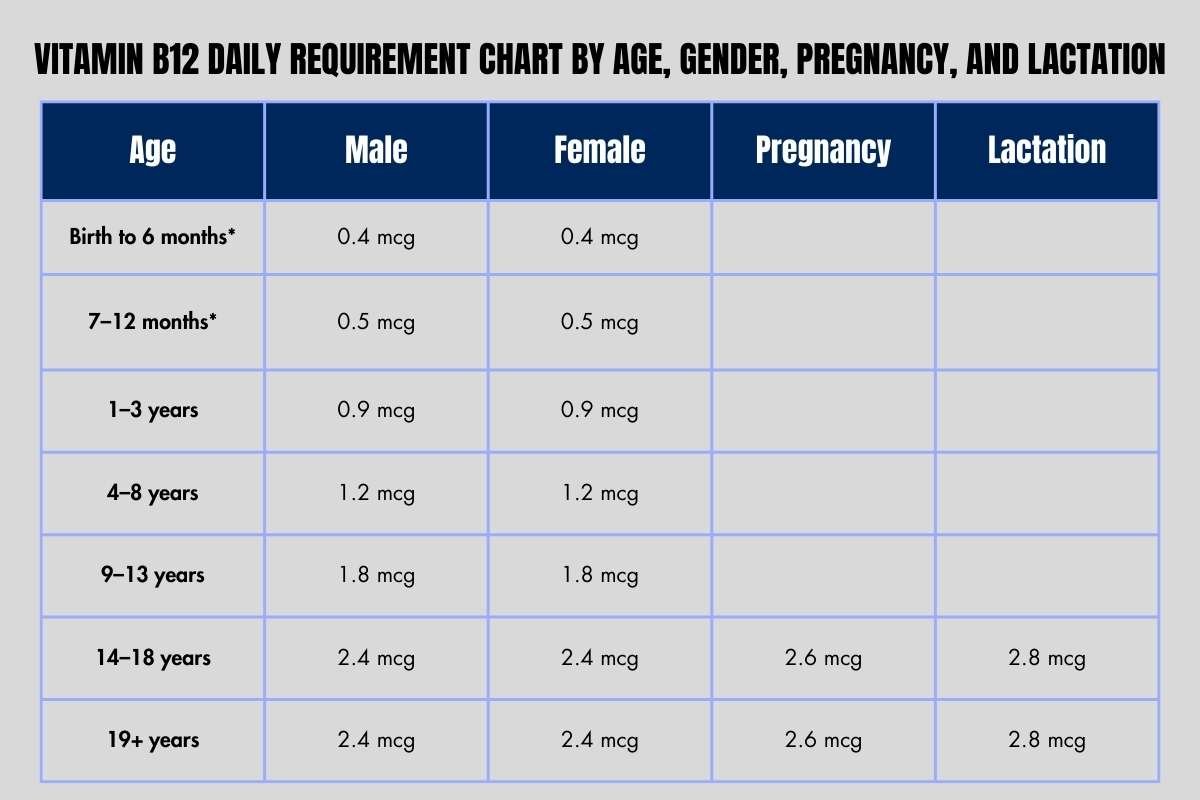
| Age | Male | Female | Pregnancy | Lactation |
| Birth to 6 months* | 0.4 mcg | 0.4 mcg | ||
| 7–12 months* | 0.5 mcg | 0.5 mcg | ||
| 1–3 years | 0.9 mcg | 0.9 mcg | ||
| 4–8 years | 1.2 mcg | 1.2 mcg | ||
| 9–13 years | 1.8 mcg | 1.8 mcg | ||
| 14–18 years | 2.4 mcg | 2.4 mcg | 2.6 mcg | 2.8 mcg |
| 19+ years | 2.4 mcg | 2.4 mcg | 2.6 mcg | 2.8 mcg |
Sound small? It is. But here’s the catch: your body doesn’t make B-12. You must consume it. And if you eat only plant foods, you’ve eliminated the easiest sources.
This is where vitamin B-12 foods for vegetarians and vegans become essential knowledge.
The Three Categories of Vitamin B-12 Foods for Vegetarians and Vegans
Category 1: Dairy Products (For Vegetarians)
If you eat dairy, you’ve got an advantage. Milk, yogurt, and cheese all contain natural B-12 because cattle synthesize it from bacteria in their gut.
Vegetarian Sources of Vitamin B-12
If you eat dairy or eggs, you have natural options:
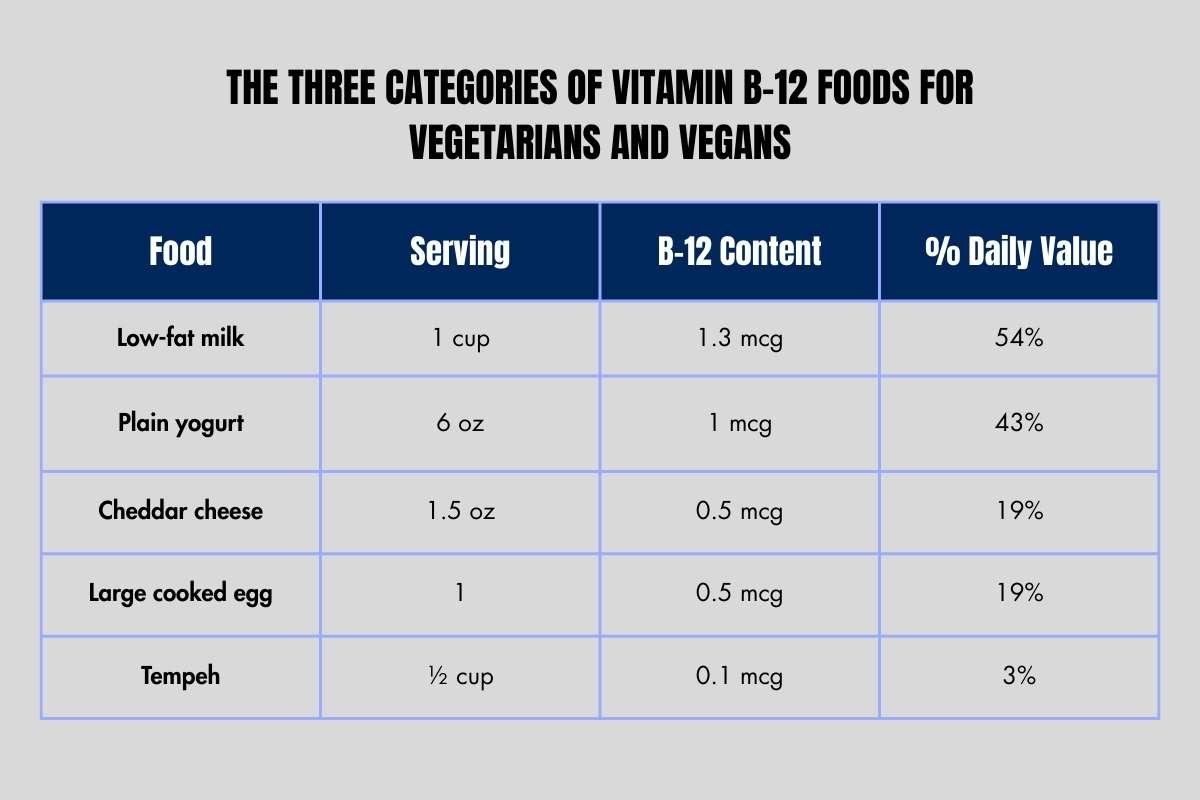
| Food | Serving | B-12 Content | % Daily Value |
| Low-fat milk | 1 cup | 1.3 mcg | 54% |
| Plain yogurt | 6 oz | 1 mcg | 43% |
| Cheddar cheese | 1.5 oz | 0.5 mcg | 19% |
| Large cooked egg | 1 | 0.5 mcg | 19% |
| Tempeh | ½ cup | 0.1 mcg | 3% |
Why this works: These foods have high bioavailability, meaning your body absorbs the B-12 easily. You’re not losing nutrients in the digestive process. If you drink one cup of milk and eat a yogurt daily, you’re covering most of your B-12 needs through diet alone.
A real example: Sarah, a vegetarian from Portland, Oregon, got tested for B-12 levels after switching to a plant-based diet. Her initial count: 220 pg/mL (the normal range is 200–900). Not critical, but borderline. Within three months of adding two servings of Greek yogurt daily, her levels jumped to 480 pg/mL. Problem solved. She didn’t need supplements.
Category 2: Eggs (For Vegetarians)
One large, cooked egg contains 0.5 mcg of B-12, 19% of your daily value.
Eggs are underrated as a B-12 source, especially because they also pack 6 grams of protein per egg. If you eat three eggs for breakfast, you’re getting 1.5 mcg of B-12 plus 18 grams of protein. That’s a solid nutritional foundation.
Pro tip: Boiling, baking, or frying eggs doesn’t destroy B-12. The vitamin survives cooking intact. Scrambled eggs, omelets, and hard-boiled snacks all work equally well.
Category 3: Fortified Foods (For Both Vegetarians and Vegans)
Here’s where both camps find relief. Fortified foods don’t contain naturally occurring B-12, but manufacturers add it intentionally. Your body absorbs fortified B-12 just as effectively as natural sources.
1. Fortified Cereals
Many breakfast cereals pack 25% of your daily B-12 into one serving. Read the label; not all cereals are fortified, but the ones that are offer an easy win. The catch? Watch out for cereals loaded with added sugar. Aim for ones with less than 6 grams of sugar per serving.
2. Nutritional Yeast
This is the secret weapon for vegans. One-quarter cup of 100%-fortified nutritional yeast delivers 8.3 to 24 mcg of B-12, up to 1,000% of your daily value.
The taste? Cheesy, nutty, savory. Most people hate the idea until they try it. Then they’re converted.
How to use nutritional yeast?
- Sprinkle on air-popped popcorn (instant snack)
- Mix into creamy soups (adds richness without dairy)
- Stir into mashed potatoes (tastes like buttered potatoes)
- Add to pasta dishes or salads
- Blend into cheese sauces for vegan mac and cheese
A study published in the Journal of the Academy of Nutrition and Dietetics found that vegans who consumed nutritional yeast regularly maintained B-12 levels comparable to vegetarians.
3. Nori (Purple Laver)
This is the newest discovery in the vitamin B-12 foods for vegetarians and vegans conversation. Nori, the seaweed used in sushi, contains B-12. A 2024 study found that consuming 5 grams of dried nori daily improved B-12 levels in vegetarians.
Why? Nori grows in saltwater environments where B-12-producing bacteria thrive. The seaweed absorbs these microbes.
You’ll find nori at any Asian market or online. Eat it as a snack by itself, use it as sushi wrapping, or crumble it over rice bowls.
Other Fortified Foods:
- Plant-based milks (almonds, oats, soy; check labels)
- Meat substitutes (many are fortified)
- Nutritional spreads and yeast extracts
- Some plant-based yogurts
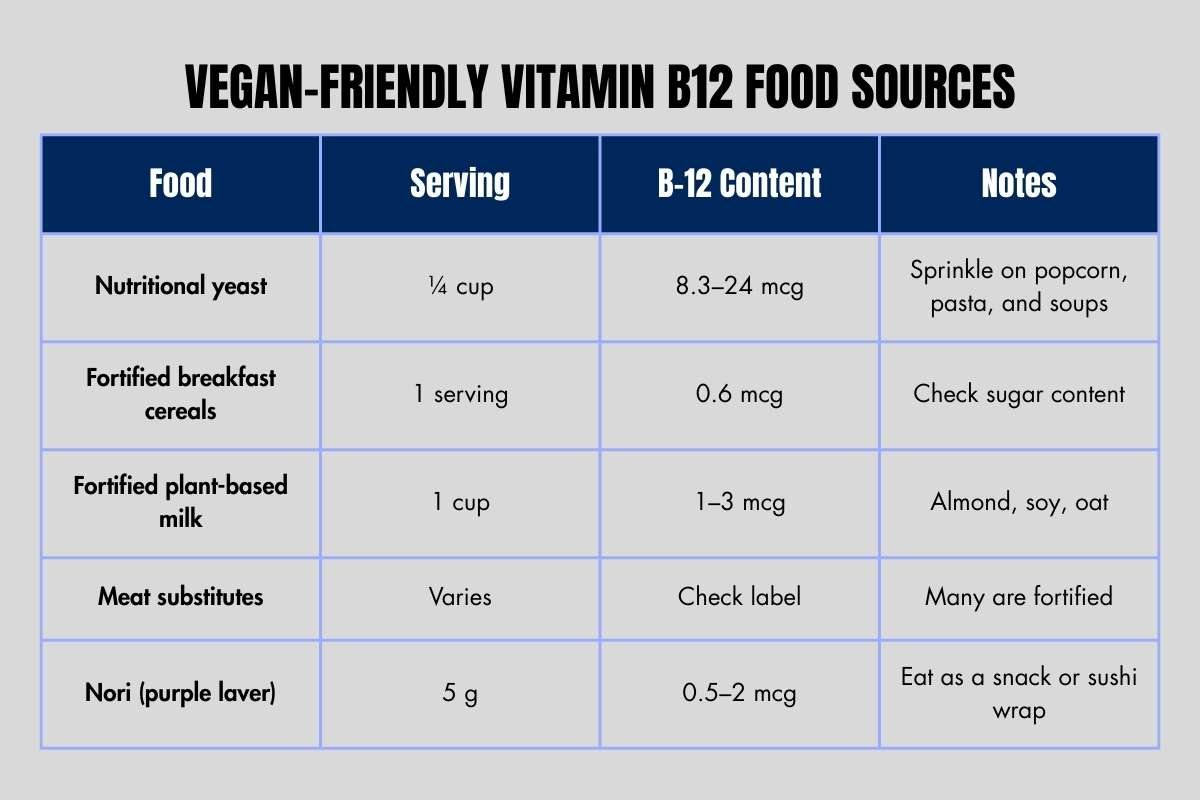
| Food | Serving | B-12 Content | Notes |
| Nutritional yeast | ¼ cup | 8.3–24 mcg | Sprinkle on popcorn, pasta, and soups |
| Fortified breakfast cereals | 1 serving | 0.6 mcg | Check sugar content |
| Fortified plant-based milk | 1 cup | 1–3 mcg | Almond, soy, oat |
| Meat substitutes | Varies | Check label | Many are fortified |
| Nori (purple laver) | 5 g | 0.5–2 mcg | Eat as a snack or sushi wrap |
Expert Tip: Dr. Michael Greger recommends three servings of fortified foods daily or supplements for vegans.
Read Next:
- Why Super Healthy Foods Are the Secret Weapon of Lifelong Energy?
- Fueling Gains: Unlocking the Power of a Vegetarian Diet for Bodybuilding
Protein and Other Essential Nutrients for Vegans (along with B-12)
While protein often gets the spotlight in a vegan diet, it’s equally important to monitor nutrients like vitamin B-12 and vitamin D. Vitamin B-12 is critical for producing red blood cells, protecting the nervous system, and supporting healthy brain function. Since it doesn’t naturally occur in most plant foods, vegans must rely on fortified foods or supplements. Vitamin D, essential for bone health, immune function, and reducing inflammation, is also limited in plant-based diets and often requires fortified foods or supplementation.
High-Protein Vegan Foods: Vegans can meet their protein needs effectively by incorporating a variety of plant-based foods. Research shows that consuming a mix of legumes, grains, seeds, and soy products over the day provides all essential amino acids. Here are some of the best vegan protein sources, along with approximate protein content per serving.
List of high-protein vegan foods:
| Tempeh | 19g protein per 3.5 oz (100g) serving | Soy-based meat substitutes | varies, often 15–20g protein per serving |
| Tofu | 8g protein per 3.5 oz (100g) serving | Pumpkin seeds | 7g protein per 1 oz (28g) |
| Seitan (wheat gluten) | 25g protein per 3.5 oz (100g) serving | Almonds | 6g protein per 1 oz (28g) |
| Lentils | 18g protein per cooked cup | Peanut butter | 8g protein per 2 tbsp |
| Chickpeas | 15g protein per cooked cup | Whole grains (brown rice, bulgur, whole-wheat pasta) | 5–8g per cooked cup |
| Black beans | 15g protein per cooked cup | Green peas | 8g protein per cooked cup |
| Quinoa | 8g protein per cooked cup | Edamame | 17g protein per cooked cup |
| Soy milk | 7g protein per cup (fortified with B-12) | Spinach, broccoli, mushrooms, asparagus, artichoke | 2–5g protein per cup |
Including a variety of these foods ensures adequate protein intake without needing to combine sources at every meal, while also supporting overall nutrient balance.
The Deficiency Reality: What Happens When You Miss Out?
This isn’t scaremongering. This is reality.
A B-12 deficiency develops slowly, which is why many people don’t notice until damage starts. Early symptoms include:
- Fatigue and weakness
- Tingling or numbness in hands and feet
- Memory problems and difficulty concentrating
- Pale or jaundiced skin
- Sore tongue or mouth ulcers
- Depression or mood swings
If left untreated, B-12 deficiency causes permanent nerve damage. The numbness becomes constant. Memory loss progresses. Some people develop pernicious anemia, where their body can’t absorb B-12 even from supplements.
The takeaway? You need a strategy. Passive hope doesn’t work.
Your Action Plan: Three Ways to Secure Your B-12
Option 1: The Food-First Approach
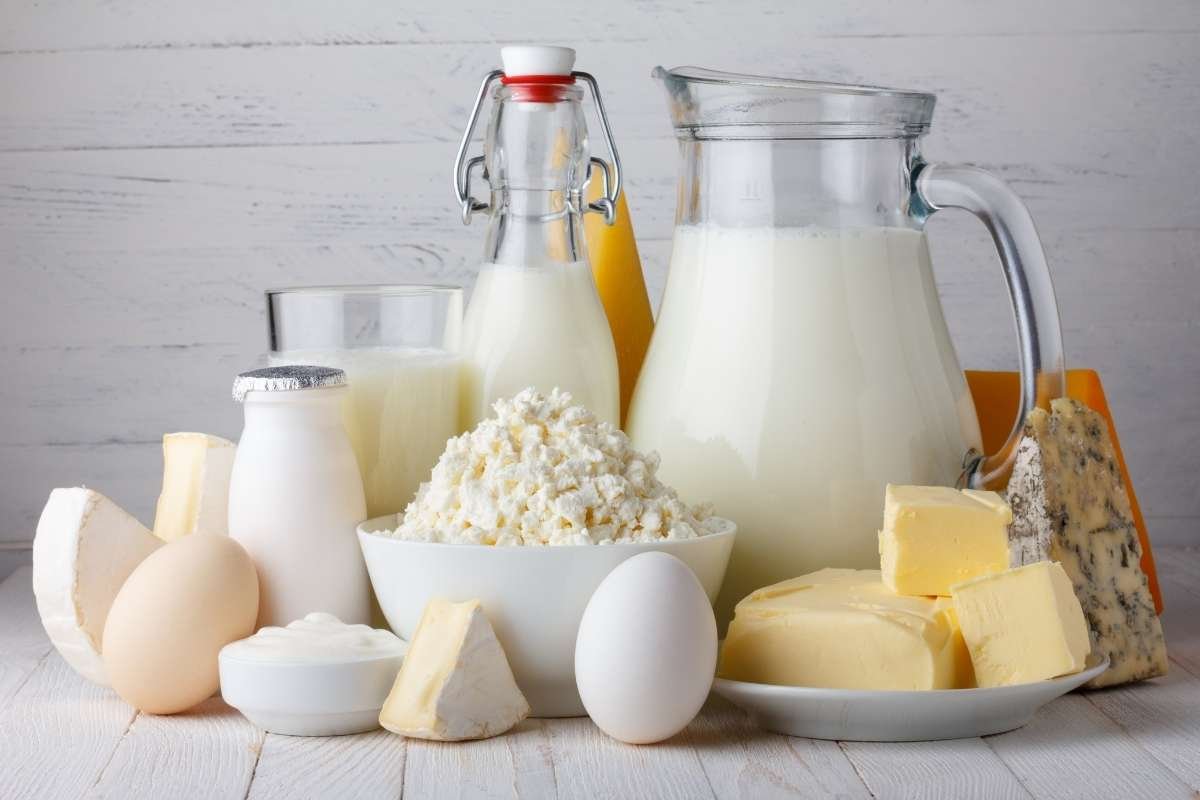
If you eat dairy or eggs, prioritize them:
- Start each morning with 1 cup of fortified plant-based milk or 2% dairy milk.
- Include 1 serving of Greek yogurt as a snack or with breakfast.
- Eat 2–3 eggs, 3–4 times per week.
- Add nutritional yeast to at least one meal daily.
This covers most of your needs through food alone.
Option 2: The Fortified Foods Strategy
If you’re vegan, rely on fortified foods:
- Choose a breakfast cereal with B-12. (25% per serving adds up quickly.)
- Cook with nutritional yeast. (1/4 cup covers your entire day’s needs.)
- Drink fortified plant-based milk with breakfast.
- Include nori several times per week.
Track your intake for one week. Write down what you consume and how much B-12 each item provides. Most vegans hit 2.4 mcg this way without trying.
Option 3: Supplements
If you’re worried about missing your targets, supplements work. Sublingual B-12 tablets dissolve under your tongue for better absorption. Most people take 2,000 mcg once weekly, which is effective.
Talk to your doctor. Get tested. If you’re low, supplements close the gap fast. Then transition to food sources for long-term maintenance.
What the Research and Health Authorities Say?
The evidence on vitamin B-12 foods for vegetarians and vegans is consistent across medical and scientific institutions.
The National Institutes of Health (NIH), the leading U.S. health research authority, establishes clear requirements. Adults and teenagers need 2.4 micrograms (mcg) of vitamin B-12 daily. Pregnant people require 2.6 mcg, while breastfeeding individuals need 2.8 mcg.
Critically, the NIH states: “Since no plant-derived foods contain adequate amounts of vitamin B-12, vegans and vegetarians should be aware of alternative sources, such as fortified products.”
A 2024 peer-reviewed study published in the European Journal of Nutrition tested whether nori (purple laver seaweed) could serve as a reliable B-12 source. The researchers found that consuming 5 grams of dried nori daily improved B-12 levels in vegetarian participants, opening a new, food-based option for plant-based eaters.
Registered dietitian nutritionists who specialize in plant-based nutrition emphasize this point: vitamin B-12 foods for vegetarians and vegans demand intentionality. Health professionals recommend three core strategies: consume fortified foods consistently, include dairy and eggs if you eat them, or supplement with B-12 capsules or injections if a deficiency develops.
For those already experiencing deficiency symptoms like fatigue, tingling, and memory problems, supplemental B-12 becomes necessary. The choice between food sources and supplements isn’t about hierarchy. It’s about what works for your body and your lifestyle.
The consensus across health authorities is unambiguous: a strategy beats guessing every time.
Read Next:
- How the 80/10/10 Diet Changes Health and Energy Fast
- Burn Fat, Boost Energy, and Transform Your Health with This Low-Carb Diet Meal Plan
The Bottom Line: You’re In Control
Vitamin B-12 deficiency doesn’t happen by accident. It happens by neglect.
The good news? Once you understand vitamin B-12 foods for vegetarians and vegans, you take the power back. You’re not guessing. You’re not hoping. You’re executing.
Choose dairy and eggs if you eat them. Go all-in on fortified foods if you don’t. Add supplements if you need insurance. Get tested annually to stay on top of your levels.
Your nervous system, your energy, your memory, and your long-term health depend on it.
One more thing: tell your friends. Most people switching to plant-based eating don’t know about B-12. Share this guide. Help them avoid the fatigue and brain fog that catches so many people off guard.