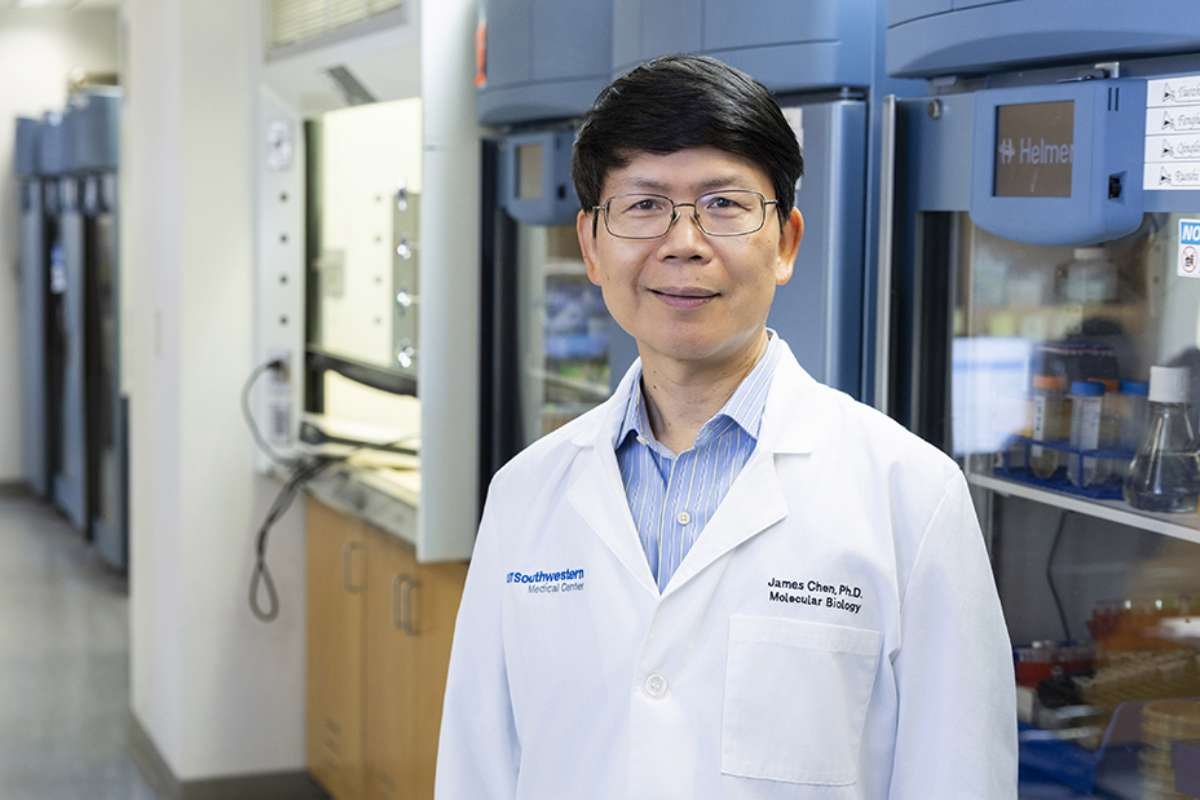
Zhijian “James” Chen, recognized for groundbreaking discoveries in immune system research, has earned the UT Southwestern biochemist award as part of the 2026 Japan Prize in Life Sciences.
The award, among the world’s most prestigious honors in science and technology, recognizes Chen’s work on innate immunity, including the discovery of cyclic GMP-AMP synthase, or cGAS, a molecular sensor that triggers immune defense when foreign DNA enters a cell.
Global Honor Recognizes Breakthrough Immunology Research
Chen, Ph.D., serves as a professor of molecular biology at UT Southwestern and directs its Center for Inflammation Research. His recognition through the UT Southwestern biochemist award reflects the institution’s view of the Japan Prize as “one of the highest international honors for science and technology.”
Numerous Japan Prize recipients have later won Nobel Prizes, including Shimon Sakaguchi, who received the 2025 Nobel Prize in Physiology or Medicine for discovering regulatory T cells. Chen shares the 2026 Japan Prize with Shizuo Akira, M.D., Ph.D., a professor at Osaka University and a leader in immunology research.
“I’m extremely honored and humbled to be selected to receive the Japan Prize,” Chen said in a statement. “This recognition validates the collaborative work of scientists at UT Southwestern and worldwide to expand our understanding of human disease.”
Established in 1983, the Japan Prize is awarded annually to scientists whose original achievements have significantly advanced science and technology while contributing to peace and prosperity, according to the Japan Prize Foundation.
Tokyo Ceremonies to Include Emperor and Empress of Japan
The prize will be presented on April 14 in Tokyo during Japan Prize Week, which includes award ceremonies attended by the Emperor and Empress of Japan, as well as commemorative lectures by the laureates.
Chen said he is grateful to the students, postdoctoral fellows, and staff in his laboratory and to UT Southwestern leadership for their support. He is also a Howard Hughes Medical Institute investigator.
UT Southwestern President Daniel K. Podolsky, M.D., praised Chen’s impact on medicine and biology.
“Dr. Chen’s breakthroughs have greatly advanced immunology, opening the door to more effective vaccines and innovative therapies for diseases such as cancer and autoimmune disorders,” Podolsky said. “The UT Southwestern biochemist award reflects the pride of the entire community in seeing his work honored by this distinguished international recognition.”
Discoveries Laid the Foundation for New Therapies and Vaccines
Chen is recognized as one of the world’s leading researchers on how the immune system protects against bacteria, viruses, and other threats. In 2012, his laboratory identified cGAS, which activates the innate immune system when it senses foreign DNA inside cells.
UT Southwestern highlighted cGAS as acting “like the body’s burglar alarm,” triggering defense responses against invading pathogens. This breakthrough, now recognized through the UT Southwestern biochemist award, reshaped scientific understanding of innate immunity and opened new avenues in infectious disease, cancer, and autoimmune research.
Earlier in his career, Chen identified the first mitochondrial protein known to play a role in antiviral immunity. He named the protein MAVS, short for mitochondrial antiviral signaling, a nod to its function and to his favorite basketball team, the Dallas Mavericks.
Chen’s research has earned many of science’s top honors, including the Paul Ehrlich and Ludwig Darmstaedter Prize in 2025, the Albert Lasker Basic Medical Research Award in 2024, the Louisa Gross Horwitz Prize in 2023, and the Breakthrough Prize in Life Sciences in 2019.
He is a member of the National Academy of Sciences and the National Academy of Medicine and a Fellow of the Royal Society of the United Kingdom. At UT Southwestern, he holds the George L. MacGregor Distinguished Chair in Biomedical Science and is affiliated with the Harold C. Simmons Comprehensive Cancer Center.