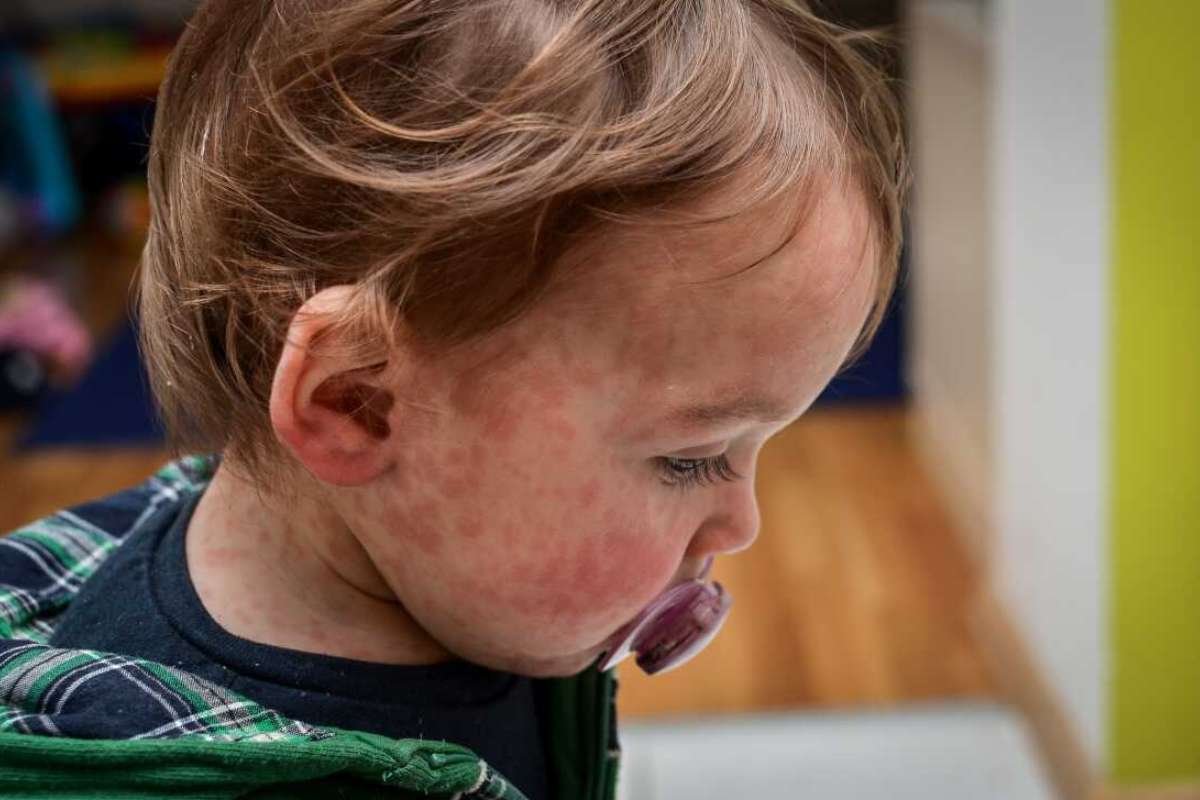
A 7-year-old boy died from a rare, fatal brain disorder years after contracting measles, according to a report in the New England Journal of Medicine that experts say underscores the dangers of falling vaccination rates.
Rare Brain Disorder Emerges Years After Measles Infection
The child’s death was caused by Subacute Sclerosing Panencephalitis, or SSPE, a rare neurological complication linked to measles infection. The disease occurs when a mutated form of the virus remains dormant in the body and later attacks the brain.
According to the case report, the boy first contracted measles at 7 months of age. He appeared to recover, but several years later began experiencing seizures, cognitive decline, and progressive neurological damage.
Within months, he lost the ability to speak and perform basic functions. Doctors reported that he died about a year after symptoms of SSPE began.
Subacute Sclerosing Panencephalitis is considered universally fatal. The condition often appears six to eight years after an initial measles infection, making it difficult for families and physicians to link the symptoms to the earlier illness.
Health experts say the delayed onset makes the disease particularly alarming because children may seem fully recovered before the virus resurfaces.
Experts Warn Measles Is Not A Harmless Childhood Illness
Infectious disease specialist Matteo Bassetti highlighted the case in public comments, warning that measles should not be viewed as a routine childhood disease.
“Measles is often underestimated,” Bassetti wrote in a statement shared online. “It can cause severe neurological complications that appear years after the initial infection.”
Medical data show that approximately one in 1,000 children infected with measles develops acute brain inflammation. A smaller but devastating proportion—about one in 25,000—later develops SSPE.
The disease gradually destroys brain tissue, leading to seizures, personality changes, loss of motor control, and ultimately death.
Pediatric neurologists say there is currently no cure or effective treatment once Subacute Sclerosing Panencephalitis begins. Care typically focuses on managing symptoms as the disease progresses.
“By the time SSPE is diagnosed, the damage is already advanced,” said one physician familiar with the condition. “That’s why prevention is absolutely critical.”
Measles Resurgence Raises Global Public Health Concerns
The case comes as several countries report significant increases in measles cases after years of decline.
Public health authorities in the United States, the United Kingdom, and parts of Europe say measles outbreaks are rising due to declining vaccination coverage and increased virus transmission.
Hospitals in some regions have reported hundreds of measles-related admissions in recent outbreaks. In severe cases, complications such as pneumonia, encephalitis, and long-term neurological damage have occurred.
Health officials stress that measles remains one of the most contagious viral diseases known. The virus spreads through respiratory droplets and can remain airborne for up to two hours in enclosed spaces.
Vaccination remains the most effective protection. The measles vaccine has been used for decades and is widely credited with preventing millions of infections worldwide.
Experts say the fatal Subacute Sclerosing Panencephalitis case serves as a reminder that the consequences of measles can extend far beyond the initial illness.
“Every measles infection carries risk,” Bassetti said. “Vaccination is the only reliable way to prevent tragedies like this.”
Public health agencies continue to urge parents to ensure children receive recommended immunizations to prevent future outbreaks and long-term complications.