An international research team led by China’s Changping Laboratory and Washington University School of Medicine identifies a brain network responsible for Parkinson’s disease, reporting in Nature that targeting it with noninvasive stimulation significantly improves symptoms. This breakthrough in Parkinson’s brain network precision therapy offers a new path for treating the progressive neurological disorder.
Parkinson’s disease affecting more than one million people in the United States and over 10 million worldwide, causes tremors, movement difficulties, sleep disturbances, and cognitive impairment. Existing treatments can ease symptoms, but do not stop the disease from worsening.
Researchers Link Parkinson’s To Newly Defined Brain Network
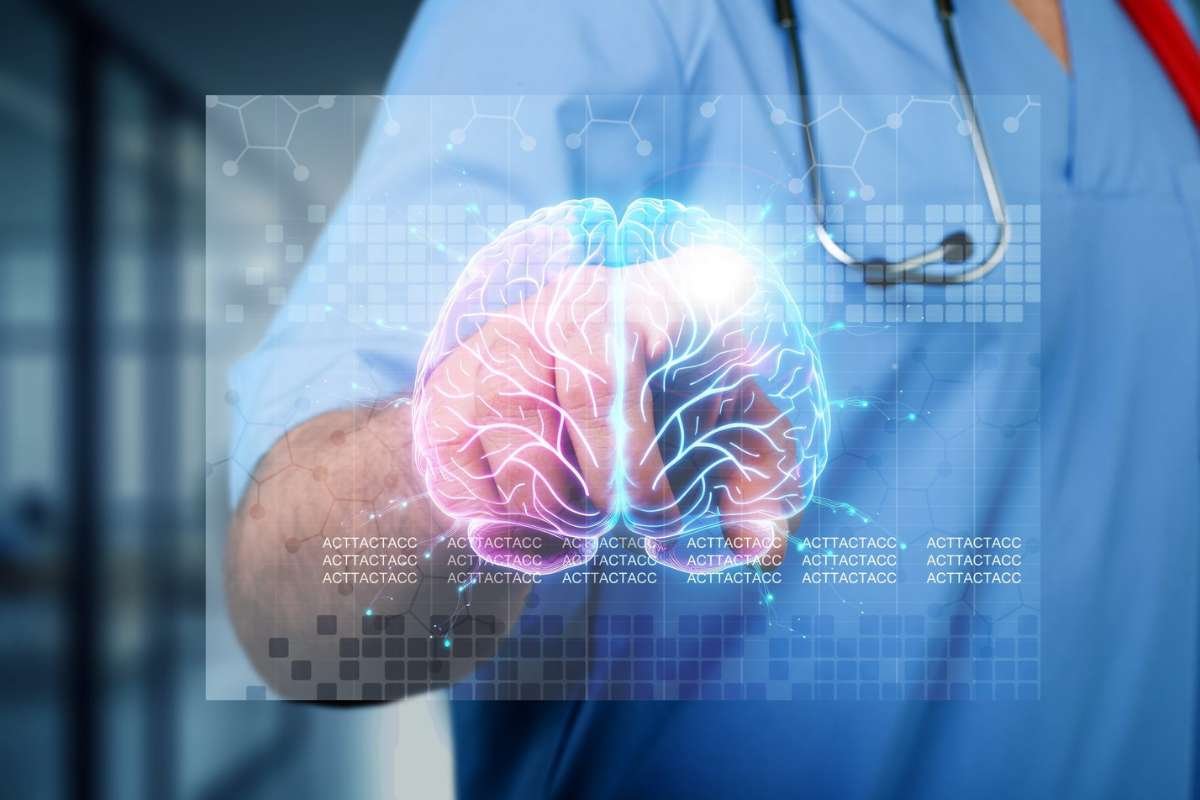
The study pinpoints the somato-cognitive action network, or SCAN, as central to the disease’s underlying dysfunction. Located within the motor cortex, the network converts action plans into movement while processing feedback from those actions.
“This work demonstrates that Parkinson’s is a SCAN disorder, and the data strongly suggest that if you target the SCAN in a personalized, precise manner— an approach we call Parkinson’s brain network precision therapy —you can treat Parkinson’s more successfully than was previously possible,” said co-author Dr. Nico U. Dosenbach, professor of neurology at Washington University.
Dosenbach added that altering activity within the network “could slow or reverse the progression of the disease, not just treat the symptoms.”
SCAN was first described by Dosenbach in a 2023 Nature paper. The new research expands that work, suggesting Parkinson’s stems from broader network disruption rather than isolated damage to regions traditionally linked to motor control.
Senior author Dr. Hesheng Liu said the findings challenge decades of assumptions. “For decades, Parkinson’s has been primarily associated with motor deficits and the basal ganglia,” Liu said. “Our work shows that the disease is rooted in a much broader network dysfunction.”
Large Imaging Analysis Reveals Hyperconnected Circuit
Researchers analyzed brain imaging data from more than 800 participants across institutions in the United States and China. The group included Parkinson’s patients receiving deep brain stimulation, noninvasive therapies, and medication, along with healthy individuals and patients with other movement disorders.
The analysis found that Parkinson’s is marked by hyperconnectivity between SCAN and the subcortex, a region involved in emotion, memory, and motor control. This abnormal wiring appears to disrupt movement as well as cognitive and bodily functions, providing a mechanistic basis for Parkinson’s brain network precision therapy.
All four therapies evaluated in the study worked best when they reduced this hyperconnectivity, effectively normalizing the circuit responsible for planning and coordinating action.
Liu said the discovery helps explain why Parkinson’s produces such a wide range of symptoms, from physical impairment to motivational changes. It also offers a measurable biological target for future treatments.
Early Trial Shows Promise For Noninvasive Treatment
Building on the findings, researchers developed a precision system capable of targeting SCAN with millimeter accuracy using transcranial magnetic stimulation, or TMS, which delivers magnetic pulses through a device placed on the head.
In a clinical trial, 18 patients receiving SCAN-targeted TMS showed a 56% response rate after two weeks. By comparison, another group of 18 patients treated in nearby brain areas recorded a 22% response rate, roughly a 2.5-fold difference in effectiveness.
“With noninvasive treatments, we could start treating with neuromodulation much earlier than is currently done with DBS” because the approach does not require brain surgery, Dosenbach said.
Researchers caution that additional basic research is needed to determine how different components of SCAN influence specific symptoms. Dosenbach plans further clinical trials with Turing Medical, a startup he co-founded, including testing surface electrode strips to address gait dysfunction and exploring low-intensity focused ultrasound to modulate brain activity.
The findings redefine the neurological basis of Parkinson’s and may pave the way for earlier, more precise interventions aimed at the disease’s root cause By focusing on Parkinson’s brain network precision therapy doctors may soon be able to treat the underlying circuitry of the disease rather than just its outward effects.
Source: https://medicalxpress.com/news/2026-02-brain-network-responsible-parkinson-disease.html