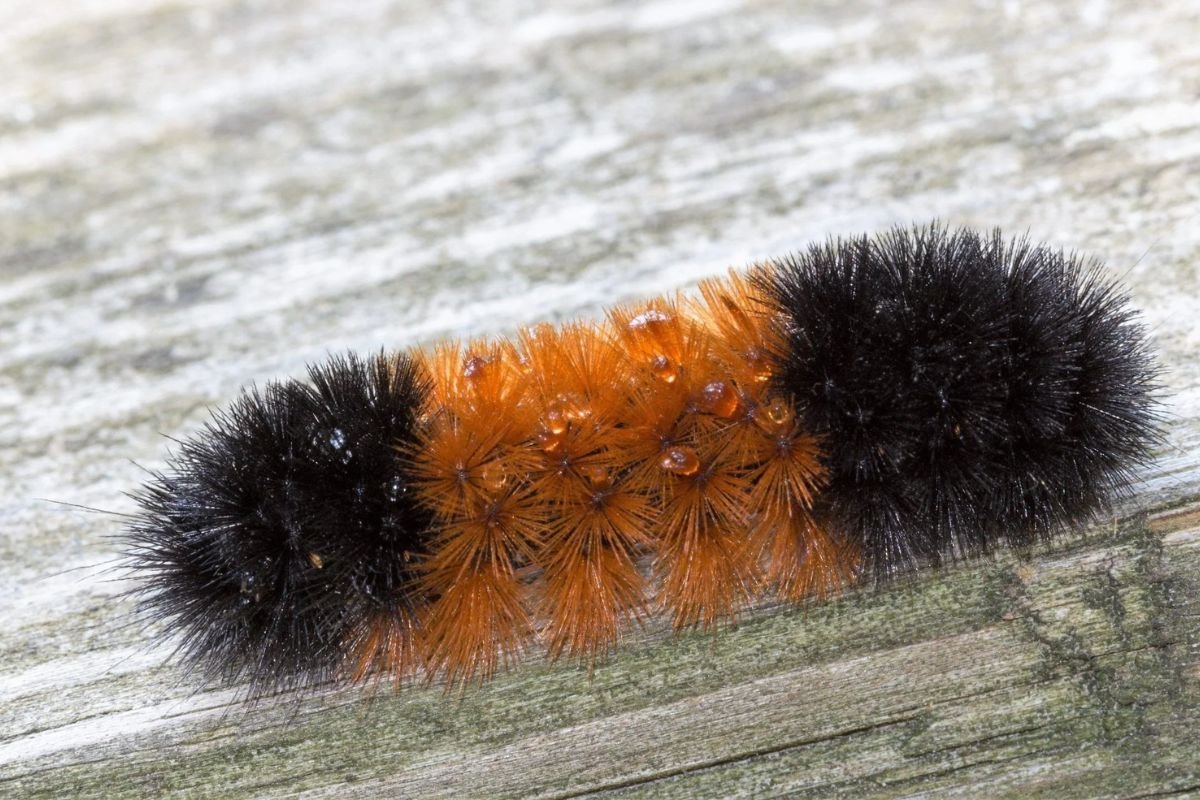
Caterpillars are soft, colourful, and often look harmless. But appearances can be deceiving. Did you know that some caterpillars carry venom potent enough to cause severe pain, internal bleeding, or even death? Among the thousands of caterpillar species worldwide, a small but dangerous fraction have evolved these toxins as a survival strategy.
For instance, the infamous Lonomia obliqua in South America has been responsible for over 1,000 reported human envenomation cases, with dozens of fatalities documented in Brazil alone. Meanwhile, the puss caterpillar (Megalopyge opercularis) in the southern United States causes thousands of painful stings each year, sending victims to emergency rooms for treatment.
Understanding the most poisonous caterpillars in the world isn’t just a matter of curiosity; it’s a matter of safety. From excruciating pain to life-threatening reactions, these tiny creatures pack a punch far beyond their size. In this guide, we’ll explore what makes caterpillars poisonous, highlight the deadliest species, and give you practical tips to stay safe while appreciating nature’s vibrant yet dangerous marvels.
What Makes Caterpillars Poisonous?
At first glance, caterpillars look soft, colorful, and completely harmless. But some are tiny walking venom factories. So, what makes them poisonous, and why should you care?
There are two main ways caterpillars defend themselves:
1. Venomous Hairs and Spines
Some caterpillars, like the infamous puss caterpillar (Megalopyge opercularis) in the southern U.S., are covered in microscopic hairs filled with venom. Even a light touch can trigger intense burning pain, swelling, and rashes. Every year, thousands of people in the U.S. end up in emergency rooms from these stings alone.
2. Toxins from the Plants They Eat
Others, like the deadly Lonomia obliqua in Brazil, feed on poisonous plants and store the toxins in their bodies. A single sting can cause internal bleeding, kidney damage, and even death. Over 1,000 envenomation cases have been reported in South America.
Nature even gives them a warning system: bright colors, fuzzy bodies, or striking patterns signal danger. Scientists call this aposematism, a fancy term for “don’t touch me or you’ll regret it.”
Understanding why caterpillars are poisonous isn’t just science; it’s life-saving knowledge for hikers, gardeners, and anyone exploring nature. After all, these tiny creatures may look cute, but some of them are more dangerous than they appear.
Top 8 Most Poisonous Caterpillars in the World
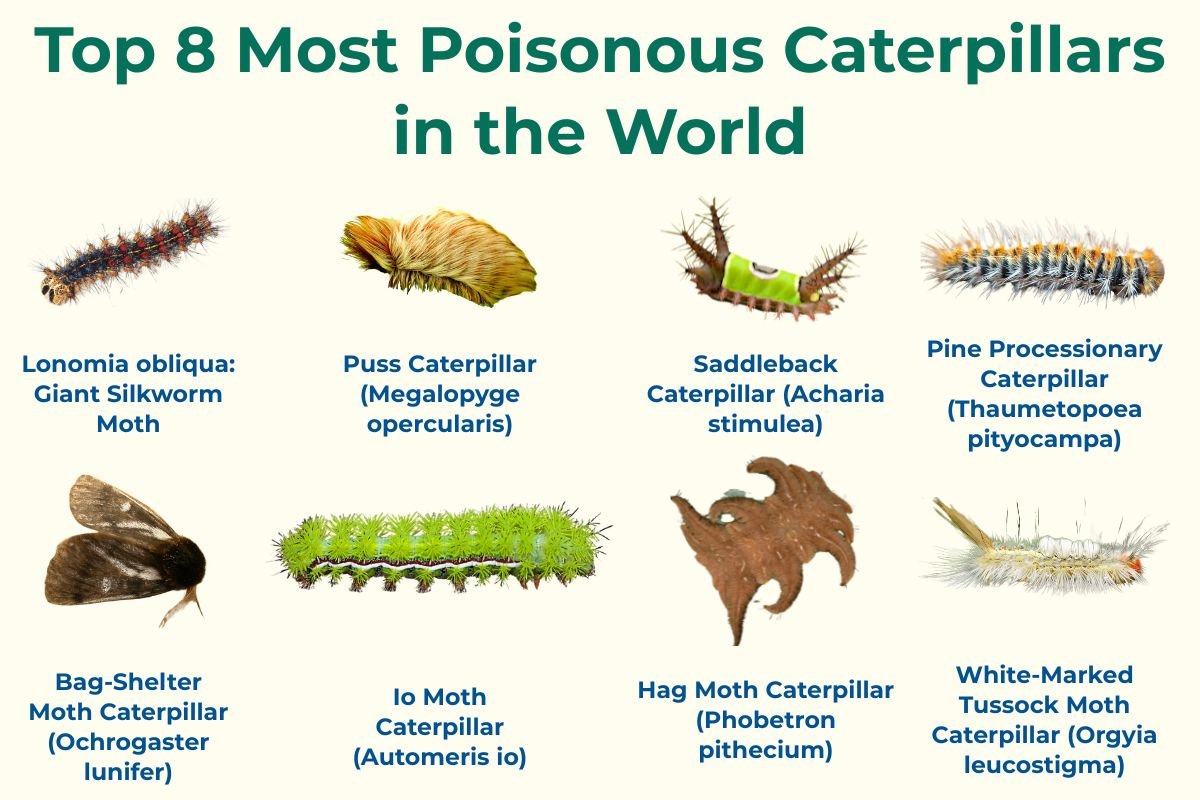
Not all caterpillars are harmless. While most are just colorful insects, a few species carry venomous spines or toxins that can cause pain, allergic reactions, or even serious health problems. Knowing which caterpillars are dangerous, where they live, and how they sting can help you stay safe while enjoying nature.
Here are some of the deadliest caterpillars around the world, along with important details about their habitat, how they deliver toxins, and the symptoms they cause:
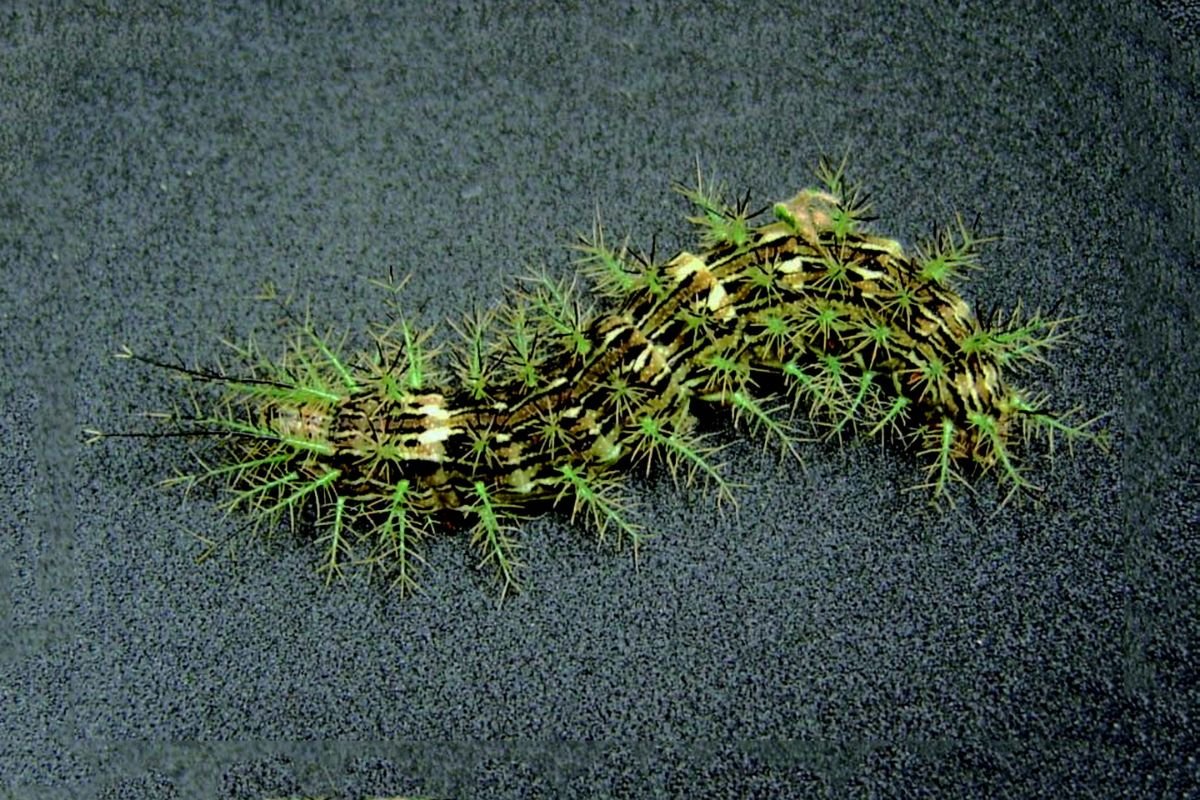
1. Lonomia obliqua: Giant Silkworm Moth
| Region / Habitat | Brazil & South America; mainly in forests near rivers |
| How it Delivers Toxin | Spines release venom that enters the bloodstream |
| Symptoms | Internal bleeding, kidney failure, dizziness, nausea |
| Active Season | Mostly summer months (December–March in Brazil) |
The Lonomia obliqua is a large greenish-brown caterpillar with small spiny projections covering its body. Its venom is extremely toxic, capable of causing internal bleeding and even fatalities. Found mainly in South American forests near rivers, it’s one of the deadliest caterpillars on the planet. Despite its danger, scientists study its venom to develop anticoagulants for medical use. Always avoid contact, as a single sting can have serious consequences.
2. Puss Caterpillar (Megalopyge opercularis)
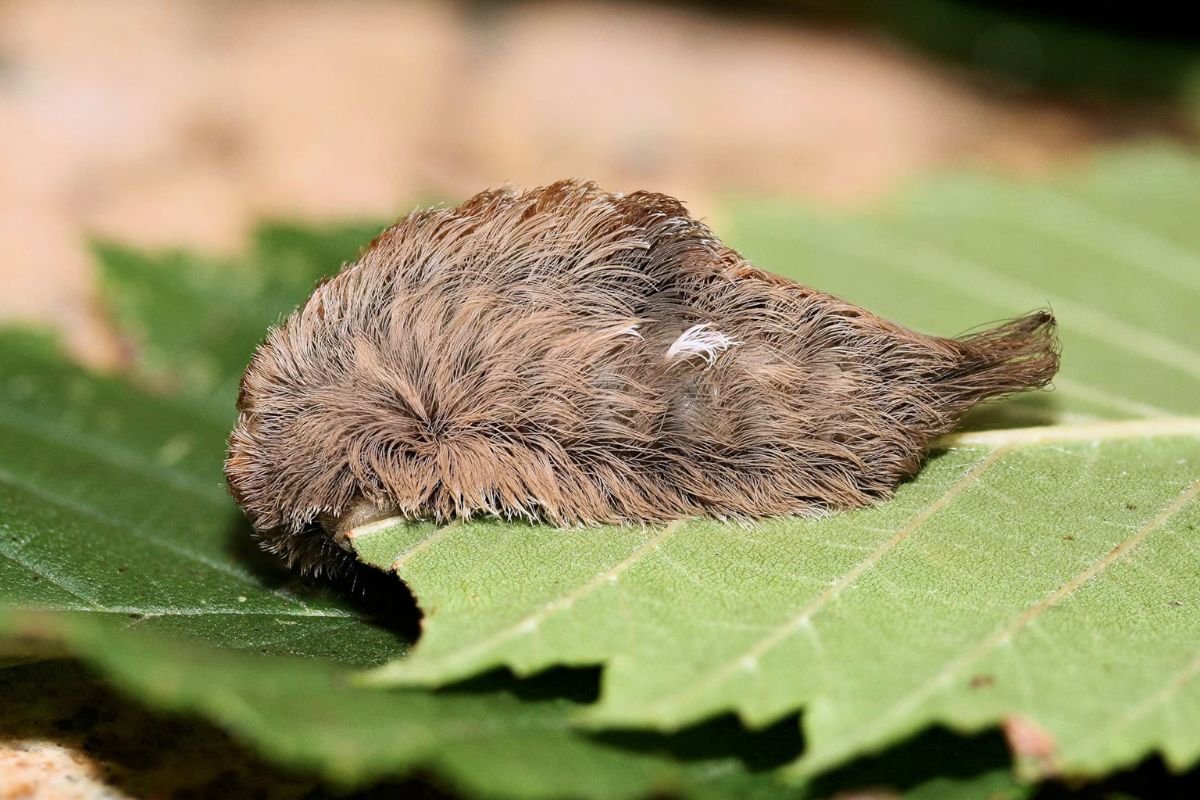
| Region / Habitat | Southern U.S., often on oak, elm, and citrus trees |
| How it Delivers Toxin | Venomous hairs that inject a toxin upon contact |
| Symptoms | Intense burning pain, swelling, rash, nausea |
| Active Season | Late summer and fall |
The puss caterpillar is a furry, soft-looking insect resembling a tiny cat, often gray or brown in color. Its venom is highly toxic and causes severe burning pain and swelling. Among the Most Poisonous Caterpillars in the World, it is notorious in the southern U.S. for sending thousands to emergency rooms annually. Its cute, fluffy appearance is a disguise for its powerful defense. Be cautious around trees like oak, elm, and citrus, where it often hides.
3. Saddleback Caterpillar (Acharia stimulea)
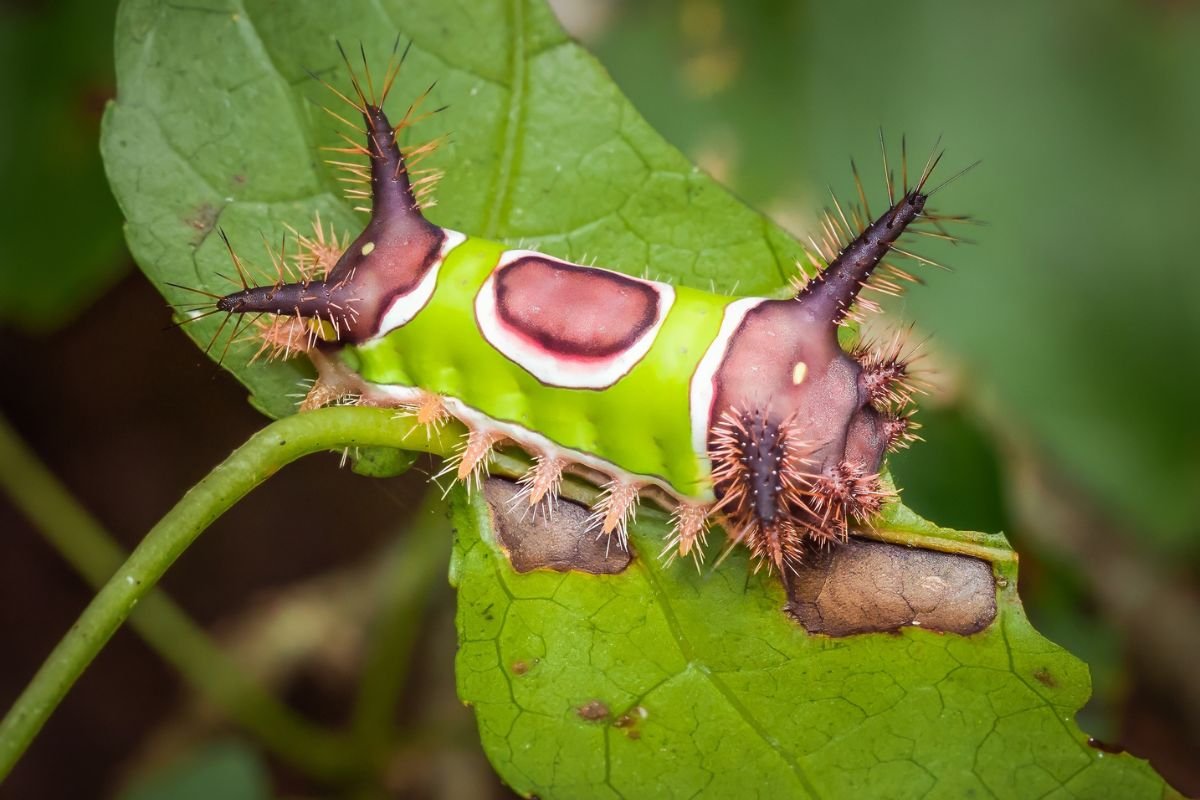
| Region / Habitat | Eastern U.S., often on deciduous trees and shrubs |
| How it Delivers Toxin | Venomous spines embedded in the body |
| Symptoms | Sharp burning pain, rash, swelling |
| Active Season | Summer months |
The saddleback caterpillar has a striking, bright green body with a brown saddle-shaped marking and spiny projections. Its venom is highly irritating, producing sharp pain, rash, and swelling. Found in eastern U.S. forests and gardens, it uses its bold colors as a warning to predators. The “saddle” marking makes it easy to identify, even for casual nature watchers. Always avoid touching; it’s deceptively small but very potent.
4. Pine Processionary Caterpillar (Thaumetopoea pityocampa)
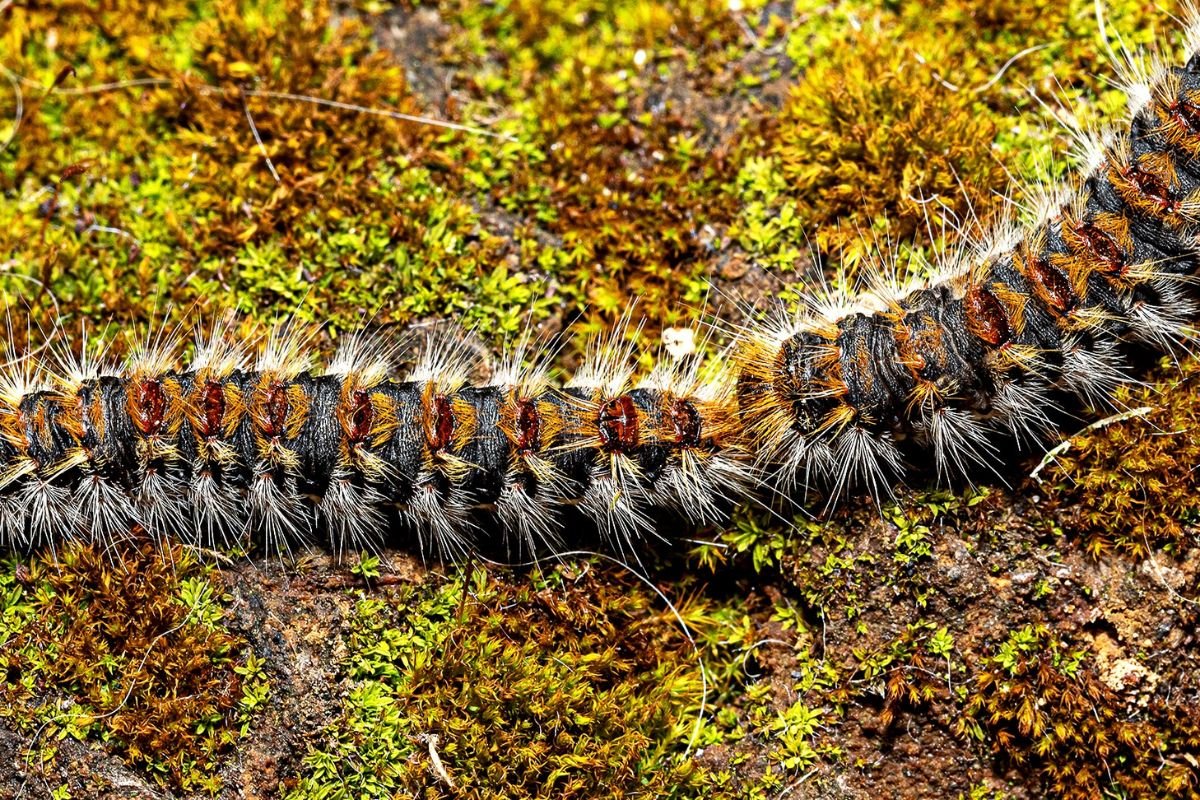
| Region / Habitat | Southern Europe & North Africa; mainly in pine forests |
| How it Delivers Toxin | Tiny hairs contain venom that can become airborne and irritate skin and eyes |
| Symptoms | Dermatitis, eye irritation, and respiratory problems |
| Active Season | Winter and early spring (larvae form) |
Most Poisonous Caterpillars in the World, the pine processionary caterpillar is brown and white and moves in long “processions” along pine trees in southern Europe and North Africa. Its venom is moderately toxic and can cause skin irritation, eye problems, and breathing issues. Even airborne hairs can trigger reactions, which makes it especially risky for children and pets. Its toxic hairs can stay dangerous for years, long after the caterpillars have gone.
5. Bag-Shelter Moth Caterpillar (Ochrogaster lunifer)
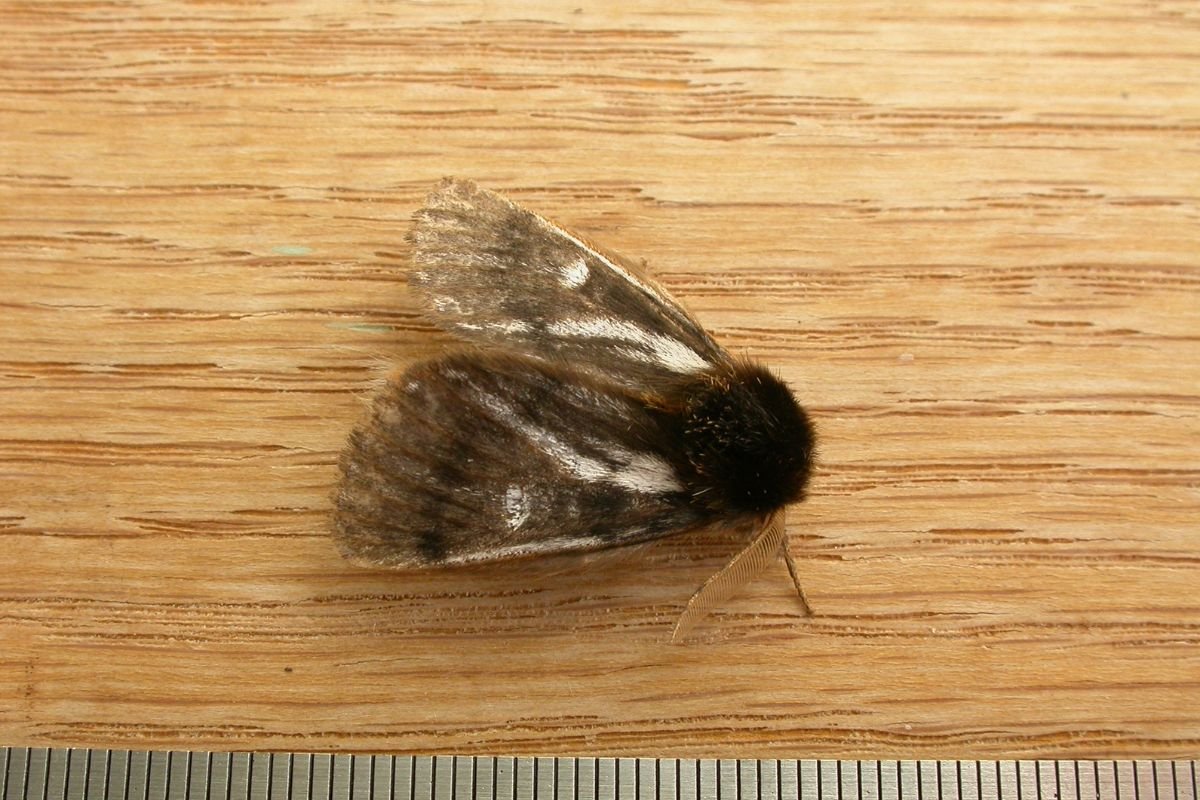
| Region / Habitat | Australia: eucalyptus forests and gardens |
| How it Delivers Toxin | Spines on the body and hairs release irritants |
| Symptoms | Itching, redness, inflammation |
| Active Season | Spring and summer |
This Australian caterpillar is brown and hairy, often hiding inside a silken bag made of leaves. Its venom is moderately toxic, causing itching, redness, and inflammation. Commonly found in eucalyptus forests and gardens, it uses its bag for camouflage and protection. Despite its small size, the sting can be very uncomfortable. Nature lovers should avoid handling it, as contact with the spines can irritate.
6. Io Moth Caterpillar (Automeris io)
| Region / Habitat | North America: forests, gardens, and meadows |
| How it Delivers Toxin | Venomous spines on the back and sides |
| Symptoms | Itching, rash, mild allergic reactions |
| Active Season | Summer |
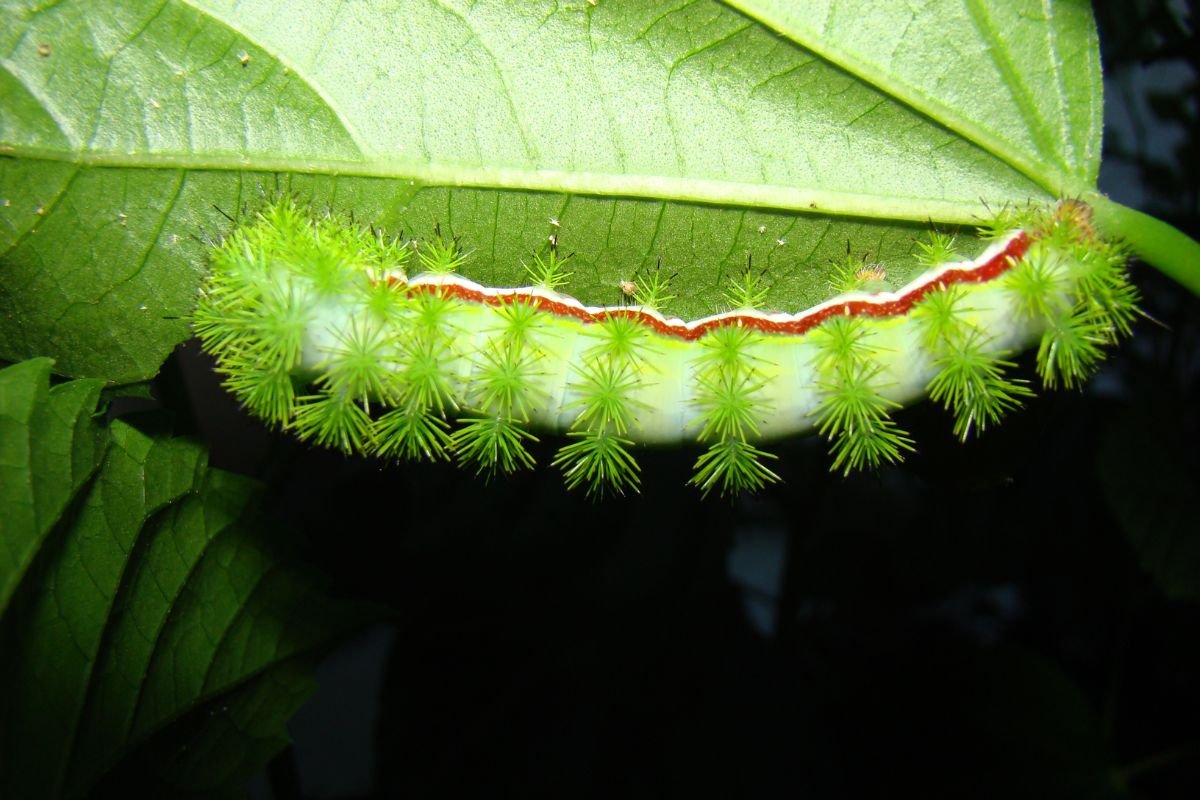
Bright green with red or orange spines along its back, the Io moth caterpillar is visually striking. Its venom is moderately toxic, triggering itching, rash, and mild allergic reactions. It uses its spines for self-defense while living in North American forests and meadows. The Io moth’s eye-like markings as an adult help scare off predators. Always admire it from a safe distance, making it one of the Most Poisonous Caterpillars in the World.
7. Hag Moth Caterpillar (Phobetron pithecium)
| Region / Habitat | Eastern North America; forests and gardens |
| How it Delivers Toxin | Contact with hair can trigger irritation |
| Symptoms | Localized irritation, mild rash |
| Active Season | Late summer |
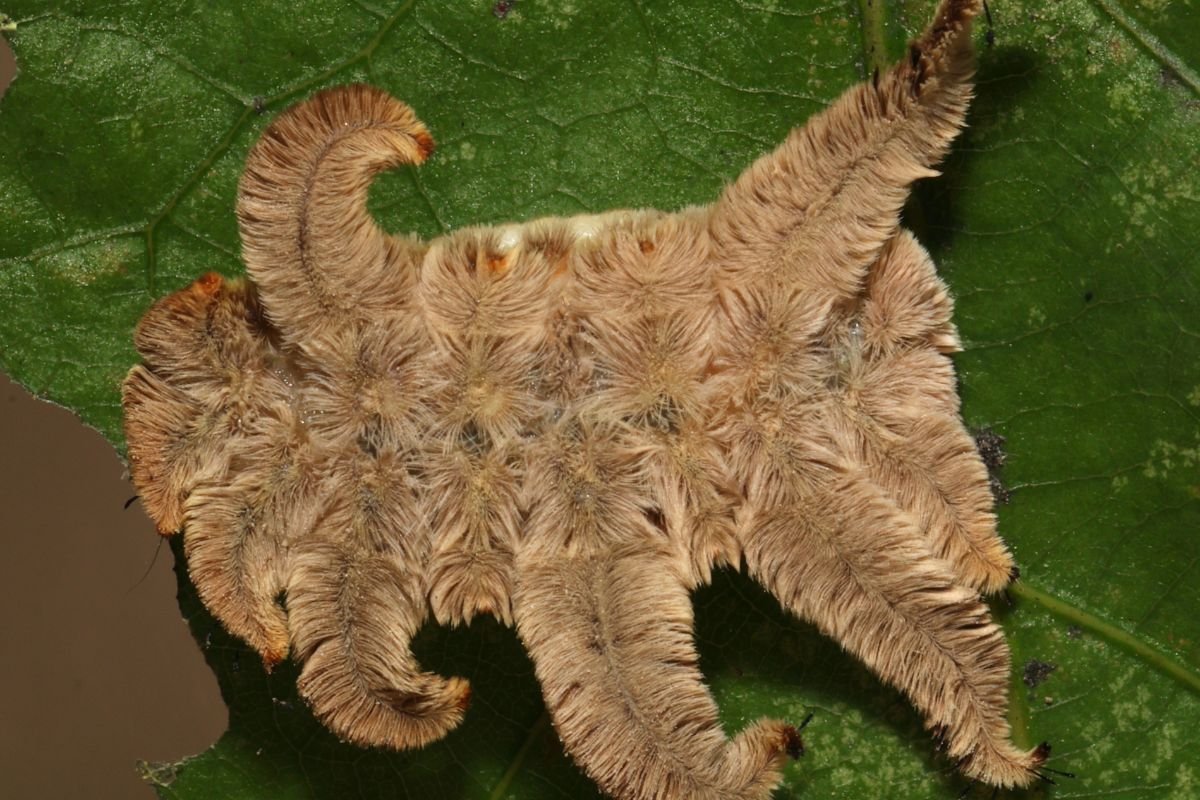
Also known as the Monkey Slug, it looks hairy and unusual, almost like a small spider or furball. Its venom is mild to moderate, causing localized irritation or a mild rash. Found in eastern North American forests and gardens, it is more strange-looking than dangerous. It transforms into a small brown moth, completing a surprising life cycle. Still, it’s wise not to touch it to avoid skin irritation.
8. White-Marked Tussock Moth Caterpillar (Orgyia leucostigma)
| Region / Habitat | Eastern North America: forests, parks, and gardens |
| How it Delivers Toxin | Hairs cause skin irritation on contact |
| Symptoms | Rash, itching |
| Active Season | Late spring to early summer |
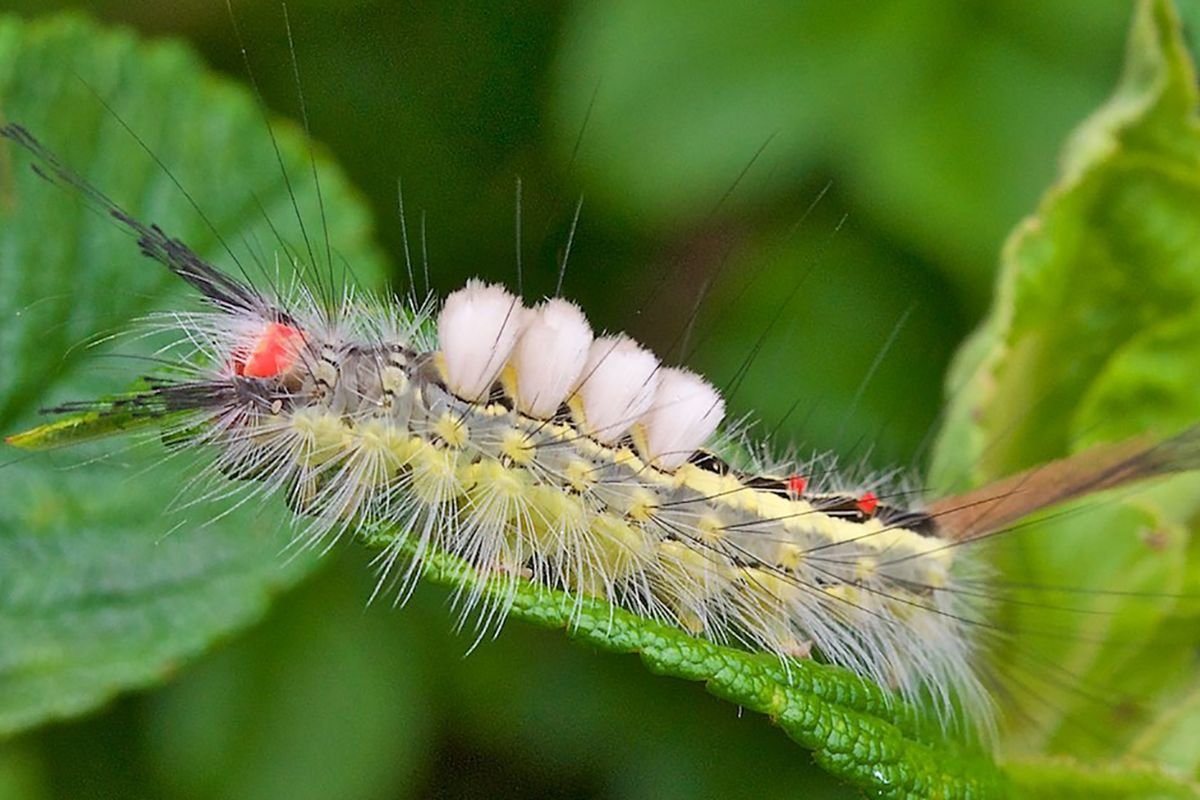
Furry with white and black tufts and bright yellow markings, this caterpillar is common in eastern North America. Its venom is mild, causing itching and rashes. Considered one of the Most Poisonous Caterpillars in the World for its ability to irritate skin, it thrives in parks, gardens, and forests. It is often mistaken for a more dangerous species due to its bold colors. Even mild stings can be uncomfortable, so handle them with care.
Symptoms and Dangers of Caterpillar Stings
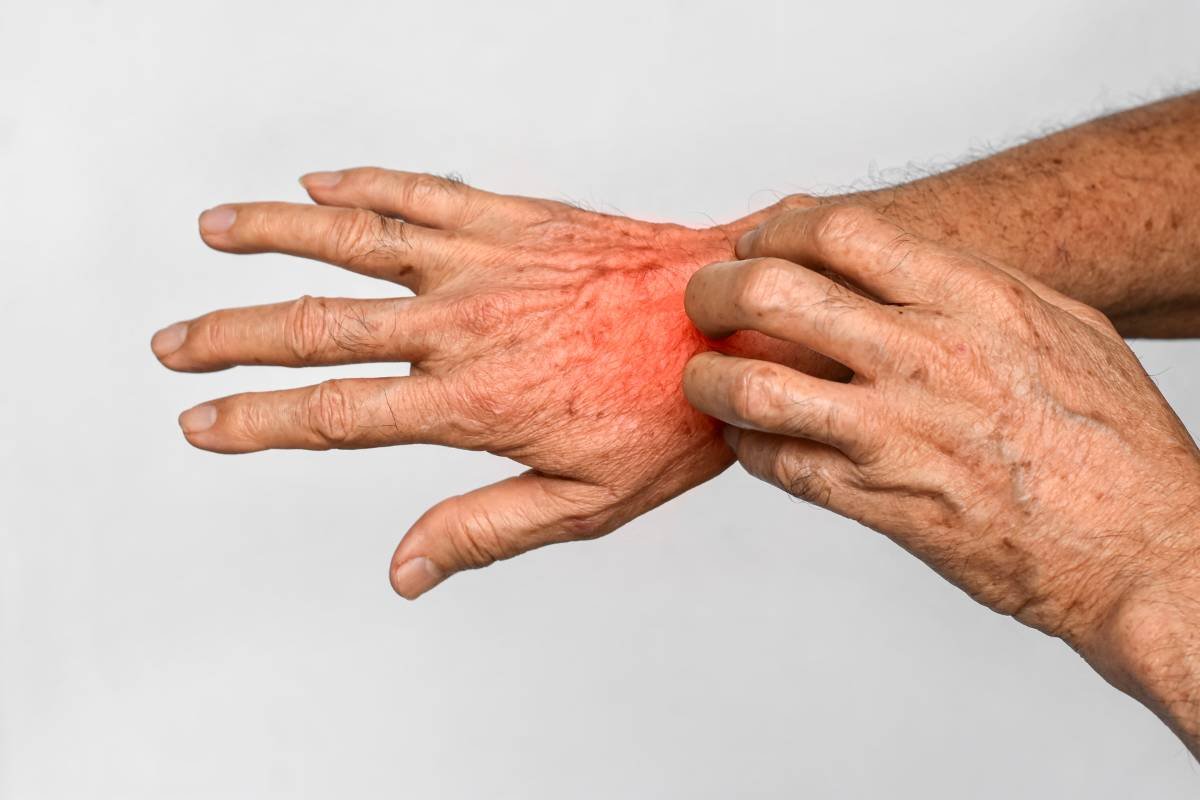
Most people think caterpillars are harmless, but some can cause painful or even serious reactions. Their stings come from tiny venomous spines or hairs that inject toxins into your skin. While some caterpillars, like the Lonomia obliqua, can be life-threatening, many only cause mild irritation.
Here’s what usually happens if you come into contact with a poisonous caterpillar:
Common Symptoms:
| Pain and burning | Many caterpillars give an instant stinging or burning sensation when they touch you. |
| Redness and swelling | The affected area may become inflamed, sometimes lasting for hours or even a day. |
| Rashes and itching | Tiny hairs can trigger itchy, blotchy rashes that look like an allergic reaction. |
| Feeling unwell | Some people may feel dizzy, nauseous, or get a headache if the toxin enters the bloodstream. |
| Breathing or eye irritation | Caterpillars like the pine processionary can send tiny hairs into the air, irritat to the eyes, nose, or lungs. |
Severe Reactions (Less Common)
| Internal bleeding or kidney problems | Extremely toxic species like Lonomia obliqua can cause serious health issues. |
| Allergic reactions | Some people may experience swelling of the face, throat, or difficulty breathing a medical emergency. |
| Delayed irritation | Certain caterpillar hairs can stay toxic for days or even weeks after contact, causing delayed rashes. |
Why Should You Be Careful?
Even small or fuzzy caterpillars can be dangerous. Children, pets, and people with allergies are most at risk. Knowing the signs and acting quickly can help prevent serious problems and reduce pain.
How to Stay Safe Around Poisonous Caterpillars?
While poisonous caterpillars are fascinating to look at, it’s important to stay safe. A simple sting can range from irritating to dangerous, depending on the species. Here’s how you can protect yourself, your family, and your pets while enjoying the outdoors:
1. Learn to Identify Dangerous Species
Familiarize yourself with the Most Poisonous Caterpillars in the World. Knowing what they look like and where they live, like Lonomia obliqua in South America or Puss Caterpillars in the southern U.S., helps you avoid accidental contact.
2. Avoid Touching Unknown Caterpillars
Even fuzzy or colorful caterpillars can be venomous. Never pick up a caterpillar unless you’re certain it’s harmless. Remember, their spines or hairs carry venom, which can cause irritation or serious reactions.
3. Wear Protective Clothing
If you’re hiking, gardening, or exploring areas where caterpillars live, wear long sleeves, pants, and gloves. This is especially important in forests, parks, or gardens where species like the pine processionary caterpillar or the saddleback caterpillar may appear.
4. Keep Children and Pets Safe
Children and pets are more likely to touch or play near caterpillars, so supervise them closely and teach them not to pick up insects. Check your garden and outdoor areas for dangerous species regularly, especially when it comes to the Most Poisonous Caterpillars in the World.
5. Take Immediate Action if Stung
- If you or someone else gets stung:
- Wash the area with soap and water.
- Remove any visible spines or hairs using tape or a credit card.
- Apply ice to reduce pain and swelling.
Seek medical attention for severe reactions, especially if it’s a highly toxic caterpillar like Lonomia obliqua, or if breathing problems occur.
6. Stay Informed
Check local guides or online resources for updates on dangerous caterpillar sightings, especially during peak seasons. Being informed is one of the best ways to avoid accidents.
Conclusion:
Poisonous caterpillars may look harmless, but many carry venom that can cause pain, allergic reactions, or even serious health problems. From the deadly Lonomia obliqua in South America to the colorful Io Moth caterpillar in North America, these insects serve as a reminder that nature is full of surprises.
By learning to identify dangerous species, understanding their symptoms and dangers, and following simple safety precautions, you can enjoy the outdoors while keeping yourself, your family, and your pets safe. Always admire these fascinating creatures from a distance, a small step that can prevent big problems.
Remember, awareness is the key: knowing the Most Poisonous Caterpillars in the World can save you from unnecessary pain and risk.
FAQs
1. What should I do if I get stung by a poisonous caterpillar?
Wash the area with soap and water, remove any spines or hairs, apply ice to reduce swelling, and seek medical attention if symptoms are severe or if it’s a highly toxic species.
2. Are all brightly colored caterpillars poisonous?
Not all, but bright colors often serve as a warning to predators. Many of the Most Poisonous Caterpillars in the World use bold colors to signal their toxicity.
3. Can caterpillar stings be fatal?
Yes, but it’s rare. Highly toxic species like Lonomia obliqua can cause serious complications such as internal bleeding or kidney failure. Most stings cause pain, rash, or mild allergic reactions.
4. How can I prevent my pets from getting stung?
Supervise pets in areas where caterpillars are common, especially gardens and forests. Teach them to avoid touching or chewing insects.
5. Are there any long-term effects from caterpillar stings?
Some caterpillar hairs, like those of the pine processionary caterpillar, can remain toxic for days or even weeks. Most stings heal with proper care, but severe allergic reactions may require ongoing treatment, especially when dealing with the Most Poisonous Caterpillars in the World.